yahoo Press
Tax refunds are 10.2% bigger than last year, with the average refund around $3,800
Images
1 / 11

2 / 11

3 / 11

4 / 11
5 / 11

6 / 11

7 / 11

8 / 11

9 / 11

10 / 11

11 / 11
Still working on your taxes? The latest IRS tax filing data shows that over 41 million returns have already been processed this year, with the average refund totaling $3,804, a 10.2% increase over the same week last year.

The total amount refunded — over $109.33 billion as of Feb. 20 — is up more than 6.9% from last year. That's due to tax changes passed in July 2025. The One Big Beautiful Bill Act ushered in new tax breaks, including an extra deduction for seniors, deductions for overtime pay and tips, a deduction for interest paid toward car loans, and an increase in the standard deduction.

Read more: 4 ways the OBBBA could lower your taxes

Over a month into filing season, taxpayer visits to IRS.gov have surged by 46.3% compared to the same week last year.

The IRS website offers a Where’s My Refund tool, where you can check the status of your return. The IRS issues most refunds within 21 calendar days of receiving your return — if you e-file. However, if you mail a paper tax return, the whole process can take a week (or more) longer.

The IRS expects to process around 164 million individual tax returns for tax year 2025 by the April 15 filing deadline.

Learn more: Where's my refund? When to expect your tax refund from the IRS.

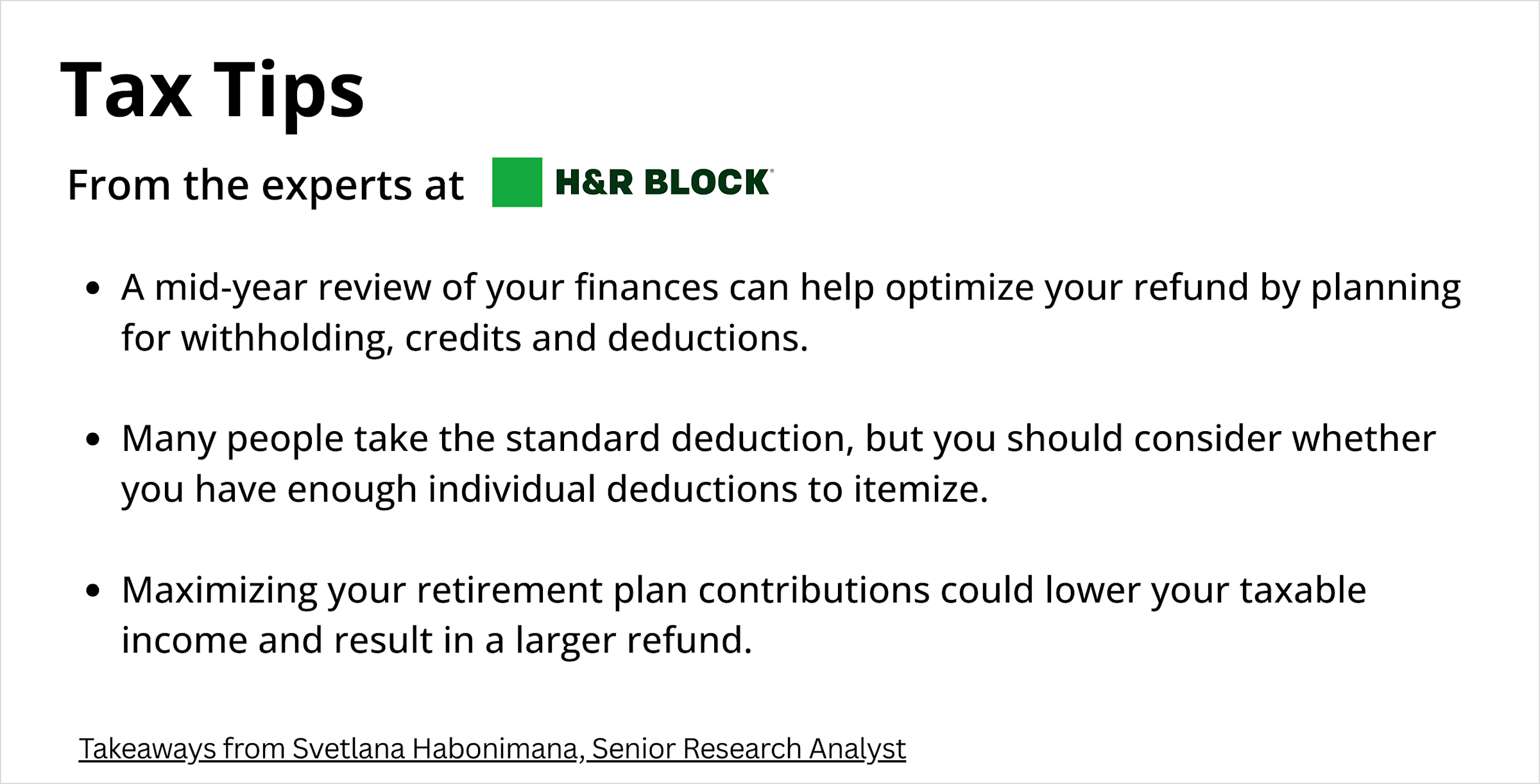
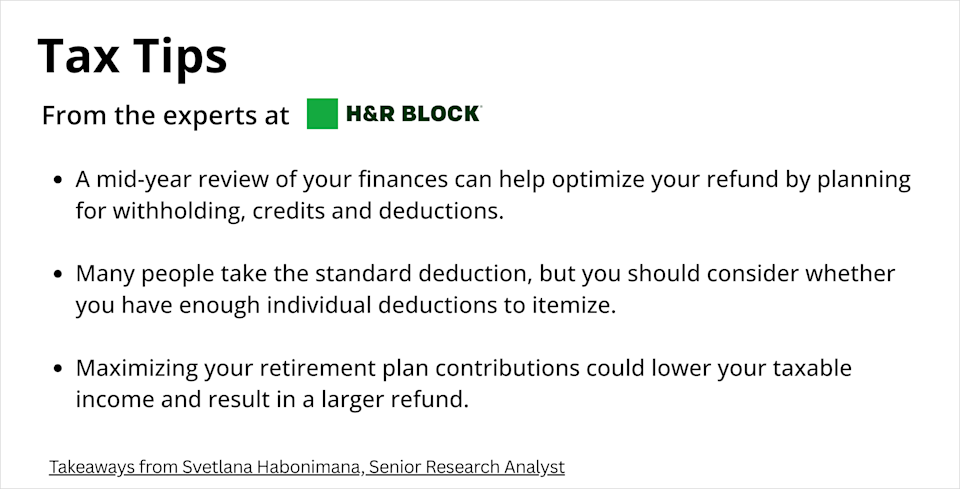
2025 may be over, but it’s not too late to increase your refund (or lower your tax bill) before the April 15 tax filing deadline. Here are a few strategies to try now.

Did you know you can still make prior-year contributions to a traditional IRA up until the 2026 tax filing deadline?

Contributing to a retirement account reduces your taxable income and, in turn, can help increase your tax refund. So, if you didn’t max out contributions to your IRA last year, now may be the time to do so.

For the 2025 tax year, the maximum you can contribute to an IRA depends on your age:

Under age 50: Up to $7,000

Age 50 or older: Up to $8,000 (including a $1,000 catch-up contribution)

Keep in mind that these limits apply to the combined total across all your IRAs (including traditional and Roth IRAs). Additionally, if your taxable wages are lower than these limits, you can only contribute the amount you earned.

If you have a high-deductible health plan, contributing to a health savings account (HSA) can lower your taxable income as well. And like with an IRA, you can make 2025 contributions to an HSA until April 15, 2026, further reducing your tax liability.

For tax year 2025, the HSA contribution limit is $4,300 for individuals under age 55 and $5,300 for those age 55 and older (including a $1,000 catch-up contribution). The maximum for families is $8,550, or $9,550 if you’re age 55 or older.

The biggest benefit of using an HSA is that it allows you to pay for qualified medical expenses using pre-tax dollars. However, even if you don’t think you’ll need the extra money in your account, it can still be worth bumping up your contributions. After age 65, withdrawals for non-medical expenses are allowed without penalty (you’d just pay ordinary income tax, similar to a Traditional IRA), essentially doubling as a long-term retirement savings tool.

Your tax return could look a lot different this year, depending on your financial situation. The One Big Beautiful Bill Act introduced a number of new tax deductions starting in 2025, including deductions for tips and overtime, an increase to the maximum child tax credit, a higher cap for state and local tax deductions, and a bigger deduction for qualifying seniors.

A quick refresher: Tax deductions reduce your taxable income and may increase your refund by lowering your overall tax liability, while a tax credit provides a dollar-for-dollar reduction of your total tax bill.

If you want to increase your refund, it’s important to take full advantage of all the tax deductions and credits you qualify for. So, don’t assume your tax situation for 2025 will be the same as in past years.

Consult your tax preparer or tax preparation software to determine which credits and deductions you may qualify for this year.

Your tax filing status determines your tax brackets, standard deduction, and eligibility for key credits. So, choosing the right status is key to maximizing your refund.

If you experienced a major life change in 2025 — such as getting married or divorced, or having a child — you may need to update your filing status. Again, if you aren’t sure which status fits your current situation, it’s a good idea to reach out to a tax professional for guidance.

Read more: 5 smart ways to put your tax refund to use

2025 may be over, but it's not too late to make a few strategic tax moves. Here's what you can do now to ensure a bigger refund in April.

According to the latest IRS tax filing data, the average refund totals $2,476, a 14.2% boost over the same week last year. The total amount refunded so far — over $32 billion — is up more than 8%.

Will you get a bigger tax refund this year? Here’s what to know before you file.

The average federal tax refund reached nearly $3,800, an 8.8% jump over the same week last year, according to Internal Revenue Service data.

Visits to the Internal Revenue Service website are surging as tax season winds down, with just a month left to file.

An early read on the 2026 filing season shows the average tax refund is $3,742, up more than 10% from last year. Here's why that's not good news for taxpayers.