yahoo Press
Scientists Discovered an Ancient Egyptian Tool 2,000 Years Ahead of Its Time
Images
1 / 10
2 / 10

3 / 10

4 / 10

5 / 10

6 / 10
7 / 10

8 / 10

9 / 10

10 / 10
"Hearst Magazines and Yahoo may earn commission or revenue on some items through these links."

Here’s what you’ll learn when you read this story:

Re-examination of an Egyptian artifact discovered about 100 years ago led researchers to realize it is an ancient “bow drill.”

The copper and leather device represents the first evidence of mechanical tools from Egypt’s pre-Pharaonic history.

At 5,300 years old, the bow drill is 2,000 years older than the oldest such tools previously known to exist.

A simple handheld copper “bow drill” from ancient Egypt is yielding new insights more than 100 years after it was first found. The small copper alloy object was originally discovered at Badari in Upper Egypt in the 1920s, inside an adult male’s grave dubbed Grave 3932. Now roughly 100 years later, researchers from Newcastle University and the Academy of Fine Arts, Vienna, have recognized the artifact's immense importance in the history of tool use. They shared their findings in a study recently published in the journal Egypt and the Levant.

The research team examined the piece under magnification and concluded that it represents the earliest identified rotary metal drill from ancient Egypt’s Predynastic period in the late fourth millennium B.C.E.—the age before the first pharaohs ruled.

“The ancient Egyptians are famous for stone temples, painted tombs, and dazzling jewelry, but behind those achievements lay practical, everyday technologies that rarely survive in the archaeological record,” Martin Odler, visiting fellow in Newcastle University’s School of History, Classics, and Archaeology, said in a statement about the research he co-authored. “One of the most important was the drill: A tool used to pierce wood, stone, and beads, enabling everything from furniture-making to ornament production.”

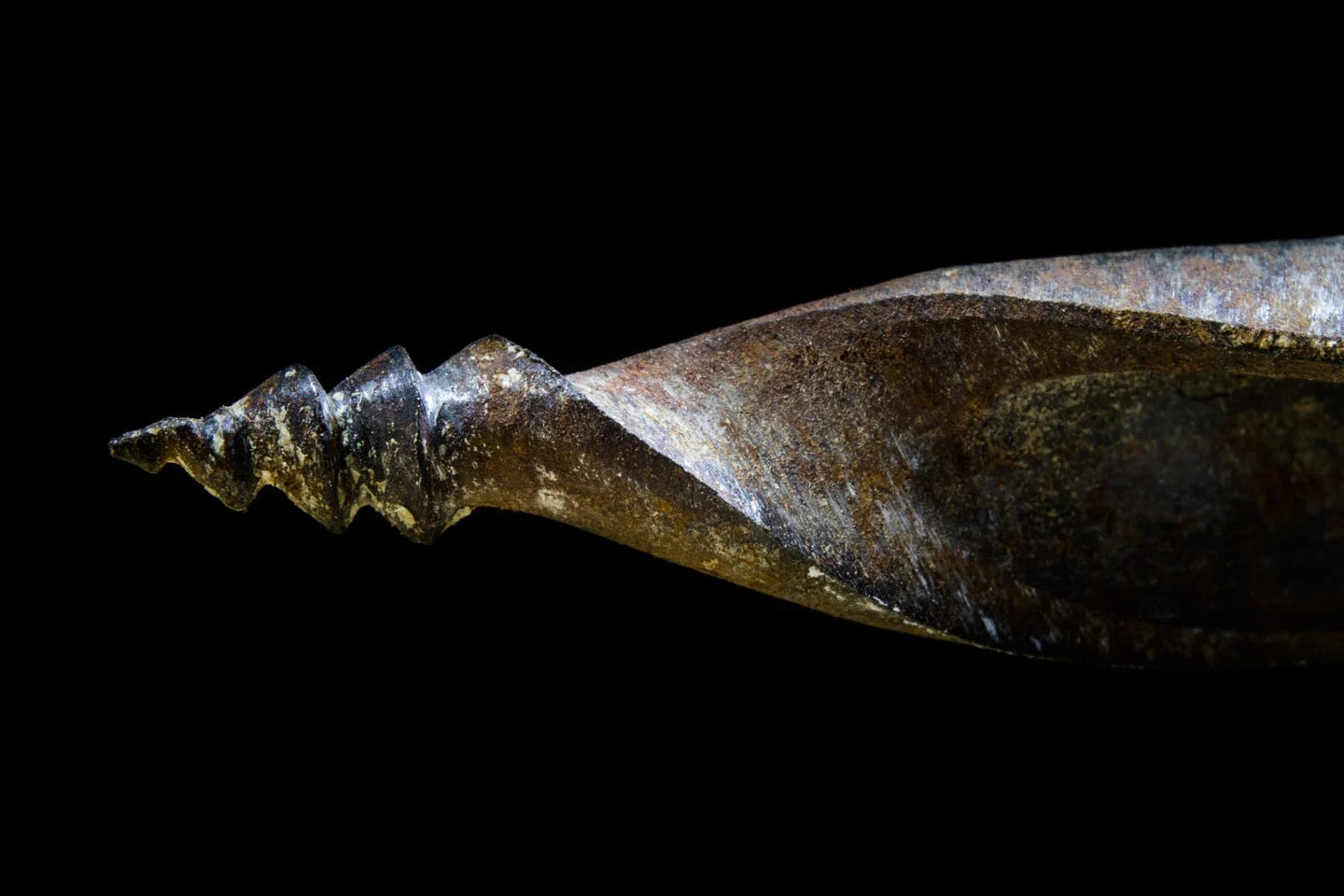
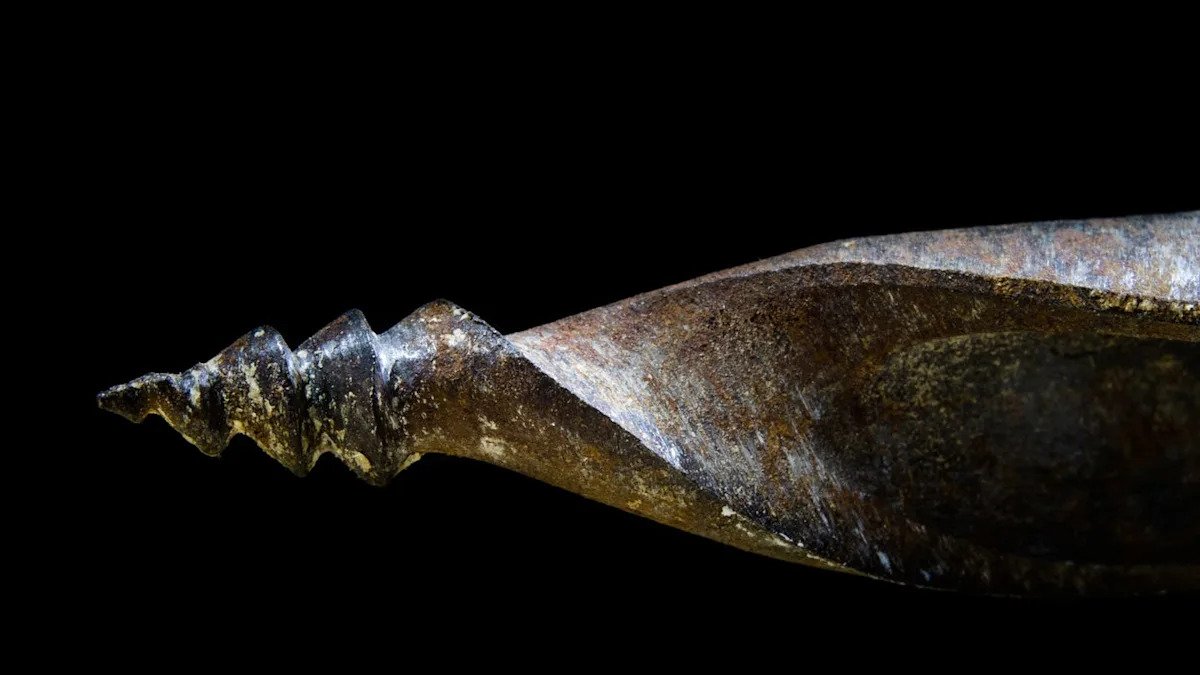
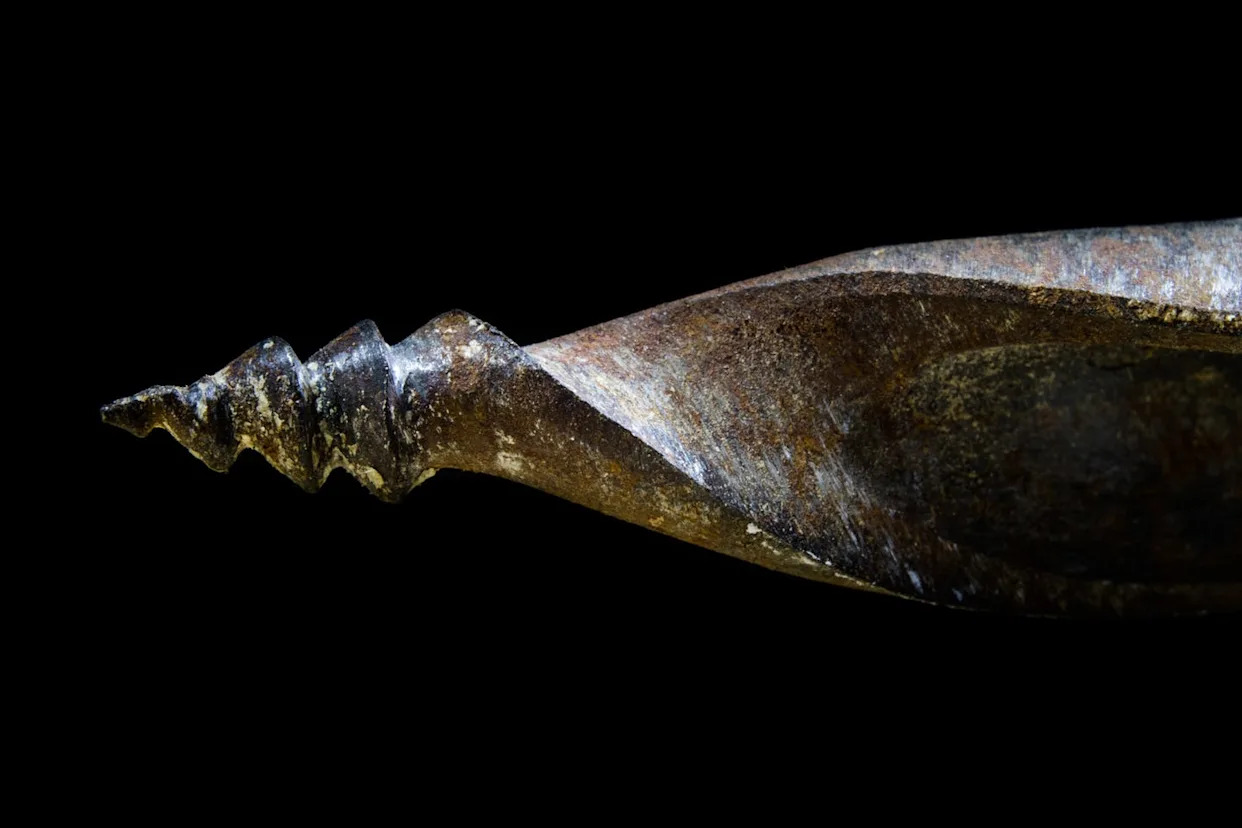
Weighing a slight 1.5 grams and measuring just over two inches long, the artifact was originally catalogued as “a little awl of copper, with some leather thong wound round it.” With such a mundane description, it sat unstudied for a century. That all changed when the research team took a liking to it and found that it featured wear consistent with drilling, highlighted by fine striations, rounded edges, and a slight curvature at the working tip. All the evidence pointed to rotary motion, not just simple puncturing.

The six coils of the leather, now extremely fragile, represent the remnants of the bowstring used to power the drill—an ancient version of a drill strap. The leather wrapping on the shaft allowed the user to spin the drill quicker than turning it solely by hand. It also meant the drill could penetrate a surface more forcefully.

“The re-analysis has provided strong evidence that this object was used as a bow drill—which would have produced a faster, more controlled drilling action than simply pushing or twisting an awl-like tool by hand,” Odler said. “This suggests that Egyptian craftspeople mastered reliable rotary drilling more than two millennia before some of the best-preserved drill sets.”

The recognition of the drill's great age puts the history of similar tools in a new perspective. The oldest bow drills previously known to archaeologists are 2,000 years newer, and depictions of such drills even appeared in tomb scenes created around 1500 B.C.E. But archaeologists are now aware that those examples are fairly recent pieces of a much longer history of tool use in Egypt.

“The technological continuity observed across nearly two millennia stresses the enduring utility of the bow drill and accentuates its significance in both woodworking and bead production,” the authors wrote. “This re-evaluation not only enriches our understanding of early Egyptian tool use but also raises intriguing questions about early metallurgical knowledge and interregional interactions in the ancient Near East.”

To further explore the bow drill, researchers subjected it to chemical analysis and portable X-ray fluorescence, finding it was crafted with an unusual copper alloy. “The drill contains arsenic and nickel, with notable amounts of lead and silver,” co-author Jiri Kmosek said in a statement. “Such a recipe would have produced a harder, and visually distinctive, metal compared with standard copper. The presence of silver and lead may hint at deliberate alloying choices and, potentially, wider networks of materials or know-how linking Egypt to the broader ancient Eastern Mediterranean in the fourth millennium B.C.E.”

You Might Also Like

The Do’s and Don’ts of Using Painter’s Tape

The Best Portable BBQ Grills for Cooking Anywhere

Can a Smart Watch Prolong Your Life?