yahoo Press
Oil climbs in early trading, diesel rising more than crude
Images
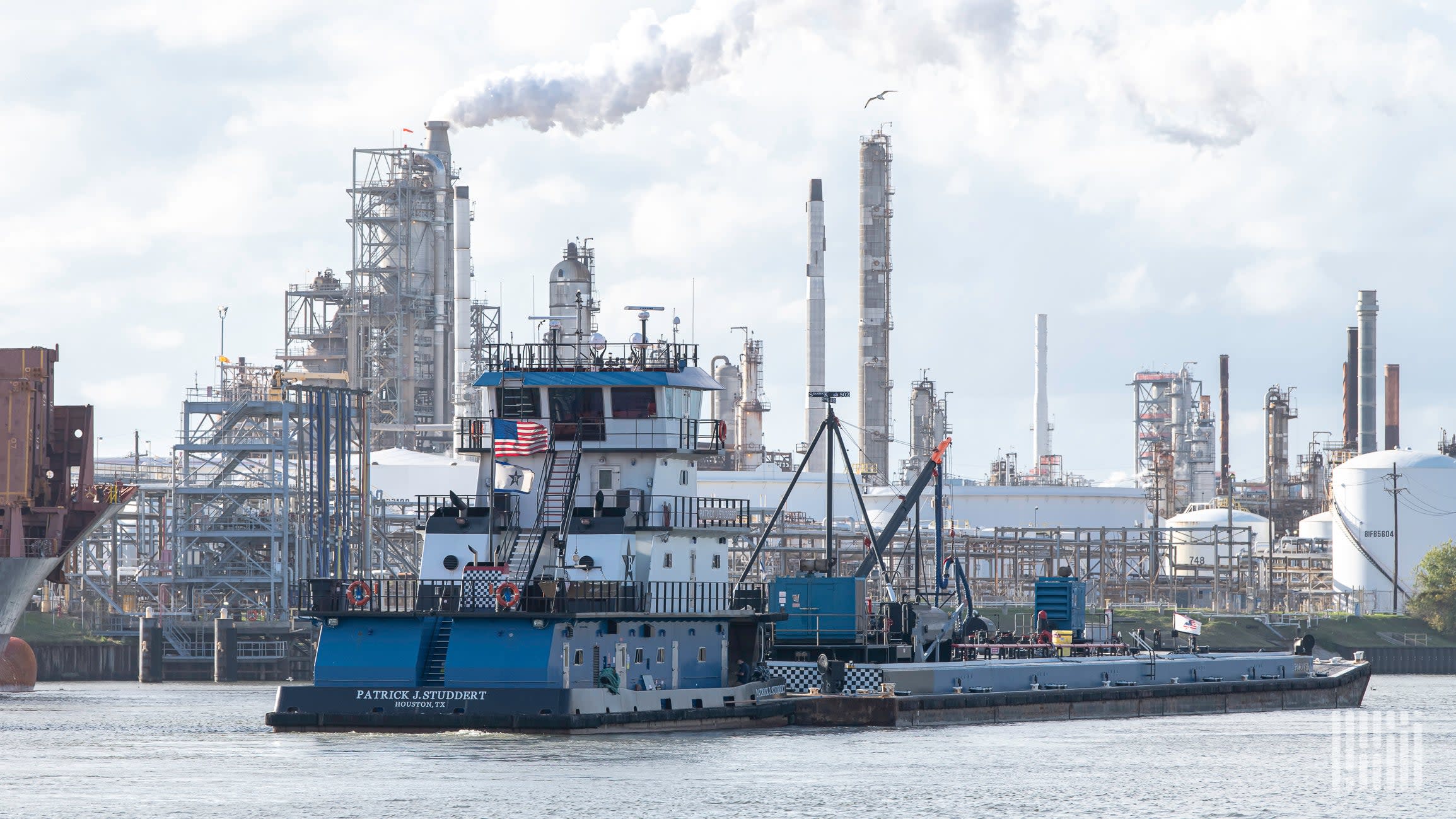
1 / 4
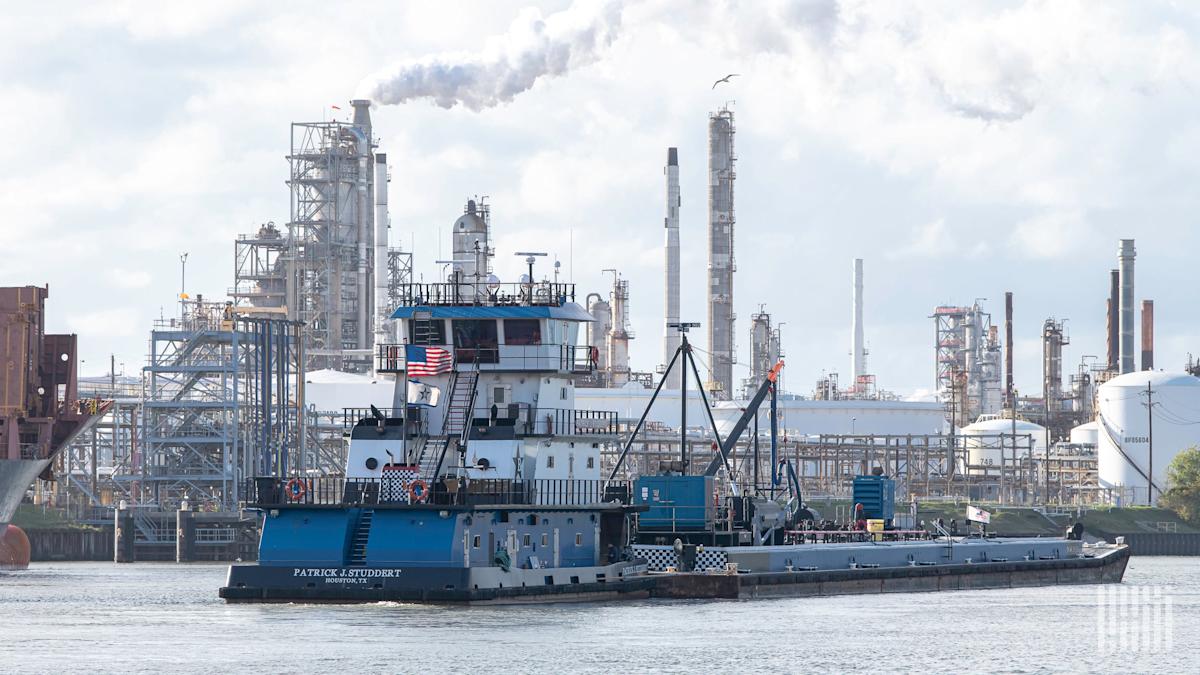
2 / 4

3 / 4

4 / 4
Oil prices soared in the first few hours of trading Sunday evening U.S. time, the first opportunity to react to the U.S. and Israeli attacks on Iran and the latter country’s response, with diesel prices moving higher at a faster rate than both crude and gasoline.

Such a move would be expected given the fact that the heavier crudes that are exported out of countries like Iran and Saudi Arabia, and through the possibly closed Strait of Hormuz, have a larger yield of distillates like diesel refined compared to crudes that produce a greater percentage of light ends, such as gasoline or naphtha.

At a few minutes after 7 p.m. Eastern time, ultra low sulfur diesel (ULSD) on the CME commodity exchange for the April contract, which is the first month listed, was up 24.55 cts/g to $2.8415/g, an increase of 12.84%. Later, it traded at more than $2.90/g.

Global crude benchmark Brent was up about 7.4% to $78.27/barrel for the May contract. Later it traded at more than $82/b.

RBOB gasoline, a semi-finished gasoline product that is the proxy for gasoline trading, was up 6.95%, 15.67 cts/g to $2.4104/g for the April contract.

West Texas Intermediate, the U.S. crude benchmark, had risen 7.28% to $71.90, an increase of 4.88%. That is an April contract price.

More than two-year high is in sight

If ULSD were to settle at $2.84/g, it would be the highest CME settlement since February 13, 2024, when it settled at $2.8959/g. For Brent, a settlement above $78.27/b would be the highest since $77.49/b on January 28, 2025.

The national average retail diesel price published by AAA, which is updated daily, stood at $3.761/g Sunday. That includes a $5.107/g price in California. The AAA price would not have  reflected any changes as a result of the Middle East war, but is now essentially a starting point for measuring how far diesel will rise at the pump in the coming days and weeks.

The weekly average retail diesel price published by the Department of Energy/Energy Information Administration, which is the basis for most fuel surcharges, was published Tuesday, effective Monday, at $3.809/g, the sixth consecutive week the price increased.

Oil markets, which kick off on the CME commodity exchange at 6 p.m. Eastern time on Sundays and two hours later for trading in Brent on the Intercontinental Exchange, launched into an unknown world in its early trading as it tried to digest several developments in oil markets as a result of the U.S. and Israel attack on Iran and the subsequent response by that country.

Among the developments being considered Sunday by traders as a radically-different world in oil begins:

The OPEC+ group which includes the member of OPEC and a group of non-OPEC oil exporters nominally led by Russia, agreed over the weekend to resume their recent increases in oil production, but at a faster rate than earlier changes. Increases at the end of last year came at a pace of 137,000 b/d. But according to news reports, the increase in April will be 206,000 b/d. The group had been adding production beginning in the first half of last year at even higher numbers, but the gains had declined to 137,000 b/d by the end of the year. There were no increases in the first quarter.

The status of the Strait of Hormuz was uncertain late Sunday, but that uncertainty would likely have been interpreted by most of the market as the same thing as a closure. Iran reportedly had declared that it has shut the Strait of Hormuz, but that is not being confirmed by other independent sources. There were other reports late Sunday that Iranian officials said the Strait had not been closed.

Regardless of whether the Strait of Hormuz is open, online commentary raised the question of whether any insurers would underwrite a shipment through that passage given the shooting war taking place nearby.

As a possible sign of that, S&P Global Energy, in a late Sunday Factbox, said “there were no crude or product tankers seen on March 1 arriving to transit the main Hormuz traffic separation scheme (TSS) channels that run east–west through the narrowest part of the strait between southern Iran and the UAE/Oman coast. It cited data from its internal service, S&P Global Commodities at Sea.

Iran produced 3.19 million b/d of crude in January, according to the latest OPEC+ survey from Platts. That month, Iran exported 1.3 million b/d, predominantly to China, according to S&P Global Commodities at Sea data. The International Energy Agency in its latest report put Iranian output as a full-year average of 3.3 million b/d in 2025. That puts Iran as the fifth or sixth largest producer, behind the U.S., Saudi Arabia, Russia, Iraq and roughly tied with the United Arab Emirates.

More articles by John Kingston

How New York’s new driving penalties impact truckers

BMO’s quarterly earnings suggest truck credit might be improving

The high-stakes fight over New York City’s renewed delivery regulation law

The post Oil climbs in early trading, diesel rising more than crude appeared first on FreightWaves.