yahoo Press
Nasdaq rises, Dow edges into the red as gas prices rocket
Images
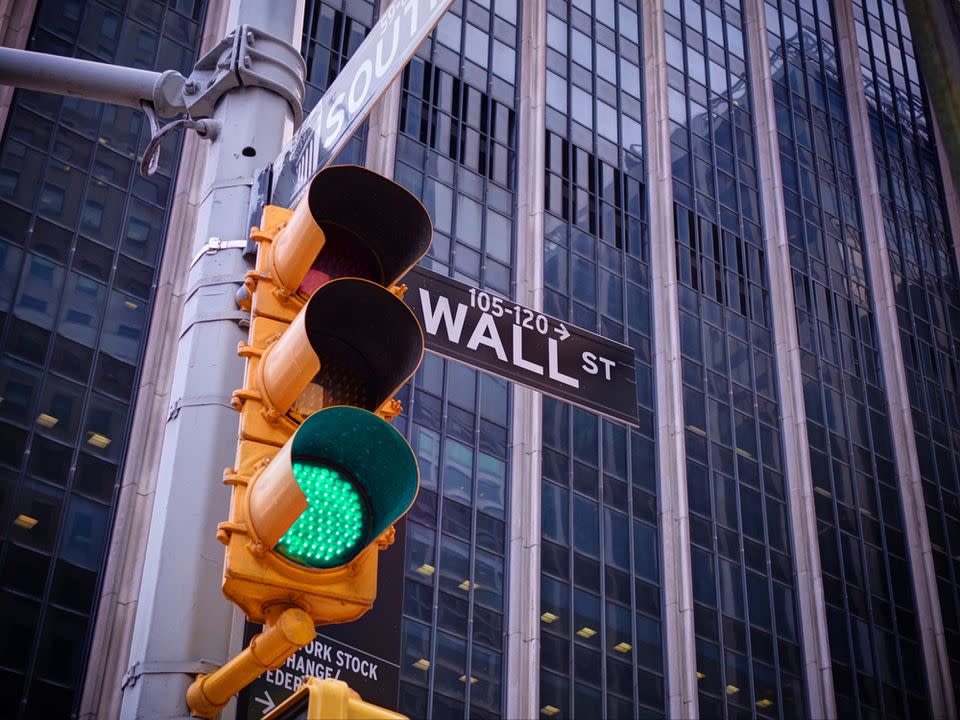
1 / 5
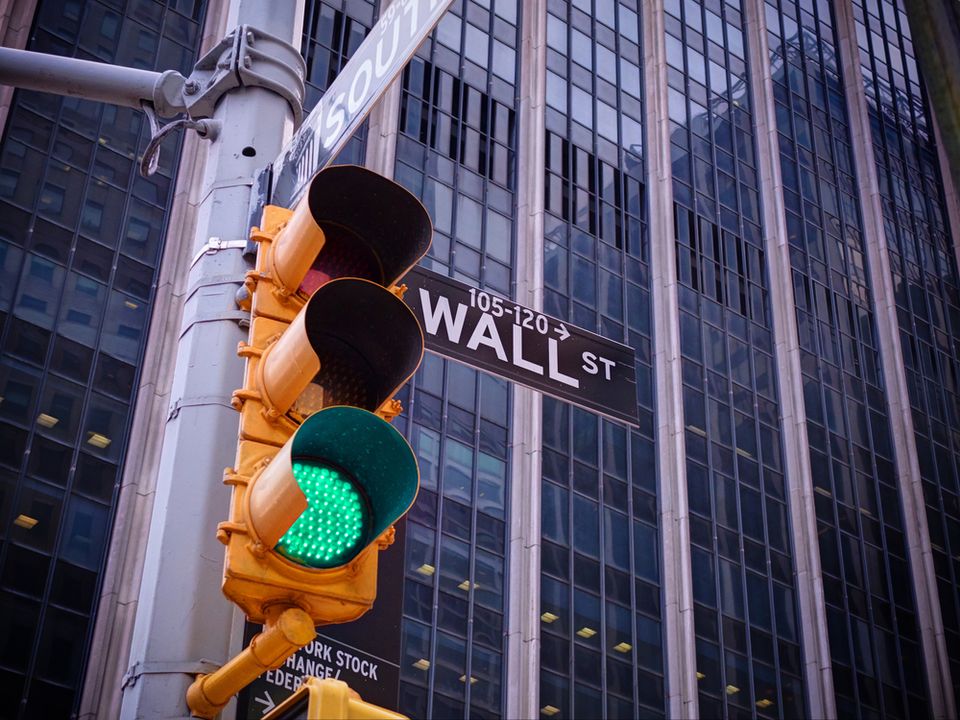
2 / 5

3 / 5

4 / 5
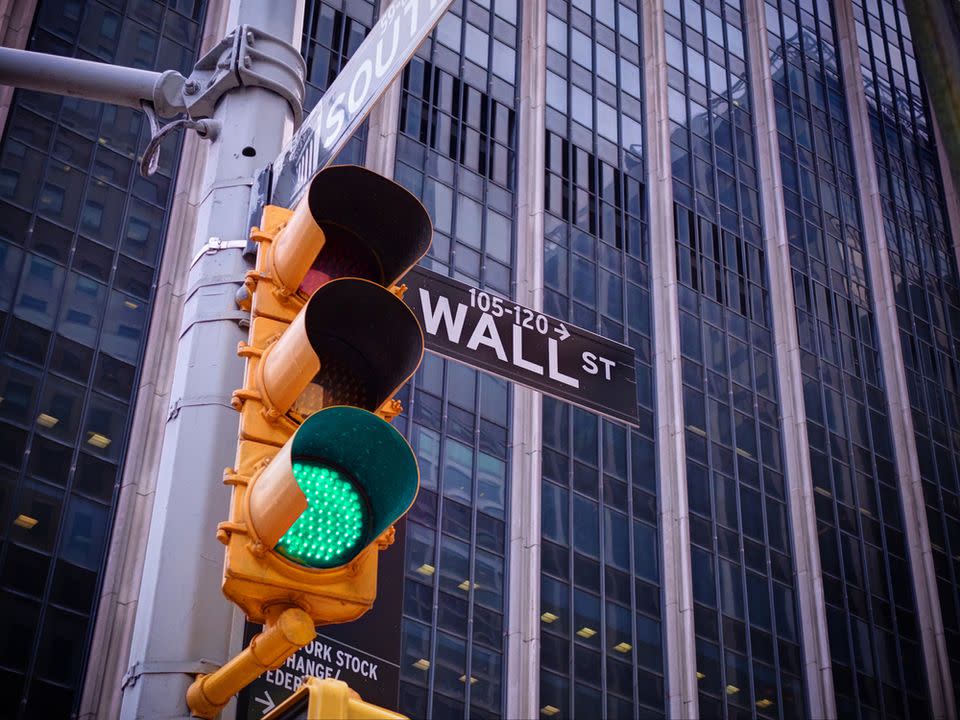
5 / 5
Dow ends 73.14 points lower at 48,904.78

Nasdaq ends 80.65 points higher at 22,748.86

Gas prices rocket after Qatar drone strike

Defense stocks move higher

American stocks finished Monday in mixed territory as investors weighed the implications of US and Israeli strikes on Iran and subsequent retaliatory attacks.

The S&P 500 ended little changed at 6,881, while the Nasdaq Composite gained 0.3%. The Dow Jones Industrial Average slipped 0.2% to close at 48,904.

Energy and defence stocks found buyers, while airline shares fell. Treasury yields climbed as traders reduced bets on interest rate cuts, fearing that higher oil prices could reignite inflation.

Oil surged, gold hit $5,400 an ounce and defence stocks rallied. But by late morning on Monday, Wall Street had found its footing.

US equities recovered from an early sell-off as investors weighed the fallout from American and Israeli strikes on Iran and subsequent retaliatory attacks. The S&P 500 and Nasdaq Composite edged up 0.1% and 0.5% respectively, while the Dow Jones Industrial Average clawed back most of its losses.

Brent crude rose 6% to around $78 a barrel, stoking inflation concerns and pushing Treasury yields higher as traders scaled back bets on interest rate cuts. Friday's February jobs report, where economists expect 60,000 new payrolls, will be the next major test for those expectations.

Qatar has halted production at Ras Laffan, the world's largest liquefied natural gas export facility, after it was struck by Iranian drones, sending European gas prices to their highest level in a year.

The state energy company declared force majeure, a legal clause that permits it to miss contracted deliveries without penalty due to circumstances beyond its control, though no structural damage to the facility has been reported.

Ras Laffan supplies around a fifth of global LNG, and its closure sent Dutch front-month futures, Europe's benchmark gas price, 39% higher to €44.51 per megawatt-hour, the sharpest single-day rise since Russia invaded Ukraine in 2022.

LNG tankers had already largely stopped transiting the Strait of Hormuz, the narrow waterway at the mouth of the Persian Gulf through which a significant share of global fuel flows, before the facility shutdown compounded the disruption.

European gas inventories are below seasonal norms, making the continent particularly vulnerable to any prolonged interruption to Middle East supplies, as it will need to import large volumes of LNG over the summer to refill storage ahead of next winter.

Goldman Sachs, the US investment bank, warned that a one-month halt to Strait of Hormuz shipping could more than double European gas prices from current levels.

US President Donald Trump said the bombing campaign against Iran could last for weeks, adding to uncertainty over the duration of the disruption and keeping traders on edge over the outlook for global energy markets.

12.18pm: Defense stocks rise

US defence stocks were in demand on Monday as Wall Street reacted to the US and Israel's war on Iran and the retaliatory strikes on regional allies, including Saudi Arabia, Qatar and UAE.

Shares in Northrop Grumman rose 4.9%, with Axon Enterprise and RTX also both climbing over 4%.

L3Harris Technologies and Lockheed Martin both rose over 3%, while Huntington Ingalls Industries, Textron and General Dynamics rose over 2%.

The US and Israel launched 'Operation Epic Fury' early on Saturday, just days after nuclear talks between the US and Iran ended with no compromise reached.

Air strikes focused on nuclear and military sites around Iran, with the assassination of Iran’s supreme leader Ayatollah Khamenei and other senior officials reported.

The Nasdaq is in positive territory now, up 10 points, with losses for the Dow and S&P both just over 0.1%.

Top risers on the Nasdaq 100 are bitcoin investor Strategy Inc, as the crypto markets spiked, and Palantir Technologies, which has a deep connection with the Pentagon and is likely being lifted by the wider defense theme.

Nvidia, Microsoft and Meta are also in positive territory.

US defence stocks are in demand this morning, as investors expect more defence spending by the US and allies that have come under fire in Iran's retaliatory strikes.

Shares in Axon Enterprise have risen 5.1%, with Northrop Grumman up 4.1% and RTX Corp climbing 3.6%.

Lockheed Martin, L3Harris Technologies and Textron were next, while Transdigm, General Dynamics and Huntington Ingalls Industries all rose over 1%.

Initial trading in New York was less pessimistic than in Europe, with losses for the main US indices considerably smaller in initial trades.

The Dow Jones is the worst, down 0.65%, followed by the S&P 500 and the Nasdaq Composite both falling around 0.5%.

On the Dow, paint group Sherwin-Williams is the biggest faller, down 3.55%, followed by Nike, Disney, 3M and Home Depot.

Nvidia, Chevron and Microsoft are the top risers, up 1.5%, 0.7% and 0.7%.

On the S&P, cruise operators and the main fallers, with Norwegian Cruise Line down 11%, Carnival down 10%, and Royal Caribbean Cruises down 5.6%.

Other fallers include Wynn Resorts, PPG Industries, General Motors, Ford Motor and MGM Resorts International.

AES Corp is the biggest faller, down 17%, as a consortium led by BlackRock's GIP and Swedish private-equity firm EQT has agreed to buy the US power company for $33.4 billion, including debt.

US stocks are predicted to start the week in the red as Wall Street react to the US and Israel's military strikes on Iran and retaliatory attacks on various Gulf allies.

Tech stocks are expected to lead the retreat when trading begins, with Nasdaq futures down 1.6%, while those for the Dow Jones and S&P 500 are pointing to declines of around 1.2%.

The price of oil, natural gas and gold surged in Asian and European sessions, following the US-Israel 'Operation Epic Fury' that led to the reported assassination of Iran’s supreme leader and other senior officials.

This was followed by retaliation from Iran with missiles and drones attacking sites across the region, including Qatar, United Arab Emirates, Saudi Arabia, Bahrain and Kuwait, as well as a British military base in Cyprus. Four US service members have been killed in Iran's response, US Central Command has revealed.

WTI jumped 7.8% to seven-month highs above $72 a barrel, while spot gold climbed 2.4% to above $5,400 an ounce, close to all-time highs.

The key Strait of Hormuz, while not technically closed, saw tankers turning around and dropping anchor.

In Europe, travel stocks were leading the decline, followed by banks and retailers, while defence and energy stocks led on the upside.

Dubai International Airport, the world's busiest passenger hub, said all flight operations remained suspended "until further notice," while Doha's main airport also remains closed due to the temporary closure of Qatari airspace.

Cirium data showed that of 5,340 flights scheduled to the Middle East on 2 March, 1,555 had been cancelled.

"From a global perspective, pretty much everything hinges on the Strait of Hormuz and the implications of any disruption to global energy flows," said market analyst John Wyn Evans at Rathbones, with impact to worsen quickly if the closure becomes protracted, "given the non‑linear nature of supply constraints. The longer it is closed, the worse the effects."

The war in Iran comes at a time when broader financial conditions have also tightened, he said, driven in part by concerns around credit exposures linked to private lending.

"This adds a layer of pre‑existing vulnerability at a moment when geopolitical uncertainty is rising. Credit spreads widened last week, and volatility indicators remain elevated but contained – suggesting a market that is nervous but not yet pricing in a systemic event."

Kenny Polcari at Slatestone said: "This is what investors need to remember: markets hate uncertainty. They price fear fast and stocks fall."

The VIX volatility index spiked by 22% overnight – causing Asian markets to fall, European futures and US futures to plunge.

"But it has since backed off a bit and is up 17% at 6:30 am, causing futures to take some of those losses back….But remember this too – as quickly as they price in fear, they recalibrate just as quickly once the facts are clearer."