yahoo Press
Man plans to propose, but his partner's finances are a 'freaking mess' after cosigning loans. The Ramsey Show weighs in
Images
1 / 4

2 / 4

3 / 4

4 / 4
“That’s a horrible way to start off your marriage.”

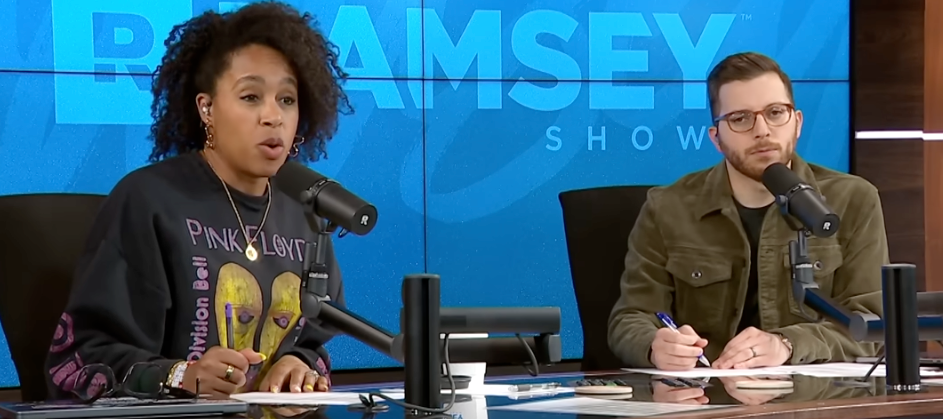
Jade Warshaw didn’t mince words when John from Portland called in to The Ramsey Show seeking advice on his girlfriend’s financial situation and his plans to propose to her (1).

Thanks to Jeff Bezos, you can now become a landlord for as little as $100 — and no, you don't have to deal with tenants or fix freezers. Here's how

Dave Ramsey warns nearly 50% of Americans are making 1 big Social Security mistake — here’s what it is and 3 simple steps to fix it ASAP

Turning 50 with $0 saved for retirement? Most people don’t realize they’re actually just entering their prime earning decade. Here are 6 ways to catch up fast

“I'm just getting into figuring out her financial situation and it's really a freaking mess,” said John.

As he explained on the show, John’s girlfriend is in serious debt after getting herself into a confusing situation with members of her family.

“She’s coliving with her mother, her sister that is married, her other sister that is married, and of course herself. And they all cosigned signatures and such, and incomes, to be able to afford and purchase a home together.

“They’re all in this mortgage. And then there's a food truck business that they run as a family business, and there’s other incomes. And then there’s private and business credit cards all mixed together, and my girlfriend’s credit score is tied to all of these as a cosigner, and two auto loans that she’s also tied to.”

Warshaw and cohost George Kamel warned John that his girlfriend’s financial situation sounds risky, especially after John revealed that her mother wants to move back to Mexico. Meanwhile, one of the sisters was diagnosed with cancer, and she and her husband “aren’t really working,” as John put it.

“She doesn’t understand that if they all default that it all reflects on her and that she could be the one that's responsible for all of it,” said Warshaw.

Cosigning loans comes with legitimate risks that cosigners don’t always understand before they give consent.

While it may seem like a gracious act to help a friend or family member with securing a loan, as a cosigner you’re on the hook for the debt and must pay it off if the borrower misses a payment or defaults. Your credit score will also be impacted by any non-payments, which can prevent you from being able to get a loan or a mortgage for yourself when you may need it (2).

While saying “no” to a request to cosign may damage a relationship, it’s nothing compared to how you’ll feel if the person asking you to cosign does permanent damage to your financial health by leaving you holding the bag on their loan.

Read More: The average net worth of Americans is a surprising $620,654. But it almost means nothing. Here’s the number that counts (and how to make it skyrocket)

While common interests and goals are often seen as important factors in a good relationship, common values — including financial values — are just as important.

“Our approach to finances is often shaped by our upbringing and personal history… If we have conflicting approaches to financial management, it can lead to anxiety, frustration, resentment, anger, mistrust and fear,” Georgina Sturmer, a counselor based in the U.K., shared with Verywell Mind (3).

For some couples, a relationship can still survive despite differing financial outlooks, but bad habits like overspending and racking up debt can be difficult to overcome and could lead to serious stress in a marriage.

It’s important to note that while a spouse is typically responsible for any debts they incurred before the marriage, as well as debt that’s solely in their name during the marriage, a spouse with large debts or a low credit score can still impact their partner in a negative way.

If you’re worried about your partner’s debts and their ability to pay them off, that could be a red flag that you might not want to ignore before walking down the aisle.

For those worried about their partner’s finances, the first step is to have an open and honest conversation about money.

From there, you can hopefully help your partner with understanding the full scope of their financial responsibilities. Couples considering marriage may also benefit from counseling to discuss their differing financial outlooks and create shared values and goals for their new life together.

Finally, if your partner is in serious debt — or you’re unsure if they can change their bad habits — you can protect your own finances by keeping your bank accounts separate, not cosigning for any loans or credit cards, and taking responsibility for all of the household bills so that they’re paid on time.

If you have cosigned a loan without properly understanding your commitments, you can attempt to remove yourself by speaking to the person you cosigned for and asking them to refinance.

In more extreme cases, you can protect your financial security by looking for a cosigner release in your original agreement — just be aware that this is not always included in loan agreements (4). The debt can also potentially be refinanced or consolidated, releasing you from responsibility for the loan, but remember that these options aren’t always available.

Once you cosign, you’re almost always responsible for the debt until it’s entirely paid off, so sign with caution.

As for John, Warshaw and Kamel advised him to ask his girlfriend to get out of her financial commitments to her family through refinancing loans and removing her as one of the cosigners. But Warshaw acknowledged that this is easier said than done.

“Your work is cut out for you, and I don’t know if you’re going to be able to win this battle, my friend,” said Warshaw. “This is deep.”

Robert Kiyosaki says this 1 asset will surge 400% in a year — and he begs investors not to miss its ‘explosion’

Dave Ramsey says this 7-step plan ‘works every single time’ to kill debt, get rich in America — and that ‘anyone’ can do it

Non-millionaires can now invest in this $1B private real estate fund for as little as $10. Here's how to get started in minutes

Warren Buffett used these 8 repeatable money rules to turn $9,800 into a $150B fortune. Start using them today to get rich (and stay rich)

Join 250,000+ readers and get Moneywise’s best stories and exclusive interviews first — clear insights curated and delivered weekly. Subscribe now.

We rely only on vetted sources and credible third-party reporting. For details, see our editorial ethics and guidelines.

The Ramsey Show Highlights (1); Allworth Financial (2); Verywell Mind (3); U.S. News & World Report (4).

This article provides information only and should not be construed as advice. It is provided without warranty of any kind.