Press
Israeli forces advance beyond the Litani River: How significant is it?
Images
1 / 8
2 / 8
3 / 8
4 / 8

5 / 8

6 / 8

7 / 8

8 / 8
Analysts say Israel is effectively expanding its area of military control northward towards the Zahrani River.

Save

Share

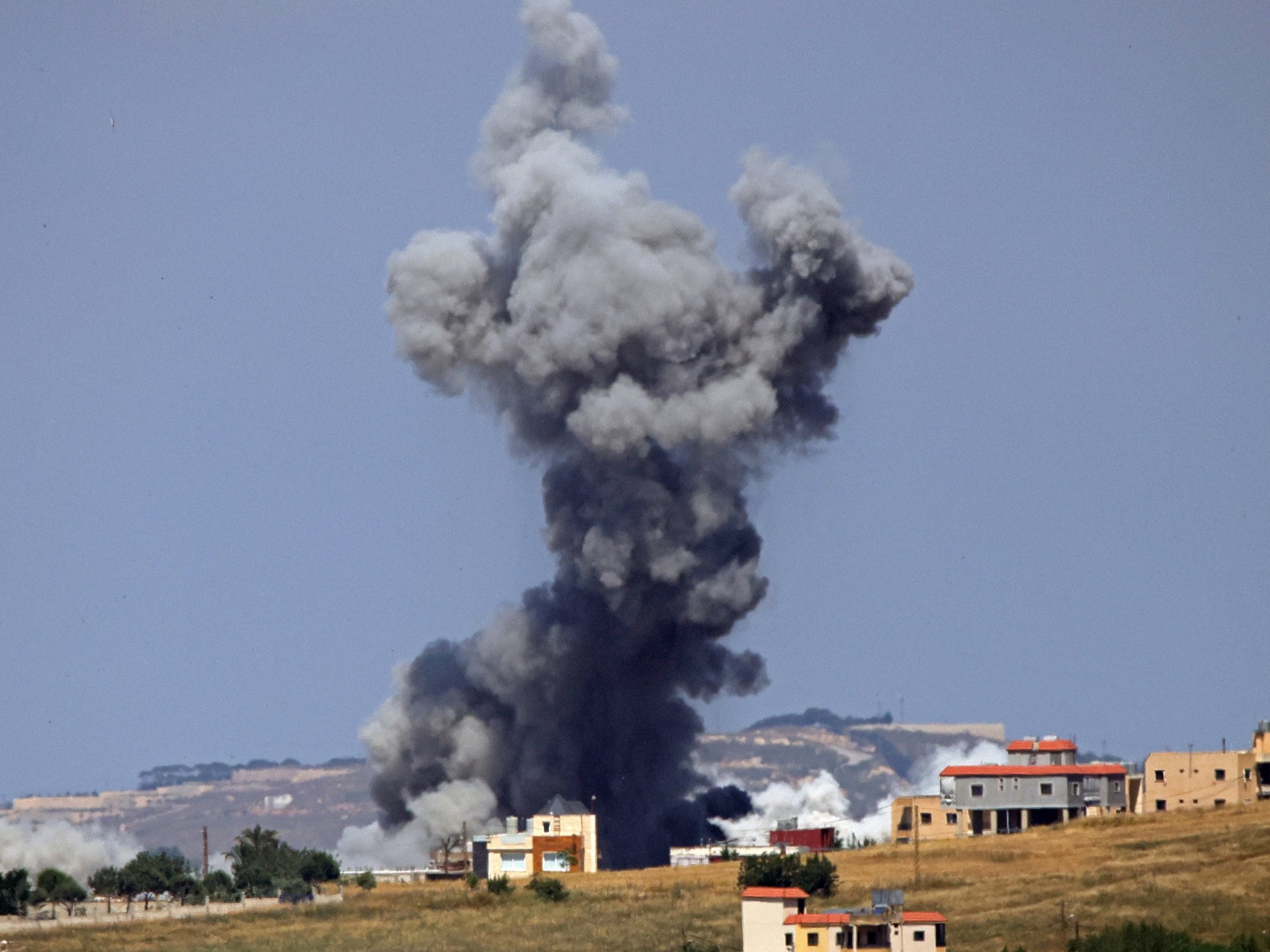
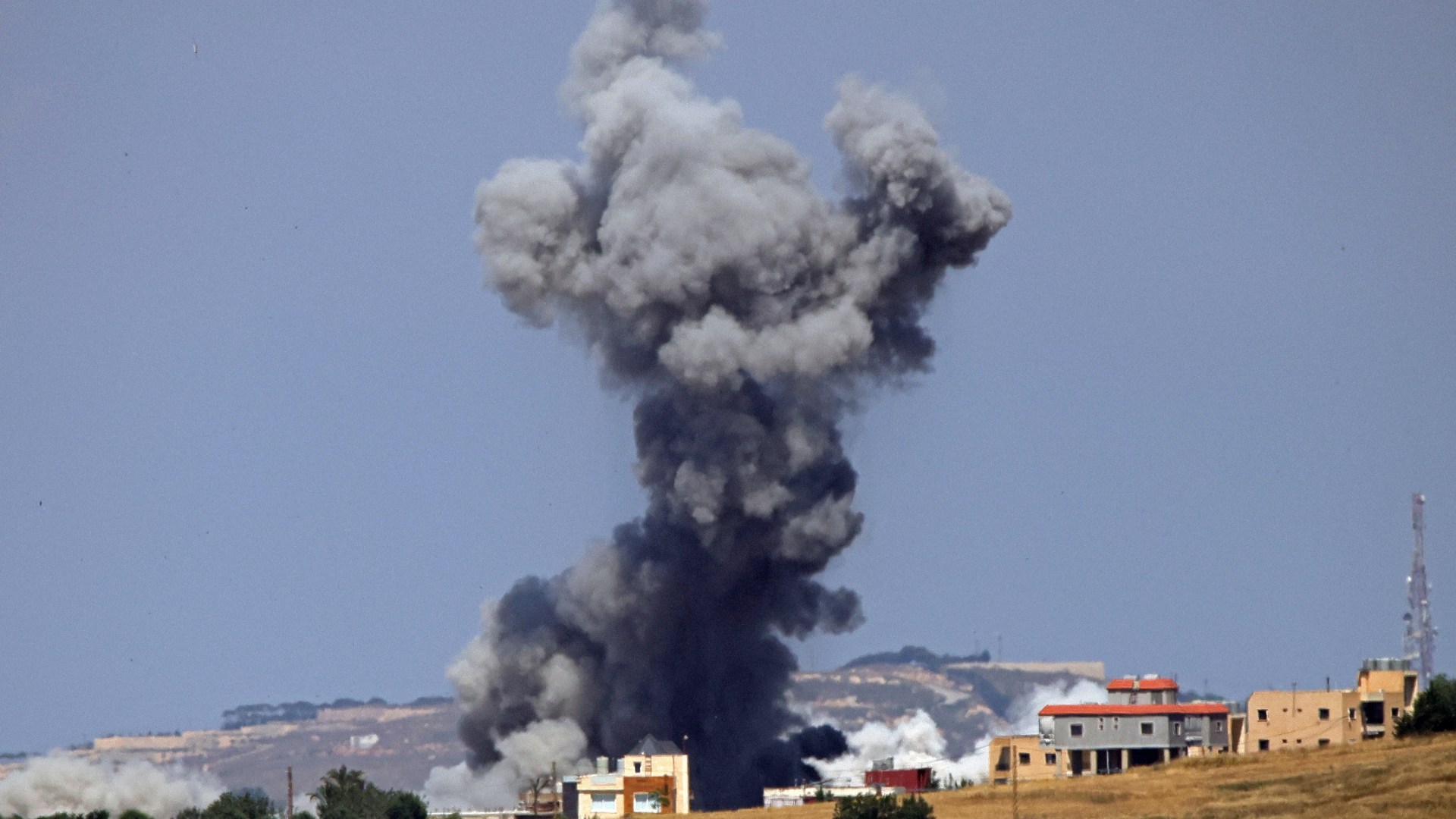
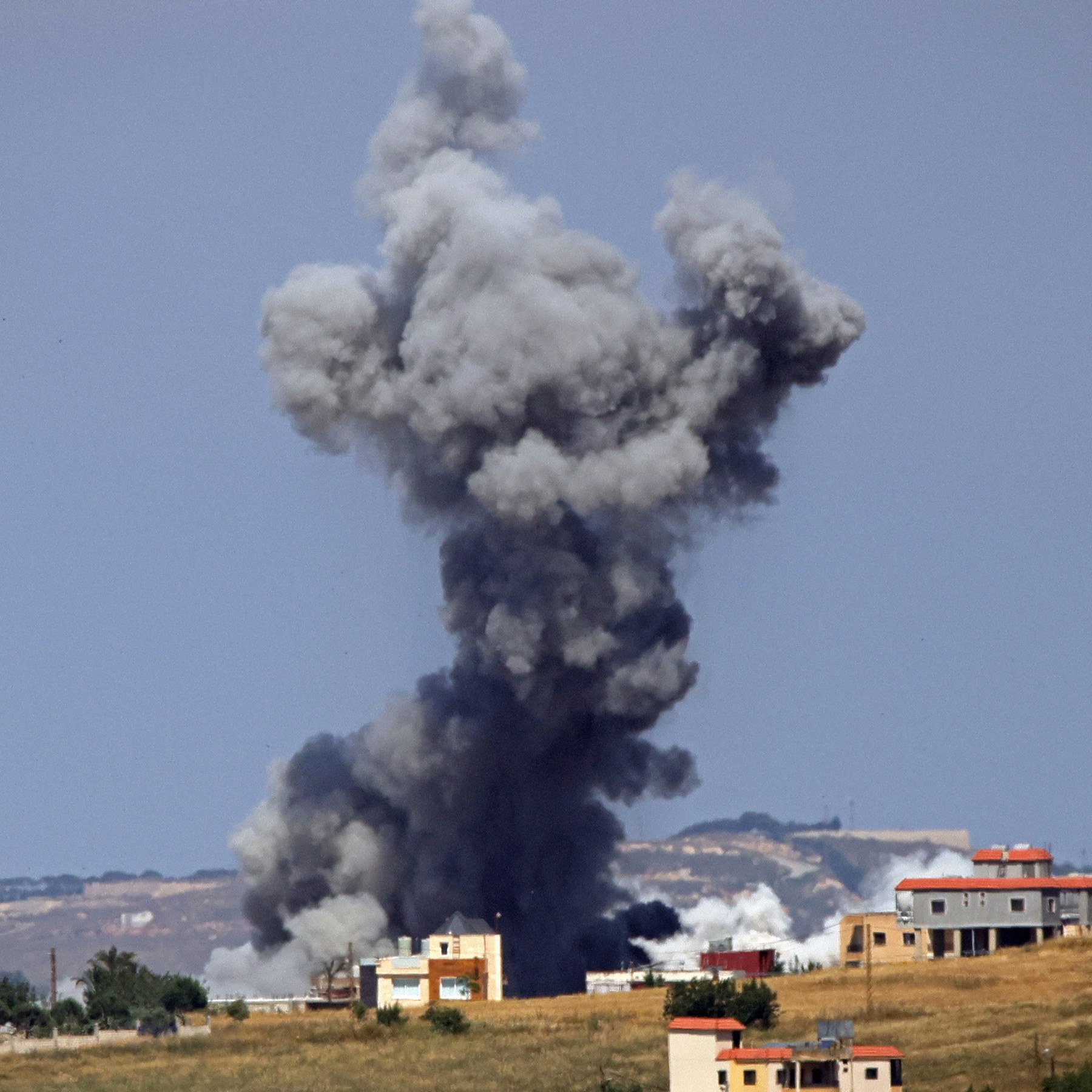
Israeli forces have reached the outskirts of the southern Lebanese city of Nabatieh and captured the strategic Beaufort Castle despite a ceasefire agreement in place since April, as analysts warn Israel is laying the groundwork for long-term control of territory inside Lebanon.

The advance marks Israel’s deepest incursion into Lebanon in more than a quarter of a century. Israeli forces now occupy about 2,000 square kilometres (770 square miles) of Lebanese territory – nearly one-fifth of the country.

Israel initially said its objective was to remove Hezbollah fighters from areas south of the Litani River closer to its border. But its forces are now operating well beyond that line, with the Israeli military issuing evacuation orders extending as far north as the Zahrani River (around 10km or 6 miles north of the Litani River), further expanding its military control.

Israeli troops have reached the towns of Zawtar al-Sharqiyah and Choukine on the outskirts of Nabatieh – a Hezbollah stronghold – while Lebanon’s National News Agency reported that Israeli strikes on Deir ez-Zahrani at dawn on Sunday killed several people.

The advance towards the north comes as Israeli and Lebanese officials continue US-mediated talks aimed at reaching a permanent end to the conflict, while outlining plans to disarm Hezbollah, which has slammed the negotiations amid Israeli attacks.

Meanwhile, a parallel tenuous ceasefire between Washington and Tehran has become increasingly tied to developments on the Lebanese front, with Iranian officials warning that an Israeli withdrawal from southern Lebanon is a prerequisite for any meaningful progress in negotiations between the two countries to end the US-Israel war on Iran.

The continued advance into southern Lebanon follows blanket evacuation orders issued for Nabatieh earlier this week, as well as similar orders covering the coastal city of Tyre.

“The [Israeli army] is operating near Nabatieh, which constitutes a significant Hezbollah power centre in southern Lebanon, and is prepared and ready to expand the offensive as required,” the Israeli military said in a post on X.

Imad Salamey, an international relations professor at the Lebanese American University, told Al Jazeera that the city’s significance extends far beyond military considerations.

“Nabatieh is strategically important because it represents far more than a military hub; it is one of the principal political, economic, and social centres of Lebanon’s Shia community and a key connective node between southern Lebanon, the Bekaa Valley, and Beirut,” he told Al Jazeera.

“Militarily, control of Nabatieh would provide Israel with greater operational depth beyond the Litani River, facilitating pressure on Hezbollah’s command, logistics, and support networks throughout southern Lebanon.

“Politically, however, the significance is even greater. A move towards Nabatieh would suggest that Israeli objectives have evolved from the original goal of pushing Hezbollah north of the Litani into a broader campaign aimed at dismantling [Hezbollah’s] entire territorial and communal infrastructure.”

Salamey said the displacement of residents from Nabatieh and Tyre could weaken Hezbollah’s social base while reshaping the demographic and political landscape of southern Lebanon.

Souhayb Jawhar, a Lebanese journalist and analyst, told Al Jazeera that Israeli forces reaching Nabatieh would mark a major shift in the conflict.

“Israeli control over it, or even encircling it, would represent a serious transformation because it would shift the war from a border zone into the political and social heart of southern Lebanon,” he said.

“This would mean expanding displacement, weakening state institutions in the south, undermining Hezbollah’s image as a force capable of protecting its constituency, and opening the door to a new security reality that may go beyond the objective of pushing Hezbollah away towards redrawing the balance of control within the south.”

Further east, Israeli forces have pushed north along the ridgeline overlooking the Litani River valley and captured Beaufort Castle, a Crusader-era fortress perched on a strategic hilltop.

Israeli Defence Minister Israel Katz said forces from the Golani Brigade had crossed the Litani River and seized the site.

The fortress lies about 15km (9 miles) from the Israeli border and overlooks large areas of southern Lebanon. Israeli forces previously occupied the site for nearly two decades before withdrawing from Lebanon in 2000.

Salamey said the seizure of the fortress offers Israel both military and symbolic advantages. “The capture of the Beaufort Castle high ground is significant because it overlooks extensive areas of southern Lebanon and provides observation and fire-control advantages over surrounding terrain,” he said.

“Historically, the site has been associated with some of the most intense confrontations between Israel and Palestinian and later Hezbollah forces, making it both militarily useful and symbolically powerful.”

The position overlooks routes linking southern Lebanon with the western Bekaa Valley and provides commanding views over areas surrounding Nabatieh, giving Israeli forces greater control over movement and supply lines in the region.

Over the weekend, the Israeli military warned residents living south of the Zahrani River to leave immediately. The order is significant because the Zahrani River lies considerably north of the Litani River, which Israel had previously presented as the effective limit of the zone it sought to clear of Hezbollah forces.

In a statement posted on X, Israeli military spokesperson Ella Waweya said the operation was aimed at “destroying terrorist infrastructure and eliminating saboteurs” while strengthening Israeli control in southern Lebanon.

The widening evacuation zone has raised questions about Israel’s long-term objectives.

“If the objective were solely to remove Hezbollah’s military presence from areas south of the Litani, operations would likely remain confined to that zone,” Salamey said.

“Expanding military activity and evacuation demands farther north may indicate an effort to establish a deeper security belt, create conditions for prolonged territorial control, or secure leverage for future political arrangements.”

Jawhar said the expanding evacuation orders also suggested Israel’s objectives had moved beyond the Litani River.

“This development reveals that Israel is not only seeking to push Hezbollah fighters and short-range missiles away from the border, but also to strike the party’s military, logistical and command infrastructure deeper inside southern Lebanon,” he said.

“In practical terms, this means that the concept of the ‘security belt’ may have expanded from the Litani line to something resembling a deeper buffer zone extending as far as the Zahrani, even if this has not been officially declared.”

Jawhar’s assessment comes as senior Israeli politicians increasingly speak in terms that suggest a more permanent military presence.

Finance Minister Bezalel Smotrich praised the capture of Beaufort Castle as a correction of what he described as past mistakes. He added that he would continue to push for “a permanent territorial conception and exceptional military aggressiveness”.

“For every explosive drone, 10 buildings must fall in Beirut. Israel must change the equation,” he said.

Analysts say the military escalation is also undermining efforts by the Lebanese government to strengthen state authority and negotiate a lasting settlement.

Jawhar said Israel’s actions suggested objectives that extended beyond its stated goal of removing Hezbollah from areas south of the Litani River. “If that were the only goal, there would be little need to advance beyond the Litani or issue evacuation orders reaching the Zahrani,” he said.

“What is taking place suggests that Israel seeks to dismantle Hezbollah’s military system, create a devastated or depopulated area that reduces the group’s ability to operate, and impose new facts on the ground before any political or security negotiations.”

He said Israel may not be seeking a permanent occupation similar to the one it maintained in southern Lebanon between 1982 and 2000, but instead a longer-term system of military control through buffer zones, surveillance and freedom of action inside Lebanese territory.

Filippo Dionigi, a professor of international relations at the University of Bristol, told Al Jazeera that the continued Israeli attacks risk weakening the Lebanese government – and may inadvertently strengthen Hezbollah’s influence.

“If Israel was abiding by the ceasefire entirely, then the Lebanese government could at least claim that its negotiations are bearing fruits that are beneficial to Lebanese interests. But this is not happening,” he said.

Instead, the continuing military campaign risks reinforcing Hezbollah’s claim that armed resistance remains necessary, he added.

“Israel attacks Lebanon, undermines the legitimacy of the government and the legitimacy of the talks between Lebanon and Israel,” Dionigi said.

“At the same time, it actually reinforces the sense of legitimacy for Hezbollah’s military action against Israel.”