Press
Blast kills dozens in village in rebel-held region of Myanmar
Images
1 / 8

2 / 8
3 / 8

4 / 8

5 / 8

6 / 8
7 / 8
8 / 8
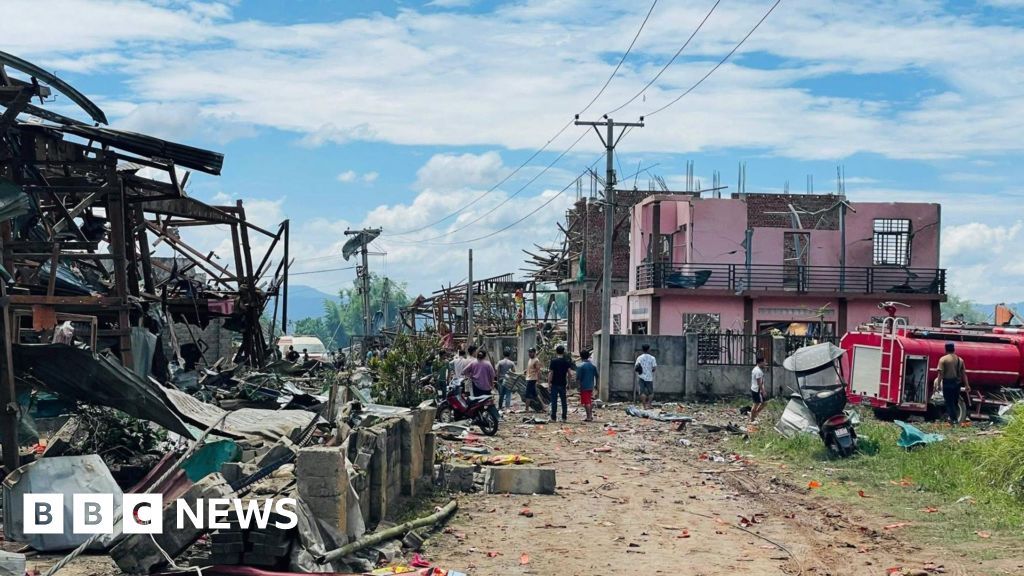
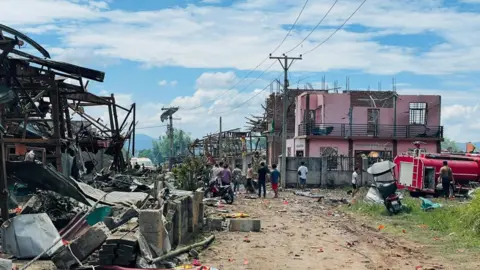
An explosion has killed at least 55 people and wounded dozens more in a village in a region of Myanmar, formerly known as Burma, under insurgent control, the BBC has been told.

A source familiar with the situation on the ground in Kaung Tat, a village in Namkham Township in Shan State, near the Chinese border, said 25 women and 30 men had died. Other reports gave slightly different casualty figures.

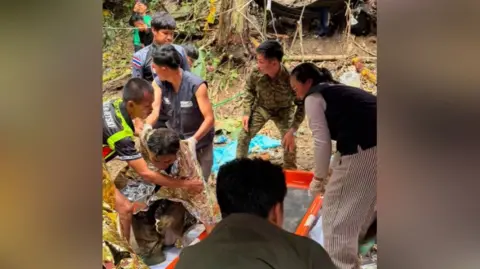
Rescue teams were searching for and extracting people trapped beneath rubble, the source added.

The Ta'ang National Liberation Army (TNLA), which controls the area and which has been engaged in bitter fighting with Myanmar's military junta, said explosives used in mining and quarrying had exploded.

Residents described scenes of devastation and confusion following the explosion.

One wrote on social media that many people had initially believed the blast was caused by an air strike.

Children were among the dead and hundreds of homes had been damaged, affecting almost an entire neighborhood, according to the post.

"By sheer luck, my phone saved my life," the resident wrote.

"I was sitting in my bedroom eating noodles and looking at my phone. If I had been eating in the kitchen, I probably would not be alive today."

The resident, who said she had suffered a minor leg injury and her own home had been destroyed, described scenes of panic and grief in the aftermath of the blast.

"People were crying, calling out for their parents," she wrote. "It felt as if the world had come to an end."

She questioned why a facility containing explosives had been allowed to operate close to residential areas, saying families of those killed would not be satisfied unless the authorities provided a full explanation.

India's post office turned stamps, postcards and letters into tools for counting a nation after independence in 1947.

The US defense secretary is questioned about US commitment, including further arms deals, at an Asian security summit in Singapore.

The BBC is in Seoul, where tattooist from all over the country have gathered to celebrate their art, following decades of underground work.

Two of the seven villagers who entered the narrow tunnels in search for gold on 20 May are still missing.

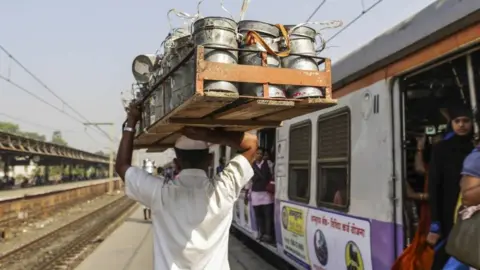
Dabbawalas, who deliver home-cooked meals, are leaving the trade as remote work and rising costs threaten their future.