yahoo Press
In deep blue California, Dems find a villain toxic enough to rival Trump: The power company
Images
1 / 7
2 / 7

3 / 7

4 / 7
5 / 7

6 / 7

7 / 7
SAN FRANCISCO — In the race for California governor, leading Democrats have found a new villain almost as unpopular as Donald Trump: the power company.

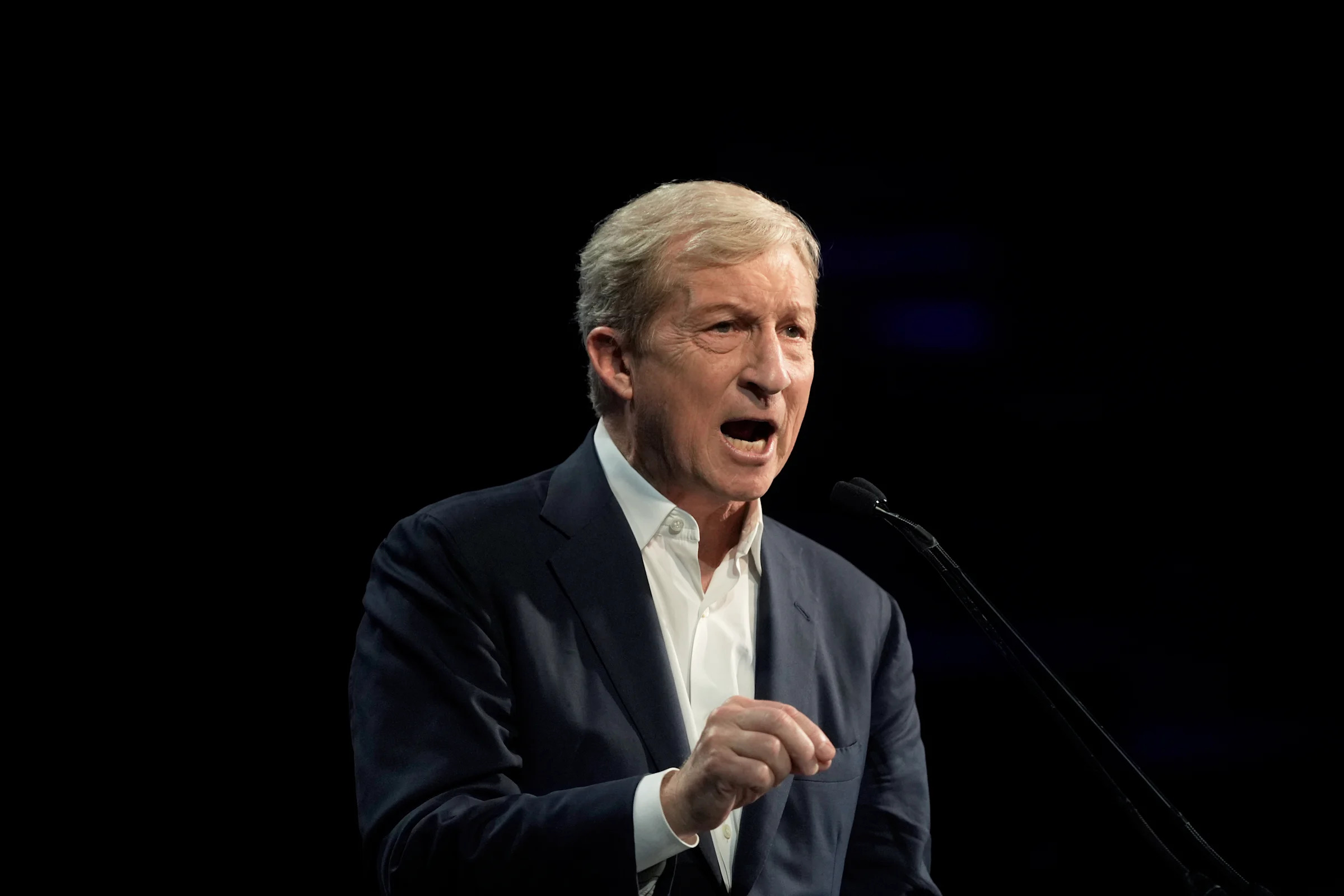
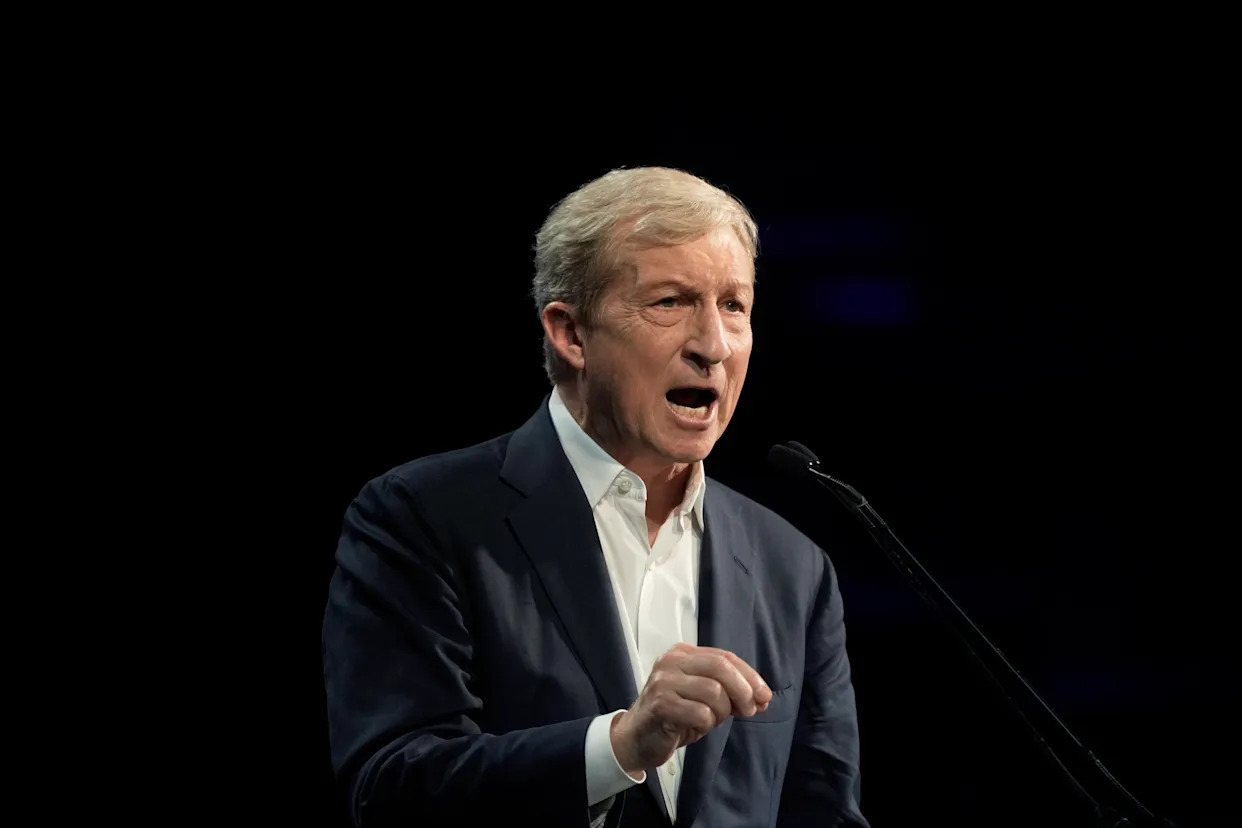
First came Tom Steyer, trashing “the monopolistic power of utilities” and repeatedly calling out energy companies by name for what he says are their exorbitant rates and poor service.

Then it was Xavier Becerra, the Democratic frontrunner, taking shots at the energy industry in a debate.

“I will freeze utility rates,” the former Health secretary said, adding that “it is time that Californians had an understanding of why so many of them are paying so much for … those charges.”

Lower polling candidates have piled on too.

San Jose mayor Matt Mahan bragged during a debate that while other candidates talk about holding the utilities accountable, “In San Jose, we’re actually doing it.” And former state controller Betty Yee, before dropping out of the race, said that the state’s utilities “need to be audited” and probably owe residents “a refund.”

The sharp criticisms coming from both Steyer, a progressive billionaire financier-turned-climate-champion, and the more moderate Becerra, reflect the emergence of a new foil in partisan politics in the nation’s most populous state.

Even as many voters here despise President Donald Trump, making him a reliable campaign punching bag, Democrats are calculating that public frustration with the power companies may run just as hot.

“It was a no brainer issue to address,” Steyer campaign spokesperson Kevin Liao told POLITICO. “Especially when Californians who live in the service areas of [Pacific Gas & Electric], SoCal Edison, and San Diego Gas & Electric have all had significant rate increases in the last few years, they are feeling that crunch.”

While 70 percent of likely California voters disapprove of Trump’s performance, according to a February survey by the Public Policy Institute of California, nearly 80 percent of California voters say that the government should do more to limit price increases by for-profit utility companies, according to a March survey by David Binder Research.

And an even higher proportion — 83 percent — of voters say that utility profits are too high given the service the companies provide, according to a poll commissioned by Deploy Action Labs, a clean energy nonprofit, conducted by Embold Research.

That voter frustration is clearly not lost on Gov. Gavin Newsom, who said during his January State of the State address that “the new cost of eggs is now your energy bill.”

The situation isn’t limited to California.

Malaise about utility bills, and the companies sending them out, has spread across the nation. Half of Americans find their utilities difficult to afford, The POLITICO Poll found this month. And 40 percent of those struggling to pay their utility bills say the companies are most responsible for their unaffordability.

Democrats were able to make hay out of electricity prices in November’s Virginia and New Jersey gubernatorial races, and the issue is continuing to pop up in elections across the country, from Michigan to New York to D.C.

But there is a risk to candidates who repeatedly hammer multi-billion dollar companies: corporations hit back.

PG&E, which serves Steyer’s adopted hometown of San Francisco and is a frequent target of his, has poured more than  $12 million into a campaign committee it sponsors to oppose Steyer since April.

“Tom Steyer is trying to drive a stake in the heart of their business,” said Steve Maviglio, a Democratic strategist. “Political observers like me see [the political spending] as a natural response when somebody’s literally spending [over $100 million] to destroy your company.”

Traditionally, the publicly-traded companies have been gun-shy about spending big directly to support or defeat high-profile candidates. Instead, the utilities have contributed to political groups run by larger business coalitions, which allow them to be politically active without drawing heat, according to Maviglio.

But Steyer is no run-of-the-mill utility basher.

While other Democratic front runners have made more general promises to address electricity rates and hold the industry accountable, Steyer has gotten specific. He’s repeatedly skewered companies by name, said he wants to “break up” their monopolistic power and promised to slash their profit rates.

His positions have raised red flags for players in state politics, according to Amelia Matier, spokesperson for the California is Not for Sale committee opposing Steyer.

“He doesn’t know what he’s doing, he doesn’t understand how things work, and they’re worried about having … a guy who comes in and breaks things up, thinking he can make things simpler and easier, and ends up blowing a hole in the budget,” said Matier.

In April, Sempra Energy, parent company of SoCalGas and SDG&E, Edison International, parent company of SCE, and PG&E each contributed about $2 million to a business coalition that has given $7.8 million to an anti-Steyer group in the past month.

PG&E declined to comment on its spending in the race, and Sempra did not directly answer questions about which candidates it supports or opposes. SCE spokesperson Diane Castro said in a statement that the utility was neither endorsing nor opposing any candidate.

However, it’s clear that Steyer has attracted the personal attention of Edison International CEO Pedro Pizarro. The executive called out Steyer by name during an earnings call last month, saying that “I do not see any fact basis” in the candidate’s claim that breaking up monopoly utilities could lead to a 25 percent rate reduction and noting that he’s been “very pointed about taking on things that are not connected to fact, like those.”

Rather than dial back his rhetoric, Steyer has embraced the opposition as a badge of honor.

“I'm going after electric costs that are driven by the electric monopolies, I'm going after gas costs that are driven by the oil companies,” Steyer said during a debate hosted this month by NBC4 in Los Angeles. “Special interests are spending tens of millions of dollars to stop me, but I'm the person on this stage who's willing to change California.”

The hesitance from utilities to take a clear position on Steyer, even as he calls for breaking up their companies, underlines that the companies face their own risk should they ramp up their spending to the type of $100 million campaigns that California interest groups have launched in the past. (Exhibit A: PG&E itself dropped $46 million on a failed ballot measure campaign in 2010.)

“They’re trying to, as best as they can, dilute the political impact of their spend,” Democratic strategist Matt Rodriguez said. “They're incredibly unpopular, so they've always got to be careful about how they engage, because just them engaging makes them a target.”