yahoo Press
Retiring head of FINRA foundation: FOMO is investors' biggest mistake
Images
1 / 6

2 / 6

3 / 6

4 / 6

5 / 6

6 / 6
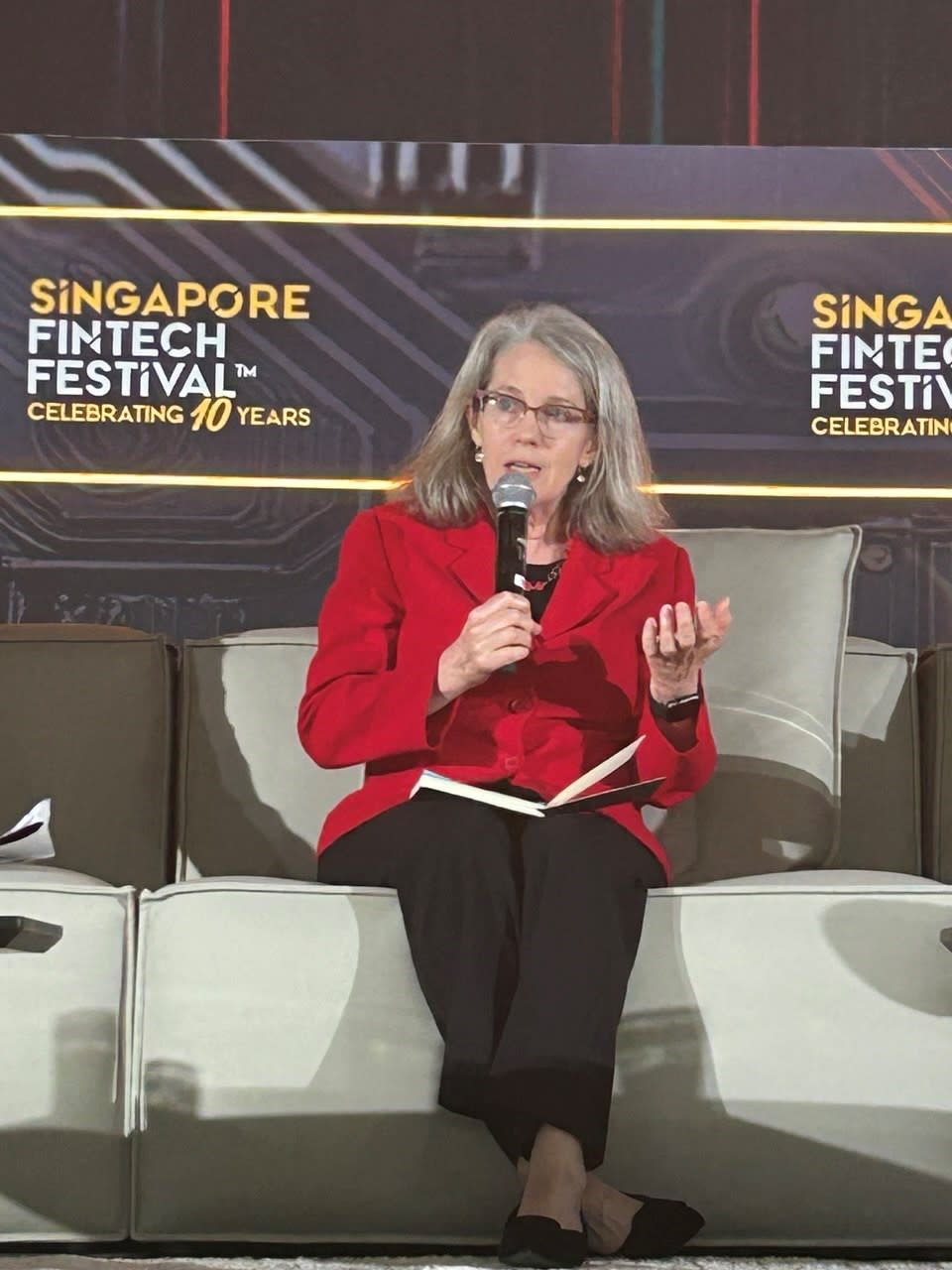
When Gerri Walsh, president of the Financial Industry Regulatory Authority (FINRA) Investor Education Foundation, graduated from the New York University School of Law, she was swamped with student debt that far surpassed what she had ever imagined.

“In one year of law school, I had more than doubled all of my undergraduate debt,” Walsh told Yahoo Finance. “I thought that I would then graduate from law school with times four my undergrad debt. I figured I needed to become a lawyer in order to pay off that debt. But I graduated with times seven.”

That was her first financial mistake. “Then I cashed out my 401(k) after only a couple of years to buy a house. I could have borrowed from my 401(k) to put that down payment together, but I didn't understand how they worked.”

Those financial missteps propelled Walsh, who is retiring this month, to dedicate her career to helping people make smart money decisions throughout their lives.

For many people, a financial life path starts with enrolling in their employer’s 401(k) plan and understanding that they are now an investor, she said.

“You need to think about your choices and to adjust those choices over time, whether it's what you're invested in, how much you're investing, how much you grow those assets by increasing your contributions until you're contributing to the maximum,” Walsh said. “And also understanding how the power of compound interest can work in your favor.”

Read more: How much do you really need to save for retirement?

Higher levels of financial knowledge are correlated with “more positive downstream financial behaviors and outcomes,” she added.

She should know.

Walsh was deputy director of the Securities and Exchange Commission’s Office of Investor Education and Assistance and served as a senior attorney in the SEC’s Division of Enforcement, investigating and prosecuting violators of the federal securities laws.

Walsh’s passion for education has been the spine of it all.

Financial literacy is still lagging in the US. A recent FINRA study found that fewer than 3 in 10 Americans correctly answered at least five of seven basic financial knowledge questions. On average, respondents answered slightly less than half of the investing quiz questions correctly.

I reached out to Walsh for one last interview before she steps down. Here are edited excerpts of our recent conversation:

Kerry Hannon: What are some of the biggest mistakes investors are making today?

Gerri Walsh: FOMO is the biggest mistake — the fear of missing out on a new product, a new strategy, or on market movements. Taking that short-term view is something that too many investors tend to do, and it can cause substantial losses.

The channels for information have expanded vastly in the last 10 years, let alone the last 30 years since I started working in this field. On the one hand, most investors do turn to multiple information sources, which is great, but there are some information sources that are less reliable than others, including social media.

There's such an inundation of information and such a pressure to act quickly. It's easy to act quickly because investing really has democratized over the past 10 years. It's very simple to make an investing decision that you might regret if you don't build in a speed hump for yourself.

Read more: Is 'financial FOMO' sabotaging your savings?

How can an investor take the emotion out?

The key is to encourage people to know themselves as an investor, to think about diversification, to slow down, to ask the question: what could go wrong?

Be your own devil's advocate. It's one of the best ways to slow down that decision making and maybe move your brain out of the irrational side to the rational side, so that you're making a more measured decision. Slowing down the decision making is hard when all the information that you receive and your ability to act on that information is seamless and frictionless.

What are some concerns that you have for those nearing retirement?

Half of people haven't even thought about what it's going to take for them to retire.

If you fall into that bucket, take that step. FINRA has tools on its website, but there are unbiased tools out there that you can use to think about how much you need to save in order to fund a lifestyle in retirement when you stop working.

Maxing out your 401(k) and your IRA contributions is one step because there are opportunities for tax-advantage savings. Take stock of your spending and be honest with yourself about what your expenses are now and what they're likely to be when you're in retirement.

What are some of the other factors people neglect to consider when eyeing retirement?

The longevity question is a big one. It fundamentally requires us to think about when we're going to die, and how long our money is going to need to last. That's extraordinarily difficult.

I look at my own parents. They died at 70 and 73, respectively, so they were quite young. I have every reason to believe that I will have more longevity than they did, but I don't know that. Thinking about those issues can be depressing, but it can also be liberating. It can be empowering to think about what [will] a 100-year lifespan look like for me?

What is your take on finfluencers?

These platforms are drawing in investors who might otherwise remain on the sidelines, providing educational content and fostering community. These investors may also face elevated fraud risk due to knowledge gaps.

You need to think about your personal circumstances and whether that advice is right for you. It's often a more complex question than a 15-second video or a one-minute blog post could possibly cover.

What do you wish every American understood about investing?

I really would love it if more of us had a better grip on risk. One of the financial knowledge questions that we ask is whether people understand the relative risk of owning a single stock versus owning a pooled investment vehicle like a mutual fund.

Very few Americans get that question right. And the percentage of Americans who have been getting that question correct has been going down since 2009, which is an indicator that Americans don't really understand risk.

Have a question about retirement? Personal finances? Anything career-related? Click here to drop Kerry Hannon a note.

How does financial literacy impact our retirement?

When we correlate higher levels of financial literacy with some of the indicators of financial capability like planning ahead, planning for retirement, we do see that when people have higher levels of financial knowledge, they are more likely to have planned for retirement.

They are less likely to engage in costly credit card behavior or other debt-inducing behavior.

Kerry Hannon is a Senior Columnist at Yahoo Finance. She is a career and retirement strategist and the author of 14 books, including "Retirement Bites: A Gen X Guide to Securing Your Financial Future," "In Control at 50+: How to Succeed in the New World of Work," and "Never Too Old to Get Rich." Follow her on Bluesky and X.

Sign up for the Mind Your Money newsletter

Click here for the latest personal finance news to help you with investing, paying off debt, buying a home, retirement, and more

Read the latest financial and business news from Yahoo Finance