yahoo Press
Caught short in space: Astronauts face toilet trouble on Moon mission
Images
1 / 12
2 / 12

3 / 12

4 / 12

5 / 12

6 / 12
7 / 12
8 / 12
9 / 12

10 / 12

11 / 12

12 / 12
When launching a rocket into space, astronauts must prepare for any number of unforeseen problems, from fuel leaks to faulty sensors.

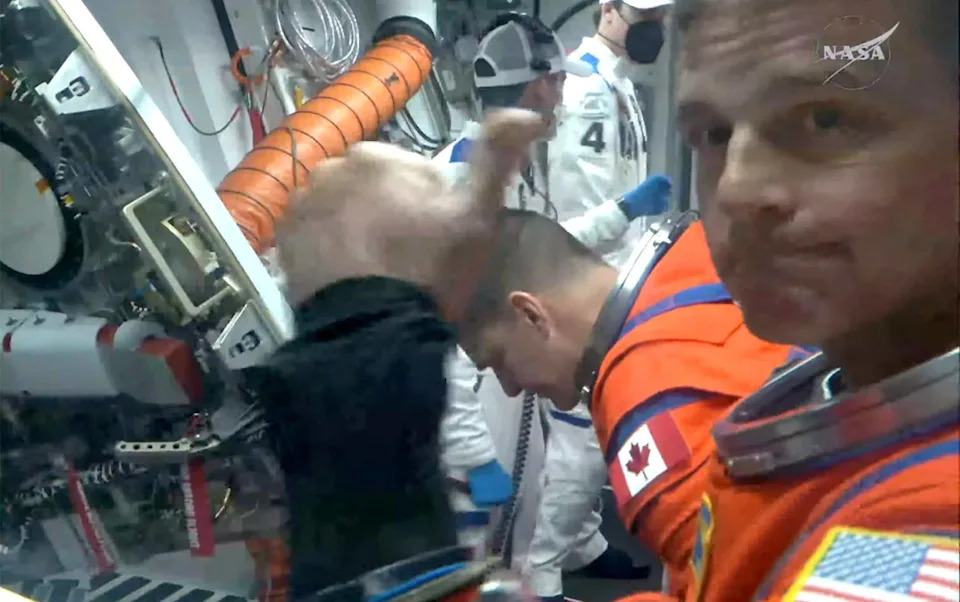
The last issue they might expect at the critical moment is a toilet malfunction – but Nasa astronauts were forced to hold their bladders for the first six hours on board the Orion spacecraft.

At least one of the four astronauts on the Artemis II mission to the Moon had to relieve themselves in a Nasa-approved bag after a fan in the toilet’s control system malfunctioned shortly after take-off, a Nasa administrator said.

The 10-day mission, launched on Wednesday, is set to take astronauts to the far side of the Moon – and, potentially, further than humans have ever gone into space before.

Although they are not landing, the test flight will evaluate life-support equipment and pave the way for a lunar touchdown in 2028, followed by the US establishing a base on the Moon’s surface.

Late on Wednesday evening, mission specialist Christina Koch took on the role of space plumber, removing parts from the toilet and executing a series of steps radioed from Nasa’s Houston space centre, including turning it off and on again.

After several hours of tinkering, the astronauts were advised to let the system warm up to operating speed “before donating fluid”. They received the good news that they could use the toilet just before going to sleep for four hours.

“You are good to use the toilet all night,” mission control said, to the relief of all those on board.

To address the issue of going to the toilet in zero gravity, Nasa has spent more than £17.4m on a “universal waste management system”.

While this system faced problems, a specialised seat to which the astronauts strap themselves, which sucks stools away into a sealed container, remained intact.

Disposing of waste posed a problem on previous Apollo missions when spacecraft had no toilets, forcing astronauts to relieve themselves into adhesive-sealed plastic bags attached to their bodies.

On the 1969 Apollo 10 mission to the moon, Commander Thomas Stafford said: “Give me a napkin quick. There’s a turd floating through the air,” according to a transcript of flight logs.

Since their introduction onboard Nasa’s Skylab space station in 1973, space toilets have been fraught with difficulty.

Astronauts had to be trained on Earth beforehand, even using an underseat camera to perfect their aim into the toilet’s four-inch opening. Despite honing their expertise, astronaut Mike Massimino still compared the experience to “riding a chopper bike”.

“I think of Peter Fonda in Easy Rider,” he said of the primitive space toilet. “That’s the right position for me.”

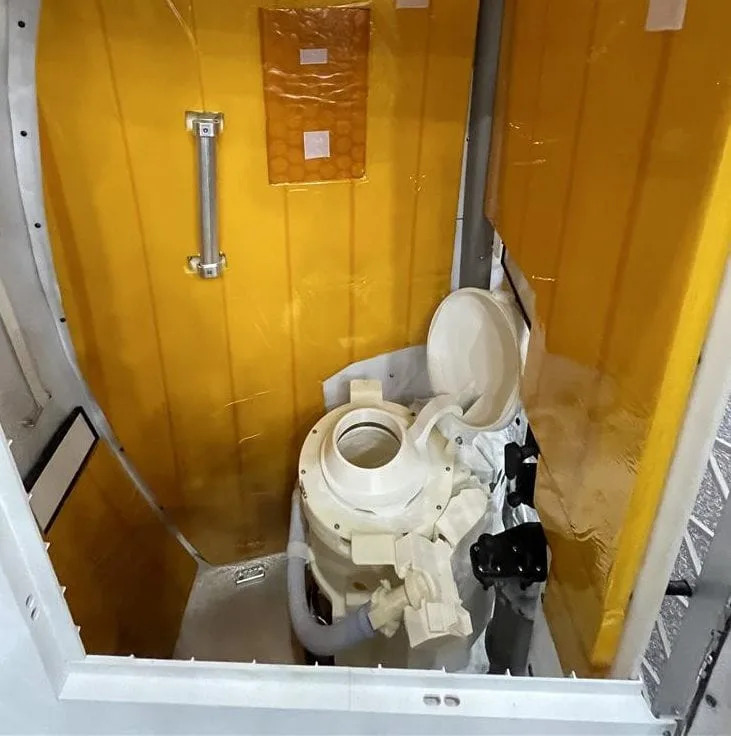
The toilet onboard Orion is technically known as the “hygiene bay” and is similar in size to the lavatories on a passenger jet.

To use it, astronauts use foot restraints to hold them in place, while airflow is used to whisk solid waste into a storage container.

For urine, each astronaut is equipped with their own personal funnel with a fan that draws the liquid into a tank.

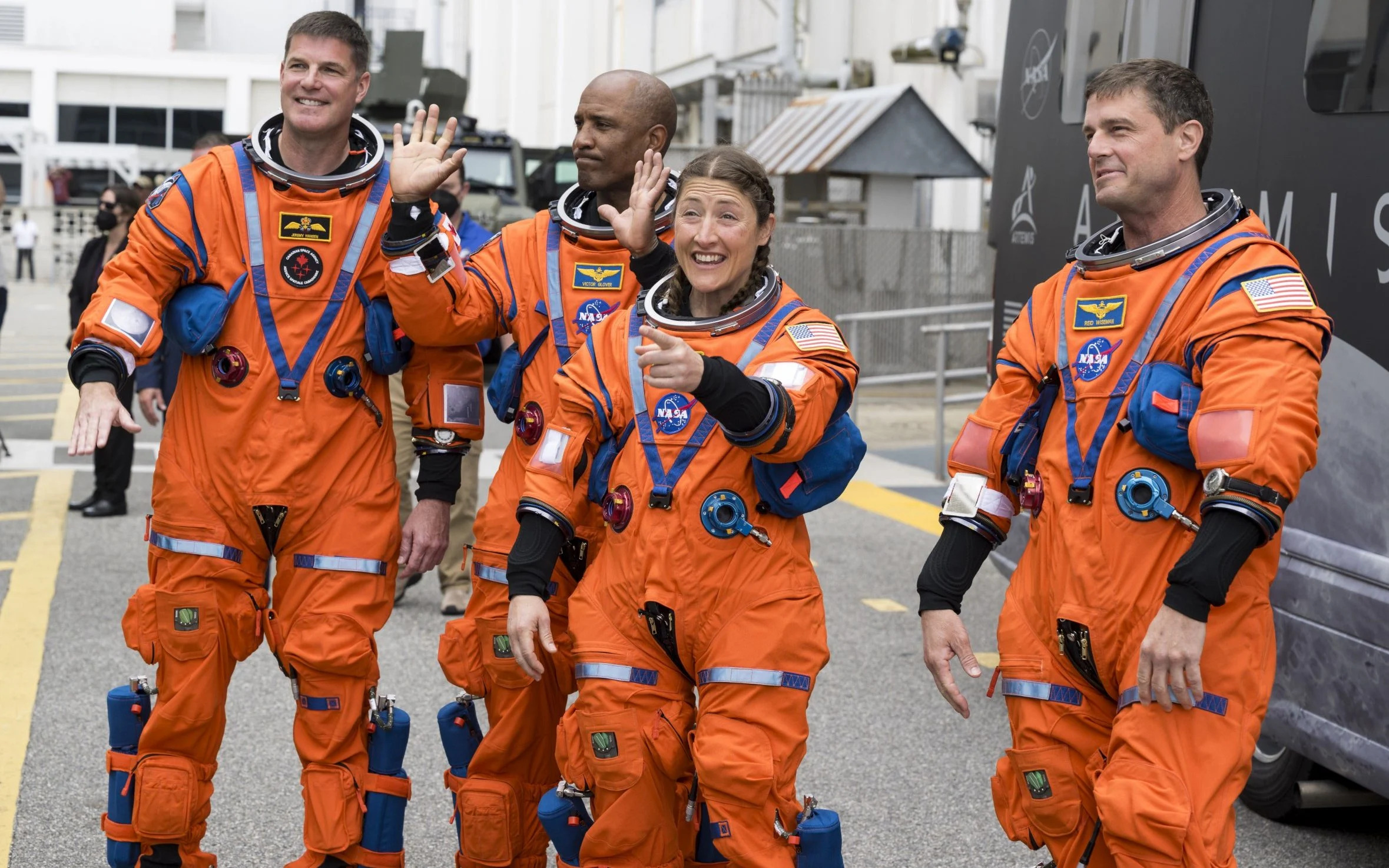
In the cramped conditions onboard the spacecraft – roughly equivalent to the size of two SUV cars – mission specialist Jeremy Hansen described the toilet as “the one place that we can go on our mission where we can feel like we’re alone for a moment”.

Toilet troubles were not the only problem the astronauts faced as they embarked on their 10-day mission to take humans back to the moon for the first time since 1972.

The crew appeared to have difficulty finding their pyjamas, with Commander Reid Wiseman asking about the location of “comfort garments” as they prepared for a nap.

Shortly beforehand, he also requested tech support for a non-working PCD (personal computing device), including issues with an Outlook email account.

Beside these minor hiccups, the mission was forced to contend with a number of technical problems as it launched into orbit at 17,000mph – 22 times the speed of sound.

A valve connecting two sets of water tanks had to be reset after it was found closed when it should have been open – likely to have been a consequence of the violence of the launch.

Engineers also contended with similar minor electronics issues experienced with the 2022 launch of Artemis I – where a component briefly tripped as a result of radiation – underscoring the challenges of human test flight.

In the hours before launch a series of technical hitches threatened to derail plans when issues were discovered with the flight termination system – which would destroy the rocket if it veered off course – and a battery for the launch abort system, which would pull the capsule away from danger if there was an issue.

Lift-off was delayed by just 10 minutes in the end, however, after the hiccups were resolved thanks to engineers being “quick on their feet”, an official later said.

The giant 322ft tall Space Launch System rocket took off at 11.35pm (6.35pm EDT) on Wednesday.

The spacecraft will stay close to Earth until Friday, with the astronauts checking over the capsule in orbit before firing the main engine to propel them to the Moon.

The capsule has travelled more than 40,000 miles away from Earth and still has around 220,000 miles to go to reach the moon.

Following the launch Jared Isaacman, the Nasa administrator, said the US’s “next leap” was under way and vowed that “America will never give up the Moon again”.

Donald Trump, the US president said the country was “winning, in space, on Earth, and everywhere in between – economically, militarily, and now, beyond the stars”.

Try full access to The Telegraph free today. Unlock their award-winning website and essential news app, plus useful tools and expert guides for your money, health and holidays.