huffpost Press
Trump Continues Threatening War Crimes If Iran Doesn’t Capitulate ‘Immediately’
Images
1 / 8

2 / 8
3 / 8
4 / 8
5 / 8

6 / 8
7 / 8

8 / 8
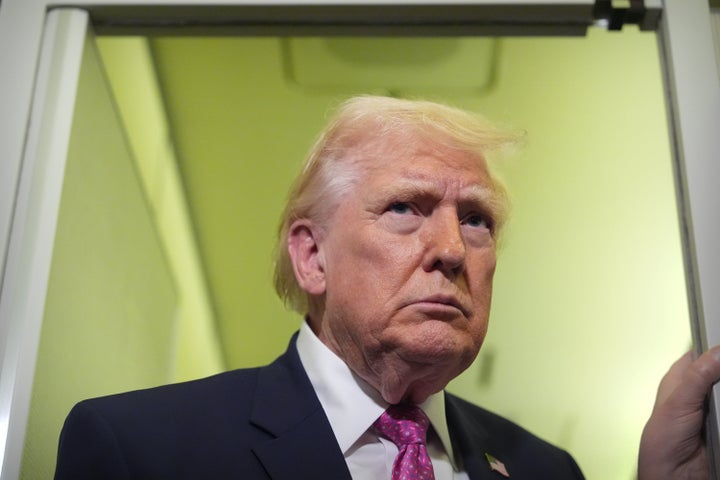
WASHINGTON — President Donald Trump on Monday continued to threaten Iran with war crimes if it does not comply with his demands, even as he also insisted a ceasefire deal with the country’s new, “more reasonable” rulers was soon at hand.

“If for any reason a deal is not shortly reached, which it probably will be, and if the Hormuz Strait is not immediately ‘Open for Business,’ we will conclude our lovely ‘stay’ in Iran by blowing up and completely obliterating all of their Electric Generating Plants, Oil Wells and Kharg Island (and possibly all desalinization plants!), which we have purposefully not yet ‘touched,’” Trump posted on social media. “This will be in retribution for our many soldiers, and others, that Iran has butchered and killed over the old Regime’s 47 year ‘Reign of Terror.’”

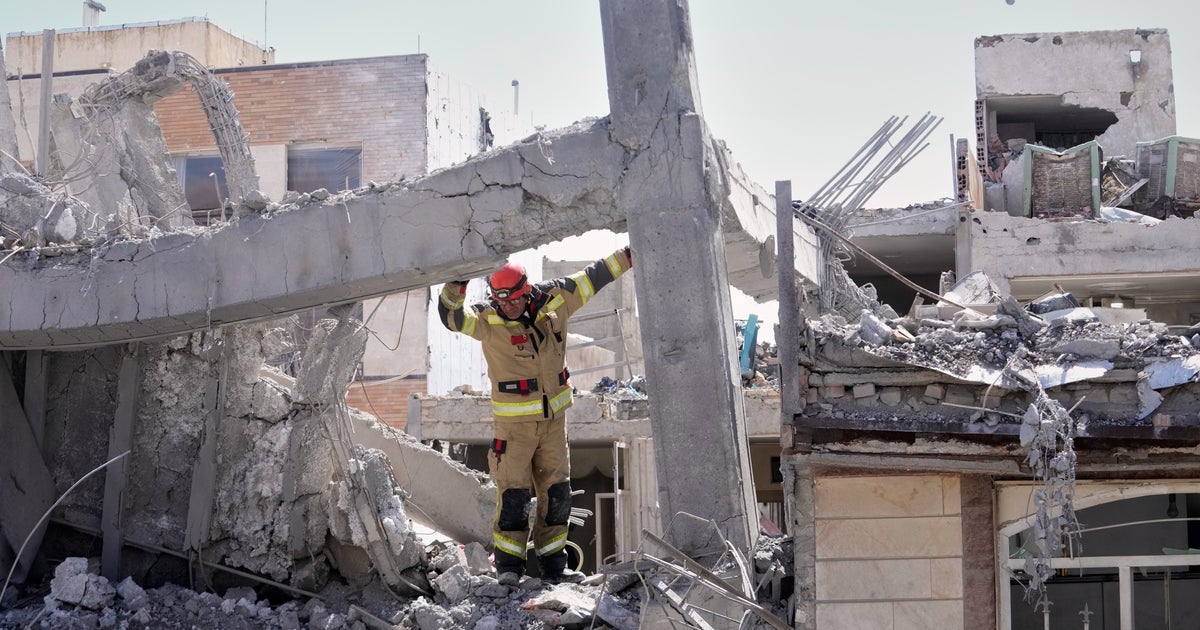
Destroying a country’s electrical and drinking water infrastructure, unless it is done for a specific military objective, violates international law governing armed conflicts, experts said, as does Trump’s additional threat to “take” Iran’s oil.

“Trump is in Putin territory,” said Fiona Hill, who served on the National Security Council in Trump’s first term, comparing Trump’s threat to Russian dictator Vladimir Putin’s repeated attacks on civilian infrastructure in Ukraine. “It’s a mafia boss play.”

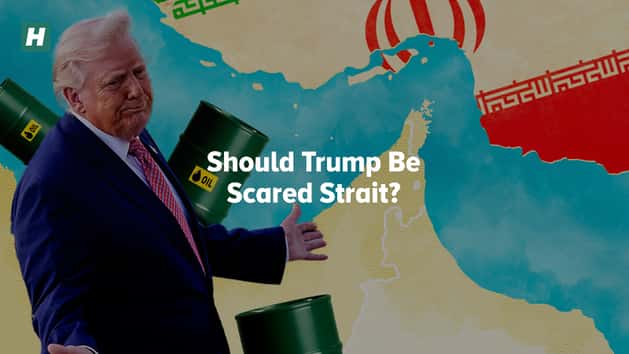
Trump originally threatened to attack Iran’s electrical generation system on March 21, giving Iran 48 hours to reopen the Strait of Hormuz to international shipping. Just before the stock markets were to open on the deadline day, Trump announced he was moving zero hour back five days because Iran was making good progress. He extended it another 10 days on Thursday. It is unclear how Monday morning’s “immediately” wording affects the 10-day time frame, which runs through April 6.

Oona Hathaway, an international law professor at Yale University, said while all of Trump’s threatened actions are war crimes, the most egregious is targeting Iran’s water supply. “In particular, the attack on the desalinization water systems would be the deprivation of objects indispensable to survival of the civilian population. Such objects are specially protected,” she said.

White House press secretary Karoline Leavitt did not respond to a HuffPost query about Trump’s threats. During a briefing Monday, she said, “Of course, this administration and the United States armed forces will always act within the confines of the law” — but then refused to take a follow-up question about Trump’s specific threat.

Brian Finucane, a lawyer who spent a decade at the State Department, said whether such an attack is illegal depends on the circumstances and whether it is being carried out for a specific military purpose. That Trump wrote in his post that it was being done as “retribution” clearly suggests, though, that the purpose is not military.

“The president of the United States should not be threatening war crimes,” he said, adding that in this case, the argument against hitting Iran in this manner goes beyond the moral one because Iran is likely to retaliate in like fashion against Gulf state allies of the United States.

“There is very much a tit-for-tat dynamic going on here,” he said. “Why should the United States care about that? Because it has global ramifications, including the U.S. economy.”

That Trump would openly threaten war crimes now comes after years of advocating a lawless use of the military. Two decades ago, Trump repeatedly argued that the United States should confiscate Iraq’s oil — “Take the oil!” — following then-President George W. Bush’s invasion of that country. Stealing a nation’s natural resources is considered “pillaging” and is specifically outlawed by the 1949 Geneva Conventions.

As he ran for president in 2016, Trump said he would target the families of terrorists for killing. When it was pointed out that doing so would constitute a war crime and that U.S. soldiers would refuse to carry out such an order, Trump insisted they would. “If I say do it, they’re going to do it. That’s what leadership is all about,” he said.

During his first term, Trump granted clemency to retired Navy SEAL Eddie Gallagher following his court-martial for posing with the body of an ISIS fighter who died in U.S. captivity. Trump was urged to do so by Pete Hegseth, who at the time was a Fox News personality and is now Trump’s defense secretary, against the counsel of his own military commanders.

And starting last summer, Trump began ordering the extrajudicial killing of suspected drug smugglers on open boats in the Caribbean and Eastern Pacific by the U.S. military, essentially executing them without even a formal accusation, let alone a trial.

Hill said the U.S. Navy’s sinking of an Iranian frigate after it left a cultural exchange in India, more than a thousand miles from the Persian Gulf, falls into the same category. “Is that not a war crime?” she wondered.

Trump, meanwhile, continues making contradictory claims about the state of things, possibly to calm the global oil market and the domestic stock market. His war, which he originally said would take no more than four or five weeks, is now into its fifth week — yet he continues to say it is well ahead of schedule.

He claims he doesn’t know who in Iran he should be negotiating with because he and Israeli Prime Minister Benjamin Netanyahu have killed so many of Iran’s leaders while simultaneously asserting that peace negotiations are proceeding well.

As he returned to Washington Sunday evening after another Florida golf weekend, Trump told reporters that he is actually killing those he is negotiating with. “We’re doing extremely well in that negotiation, but you never know with Iran because we negotiate with them and then we always have to blow them up,” he said.

On Monday, Secretary of State Marco Rubio laid out the objectives for the war: destroying Iran’s air force, navy, missile stockpile and the factories it could use to make more. Notably unmentioned was either its nuclear program or reopening the Strait of Hormuz to unfettered navigation.

That Trump’s own statements are often at odds with those from his top aides or even with self-evident reality is par for the course, said Hill. “He’s negotiating in real time, as he has always done,” she said, adding that his approach to Iran reminds her of the bullying way he has treated Ukraine. “He’s treating the Iranians like the Ukrainians. Unlike the Ukrainians, the Iranians have a hell of a chokehold on the rest of the world.”

By entering your email and clicking Sign Up, you're agreeing to let us send you customized marketing messages about us and our advertising partners. You are also agreeing to our Terms of Service and Privacy Policy.