yahoo Press
As Utah’s population nearly doubles, state makes long-term plan to keep waters stocked with fish
Images
1 / 9
2 / 9

3 / 9

4 / 9
5 / 9
6 / 9

7 / 9

8 / 9

9 / 9
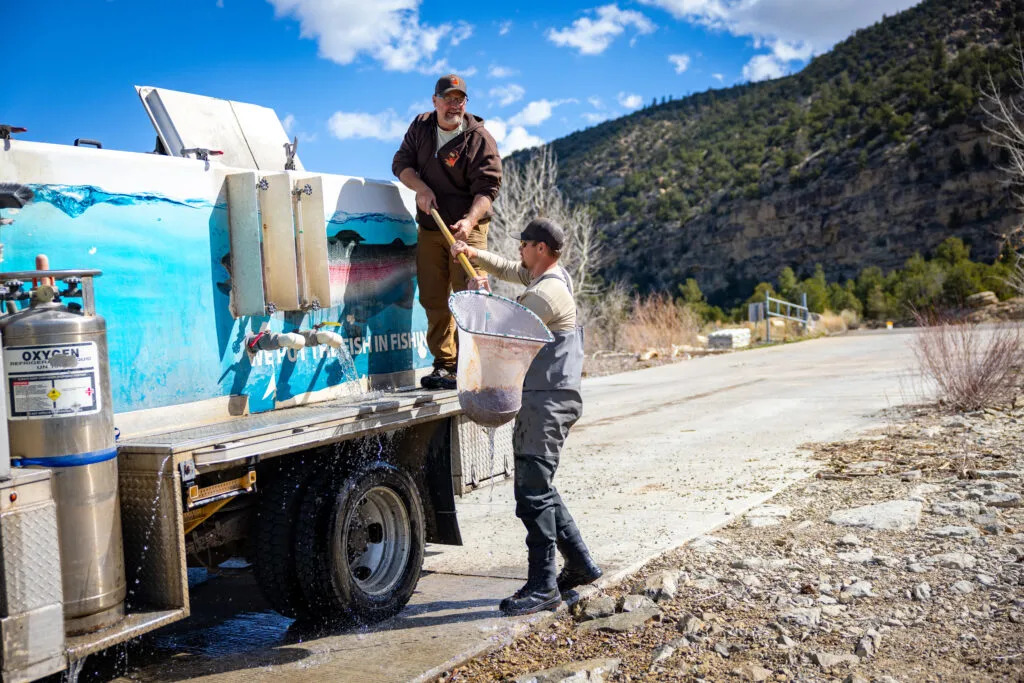
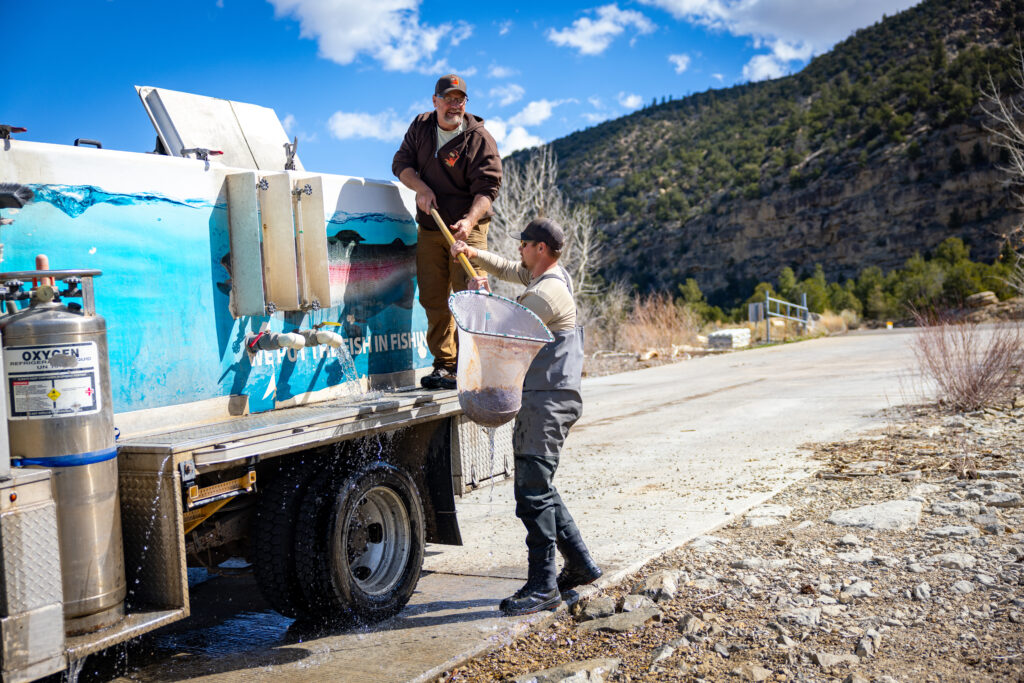
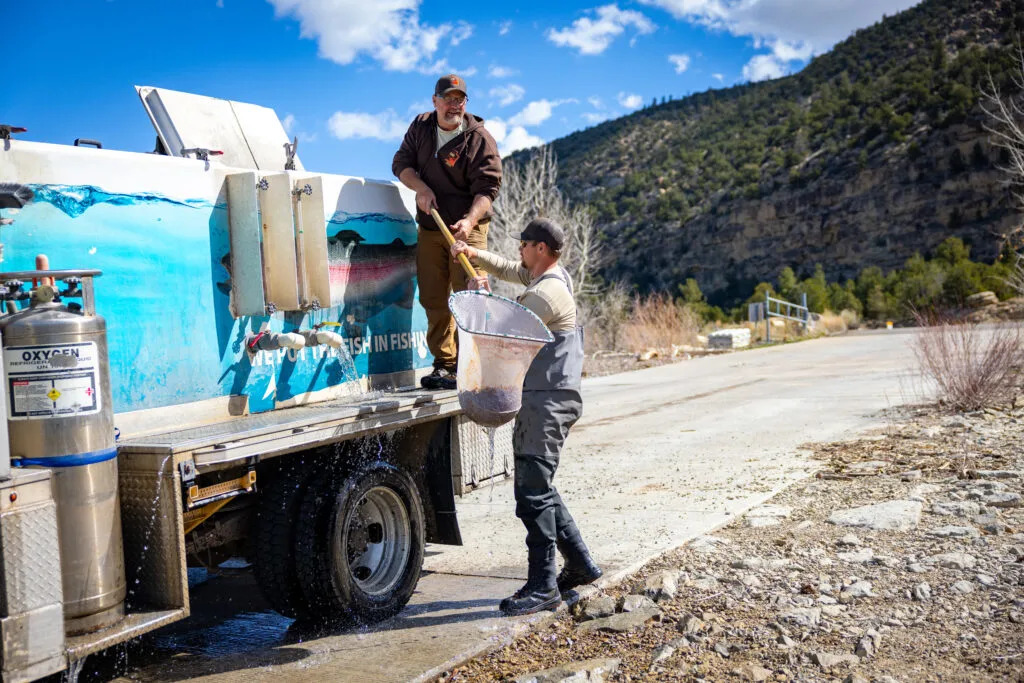
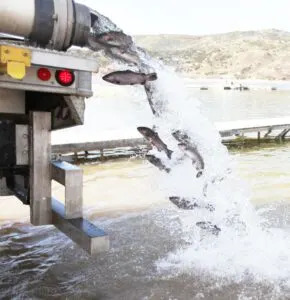
Utah Division of Wildlife Resources staff works on fish stocking. (Courtesy of Utah Division of Wildlife Resources)

Demographers estimate that Utah’s population will nearly double between 2020 and 2050, a calculation that, among other concerns, has made the state wonder — how will an expanding population impact fish production?

The Utah Division of Wildlife Resources has developed a 30-year plan for fish production and stocking in state waterbodies amid substantial growth, increasing water demands and ongoing drought conditions, the agency said in a news release.

“This new plan is helping us proactively look ahead at the future of fish production in Utah by organizing how and where we will raise fish, where we can raise a few different species, and where we can raise native fish to help recover those species, as well,” fish culture coordinator at the Division of Wildlife Resources Roger Mellenthin said in the release.

The plan may allow an increase to the agency’s capacity and efficiency, and expand fishing opportunities alongside native species conservation efforts, Mellenthin added.

Utah’s population growth will likely lead to an increase in anglers, the division said. However, the fish production capacity is currently not expected to continue to increase because of a limited number of hatcheries and available water resources.

The division is in the process of reconstructing its Loa Fish Hatchery, which when completed in 2027 will join 12 other state-owned hatcheries, allowing for reduced densities at other facilities, which would enable the state to lower disease transmission among fish.

But, other efforts may be underway in the division’s long-term plan.

The changes include stocking fewer fish at waterbodies with higher rates of catch-and-release fishing. Additionally, the division is looking at increasing the production of native fish species by raising and stocking more green sucker, northern leatherside chub, roundtail chub and woundfin, as well as Western toads to ensure the species remain common in Utah.

Also, since state waters are experiencing warmer temperatures, the state will switch from traditionally stocking some mid- and low-elevation waterbodies with coldwater species like trout, in favor of fish that tolerate warmer temperatures, a change that will also be reflected in hatcheries.

“We are increasing our efforts to better understand fishing experiences at many of Utah’s waters, and over the next few years, anglers may see more requests to provide feedback about their fishing experiences, especially as some of the stocking changes are implemented,” Trina Hedrick, sportfish coordinator at the division said.

SUPPORT: YOU MAKE OUR WORK POSSIBLE