Press
A president suing himself? Why experts say Trump’s $10bn lawsuit might fail
Images
1 / 18
2 / 18
3 / 18
4 / 18

5 / 18

6 / 18

7 / 18

8 / 18

9 / 18

10 / 18

11 / 18

12 / 18

13 / 18

14 / 18

15 / 18

16 / 18

17 / 18

18 / 18
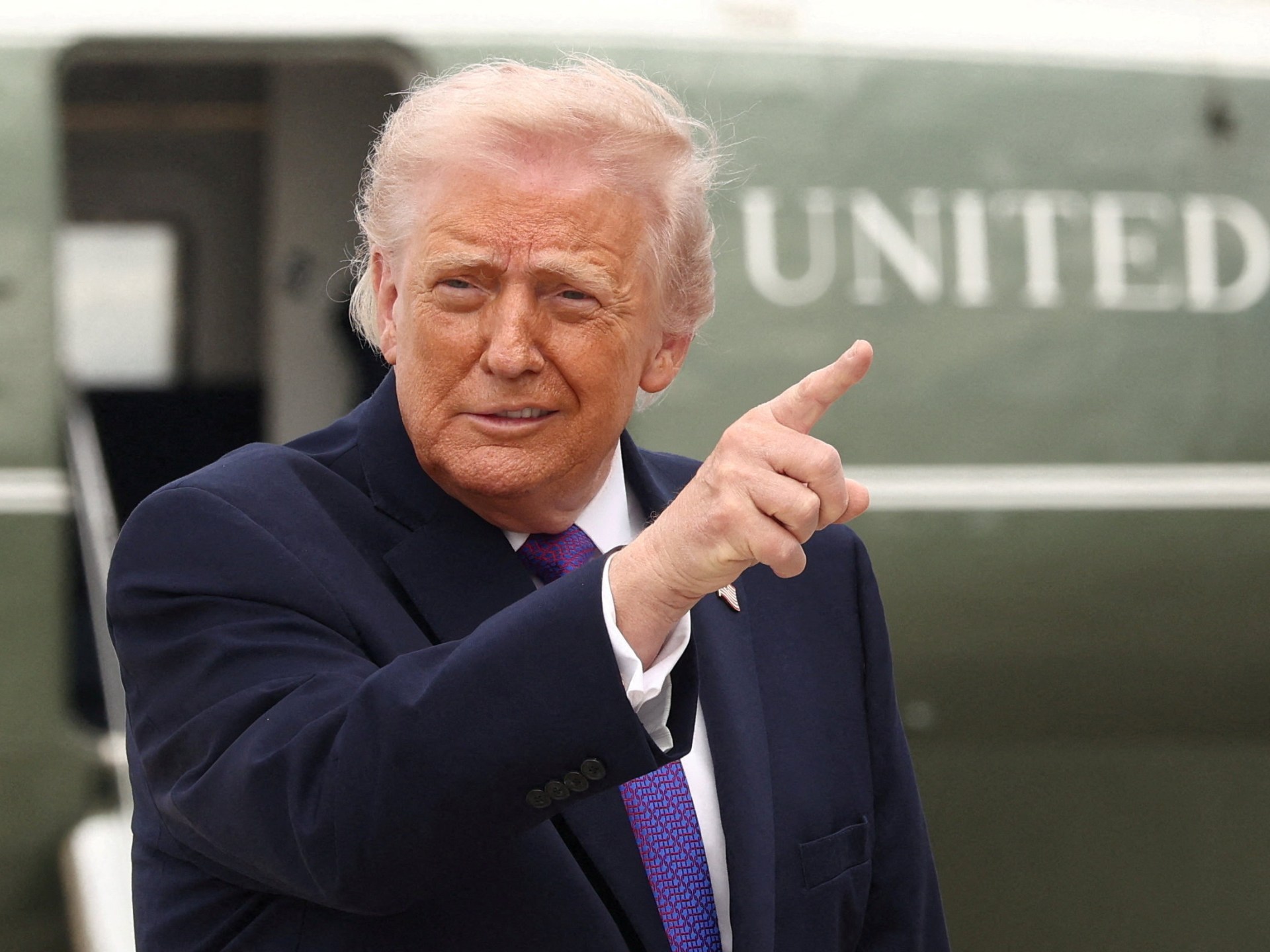
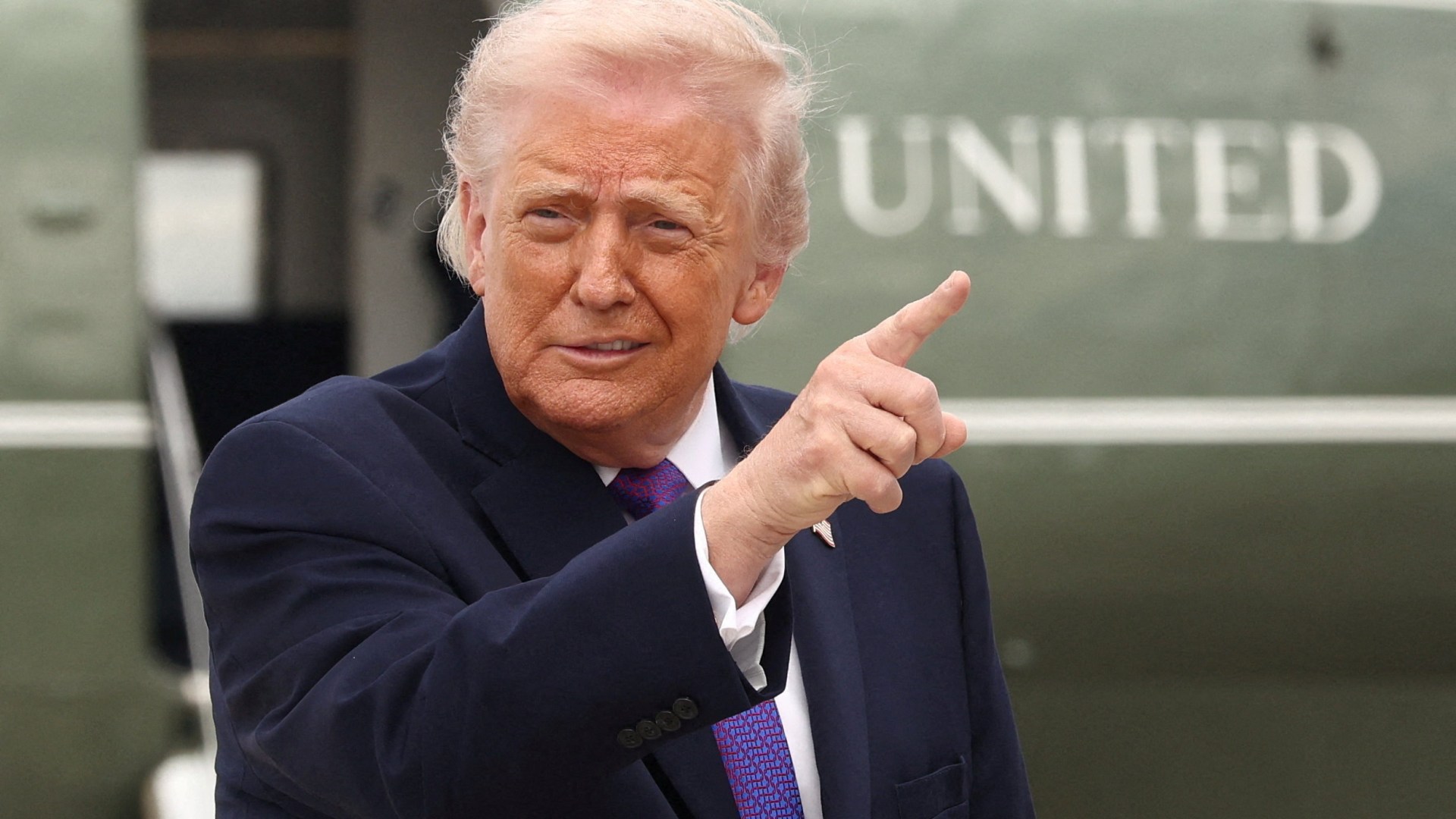
Experts say Trump's decision to sue over his leaked tax returns risks putting him in charge of arranging his own payout.

Share

Save

Hundreds of lawsuits have been filed against the United States government since Donald Trump returned to the presidency.

One, however, had a surprising plaintiff: Trump himself.

Before January 29, no sitting president had ever sued his own government in court. Now, advocates and legal experts are faced with a thorny question: Can the lawsuit be stopped?

A court date has not been set so far, but experts agree that, for better or worse, the government will seek to bring the complaint to a speedy conclusion.

At the heart of the case is Trump's contention that the federal government should be held liable for the leak of his federal tax returns during his first term as president.

The man responsible, Charles “Chaz” Littlejohn, is already behind bars. Still, Trump wants the Treasury Department and one of its agencies, the Internal Revenue Service (IRS), to pay damages to the tune of $10bn — at minimum.

But analysts say the ethical implications of the case and the circumstances surrounding it could scuttle Trump's plans to claim the cash.

“This is a weird Donald Trump lawsuit where it's not entirely performative,” said Samuel Brunson, a professor at Loyola University Chicago School of Law.

“He does have a legitimate complaint. The leaking of the information, it is an actual wrong, and it's one that Congress has recognised.”

But step beyond that fact, and Brunson explained that Trump’s claim is "not great".

Trump's case concerns events that began in 2017, when Littlejohn was re-hired as a government contractor for the consulting firm Booz Allen.

At the time, Trump was making headlines for his refusal to release his tax returns to the public, as had been the custom for incoming presidents and as he himself had promised to do.

Tax returns are guarded by strict privacy laws, but since the 1970s, every president except Trump has made theirs public as a gesture of transparency.

Amid the controversy, while working on an IRS contract, Littlejoin stole Trump's tax files. He then shared the documents with major media outlets.

In 2020, The New York Times published a series of articles that detailed how the famously wealthy Trump had paid little to no federal income tax over the previous 15 years.

Then, in 2021, ProPublica relied on Littlejohn’s leaks to outline discrepancies between how Trump's businesses reported their assets to tax authorities, versus lenders.

The leaks, according to Trump’s suit, were politically motivated and “caused significant and irreparable harm” to the president, his sons and his business interests.

Though Littlejohn was not a government employee, Trump's complaint argues that the IRS was responsible for his actions.

Trump is not the first US president to sue the federal government. But previous efforts came after the presidents in question had left the White House.

In 1974, for example, the scandal-plagued former President Richard Nixon filed a lawsuit in an effort to maintain control of his presidential papers, calling their anticipated publication a breach of privacy.

But unlike Trump, experts note that Nixon was no longer in office at the time, and he was not seeking financial compensation.

Trump himself has previously filed legal complaints against what he considers unjust government investigations. But those claims were filed when Trump was a private citizen, in 2023 and 2024, between his first and second terms.

Now that he is back in office, though, Trump has the power to settle those complaints in his own favour, as well as the IRS case.

Reports have indicated he is seeking $230m in compensation from the Department of Justice (DOJ), which falls under his authority, just like the IRS.

Government ethics organisations, former IRS officials and taxpayer advocates have already pleaded for a federal court in Florida to throw out the latest case as a clear conflict of interest.

Among the groups involved is Common Cause, a nonpartisan government watchdog. In February, it filed a legal brief arguing the case should be delayed at least until Trump has left office.

Otherwise, the case risks paving the way for presidents to negotiate their own legal settlements with agencies under their direct control, winning taxpayer money without constraint.

For Abigail Bellows, Common Cause's senior policy director for anticorruption and accountability, how the case proceeds will be a test of whether the president's power will go unchecked.

“It's really not just about the money. It's also about a show of force, testing the loyalty of senior officials, testing how far he can push the courts, testing how acquiescent Congress will be, and seeing if a president is able to shake down his own agencies," Bellows said.

"And if nobody hits the brakes, then what else can he do?”

Even Trump has acknowledged the questionable optics of suing his own government.

"If I pay myself, that somehow will never look good," Trump told reporters on Air Force One in January. He suggested the solution could be to donate any monetary settlement or damages he receives.

"Nobody cares how much if it goes to good charities," Trump continued. "So you settle by giving charities a lot of money, and I think we're going to do something like that."

But there is a key legal bulwark against Trump receiving money from his own government.

The US Constitution contains what's called the Emoluments Clause, which bars the president from receiving any compensation, beyond his salary, from the federal government.

Nikhel Sus, chief counsel for the watchdog Citizens for Responsibility and Ethics in Washington, told Al Jazeera that any settlement Trump might win would violate the Emoluments Clause, even if he were to direct it to a charity.

“A payment directed at the president's behest to a specific charity of his choice would be an indirect benefit to the president, even though he isn't the one that is receiving the money,” Sus explained.

Normally, the Justice Department would defend the federal government against such civil lawsuits.

But the Justice Department has seen its independence erode under Trump's leadership, and its top official, Attorney General Pam Bondi, is a close political ally of the president.

For the case to move forward, Sus said lawyers representing the Justice Department have an ethical obligation to avoid any conflict of interest.

But Trump has “asserted a maximalist view of his authority under the Constitution”, Sus explained, and it is unlikely the Justice Department could act independently of Trump's wishes.

That conflict of interest is likely to raise eyebrows in court, Sus added, and a judge might seek to minimise Trump's influence over the Justice Department's defence.

“His position is that he has direct control and supervision over every employee of the executive branch, right?" Sus said.

"So he cannot, in this case, argue that the Justice Department is distinct from his oversight and the White House, because he's argued the exact opposite in writing on numerous occasions."

The court could opt for a delay. Or it could appoint an independent counsel to defend the federal government, someone with no connections to the Trump White House.

Either option would prevent the president from negotiating a settlement with his own Justice Department, according to Sus.

But advocates like Bellows warn that, without a failsafe to prevent the Justice Department from bowing to his demands, Trump would essentially be able to name his own price.

“If he's successful, and the DOJ goes along with this heist, then that becomes the new standard for the ways in which we ignore conflicts of interest and use our judicial system as a way to enrich the people currently in office,” Bellows said.

“There's the risk of a complete free-for-all.”

In a statement to the media, however, the Justice Department denied the potential for impropriety.

"In any circumstance, all officials at the Department of Justice follow the guidance of career ethics officials," it said.

Trump’s personal lawyers did not return a request for comment by time of publication.

But conflicts of interest are not the only hurdle facing Trump's lawsuit against the IRS. Advocates warn some of the claims he makes in his complaint might stand up to scrutiny.

There is, for example, a two-year statute of limitations built into the law Trump is using to sue the government.

Trump’s suit contends the two-year window should start when Littlejohn was sentenced in January 2024. Groups like Common Cause, however, argue the clock began ticking in 2020 when the first articles about Trump's taxes were published.

For Trump’s argument to hold weight, according to his opponents, he has to show he was unaware of the violation at the time of the publication.

But that claim might be undermined by Trump's own public comments at the time. He posted on social media about The New York Times's coverage, describing its revelations as being based on “illegally obtained” information.

“It could have been someone else tweeting on his behalf, but at least it's strong evidence that he was aware of this leak longer than two years ago,” Brunson, the Loyola law professor, said.

Then, there's the question of how Trump and his lawyers arrived at the sum of "at least" $10bn in damages.

Typically, the formula for damages in a case like this is $1,000 for every unauthorised disclosure by a government employee, Sus said.

Instead, Trump's lawsuit argues that he should be awarded $1,000 not just for Littlejohn’s initial leak, but for each “subsequent disclosure by third parties, including by The New York Times, ProPublica, and by many additional print, broadcast, cable, social media and other platforms".

Such a calculation is “completely unsupported by any case law; numerous courts have rejected that", Sus said.

Brunson, too, said the method employed by Trump’s lawyers "strains credulity".

“I don't have a good enough imagination to figure out how he was damaged $10bn worth, given that he was re-elected to the presidency,” Brunson said.

Littlejohn himself could be an impediment to Trump's case succeeding.

To assess Trump's claims, a court would also have to weigh whether or not the IRS should be held accountable for the actions of one of its contractors.

Trump’s suit contends that the IRS failed to implement “appropriate technical, employee screening, security, and monitoring systems to prevent Littlejohn’s unlawful conduct".

Although Littlejohn was not an IRS employee, Trump’s suit claims that he had “staff-like access to tax returns” and that the agency monitored his work on a “day-to-day” basis.

But in other cases related to Littlejohn’s leaks, the Trump administration has argued that the federal government cannot be held responsible for the actions of a contractor.

If the IRS doesn’t move for a quick dismissal on the same grounds, "it would be a marked departure from how the government has handled materially identical cases," Sus said.

That, in turn, could suggest "preferential treatment" for the president, something a court might reject.

Congress, too, could look to take action that would all but obviate Trump’s lawsuit.

Democratic Senators Ron Wyden and Chuck Schumer introduced a bill in February that would impose a 100-percent tax on any settlement a sitting president might win from his own government.

The legislation would also impose the same tax on vice presidents, cabinet officials and Congress members while in office. A similar proposal was also submitted in the House of Representatives last month.

Given that Democrats lack a majority in both chambers of Congress, it’s unclear if the legislative efforts will be successful.

But Democrats are looking to leverage Trump's drooping popularity into wins during November's midterm elections, in a bid to win back control of Congress.

For now, the matter is fully in the hands of the court. Experts say the stakes are enormous.

"If he can settle this — where there are very, very legitimate open questions about whether he's got a legitimate cause of action — then it risks the unconstrained ability of whoever is the president to just take money from the Treasury," Brunson said.