yahoo Press
Saudi Arabia to redirect most oil exports ‘within days’ to avoid Strait of Hormuz
Images
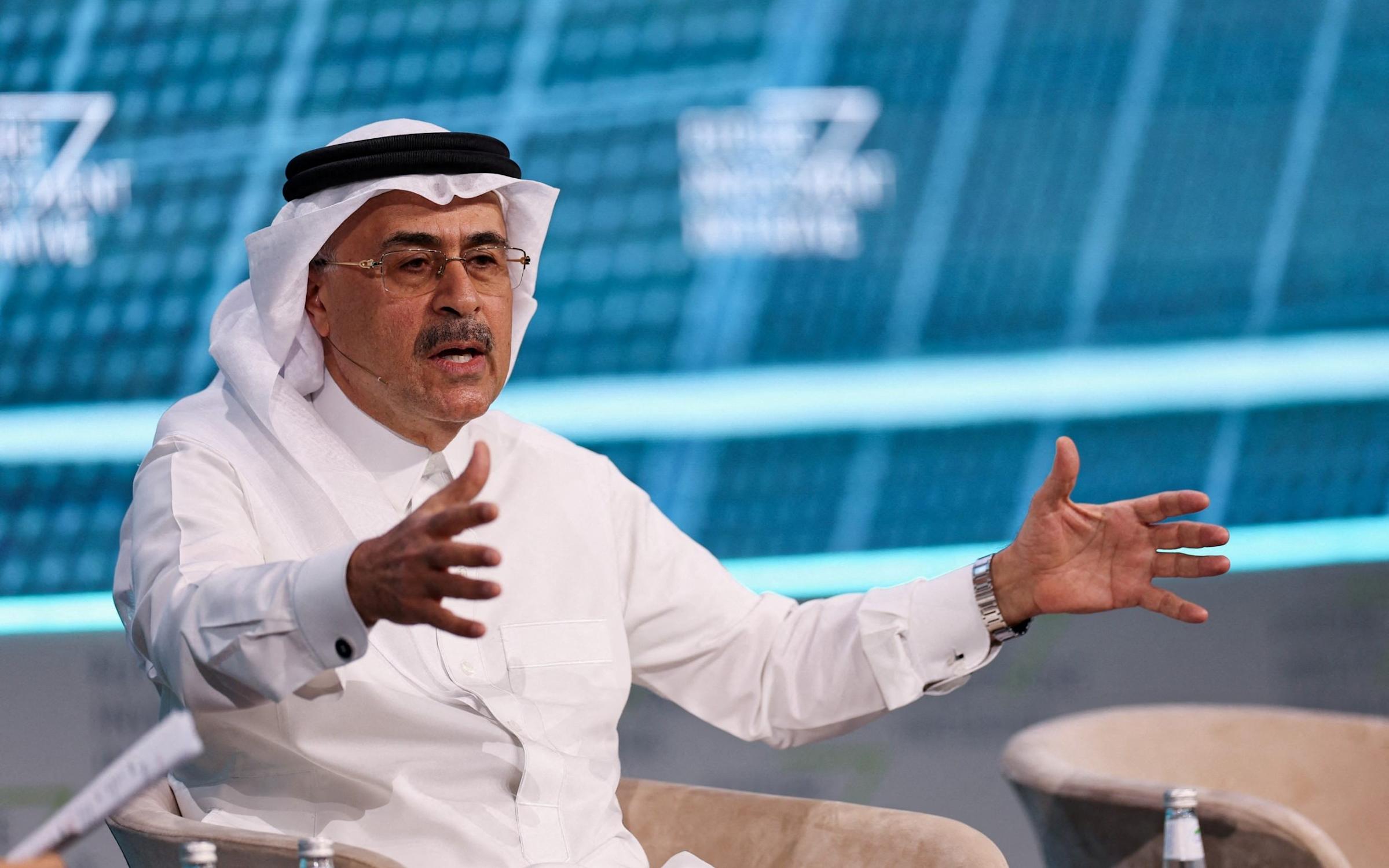
1 / 5
2 / 5

3 / 5

4 / 5
5 / 5
Saudi Arabia will be able to resume the majority of its oil exports “within days”, the boss of state-owned oil giant Saudi Aramco has said.

Amin Nasser said the company was working to redirect shipments via a pipeline to ports on the Red Sea. This would allow it to sidestep a blockade in the Strait of Hormuz, a critical choke point for global supplies of oil and natural gas.

Mr Nasser said: “Immediately as the ports were starting to close, we ramped up production through the East-West Pipeline, which has a capacity up to seven million barrels a day, most of it for export.

“Approximately two million barrels of that will be utilised supplying existing refineries in the western regions, which also export some of the products to the global market. We are ramping up. We should be reaching capacity in a couple of days.”

The comments suggest at least five million barrels a day will soon hit the market, meaning Saudi Arabia will be able to resume about 70pc of its oil exports. Aramco, which is the world’s largest oil producer and the primary source of revenue for the Saudi state, exported roughly seven million barrels a day prior to the crisis.

Mr Nasser said flows were “pending an availability of vessels which are currently en route”.

He added that the company was restarting production at its Ras Tanura refinery after it was targeted in a drone attack last week.

Nevertheless, Mr Nasser warned the Iran war could have “catastrophic consequences” for global oil markets.

The Aramco chief said the conflict was the “biggest crisis the region’s oil and gas industry has faced” after supplies were squeezed and global storage levels fell to their lowest level in five years.

Mr Nasser said: “If this disruption goes on longer, we will see faster drawdowns.

“There would be catastrophic consequences for the world’s oil market, and even more drastic consequences for the global economy.”

He warned of a “drastic domino effect” for the global economy as reduced oil production drives up prices.

This risks hammering sectors such as aviation, agriculture and car manufacturing.

Mr Nasser added: “Spare oil output capacity is mostly concentrated in this region, so shipping resuming in the Strait of Hormuz is absolutely critical.”

Energy markets have been thrown into turmoil after the US and Israeli strikes on Iran led to the closure of the Strait of Hormuz.

Credit: Marine Traffic

Aramco has already begun cutting output at two of its key oil fields, and the country’s output has reportedly fallen by as much as 2.5 million barrels daily.

Neighbouring Gulf countries, including the UAE and Kuwait, have also begun to cut output or declared force majeure on oil shipments as a result of the conflict.

Iraq is reportedly also exploring alternative oil export routes, including pipelines, to reduce its reliance on the Strait of Hormuz.

The crisis has sent oil prices soaring, with benchmark Brent crude surging to almost $120 a barrel earlier this week.

Prices have since eased back after Donald Trump said the Iran war would be “over soon” and pledged to waive some oil sanctions.

Nevertheless, global energy markets remain under strain after Iran’s Revolutionary Guards Corps responded: “We are the ones who will determine the end of the war.”

They added that they would not allow “one litre of oil” to be shipped from the Middle East if the US and Israeli attacks continued.

This prompted Mr Trump to threaten Iran with “death, fire and fury” if it blocks the Strait of Hormuz, which usually handles around a fifth of global oil and liquefied natural gas shipments.

Mr Trump said the Islamic Republic would be hit “twenty times harder” if it blocked oil supplies through the key artery.

Mr Nasser’s comments came as Saudi Aramco reported profits of $93.4bn (£69.4bn) in 2025, down 12pc from the previous year due to lower oil prices. The company also launched its first-ever share buyback programme of up to $3bn.

Try full access to The Telegraph free today. Unlock their award-winning website and essential news app, plus useful tools and expert guides for your money, health and holidays.