huffpost Press
Alabama Governor Spares Life Of 75-Year-Old Who Never Killed Anyone
Images
1 / 8

2 / 8
3 / 8
4 / 8
5 / 8
6 / 8

7 / 8

8 / 8
Alabama Gov. Kay Ivey (R) on Tuesday commuted the death sentence of a 75-year-old man who, by the government’s own admission, never killed anyone.

Charles “Sonny” Burton, an accomplice in a 1991 robbery that ended with a fatal shooting, was scheduled to be executed by nitrogen hypoxia on Thursday. Ivey reduced his sentence to life without the possibility of parole, marking only the second time she has commuted a death sentence since entering office in 2017.

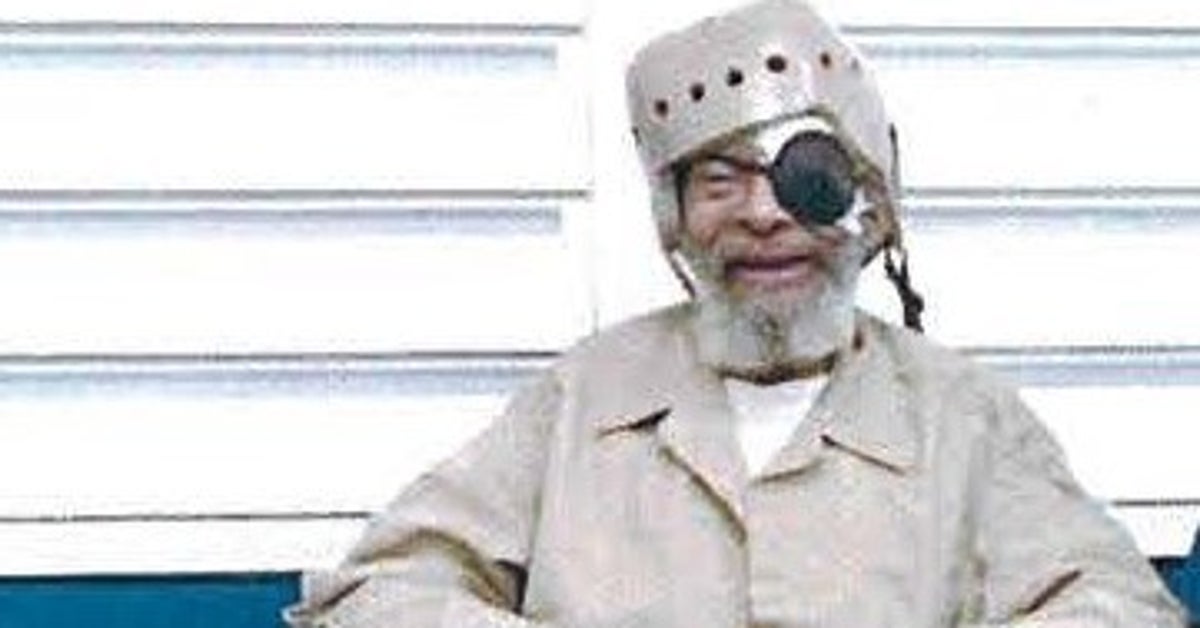
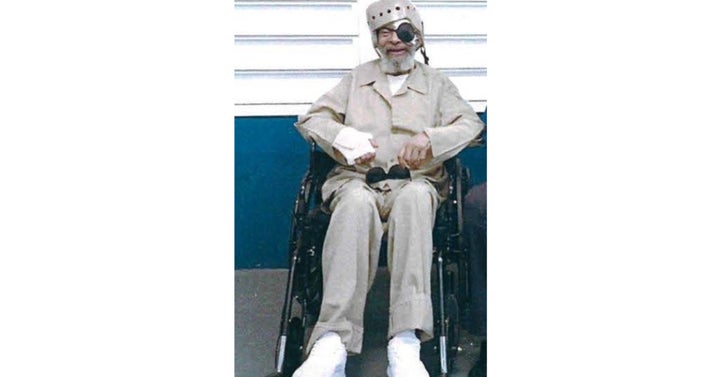
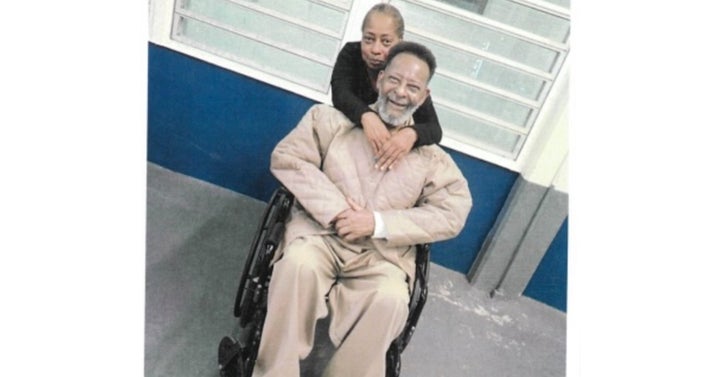
Had the killing gone forward, Burton would have faced a harsher punishment than the man convicted of shooting the victim. Six of the eight living jurors wrote letters to Ivey indicating they had no opposition to Burton’s clemency, and three specifically requested his death sentence be commuted. The victim’s daughter also asked the governor to grant mercy. Burton, who has apologized for his role in the crime, is currently in poor health. He uses a wheelchair and wears a padded helmet to protect himself from frequent falls.

“I cannot proceed in good conscience with the execution of Mr. Burton under such disparate circumstances. I believe it would be unjust for one participant in this crime to be executed while the participant who pulled the trigger was not,” Ivey, who has allowed more than 25 executions to go forward, said in a statement.

Federal public defender Matt Schulz, who has represented Burton since 2008, thanked Ivey for her decision in a statement on Tuesday. “Today’s grant of clemency strengthens, rather than weakens, public trust in our system of justice,” Schulz wrote.

“There is no question that this was a tragedy, more than anything for the family of the innocent victim in this case, Mr. Doug Battle, who lost his life. The forgiveness and reconciliation that has been offered means more to him even than today’s commutation,” Schulz continued.

Like most people sentenced to death, Burton was subjected to extreme violence before committing the crime that landed him on death row. Burton was born in Montgomery, Alabama, in 1950, and his parents divorced young. He went to live with his father, who “abused him all the time,” his younger sister Sheila Ford said in a video prepared for his clemency application. After a particularly brutal beating, Burton hid from his father in a closet for three days, Ford said. Burton started living on his own when he was about 15, and would go on to spend most of his life in and out of prison. While Burton was in prison for a conviction unrelated to the robbery that landed him on death row, his wife and her friend were fatally stabbed.

In the summer of 1991, Burton, four other men and a 16-year-old boy robbed an AutoZone in Talladega. After Burton exited the store, one of the men, Derrick DeBruce, fatally shot a man named Doug Battle.

Under the state’s so-called felony-murder statute, anyone involved in a felony — such as a robbery — that leads to a death can be held criminally responsible for that death, regardless of their intent or involvement in the killing. Nearly every state, as well as the federal government, has a felony-murder rule, and 21 states, including Alabama, allow felony-murder convictions to be punished with a death sentence.

All six participants in the robbery were charged with capital murder, although four took plea deals to avoid a death sentence. Only Burton and DeBruce were sentenced to death. During their trials, prosecutors argued that DeBruce was the one who pulled the trigger but that Burton was the leader of the plot. An appeals court later found DeBruce received ineffective assistance of counsel at trial, and he was resentenced to life without parole. He died in prison in 2020.

Burton has presented evidence that he, too, had an unfair trial.

In Alabama, felony murder convictions are only supposed to be punishable by death if the defendant “had an intent to kill.” Prosecutors never proved at trial that Burton planned to kill anyone. Instead, they argued that as an accomplice to the robbery, Burton was equally guilty in the eyes of the law — a misrepresentation of the law that Burton’s lawyer did not correct.

During the sentencing phase of Burton’s trial, he asked to call two of his codefendants as witnesses. His lawyer refused, but the judge ordered the lawyer to call the two men. In an effort to help Burton, they testified they did not know him, which was easily disproven.

“That, of course, infuriated the jury and probably contributed greatly to his death sentence,” Schulz, Burton’s current lawyer, said in an interview.

Despite the lengthy appeals process in death penalty cases, procedural barriers governing what can be raised on appeal make it incredibly difficult to remedy trial issues. “This outlier case is a quintessential case for the exercise of executive clemency,” Schulz wrote in a clemency petition requesting that Ivey commute his death sentence. “It is one which, similarly to a handful of cases from other states, slipped through the cracks.”

Indeed, people sentenced to death under similar circumstances to Burton have received clemency, even from governors who regularly allow executions to go forward. Most recently, Oklahoma Gov. Kevin Stitt (R) commuted the death sentence of Tremane Wood in November, who was on the verge of being executed for the death of a man during a botched robbery — even though his older brother, who admitted to killing the victim, received a life sentence. As HuffPost previously reported, the disparate sentencing outcomes appeared to be the result of Wood’s severely impaired trial lawyer, who later temporarily lost his law license after admitting to client neglect. Oklahoma has the highest rate of executions per capita, and Wood’s commutation marked only the second time Stitt used his clemency power to block an execution.

In December, Tori Battle, the victim’s daughter, wrote an op-ed opposing Burton’s execution. “My opposition to this execution is not a betrayal of my father. It is an affirmation of the values he lived by, and that I have tried to instill in my children,” she wrote. “Justice can be measured by our commitment to truth and our willingness to show mercy.”

Tori Battle also wrote to Ivey, urging her to grant clemency: “I want to remind you of the man that all of this is supposedly being done for. My father, Doug Battle, was many things. He was strong, but he valued peace. He did not believe in revenge. And in that way, I am very much his daughter.”

Six of the eight living jurors who sentenced Burton to death now have no opposition to his sentence being commuted to life without parole — and three have asked Ivey to commute his death sentence, citing the shooter’s sentence.

“It makes no sense that Mr. Burton stay on death row for his involvement in the robbery, when the man that did the killing got to live out the rest of his natural life in prison,” juror Bobbye Jackson wrote in a letter to Ivey. “It makes no sense, and it is not fair or just.”

In yet another example of how arbitrarily the death penalty is applied, the man who killed Burton’s wife and her friend received a life sentence. Over time, Burton forgave the man who killed his wife, Schulz said, and urged his children to do the same. Burton’s daughter, Carolyn Amanda Shavers, was the one who found her mother’s body. “You will never know what it did to me to see my Mama that way,” she wrote in a letter to Ivey. “I couldn’t eat or sleep. I kept seeing my Mama’s hair, stuck to the floor. And if my father gets executed too, I don’t know what will happen to me.”

Burton has apologized to Battle’s family for his role in the robbery. “For the last 25 years my involvement had weighted heavily on me,” he wrote in a letter to the Battle family. “I never expected it (robbery) would end in Doug Battle losing his life in murder. And was terribly horrified when I learn that it did.”

“I sincerely apologize for participating in the robbery that led to Mr. Battle murder. I wish there was more that I could do, but I do hope you can maybe find some comfort in this apology,” Burton wrote.

Burton is in poor health, and his family worries he would not have long left to live even if he were not facing imminent execution. But they don’t want the state to take away his final days. Schulz tries to schedule his visits shortly after Burton gets his weekly shot for rheumatoid arthritis, when the pain is the most manageable. Burton wears a padded helmet to minimize injury from his frequent falls.

“It feels like somebody taking a knife and sticking it between your joints and trying to pry your joints loose,” Burton told independent reporter Lee Hedgepeth, describing the pain from his arthritis.

Before Ivey commuted Burton’s death sentence, the state planned to kill him by suffocating him with nitrogen gas, a new execution method that the American Veterinary Medical Association has advised against using to euthanize most mammals because of the “panic and distress” observed before they died. When Alabama carried out the first-ever nitrogen gas execution to kill Kenneth Smith in 2024, Smith “appeared to shake and writhe on the gurney, sometimes pulling on the restraints” for at least two minutes before he died, The Associated Press reported at the time.

Since then, Schulz has watched two people be executed with nitrogen gas. “You can tell that they know when the airflow has changed. They look panicked. They are obviously aware that they are not catching their breath, that they are not receiving oxygen,” Schulz said.

“They are panicked, they are thrashing about, and they are looking over and their eyes look terrified. They are going through what you think someone would go through if they were being suffocated.”

By entering your email and clicking Sign Up, you're agreeing to let us send you customized marketing messages about us and our advertising partners. You are also agreeing to our Terms of Service and Privacy Policy.