huffpost Press
'It Was Very Creepy': These People Say They Lost Global Entry Just For Watching ICE Agents
Images

1 / 8

2 / 8

3 / 8
4 / 8

5 / 8
6 / 8
7 / 8

8 / 8
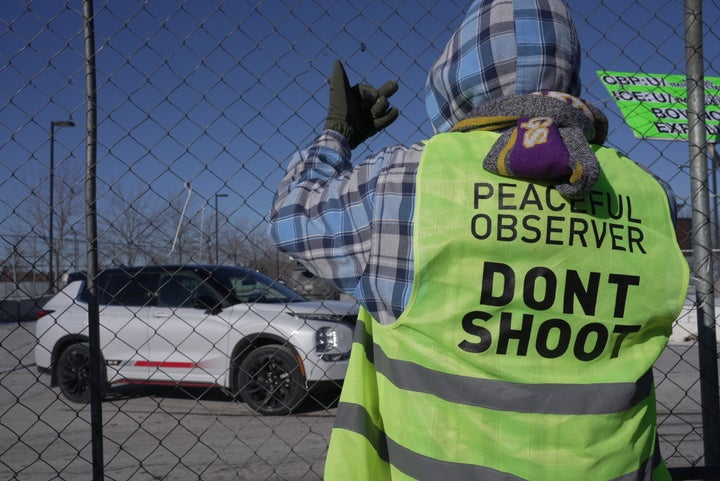
Nicole Cleland was following a vehicle of federal agents in Richfield, Minnesota, on Jan. 10 when a member of Border Patrol stepped out and approached her car. The agent startled Cleland by addressing her by her first name, she recalled. He said they were using facial recognition technology, and warned her to stop “impeding” their work or she’d be arrested.

Three days later, Cleland said, she received an email from U.S. Customs and Border Protection informing her she had lost her Global Entry status, one of the government’s “Trusted Traveler” programs that expedites arrival to the U.S.

“As soon as I got the email, I said to my husband, ‘How much do you want to bet this has to do with Saturday?’” said Cleland, who’d been volunteering as a legal observer to track immigration raids in her community. “There’s just way too much coincidence there.”

Cleland is right to wonder about the timing, judging from a recent CBP memo reviewed by HuffPost.

CBP told its field offices in mid-February to send “recommendations to revoke Trusted Traveler membership for U.S. citizens” to headquarters for review, along with an incident report and an “articulated reason” for yanking someone’s trusted status.

“The memo raises the question of whether revoking Trusted Traveler privileges could be used as a means of retribution.”

The memo pertains specifically to “encounters” with CBP officers who are supporting “operations led by other law enforcement agencies.” Over the past year, many CBP officers have been diverted from their normal duties at U.S. ports of entry to assist Immigration and Customs Enforcement in its inland immigration operations, putting them in close contact with demonstrators in Minneapolis, Los Angeles and other cities.

The brief memo raises the question of whether revoking Trusted Traveler privileges could be used as a means of retribution for people who protest the administration’s immigration crackdown. CBP personnel can already recommend that someone lose their privileges, but those cases typically result from officers seizing illegal drugs or prohibited plants or animal products as someone is entering the U.S. ― not from run-ins on city streets.

The memo does not explicitly mention protests or otherwise lay out the circumstances that would justify revoking Global Entry, only that the final determination for a case would be made by an executive director. But a Department of Homeland Security employee told HuffPost they viewed the memo as an invitation to submit cases involving protesters.

CBP, which is part of DHS, did not provide answers to questions for this story.

Have you had your Trusted Traveler privileges revoked after a run-in with federal agents? Our reporter can be reached on Signal at davejamieson.99 and by email at dave.jamieson@huffpost.com.

According to the agency, around 13 million people are enrolled in Global Entry, which comes with TSA PreCheck. It is the most popular of CBP’s Trusted Traveler programs, though there are separate ones for commercial truck drivers and frequent travelers from Mexico and Canada.

People routinely lose Global Entry due to recent criminal charges or customs violations. But some people lose it with no explanation, and must turn to a program ombudsman in hopes of getting the decision reversed. The number of revocations has increased substantially since 2024, according to an analysis by Bloomberg last year.

It’s not clear what would suffice to revoke someone’s privileges based on an encounter during an inland immigration operation. Trump-appointed prosecutors have been aggressively filing charges accusing people of impeding or assaulting federal agents in the course of their duties. Such cases could potentially be grounds for pulling someone’s Global Entry, especially if they allege violence.

But what if an activist followed agents in their car, blew a whistle to warn the community of a raid, or heckled agents and called them “fascists”? And how might facial recognition or other forms of surveillance be used to identify people?

Sara Robinson, a staff attorney with the ACLU’s National Security Project, said it would be unconstitutional to revoke someone’s Global Entry as punishment for recording agents.

“This is about more than convenience at the airport: It’s about whether the government is punishing speech it dislikes and seeking to deter people from exercising their fundamental freedoms,” Robinson said.

Michelle Shara said she lost her Global Entry status in November after an encounter with federal agents in Charlotte, North Carolina, outside what she said was a CBP office. Shara and a friend drove to the city from South Carolina with the intent of observing and documenting immigration raids. In a video she provided to HuffPost, a camo-clad agent approaches Shara while she is in her car and tells her she is trespassing on federal property, before demanding her driver’s license to take down her information.

“You always joke… ‘I’ll probably be on a list.’ But then I was like, ‘Oh shit.’”

Shara said she received the email about her Global Entry status 10 days later. Like Cleland, she said she had not had any recent arrests or customs violations that would explain the change, and the notice of her revocation did not provide a specific reason.

“It was very creepy,” she recalled. “You always joke… ‘I’ll probably be on a list.’ But then I was like, ‘Oh shit.’”

Though she doesn’t use Global Entry often, the episode rattled Shara. She recently traveled to Australia and said she wiped her phone and shared her itinerary with friends before returning, thinking she might be detained. She made it through customs without incident.

John M. Manley, an immigration attorney who has represented clients who have lost Global Entry, said people sometimes have it revoked after carrying too much undeclared cash or restricted agriculture products through a customs check. But he said he has also seen people lose theirs after they were arrested but not prosecuted ― such as in a bar fight ― or when their name or address seems to match that of someone else who’s in legal trouble.

He said travelers don’t have much recourse if Global Entry is revoked.

“There’s really nothing to prevent them from revoking people,” he said. “It’s a travel perk, basically. So you don’t have any rights. That’s why it’s so subjective.”

While losing Global Entry can be a major inconvenience for air travelers, the loss of Trusted Traveler status can be a more serious blow for someone who regularly crosses the border because of their job or family. CBP’s NEXUS, SENTRI and FAST programs allow for quicker crossing at land border ports, and all three are listed in the memo for possible revocation.

Cleland filed a Freedom of Information Act request for details on why her status was revoked. She said she’s less bothered by the loss of Global Entry than by how she believes she lost it. She has stopped acting as a legal observer for now, fearing the government might retaliate against her.

“I struggle with it every day, because I feel like they’ve won,” she said. “I’m almost ready to go back to some of this rapid-response work, but I don’t know how far they’ll go.”

By entering your email and clicking Sign Up, you're agreeing to let us send you customized marketing messages about us and our advertising partners. You are also agreeing to our Terms of Service and Privacy Policy.