buzzfeed Press
Betty Buckley Opens Up About "Memory," "Carrie's" 50th Anniversary, And Her New Album "Enough"
Images
1 / 15

2 / 15

3 / 15

4 / 15

5 / 15

6 / 15

7 / 15

8 / 15

9 / 15

10 / 15

11 / 15

12 / 15

13 / 15

14 / 15

15 / 15
The legendary performer opens up about recording her new album, Enough, the lessons she learned from her Tony Award-winning role, and memories of making the horror classic Carrie.

I’m a pop-culture writer covering everything from TV and movies, to music, Broadway, books, and games.

From her unforgettable Tony-winning performance as Grizabella in Cats (I still see clips from her 1983 Tony Awards performance go viral on TikTok) to memorable roles in shows like Eight Is Enough and movies like Carrie, Betty has built one of the most remarkable careers in theater and film.

Now, she's marking the release of her new live album, Enough, recorded during her acclaimed residency at Joe's Pub in New York City.

Celebrating the release of Enough, I spoke with Betty about the inspiration behind the album, her journey behind "Memory," and how she reflects on the film Carrie as the horror classic turns 50.

Note: This interview has been modified for length and clarity.

Betty: Joe's Pub has a wonderful theatrical feeling. The ceilings are high, and the acoustics are beautiful. It's also an opportunity to perform with my full band, which brings me so much joy.

I have such a history with The Public Theater, and I auditioned there many times in my youth. I even took a Shakespeare workshop with Kevin Kline's Shakespeare coach, and the class included Goldie Hawn, Sally Field, Helen Hunt, Bernadette Peters, Lauren Hutton, and me.

Joe Papp was incredibly kind to me throughout my career. I did workshops with him for The Mystery of Edwin Drood, The Human Comedy, and he cast me in I'm Getting My Act Together and Taking It on the Road during one of my breaks from Eight Is Enough.

The staff at Joe's Pub is wonderful, and there's a real respect for both the music and the people. Even though the room feels theatrical, the audience is so close that there's a sense of intimacy.

The only downside is when someone orders French fries, and they'll be right under me on the stage. They're my greatest temptation. (Laughs.)

Every time I perform there, I feel at home.

Betty: A lot of the music I choose is inspired by what's happening culturally at that particular moment. I look for songs that have an immediate resonance with my heart and mind.

This collection includes songs like Bob Dylan's "The Times They Are A-Changin'" and "Don't Think Twice, It's All Right," James Taylor's "On the 4th of July," Paul Simon's "American Tune," and Benard Ighner's "Everything Must Change." These songs are a beautiful contemplation of who we are, what we value, and the principles our country was founded upon.

We're living through such a difficult period. I felt these songs really addressed the moment.

One of my favorite lyrics in "On the 4th of July" is: "Love forever and ever must stand." I think that's such a beautiful thought.

Betty: I was very influenced by jazz musicians when I was growing up. Jazz instrumentalists have meant a lot to me, and my notion of how to interpret songs. I studied all the great lady singers, and I was fortunate because my mother had a vast record collection. I taught myself to sing by imitating those great ladies like Judy Garland, Sarah Vaughan, Ella Fitzgerald, Nancy Wilson, and Della Reese.

On Enough, I sing a song called "Everything Must Change" that I saw Sarah Vaughan perform when I was 22. I was deeply moved when I saw her in concert at the Philharmonic Hall. I had standing room tickets in the back of the hall, and she just took people's breath away.

I was standing there watching this incredible woman with her trio of musicians that she'd been working with forever. She just sang this song, and people were breathless. I was standing there thinking, "I want to do that. I want to be a concert artist."

Betty: I'm incredibly grateful that people associate me with "Memory," because not every performer gets to have a signature song. Learning how to sing "Memory" and how to play Grizabella was a defining moment in my life.

I'd spent years studying acting and voice because I wanted to bring real emotional truth-telling work to musical theater. Learning to play Grizabella became the opportunity I'd been preparing for.

The challenge about singing "Memory" was that the job assignment wasn't simply to sing the song — the assignment was to stop the show. Throughout the previews, I wasn't doing that.

I'd been in this intense process of meditation and prayer, and running around the city studying people, trying to put all the clues from the universe together. I was inspired to go out on the streets of New York after a session with my wonderful teacher, Paul Gavert. I was observing women experiencing homelessness. At first, I wasn't very discreet about it, and one woman actually chased me down the street yelling at me.

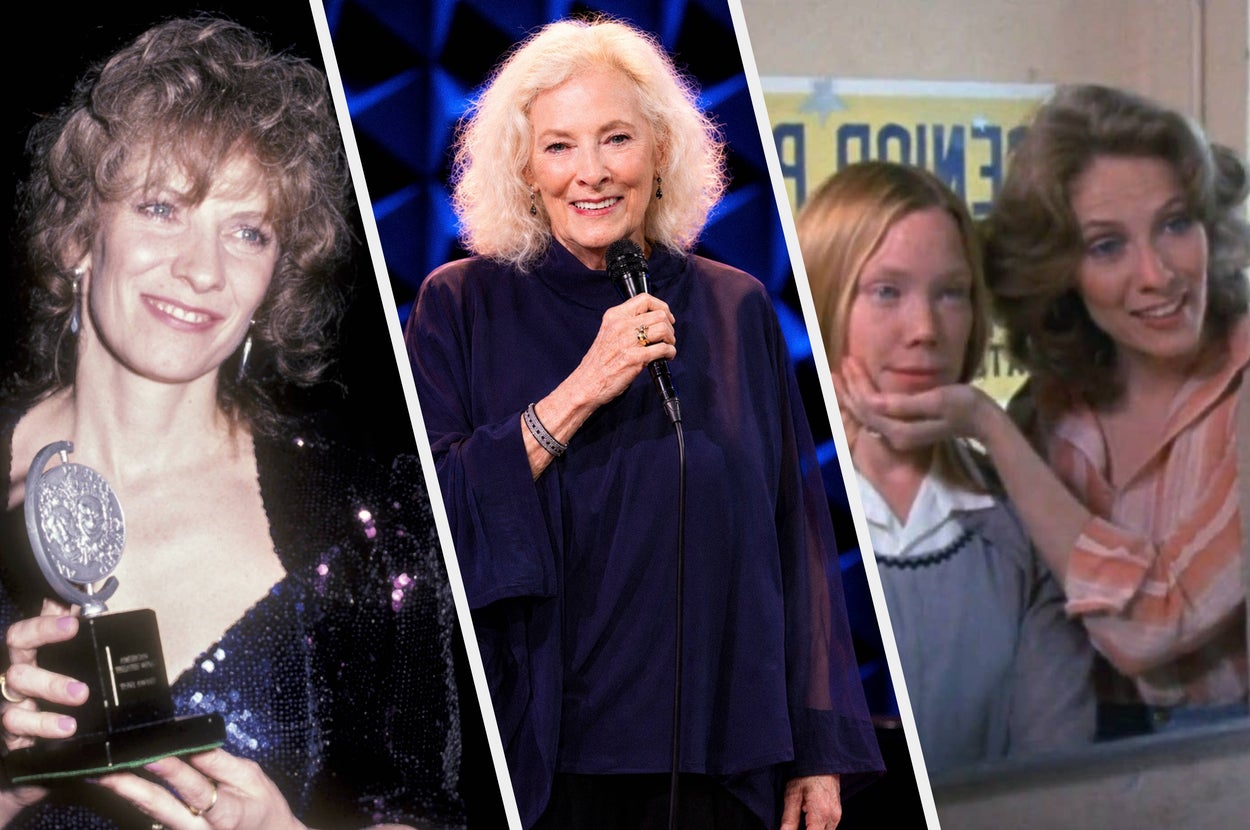
Betty with her Tony Award on June 5, 1983.

One day, I was coming out of my apartment, and I saw this beautiful woman. She had very white, pasty makeup, smeared red lipstick, and wild hair the color of Grizabella's wig. She was kind of "floating" down the street with such grace. Our eyes met for just a moment, and I felt as though she silently acknowledged me before continuing on her way. That day was a breakthrough for me. I witnessed her grace and dignity. I had been playing Grizabella the opposite way.

In case I didn't get the message from the universe, I was walking out of the stage door literally two nights later, and another woman, quite like the first, floated by me. We had a similar encounter: the same pasty makeup, smeared lipstick, wild hair, layers of clothes. That's when I understood how to play Grizabella. I realized I needed to come from that same grace and dignity.

About two weeks later, everything finally came together, and "Memory" stopped the show. There was this breathless silence, and then the audience went crazy. I thought, "Phew, thank you, God." I was so, so relieved.

Betty: Brian De Palma and screenwriter Larry Cohen were incredibly generous to me.

Before Carrie, I'd auditioned for Brian several times. Instead of casting me onscreen, he would bring me in afterward to dub dialogue for actors he'd hired on location who weren't professional performers. I'd watch their performances and create their voices during ADR [Automated Dialogue Replacement]. Sometimes I'd voice teenage girls, sometimes older women, sometimes even little boys.

It was fascinating work, but after a while, I finally said to Brian, "I don't think this is fair. You're casting people that aren't actors, and then you bring me in to fix the performance. I'm not going to do this for you anymore."

He seemed to respect that. A few months later, he invited me to dinner and handed me Stephen King's novel, Carrie. He told me he wanted me to play the gym teacher. In the book, the gym teacher is Miss Desjardin, and in the film, her name is Miss Collins. Miss Desjardin is a tiny part in the novel, but they gave Miss Collins a bigger role in the movie. It was a perfect feature film debut.

I remember the moment when I first read the script. I was in my apartment at 86th and West End, and I just started crying. I realized what an incredibly generous gift it was to create that part for me.

I owe him a debt of thanks. I hope the day comes when I get to thank him in person. I haven't seen him since that time. That was a really generous thing to do.

Betty: I remember the energy of the seven of us making our film debuts. Many of us in the film, including John Travolta, had never done a movie before. The only one who had was Sissy Spacek.

It was so much fun, and when it came to the scene at the gym, the prom, everybody had different death scenes on different days. We would all come to watch the next person's death scene, then we'd all go out and celebrate together. That was a pretty funny and wild experience.

Betty: I actually campaigned to Brian — I said that Miss Collins is Carrie's champion and shouldn't die. He explained to me that he's making a montage where Carrie imagines everyone betraying her. [Carrie's famous "They're all gonna laugh at you!" sequence.]

When he had me shoot that scene where Miss Collins is supposedly laughing at Carrie, I was really conflicted as an actress. At the time, I didn't know what his plan was as the filmmaker, so I thought, "That's just wrong."

You can see it in the film, where I'm trying really hard to laugh convincingly. It was uncomfortable because I didn't get his vision until I saw the film — and once I did, I thought, "Okay, this makes sense."

BuzzFeed: Thank you for a fascinating chat! I truly enjoyed learning about your new album and walking down memory lane with you.