buzzfeed Press
"Your Salmon Is Full Of Worms": 59 Industry Secrets Companies Do NOT Want you To Know
Images
1 / 19
2 / 19

3 / 19
4 / 19

5 / 19
6 / 19

7 / 19

8 / 19
9 / 19
10 / 19
11 / 19
12 / 19

13 / 19
14 / 19
15 / 19
16 / 19

17 / 19

18 / 19
19 / 19
“Mark your packages ’fragile’ all you want. It will be treated no better or worse than anything else.”

I'm a Senior Staff Writer based in New York City, where I've been covering classic BuzzFeed-style content since 2020.

"I work on schools, and basically all security is driven by active shooter situations. Like, when I go onsite, it’s not so much 'what if there’s a fire in this hallway,' it's more 'what if the shooter is coming from that hallway.' It’s been a very tragic realization."

"All youth-serving organizations, not just churches. But yes."

"It's because labs/manufacturers own their formulas, not the cosmetic brand."

"This is also the same with hair care/styling products! Your professional products are made by the same manufacturers that make drug store products. And many professional brands own drug store brands! Even worse is how stylists are brainwashed into believing the professional brands are better because guess who typically hosts your stylists' continuing education? Hair brands!"

"Now, I have worked at some smaller brands that DO pony up the $$$$$ to test, so it's not every brand. But it takes a significant amount of capital that many don't want to pay until they get larger."

"I used to work at a toy factory on an assembly line. When I'd be filling up those zip bags of the big chunky block sets for toddlers, my fingers would turn black from the dirt on them. I'm sure people bought these and these and gave them directly to their kids, who probably put them in their mouths. 😬"

"How many take-away food containers get washed before chefs fill them straight out of their cartons? The answer is none. They're manufactured in filthy factories and handled many times before holding our meals."

"This applies to fabrics as well, especially sheets and covers. Many do not realize the chemicals that are still highly concentrated, or do not worry enough about exposure when it comes to clothing."

"My dad used to work for a coal power plant as the plant manager. One day, there was a spill. He reported it to the local authorities and followed the proper remediation protocol. He was fired."

"Same thing with gas stations. No way to know unless the employees decide to let the right people know."

"I was in the same industry for 25 years — don't accept cloudy tea."

"I worked in food service for years and was lucky to work at a place that made me soak the taps in sanitizer overnight every night and scrub the insides and crevices daily with a wire brush. We also had a contractor come every six months to clean out the overhead ice bin and check that everything was running properly. Even with that consistent effort, I just can't trust that internal tubing for the soda flavoring that just got neglected for YEARS."

"I've been in and out of hospitals for the majority of my life. I've learned a lot about getting management involved, asking for itemized bills, memorizing the ins and outs of insurance appeals processes, and so much other nonsense. It is a whole skill and knowledge set that I've had to build over 20 years of being chronically ill.

Two things I recommend to a lot of folks: find a way to work with the hospital's patient advocate(s), and talk to the billing department directly about financial hardship. The latter can often direct you to resources like grants, or will help you set up a structured payment plan, or even significantly reduce what you need to pay if you have no insurance and are paying out of pocket. The former is a wonderful general support system to help folks navigate the cost of care or communication issues with you or your loved one's medical team."

"I'd also take a look at the No Surprises Act. I hear time and again that anesthesia services are falling out-of-network, as many are being bought out by private equity. No Surprises helps to explain your rights against 'balanced billing', which is where out-of-network providers try to bill you directly for the difference in what the insurance paid them vs. what they wanted to charge you."

"Health care is care providers overcharging insurance companies because they know insurance companies want to pay less, and we're stuck in the middle.

I went to my dermatologist, and they told me they stopped accepting my insurance, but I could pay for my yearly out-of-pocket. The normal deductible was $30, and the out-of-pocket visit was $50. So $20 extra to not have to find a new doctor.

When I got home, I pulled up my previous visit to see what insurance paid. Technically, they should have only paid $20. Nope, they paid $450. The bill was office visit $200, exam $300, scan $500. Minus deductible and 'discount' insurance, they paid $450."

"Your healthcare premium (monthly deducted from your paycheck) covers nothing but access to the insurance network. There is literally no other benefit to it. It doesn't cover any services. It's pure profit for the insurance company."

"Nurses are the ones making sure you get your medications and checking your drip, etc. Good nurses, you get the treatments you need, and then the doctors can evaluate effectively if the treatment is working or not. Bad ones, or, and I can't stress this enough, one stretched very thin with too many patients at a badly managed hospital, result in missed medications and the patients getting worse, and no one knows if it was the wrong treatment or just that you didn't get the treatment delivered correctly."

"My brother was a paramedic. He kept saying his job was to make sure people stayed saved, because he was answering a call the actual savior made."

"And also, don't lie to us. One look at the task manager and we can see that you didn't reboot this morning, but 80000h ago. "

"My client wants AI solutions, but doesn't want to pay for our licenses…"

"We're running into that a lot. Trying to explain to clients that a standard transaction is 17 cents while an AI transaction is 33 cents baffles them. The immediate question is 'Why is it more expensive?' We then show them the usage charges for AI, and they simply can't grasp why AI would cost so much more to use than deterministic flows. Even with the upcharges we apply to AI transactions, our margins on those transactions are negative."

"I work in PM for construction. The same goes for long-ass lane closures. We can't have three closures in a span because of restrictions, but we can close two miles of that road."

"People always wonder why road work takes so long, and start blaming the fact that there's one guy working with five guys watching. That's not the reason. The main reason is the rules and regulations. EVERYTHING has to be approved by the city. If we run into an unknown problem, now we have to wait for approvals in order to move on. As for why there's usually more guys watching than working, usually, more hands just get in the way. Other times, it's that specific guy's job to do whatever it is he's doing, and the guys watching are waiting for their specific task to come up. Some people might ask, 'Why don't the ones waiting sit at home until it's their turn?' We all have bills to pay; unless you're in management, you're only getting paid while you're on the job site."

"I used to work at a UPS store. We had two regular shippers. One was a soil testing company that would ship 12x12x12 cubes of dirt, which are small but super dense. The other would ship a solid lead tube. It was 2" in diameter and about 8" long. It weighed over 20 lbs. We never put it in a box because it would often break through and get separated from its label. That thing was like a bullet when it went through the sorting system. If a TV or artwork was under it, guaranteed damage. Pack your stuff for abuse, you never know what else is being shipped."

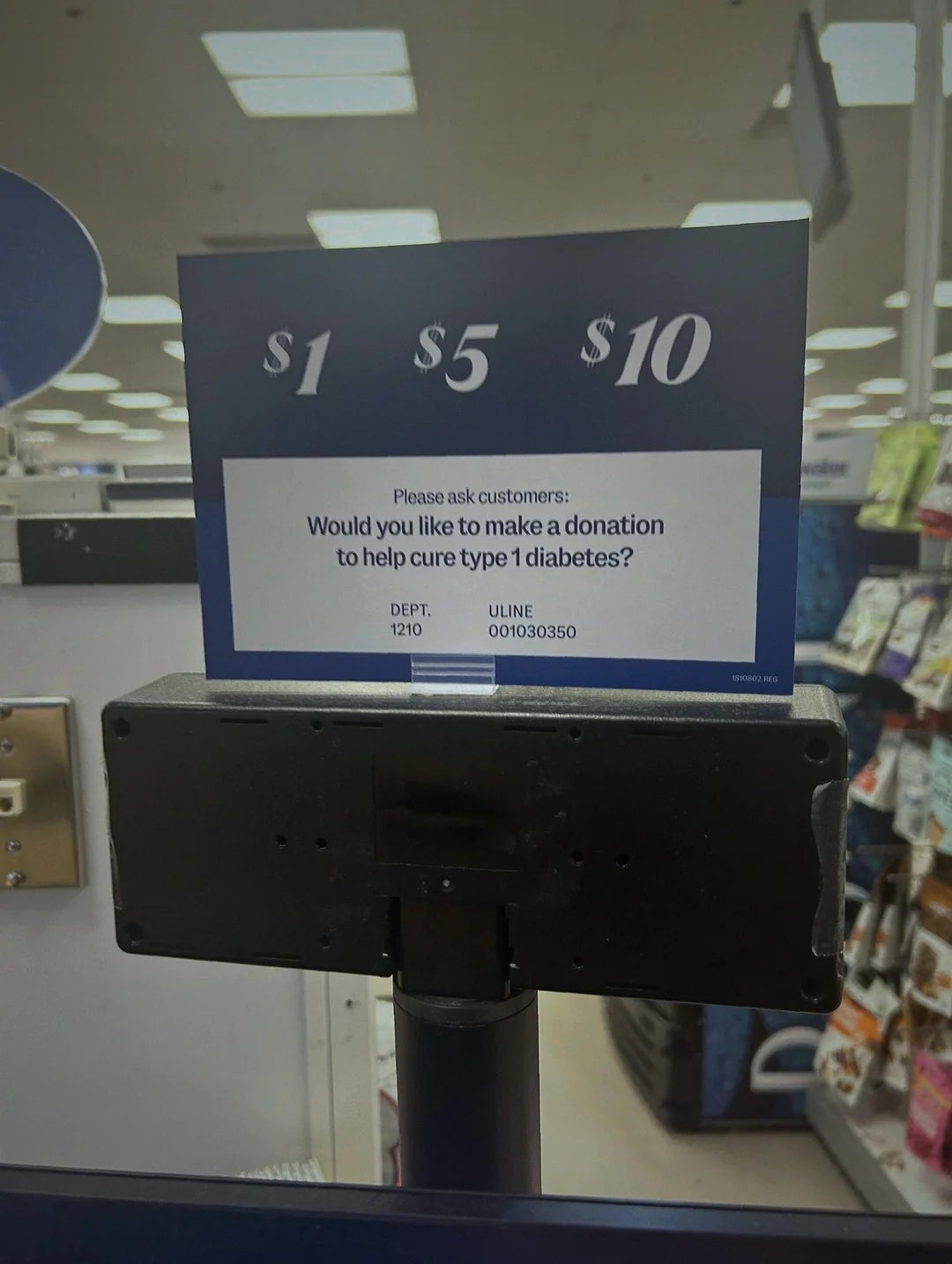
"For anyone trying to vet a nonprofit: all nonprofits in the US have to file a 990, which is publicly available and includes details about employee salaries and budget. Good nonprofits also publish annual reports with a further breakdown of their budget.

Just like with for-profit businesses, there are good ones run by good people and bad ones run by bad people. At the end of the day, 'nonprofit' is just a tax designation, so do your research and don't let a few bad nonprofits discourage you from supporting causes you care about."

"There's another layer: all that's needed is for the nonprofit to invest back any profit into the mission for it to qualify and keep its nonprofit status. So, not-for-profit doesn't mean it never generates profit. One way to 'reinvest' the profits is to pay people, usually upper management.

There are lots of non-profits out there where personnel take over 50% of the money generated. Your donation is quite literally going straight to people's pockets — again, usually upper management."

"That being said, that's not always a bad thing. People deserve to be compensated for their work. Someone has to do the accounting and write/manage the grants. There are multibillion-dollar NGOs out there, but most NGOs are run by people struggling to pay themselves a living wage and eventually abandoning the work for a corporate job because there's only so much you can be both overworked and underpaid."

"FreeTaxUSA is the best for taxes without paying an arm and a leg. It walks you through everything!"

"It's also because it's a way to keep the job if u fail a drug test.

I know someone who did rig work, then would quit come drug test time. He started working for the Fire Department. He tried the same thing, and they told him treatment or gone for good. He took the treatment."

"I attended the friends and family meetings for a family member who was doing outpatient rehab. He was not in the medical field, nor a first responder, but fully 75% of his cohort were."

"I remember going to a talk for a guy who did cybersecurity for a hotel. He said they had like 10 cyberattacks a DAY. When I found out AI could code well, I was like oh shit. We are in trouble."

"Clearly, you don't know about the plumber's corner under the stairs. If you're hiring construction workers, stay on-site as much as you can. They hate nosy nellies because they can't pee inside pre-plumbing when the owner is around."

"Not landscaping but construction: a house was getting built next to mine, and one of the guys working on it was walking into my backyard to use the bathroom.

The first time I let it slide, the second time I walked over and called him out. Go piss on your boss's land, not mine, asshole. "

"It's a shitshow. They increased class sizes so much that students who want to learn aren't really learning much because the teacher is often busy trying to deal with the disruptive kids to actually teach. This is a genuine problem where I am. This relevant public service has been destroyed — no wonder the grades are lower and lower every year. It's got so bad that I know quite a few teachers now that have collectively begun the process of opening tiny private schools where the sizes are REALLY small (6-10 kids), where they can actually teach and the kids will actually learn."

"Also, if a student never comes to school, we're instructed to give them a 50, not a zero. 50 is still failing, but you can't recover from a zero. So if we can bend over backward for this student that never comes to school, maybe we can get him/her passed and graduated."

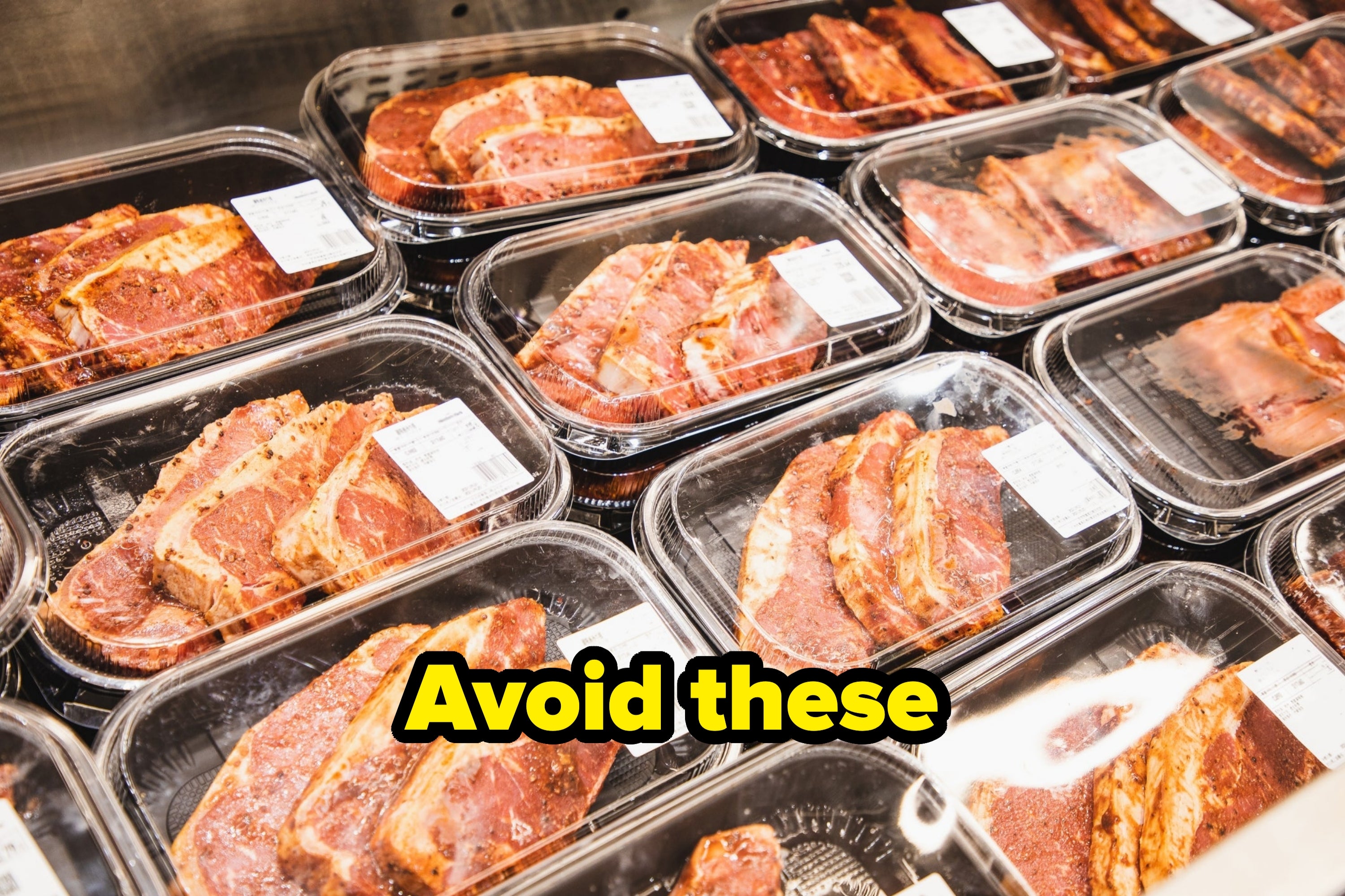
"Can confirm. Worked in a popular butcher shop for years, and when the meat started to smell a little funky, it was time to marinade it. It's not yet dangerous, the 'going bad smell' of meat has levels, and stage one is still perfectly safe once it's cooked to the recommended temperature."

"There's really no such thing as a buyer's agent. They only get paid if you buy, so they are incentivized to get you to make an offer, and one that is as high as possible (if they're on a percentage). That doesn't sound like someone who's on the buyer's side. That sounds like just another salesperson."

"Their incentive is to make you pay as much as possible for the house. When, as the buyer, your incentive is to pay as little as possible.

It leads to situations where unscrupulous agents are pushing their buyers to overbid due to the hot market (I've heard second-hand stories of buyers going considerably over asking when they didn't need to) because they get a higher cut out of a higher bid."

"The industry is owned by the banks; most realtors don't understand that when they get into the business."

"100%. And they are also 100% driving us into another 2008 (them and the 10-year auto loan catastrophe)...the banks are lending on fucking *anything* right now."

"I'm in the game industry, and this industry has been decimated over the past four years. It was not easy to get into this industry before then, but now it is far harder. Exponentially harder. This is especially true for junior developers. Every time I hear about people graduating from game dev schools or with a game dev degree, I feel so bad. Many of them are about to get their dream crushed and realize the financial debt they are stuck in."

"By the end of the Obama presidency, they were already doing trials of ways to counter that, but still give legally licensed legitimate agents access to the system.

Then Trump got in, and all those trials were abandoned. For four years, agents were committing rampant fraud, and we had no new tools to combat it at all.

Then Biden got in, and all those trials got restarted. We got new tools every few months to try to prevent or fix fraud. By the end of his term, fraud was significantly down, and agents were now required to call in with their clients so their clients themselves could put on record what they wanted and what they were allowing the agent to do. Rules around this were very strict, like, 'fail to follow them, you could get fired', strict.

Then Trump was re-elected, and the rules were suddenly changed in ways that effectively de-fanged them. Agents can call in with someone pretending to be you, give your info, and have the imposter grant them full access to everything.

Before I left, I could see the fraud numbers starting to creep back up again.

Stop electing people who care more about businesses making money than about you."

Submissions have been edited for length/clarity.