Press
Thames Water moves step closer to nationalisation after government objects to rescue deal
Images
1 / 8

2 / 8

3 / 8

4 / 8
5 / 8
6 / 8
7 / 8
8 / 8
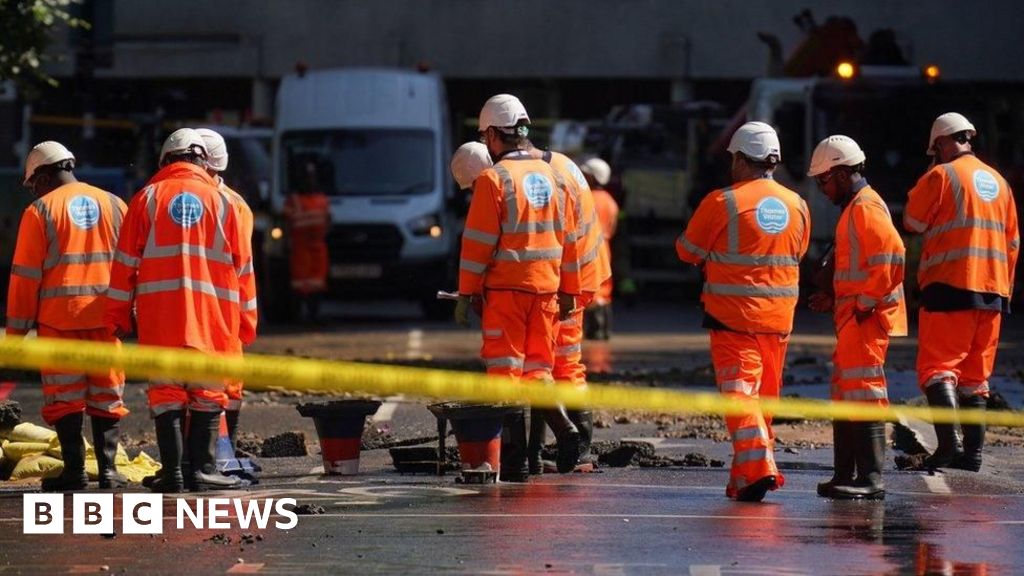
The government has objected to a proposed rescue deal for Thames Water, in a move which takes the UK's largest water company a step closer to a form of nationalisation.

Environment Secretary Emma Reynolds wrote to the industry regulator on Monday to raise concerns over the £10bn package put forward by the firm's lenders.

Fears the company could collapse first emerged three years ago, and the government has been on standby to take control if required ever since.

A government spokesman told the BBC that the current offer "does not do enough to protect consumers or the environment".

Thames Water - which serves about 16 million customers, mostly across London and parts of southern England - has faced heavy criticism in recent years over its performance, sewage discharges, and pipe leaks.

In May last year, it was handed a £122.7m fine, the biggest ever issued by the water industry regulator, for breaching rules on sewage spills and shareholder payouts.

A group of its existing lenders has offered to write off £9.4bn of its near £20bn debt pile and inject billions in new money, but want leniency from future pollution fines in return.

London & Valley Water, a consortium of large financial institutions and investors, said some £3.35bn of cash would be put into the company along with a new £6.55bn debt facility. It would be part of a £10bn business plan until 2030.

A spokesman for the group has previously said the proposed rescue deal would "fund significant improvements for customers, clean up local rivers and achieve full compliance as quickly as possible".

Ofwat, which regulates water companies in the UK, has been reviewing the proposal and a decision is expected this summer.

Without a rescue deal agreed, Thames Water is set to run out cash within a matter of months and could collapse.

The Times, which first reported the story, said the government's intervention was over concerns the deal would place an "undue burden" on customers. Reynolds is due to address Parliament on Tuesday.

Thames Water and Ofwat have been contacted for comment regarding the latest developments.

The government has previously said it would prefer "a market-based solution", but would step in "if that were to become necessary".

The form of temporary nationalisation on the table is known as a special administration regime (SAR), which ensures vital companies such as water, are kept running by government appointed managers.

If the company does go bust, households will still have drinking water and sewerage services.

A spokesperson for Thames Water has previously told the BBC that a SAR would create problems rather than solve them.

"SAR would delay urgently needed improvements, increase costs, transfer risk and potentially create operational disruption," the spokesperson said.

Its lenders, London & Valley Water, previously warned "nationalisation is not the right answer".

"It will only restart the process of fixing Thames Water, require billions of pounds of government financial support, increase uncertainty for employees, put pensions at risk, destabilise the supply chain, and make it harder to deliver the improvements customers deserve," a spokesman added.

Earlier this year, a company which wanted to buy Thames Water, CKI Holdings, argued that customers would be better served if the utility was allowed to collapse, so that they and others could submit new bids to revive the debt-ridden company.

The firm's co-managing director Andy Hunter said CKI, which already owns 75% of Northumbrian Water, had a proven track record in owning critical utilities.

"I think the next owner of Thames Water should be an experienced, credible, long-term focused operator with the expertise and the resources to fix Thames Water," he said.

"But we seem to be sleepwalking into a conclusion that will result in the next owner of Thames Water - having, doubtless, many attributes - having none of these attributes."

In July last year, the boss of Thames Water, Chris Weston, said the company was "extremely stressed" and that it would take "at least a decade to turn around".

The move is seen as a bet that combining streaming with its news and sport offering will boost Fox as TV audiences move online.

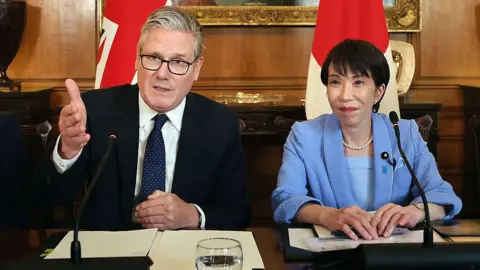
Japanese firms will spend billions on UK infrastructure and offshore wind, Downing Street says.

The new target hasn't yet been decided, with different numbers under consideration, the BBC understands.

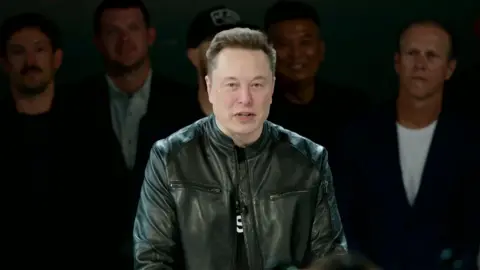
Musk is now worth $1.11tn according to the Bloomberg rich list, while SpaceX listed on the Nasdaq stock exchange with a value of $2.2tn.

The public sale is also expected to make Elon Musk the world's first trillionaire.