Press
NHS report told of Nottingham maternity problems before major inquiry
Images
1 / 6

2 / 6
3 / 6
4 / 6
5 / 6
6 / 6
A previously unpublished report has detailed serious concerns about workload, staffing and culture within Nottingham's troubled maternity services.

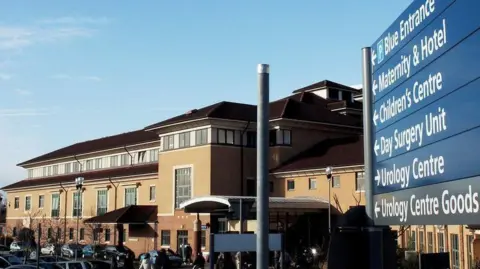
The review of the maternity unit at Nottingham City Hospital - seen by the BBC - was dated days before baby Harriet Hawkins was stillborn in 2016 - a landmark case that eventually led to the largest review of maternity failings in the NHS.

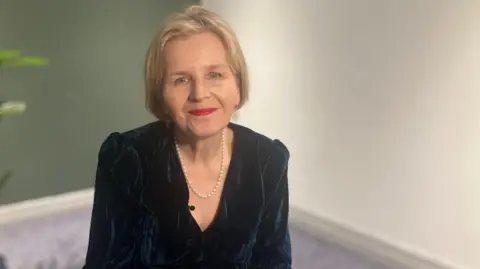
Donna Ockenden, who is leading the review of Nottingham University Hospitals (NUH) NHS Trust - which runs City Hospital - said: "There were many concerns that were known about when Harriet Hawkins lost her life."

She will publish her findings on 24 June after overseeing the review into baby deaths at NUH.

The previously unpublished workplace report is historic, but raises questions about whether warning signs around staffing pressures and culture were acted on sufficiently.

The external review - carried out by a workplace psychologist between December 2015 and March 2016, and dated 30 March 2016 - praised the "remarkable" commitment of staff, but also highlighted concerns around workload, inappropriate behaviour and wider issues with workplace culture.

A total of 49 members of staff, including doctors and midwives, were interviewed and quoted in the report anonymously.

The review was instigated after letters to staff at the maternity unit, as well as "unusual actions" on the unit during a visit by healthcare inspectors.

This included an empty can of energy drink left in the middle of the floor of a clean delivery room - as well as butter "smeared around the top of a birthing pool".

The report also cited feedback from Care Quality Commission (CQC) inspectors, highlighting "some concerns with the culture" within the City Hospital maternity unit.

The review was carried out to understand the culture, identify issues, and provide recommendations of potential solutions.

One worker said: "There is immense pressure on staff - we are mildly to moderately short-staffed all the time."

Another added: "Sometimes we go home in tears. We have our private groups in Facebook. We share on here and provide help: 'Sorry you are not supported, how are you?'"

Another suggested: "We need to close the labour suite, rather than make it an unsafe place to work."

The report also raised concerns about how patients were allocated to midwives.

One account described newly qualified midwives being assigned "high-risk cases", while more experienced staff carry out less complex tasks, adding: "This happens all the time."

Issues with team culture were also identified, with "numerous reports" of some senior staff not being supportive, and, at times, belittling junior colleagues.

The report also referenced some concern about equipment. One worker said: "We don't seem to have enough thermometers."

However, those who took part in the review reported enjoying working together and "valued working with students".

"I enjoy nurturing students, they are our future," one worker said.

Summing up, the external reviewer said: "The passion and commitment experienced and observed from all 49 participants was striking and remarkable.

"Whilst this external review was focused on the City maternity unit, these recommendations are perhaps relevant for the whole maternity service for [NUH]."

Eight recommendations were made in total, which included involving all staff in establishing a vision for the maternity service as a whole, as well as providing development support for team members and managers.

Days after the report was dated, Harriet Hawkins was stillborn at the hospital.

Her case, which saw catastrophic failings, led to what was thought to be the largest payout in NHS history for a stillbirth clinical negligence case.

It also set in motion a chain of events, which resulted in the biggest investigation into a single NHS service since its creation.

Hospital bosses initially found "no obvious fault" in relation to Harriet's death, and the couple were told she had died from an infection.

But an external review identified 13 failings, and concluded Harriet's death was "almost certainly preventable".

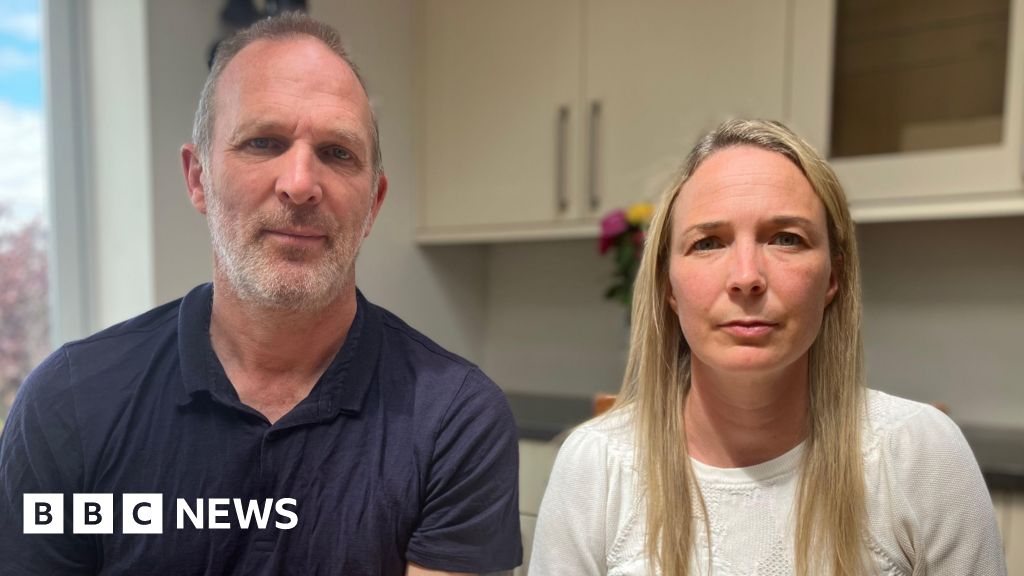
In response to the report, Harriet's parents - Dr Jack and Sarah Hawkins - said the review showed there were significant problems at the hospital where their daughter died, with evidence of a "toxic culture".

Sarah said: "Culture is a really key factor in having a safe department - the culture I was exposed to was toxic."

"I was subjected to some of the worst comments at the most vulnerable time of my life.

"As I walked on to the ward, having been in labour for days and told not to come in, a senior member of staff shouted out 'is it still hanging out of you?'

"I burst out crying. We were clueless about the staff concerns when we went in there."

Jack added: "The whole of Nottinghamshire should have known about this at the time. We did not know what we were walking into.

"In what world is it OK for the most complex tasks to be given to the most junior staff in a labour suite?"

Donna Ockenden, the senior midwife whose team has spent four years reviewing maternity services in Nottingham, said the 2015-2016 workplace culture report exposed patterns of working that were "not right or acceptable".

"Absolutely, I am fully aware of those issues and what I would say is that a lot of those issues took a very long time to sort out," she said.

"They were not sorted out in 2016 immediately.

"In Nottingham, there was an entrenched culture where perhaps a small number of relatively of senior people were feared by others.

"Today, we are picking up an improving culture in maternity services in Nottingham in 2026 but there remains work to do."

This is not the first time culture in Nottingham's maternity services has been raised as an issue. A BBC Panorama documentary, broadcast on 1 June, revealed offensive terms were used by NUH staff to describe heavily pregnant women, raising concerns about staff attitudes.

This included the acronym "FOH" - described in a 2018 resignation letter from another member of staff - which was written by a midwife on a whiteboard at a maternity unit run by NUH.

"FOH" stood for "F", a swear word. The "O", standing for "OFF". The "H", short for "HOME", signalling they wanted the women to leave the maternity unit.

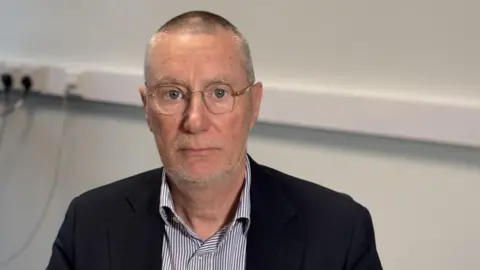
Anthony May, the current chief executive of NUH, who has led the trust since September 2022, said the 2015-2016 report "reinforces the importance of culture in the workplace".

He said: "We know there is a link between culture, and the safety and quality of services.

"We are very focused on that now, and there are many examples where we are trying to improve culture today.

"Our recruitment and retention rates are better, and that is a sign of [good] culture."

May accepted improvement at the trust remained a "work in progress", and that it was challenging to change culture.

May stressed the trust is encouraging staff to "speak up and raise the alarm", adding they are working in difficult circumstances under extraordinary scrutiny.

He said, to his understanding, the report itself was never put into the public domain and was marked for internal use only. He said it had been presented to a quality committee, which feeds information to the public board.

"It did not get the level of scrutiny and prominence it deserved," he added.

Listen to BBC Radio Nottingham on Sounds and follow BBC Nottingham on Facebook, on X, or on Instagram. Send your story ideas to eastmidsnews@bbc.co.uk or via WhatsApp on 0808 100 2210.