buzzfeed Press
17 Infamous Scammers Who Tricked The Whole World With Their Fake Memoirs
Images
1 / 20
2 / 20

3 / 20
4 / 20
5 / 20
6 / 20
7 / 20
8 / 20
9 / 20
10 / 20
11 / 20
12 / 20
13 / 20
14 / 20
15 / 20

16 / 20

17 / 20
18 / 20
19 / 20
20 / 20
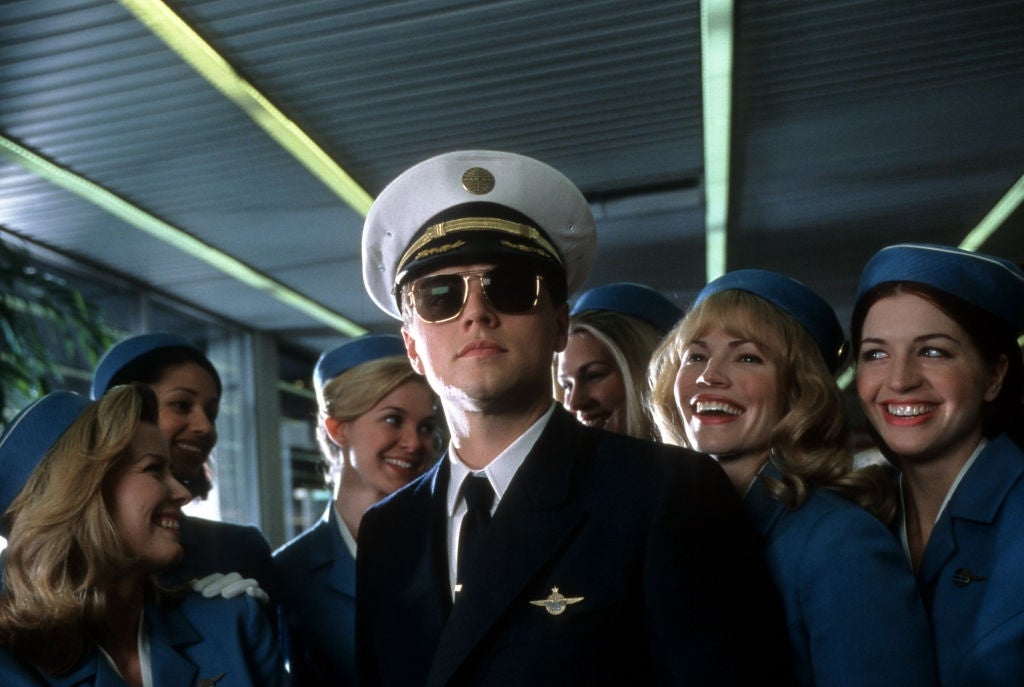
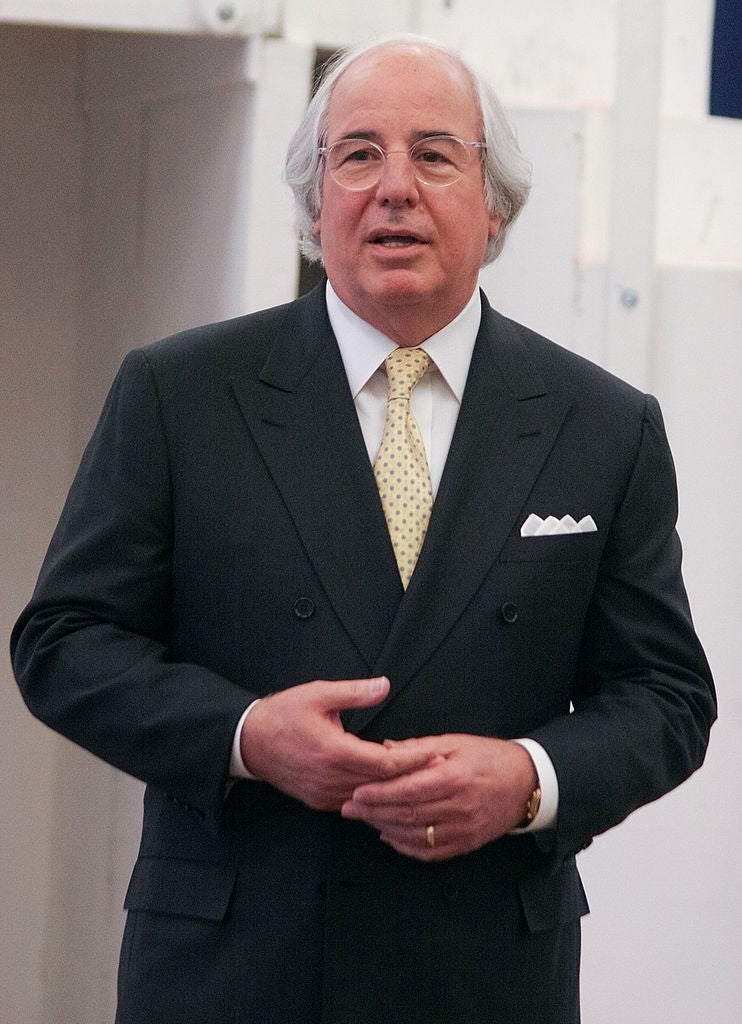
One man fleeced a publisher for $750,000 by claiming that an iconic billionaire gave him the exclusive rights to his life story!

As a staff writer at BuzzFeed, I write about all things celeb, pop culture, and books.

Note: This post mentions drug addiction, child abuse, and rape.

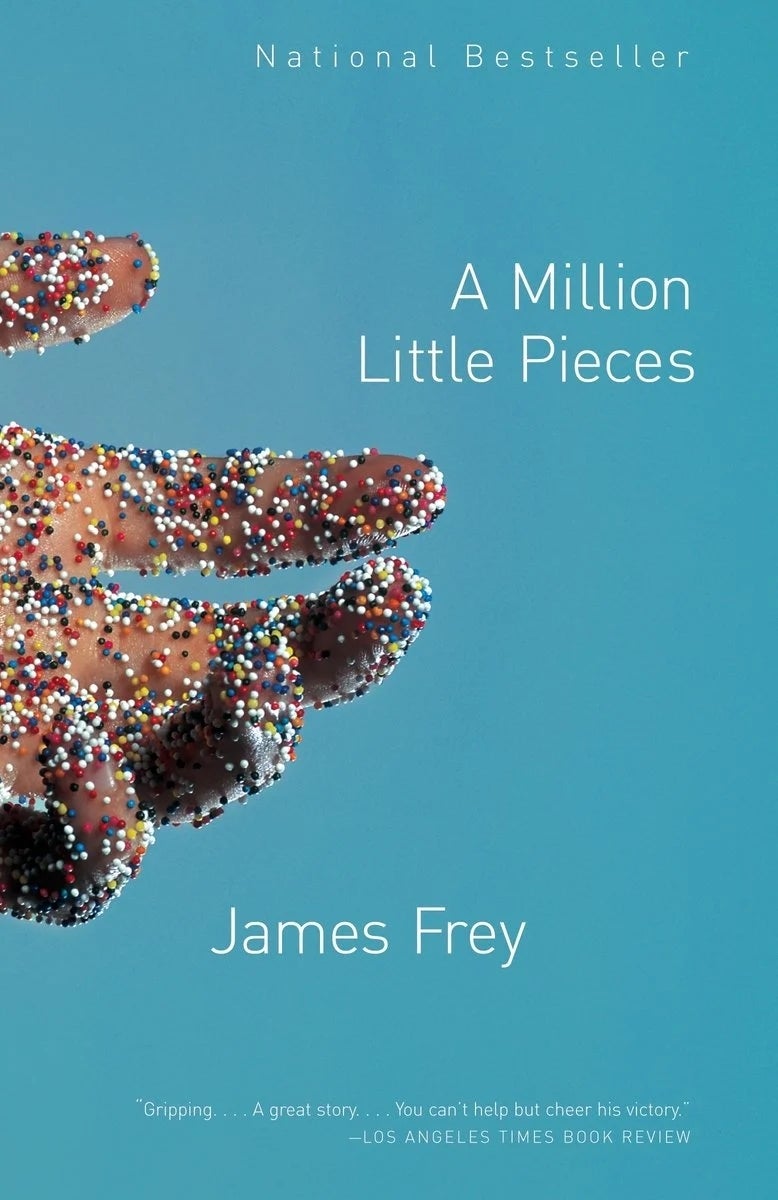
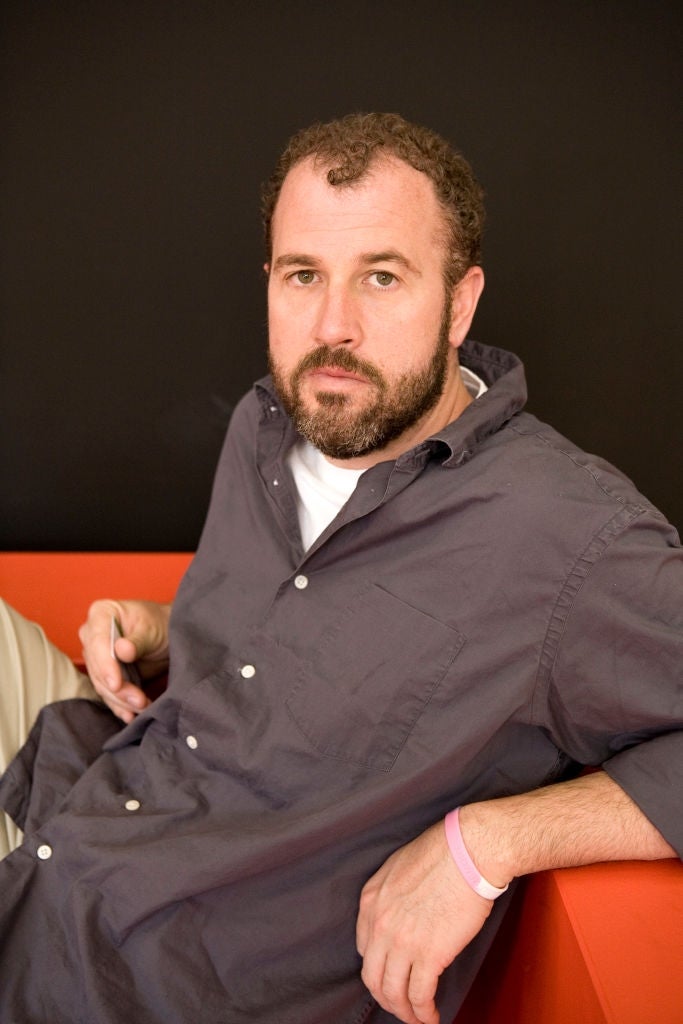
The outlet wrote, "When TSG confronted him Friday (1/6) afternoon with our findings, Frey refused to address the significant conflicts we discovered between his published accounts and those contained in various police reports. When we suggested that he might owe millions of readers and Winfrey fans an explanation for these discrepancies, Frey, now a publishing powerhouse, replied, 'There's nothing at this point can come out of this conversation that, that is good for me.'"

Later, Frey and his publisher admitted that parts of the story were fake. There was also a class action lawsuit against Frey's publisher, who ultimately agreed to pay $2.35 million, including refunds to readers who felt they'd been defrauded, the plaintiffs' legal fees, and a charitable donation.

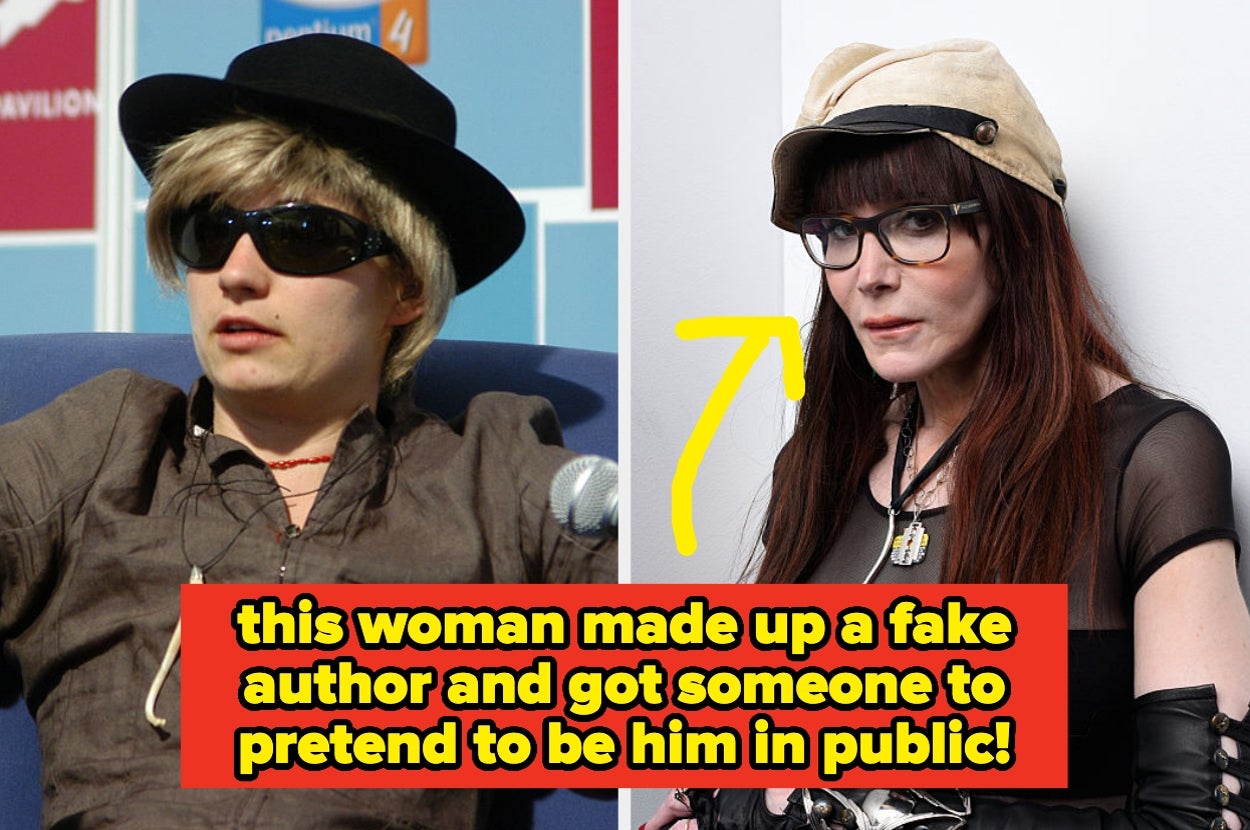
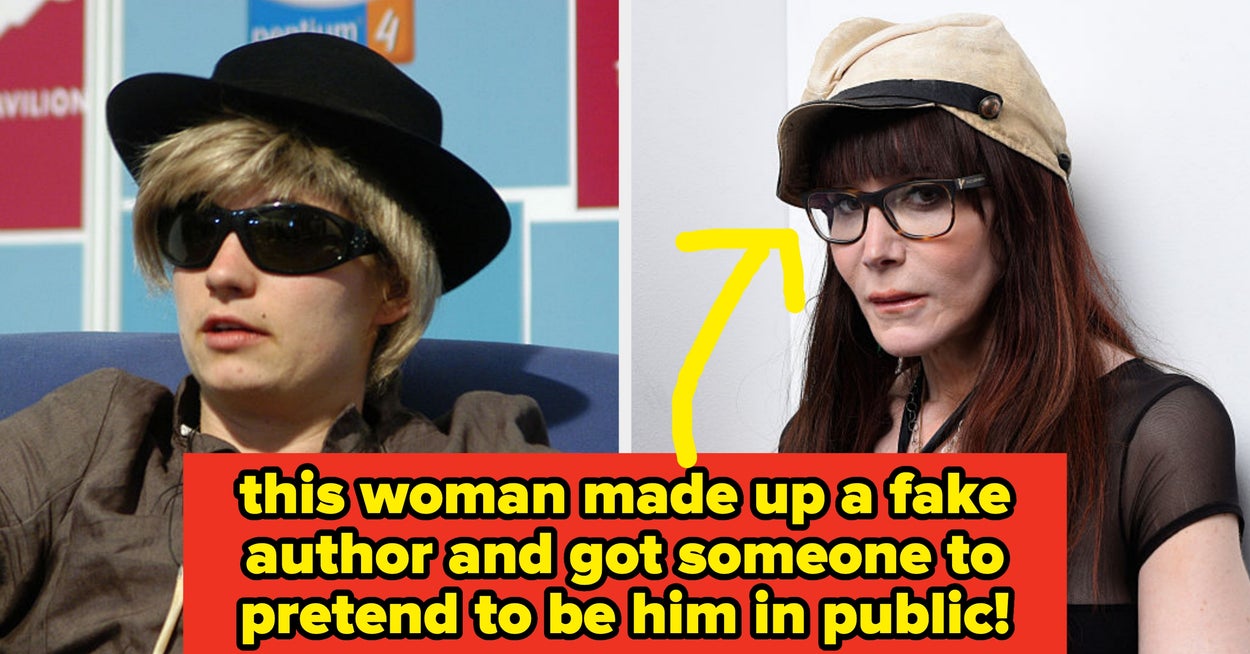
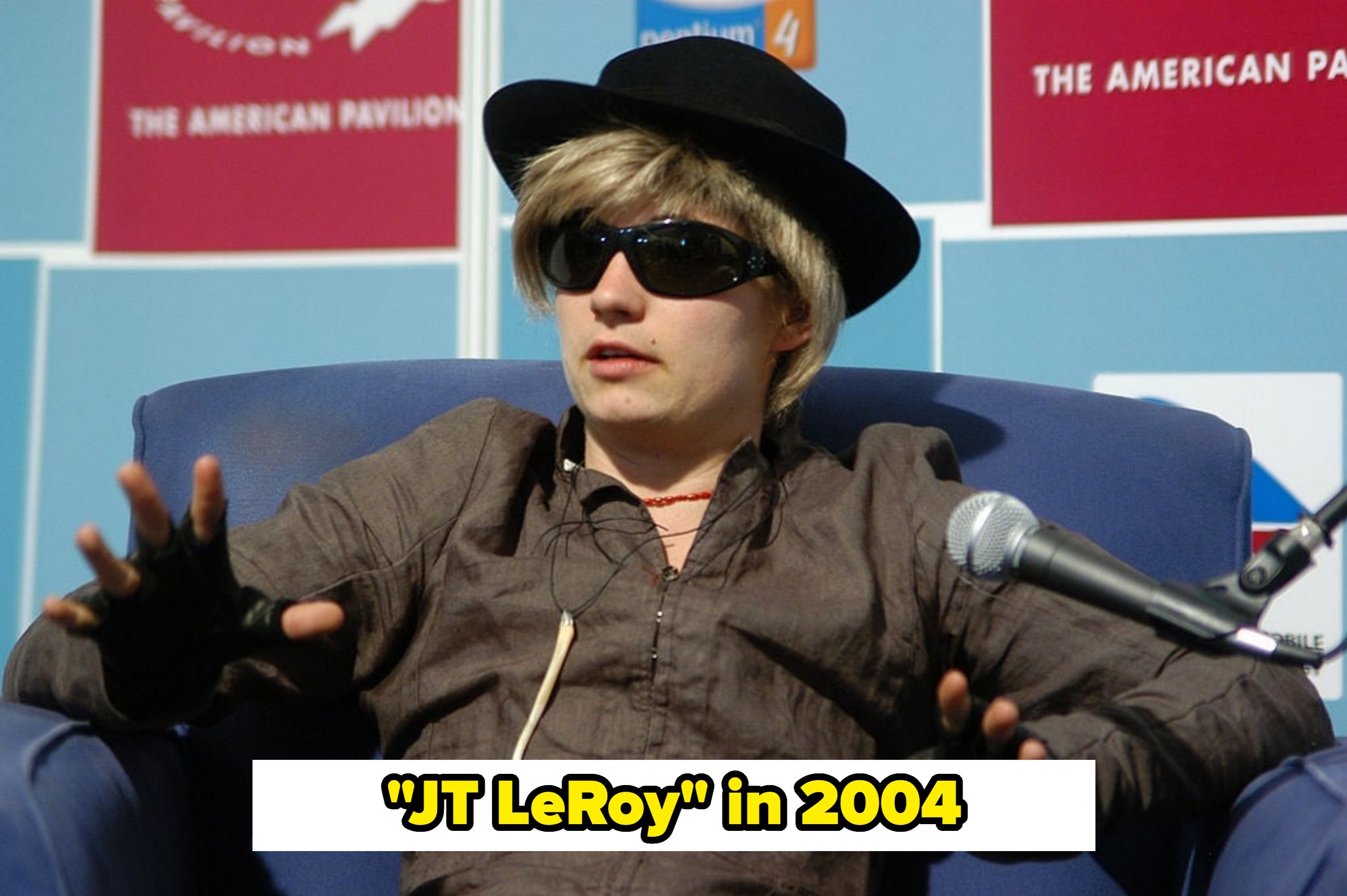
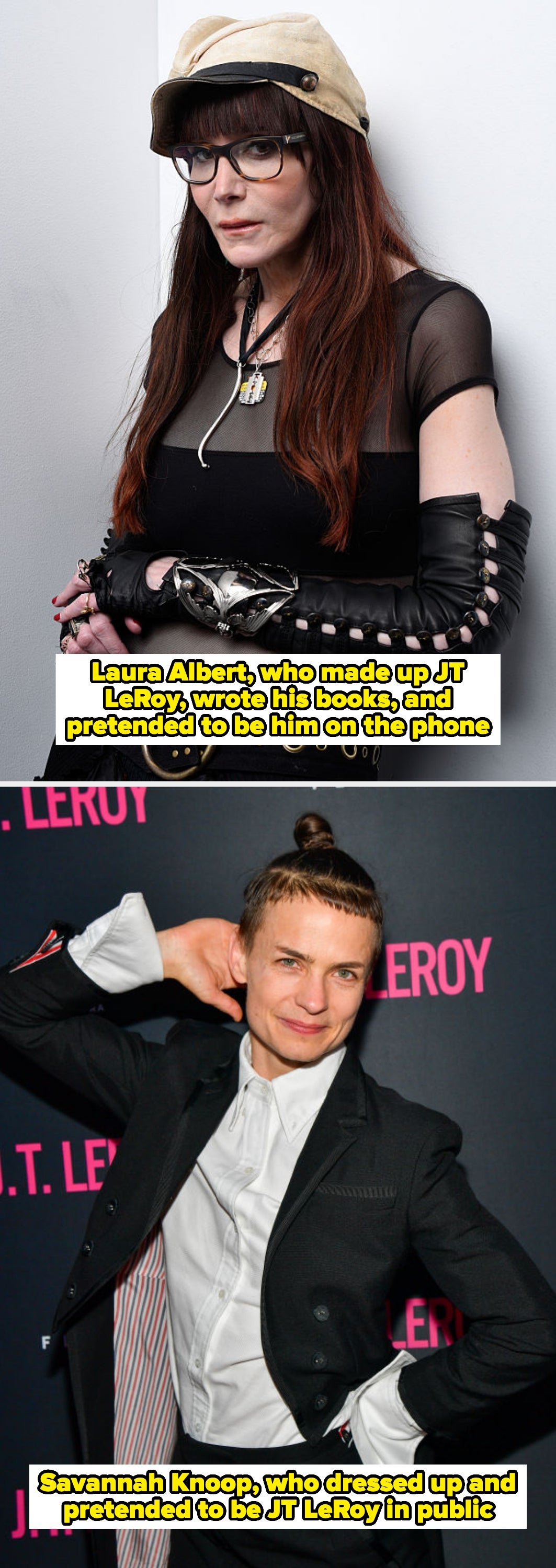
Additionally, Albert's sister, JoAnn, accepted payment for LeRoy's first book on his behalf, pretending to be his cousin, and for his other books, the checks were mailed to a business run by the Alberts' mom.

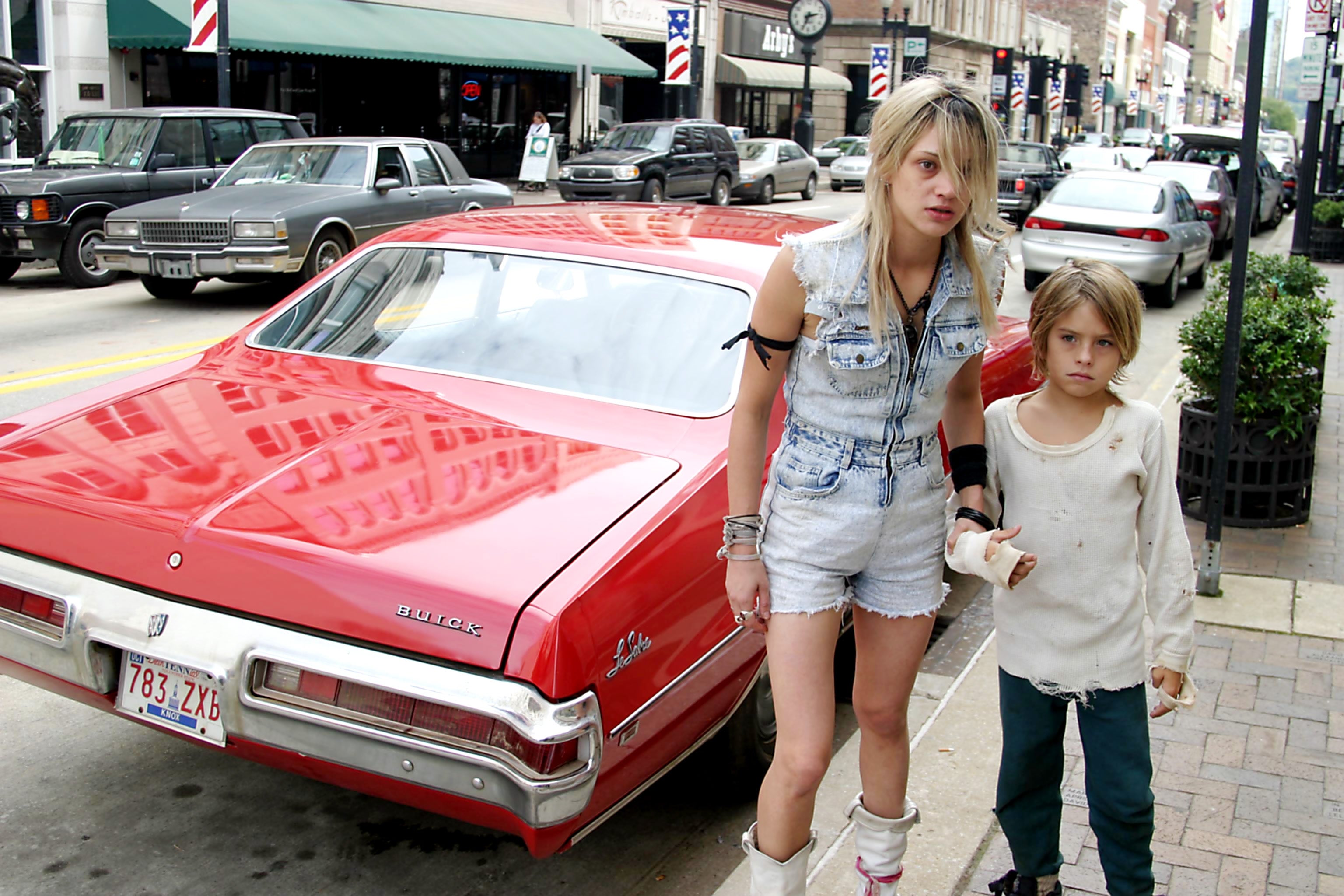
In 2008, Knoop published a memoir titled Girl Boy Girl: How I Became JT LeRoy. Then, in 2018, their memoir was adapted into the movie JT LeRoy, which starred Laura Dern as Albert and Kristen Stewart as Knoop.

In 2017, Albert's representative told the Guardian that "it was not part of JT Leroy’s persona to have HIV and that no reference was made to JT Leroy being HIV-positive in his writings or interviews."

Emerson wrote, "I know how that sounds, especially after three hundred pages explaining why truth is fiction, war is peace, there is no spoon, etc. If you choose to doubt, I won't blame you."

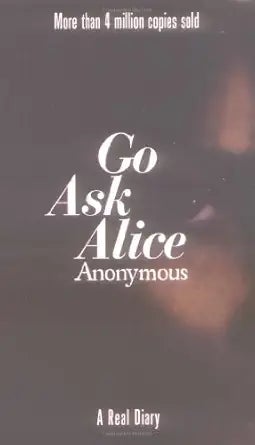
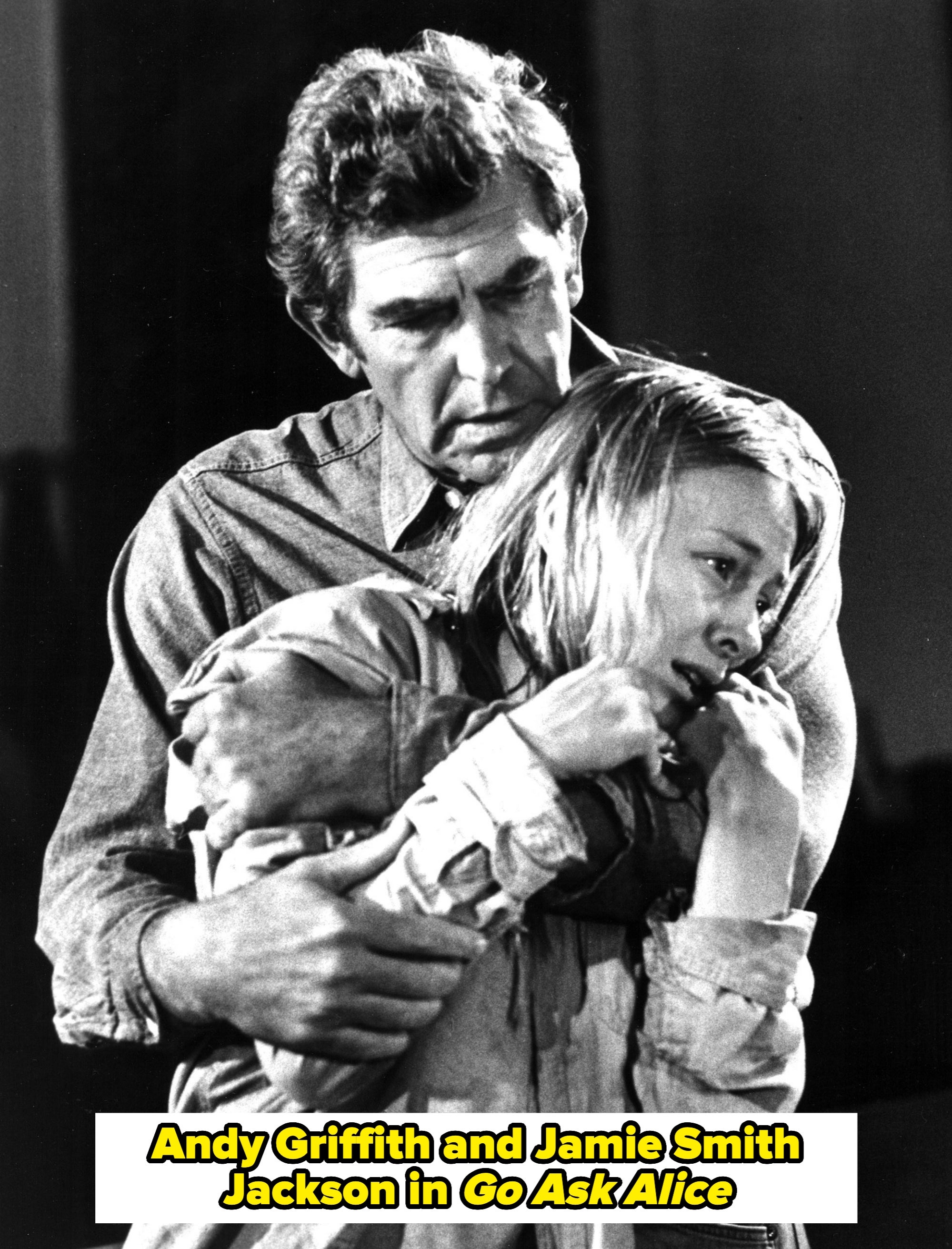
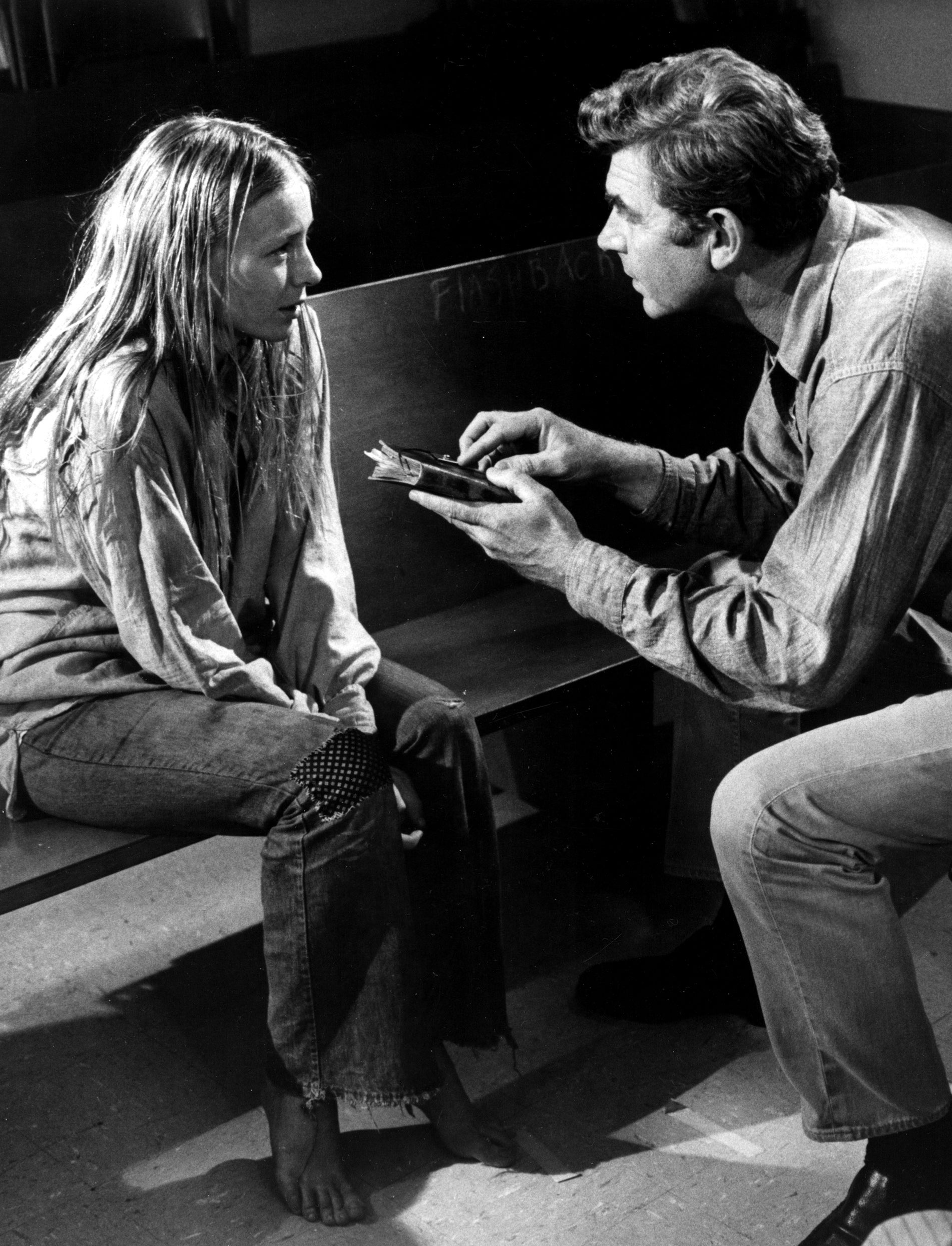
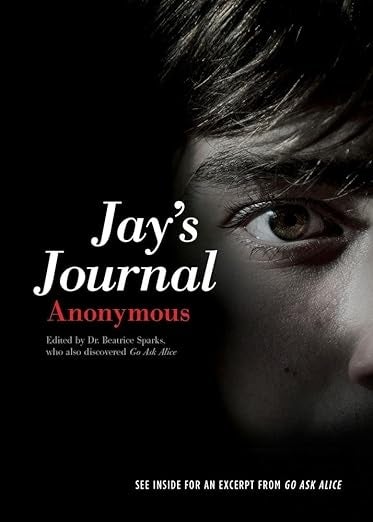
After the widespread success (and controversy) of Go Ask Alice, Sparks was revealed as the "editor." She published two books under her own name. The first, Voices, shared the supposed stories of four teenagers — Mark, who experienced suicidal ideation; Jane, a runaway who was forced into a life of drugs and sex; Millie, the victim of a teacher who taught her about lesbianism; and Mary, a cult survivor. Sparks claimed the stories were based on hundreds of interviews with real teens.

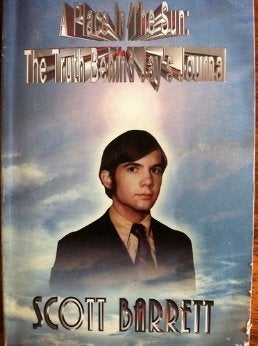
The alleged fabrications in Jay's Journal caused real-world suffering for the Barrett family. They were troubled by reports that kids were trying to recreate events from the book, and Alden's grave was constantly being vandalized.

Sparks continued publishing tales of alleged teenage tragedy into her 80s.

Initially, Rosenblat released the following statement: "This is my personal story as I remember it. The events that are its background are part of history; the book, however, reflects my memories of how the events affected my life. I was a young child at the time my family was caught up in the Holocaust, and I saw things through a young child's eyes. But I know and remember what I saw. What I offer in this memoir are the images, sounds, smells, and feelings that have stayed in my mind for some seven decades."

Sidney Finkel, a Holocaust survivor and friend of Rosenblat, told Today, "I am very worried because many of us speak to thousands of students each year. We go before audiences. We tell them a story, and now some people will question what I experienced."

In a statement, Waltzer told the outlet, "This was not Holocaust education but miseducation. Holocaust experience is not heartwarming, it is heart rending. All this shows something about the broad unwillingness in our culture to confront the difficult knowledge of the Holocaust. All the more important then to have real memoirs that tell of real experience in the camps."

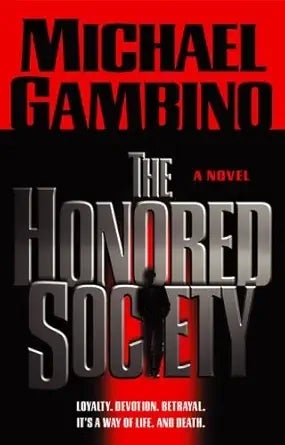
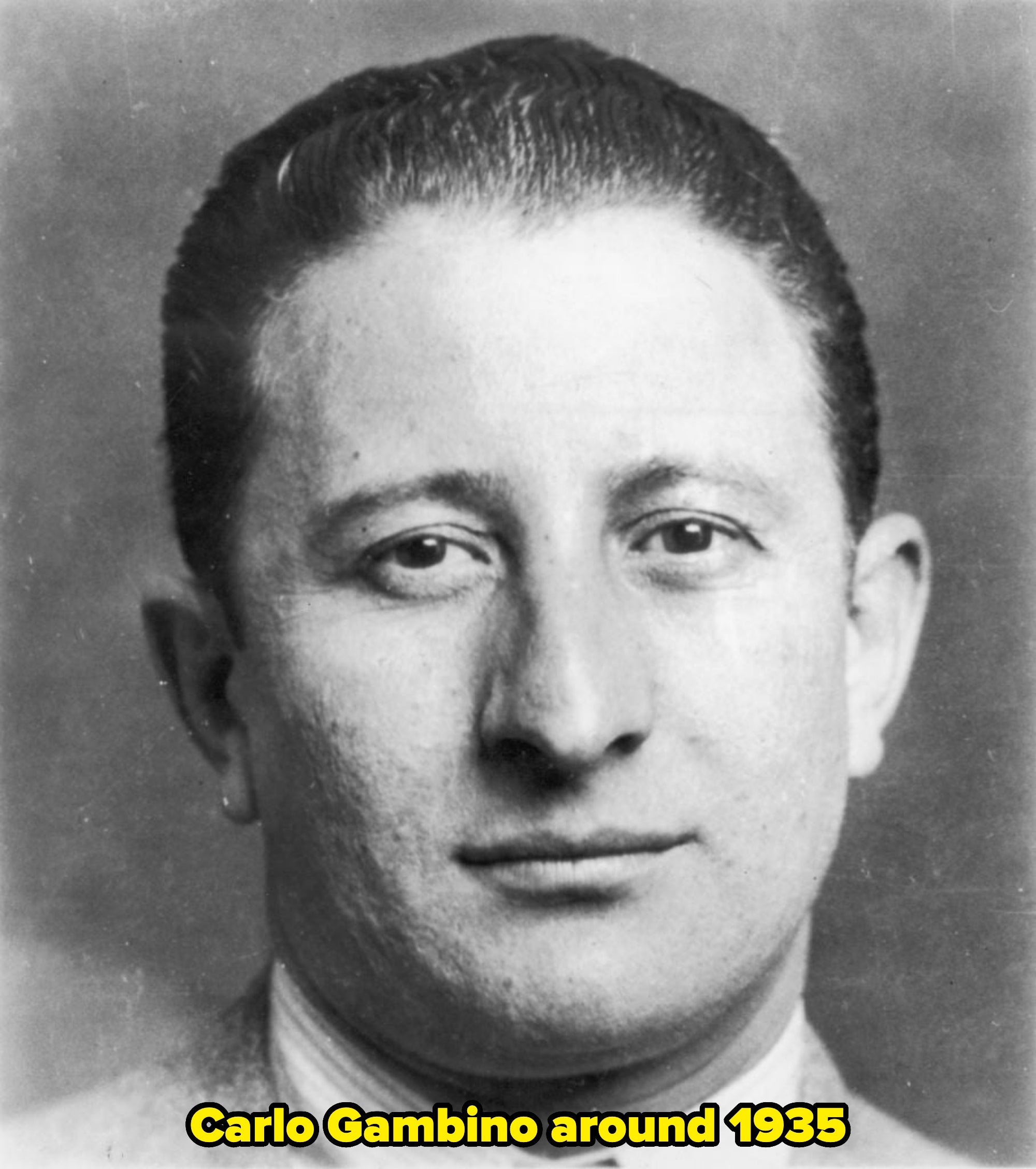
The publisher reportedly withdrew the book and sued Pellegrino's Hollywood agency, and the Gambinos planned to sue Pellegrino as well.

Before the truth came to light, Defonseca and her ghostwriter, Vera Lee, had been awarded $32.4 million in a copyright case against their US publisher. After the author admitted to fabricating the memoir, a court ordered her to pay back the $22.5 million she'd received.

The judge said, "The present case is unique. The falsity of the story is undisputed. Under oath, Defonseca averred that, notwithstanding her present understanding that her story was false, she believed throughout the book production process and trial underlying Mt Ivy I that her story was true; her parents were in fact taken away when she was four years old and murdered in Nazi concentration camps... Whether Defonseca's belief was reasonable or not, the introduction in evidence of the actual facts of her history at the trial underlying [the publisher] could have made a significant difference in the jury's deliberations."

So, al-Sabbagh teamed up with journalist and human rights activist Rana Husseini to unravel Khouri's lies. In total, they uncovered 73 exaggerations and errors in Forbidden Love. One glaring mistake in particular formed the foundation of the author's story. In the book, Khouri claimed that she and Dalia opened a unisex salon, where Dalia met Michael, in the '90s, but such a salon would've been illegal in Jordan at that time.

The, al-Sabbagh sent her evidence to Khouri's publishers, who replied, "Following our discussions with Norma, we are satisfied that, while some names and places have been changed to protect individuals' identities ... Forbidden Love is a true and honest account of her experiences."

Khouri herself sent a letter refuting all 73 errors and exaggerations, adding, "Forbidden Love is not fiction. Is it not enough that her father received nothing more than a slap on the wrist for her murder ... now you wish me to say that she never existed in the first place ... and for what ... the 'image of Jordan'. I am angered to see that you are more concerned for the 'image of Jordan' than for the many innocent victims of honor killings each year in your country."

Al-Sabbagh told the Sydney Morning Herald, "It was totally crazy. She accused us of only defending Jordan's reputation, when we had to defend the reputation of Jordanian women against what she wrote. She ruined the reputation of Jordanian women, saying they were imprisoned in their homes and so on. Jordanian women have excellent education levels that are gradually being translated into participation in the workforce. Her tone is that all Jordanian women live under these traditional practices, which is wrong."

So, al-Sabbagh kept digging. She discovered that Khouri, who claimed not to have returned to Jordan since she fled, had actually entered the country with a US passport three years before Forbidden Love was published.

Husseini told the Guardian, "This woman has ruined our cause... We decided to do a full investigation because the book has had wide publicity. I had never heard of this case, and when I got the book, I was so surprised by the many errors. She talks about a jury, and we don't have juries; she talks about killers being bailed out, but killers are never bailed out in Jordan."

Her mother, Asma, said, "I have no idea why they left. The mother's always the last to know ... They hurt me big. I miss them so much. But Norma always kept deep secrets. She kept things to herself."

At the time, Khouri denied having lived in the US or having kids. She claimed, "Yes, I have paperwork that shows that I was married to [John Toliopoulos]. This was to get my Jordanian passport without my father's involvement... I have only ever been to America after the book was published, on a publicity tour. I have never had an American passport... I stand by what I wrote. I refute the allegations that you are making, and had I been given more ample time, I would have supplied proof. I intend to do so in the future."

Ultimately, the publisher pulled Forbidden Love from shelves after its literary editor conducted an investigation and found that Khouri had indeed been living in the US when she claimed to be living in Jordan.

She said, "For whatever reason, I was really torn, and I thought it was my opportunity to put a voice to people who people don't listen to. I was in a position where at one point people said you should speak for us because nobody else is going to let us in to talk. Maybe it's an ego thing. I don't know. I just felt that there was good that I could do, and there was no other way that someone would listen to it."

During the Satanic panic, there were over 12,000 cases of daycare workers across North America who were falsely accused of committing SRA against the young children in their care. The allegations were largely unsubstantiated. Many of the workers had their reputations ruined, and some were wrongfully imprisoned.

Sean Horlor, who co-directed Satan Wants You, a 2023 documentary about Michelle Remembers and the Satanic Panic, grew up in Victoria, British Columbia, near Smith and Pazder, during the '80s and '90s. He told CBC, "You know, in Michelle Remembers, one of the most pivotal scenes actually takes place in Ross Bay Cemetery. This Satanic cult that's abducting and murdering babies takes Michelle, buries her alive in an open grave, and then they dig her out and hold this rebirth ceremony where her mother gives her away to Satan.

So you can imagine what Ross Bay Cemetery was like growing up in Victoria at that time. It was constantly vandalized, and every Halloween, there were rumors that there were Satanists there and that you should never go near it. All throughout Victoria, too — this is like my entire childhood — [people would say] there were stores downtown that allegedly had altars set up in the back. You had to look out for this and that — look out for people in black clothes. And you know, the queer bookstore in town, they were hotspot No. 1 where children were being sacrificed.

That's the sort of thing that you grow up with — that I grew up with. This didn't just happen to Victoria; it happened everywhere. Steven [J. Adams, co-director] and I are queer men, and a lot of the daycare cases [during the Satanic Panic] involve queer men and women who were accused of being Satanists and abusing children. It's disturbing to know that it all started with this book, and to know how it spread and how many lives are affected."

The reporters wrote, "Our investigation, published in late 1989, was the first in-depth analysis of a particular testimony of satanic ritual abuse. It provided the first concrete evidence that at least some such stories could be the result of troubled minds, bad therapy, and credulity regarding Satanism, and not the result of actual events. Although the evidence was overwhelming and the original publisher and Lauren even admitted that she repeatedly said things that were not true, some continued to believe her."

Years later, Cornerstone magazine uncovered another hoax that Stratford had orchestrated. She reportedly pretended to be Laura Grabowski, a Jewish woman from Poland who survived the Holocaust as a child. The publication was unable to contact her at the time.

Hadjimatheou spoke to eight people who had "direct knowledge" of the situation.

Reportedly, Raynor and Moth Winn's real names are Sally and Tim Walker. Hemmings was Winn's boss at the family-run estate agency and property surveyor where she worked as a bookkeeper in the '00s. Hemmings alleged that her husband began to notice there was money missing a few years after Winn began working for them. In 2008, he checked the company's account balance to discover that the large sum she was meant to deposit hadn't been deposited at all. The Hemmings went through their books and discovered a total of £9,000 missing.

Several days later, Winn went to the Hemmings' house in tears to pay back the missing funds. However, the couple kept digging, and eventually, they discovered "around £64,000 she'd nicked over the previous few years." Hemmings's husband reported it to the police, and Winn was arrested. After being questioned, she was released to go home for the night and told to return to the station in the morning. However, the next day, she disappeared.

The Winns went to London, where Moth's distant relative and his wife lived. The relative lent them the money to repay the Hemmings so they wouldn't go to prison. He also got them a lawyer, who convinced the Hemmings to not pursue criminal charges and sign an NDA in exchange for the Winns paying them back and covering their legal fees.

The relative lent the Winns £100,000 through a "payable on demand" loan secured against their house. When the relative's business went belly-up a few months later, the loan was transferred to a pair of men he was indebted to. Those men demanded the Winns pay back the loan, and when they failed to do so, the men took to them to court, which ordered that their house would be repossessed if they didn't pay back the loan within a year. The couple tried to make money by starting a publishing company that only published one novel, and customers who ordered it from their website would be entered in a drawing to win their house "free of mortgage or any other legal or registered charge." In reality, they had a £230,000 mortgage on top of the loan. Ultimately, the house was repossessed.

In a statement, Raynor Winn told the Observer, "The Salt Path lays bare the physical and spiritual journey Moth and I shared, an experience that transformed us completely and altered the course of our lives. This is the true story of our journey."

The publisher didn't respond to the outlet's request for comment at the time.

Lowell initially told her story in interviews to get press attention, which in turn helped her get better roles. Eventually, a publicist convinced her to write a book.

Lowell and Colcord argued over whether or not it was possible for her dad's crew to fold a topsail on the schooner. The more he scrutinized her, the more irritated she became. To settle the disagreement, another book critic called up a friend who worked on an ocean liner. The friend clarified that it would be impossible, and Colcord was right. So, Lowell ran at him and threw a punch but stopped a few feet short. She reportedly said, "If you weren't so old. God damn it! No one has ever called me a liar before!"

The publisher continued supporting Lowell, and The Cradle of the Deep became a huge success.

Colcord told the Bookman, "If today we have reached the point of progress where a literary hoax is condoned as good business … then we have fallen on evil times in American literature."

Lowell made a significant amount of money from book sales, and after divorcing her husband, she went on to become a tabloid reporter. She published another book about her alleged exploits, titled Gal Reporter.

Inspector John Tarpey told the Toledo Blade, "The T's were crossed the same, the I's were dotted the same, and some letters were broken up alike. We took the samples to our own handwriting experts, who studied them for two days and confirmed that they were the same."

In 1981, Irving published The Hoax, a book about his fraudulent autobiography. In 2006, it was adapted into a movie starring Richard Gere.

His original fake Hughes memoir was published online in 1999.

Reporter Michele Ingrassia also noted two interesting details about Johnson — his voice (he made a lot of phone calls and did radio interviews) sounded like it could believably belong to a woman, and the cultural references he made in his book were pretty dated for a 14-year-old.

In 2006, The Night Listener was adapted into a movie starring Robin Williams.

If you or someone you know has experienced sexual assault, you can call the National Sexual Assault Hotline at 1-800-656-HOPE (4673), which routes the caller to their nearest sexual assault service provider. You can also search for your local center here.

If you are concerned that a child is experiencing or may be in danger of abuse, you can call or text the National Child Abuse Hotline at 1-800-422-4453(4.A.CHILD); service can be provided in over 140 languages.

The National Alliance on Mental Illness helpline is 1-800-950-6264 (NAMI) and provides information and referral services; GoodTherapy.org is an association of mental health professionals from more than 25 countries who support efforts to reduce harm in therapy.