Press
New drug to stop 'Ozempic butt' muscle loss side effect of obesity jabs
Images
1 / 8

2 / 8
3 / 8

4 / 8
5 / 8
6 / 8

7 / 8

8 / 8
A new drug called apitegromab could help people on obesity jabs avoid unwanted muscle decline that's been linked to flat bums or "Ozempic butt", according to research in Nature Medicine journal.

Around a third of the weight loss from GLP-1 obesity jabs like Wegovy and Mounjaro can come from muscle rather than fat, the US research suggests.

But in the trial with 102 adults, mostly women, those who took apitegromab with their obesity medication maintained more muscle while still losing fat, body scans showed.

Experts say more evaluation studies are needed though, before recommending it.

People on GLP-1 drugs such as Ozempic, Wegovy and Mounjaro may experience exaggerated loss of fat, muscle and tissue volume as weight quickly drops.

It is thought to be the result of rapid slimming, rather than the medication itself.

Obesity jabs curb appetite and make you feel fuller for longer, so you eat much less and shed weight.

Unlike fat, it is harder to put muscle back on quickly.

While not a medical diagnosis, some users complain of how their body shape changes, including a deflated or saggy bum, dubbed Ozempic butt.

US plastic surgeons say they are seeing a "noticeable uptick" in consultations about it.

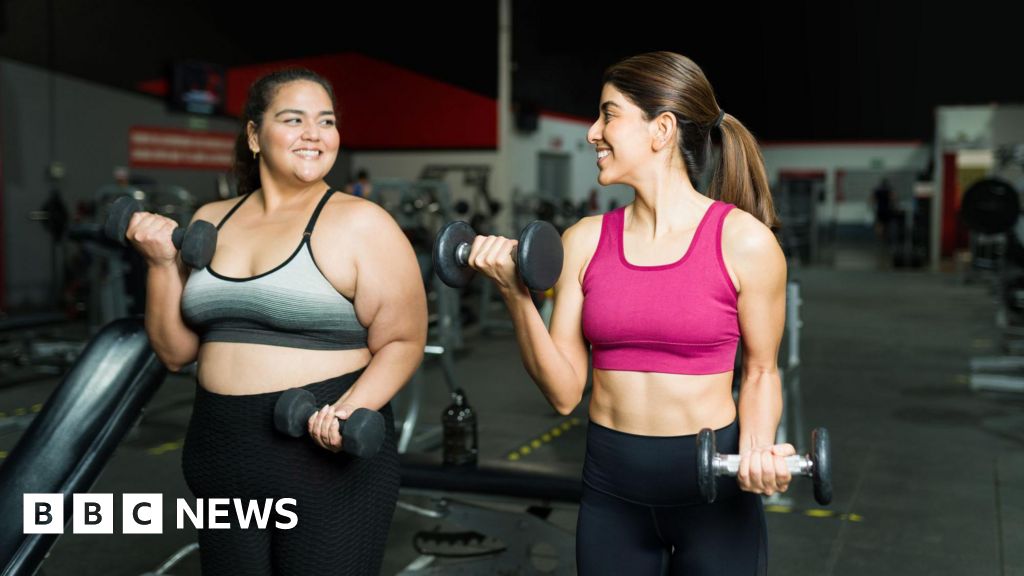
People on GLP-1s are already advised to eat healthily and do exercise, including strength training, for their muscles.

GLP-1 drugs are not meant for a short-term or cosmetic weight loss, and health experts strongly advise against using them as a quick-fix to get "beach body" ready, although it is clear people do misuse them.

Currently, apitegromab is only available for use in clinical trials and must be given into a vein as an infusion.

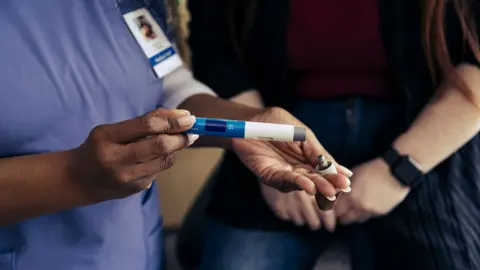
The company that makes it, which funded the work, is investigating whether people could self-inject it using a special injection pen - just like GLP-1 jabs.

Apitegromab works by blocking a protein involved in the breakdown of muscle and is also being explored as a treatment for other medical conditions affecting muscles, including spinal muscular atrophy.

In the obesity trial, which ran for six months and used the weight-loss drug Mounjaro, people who also received apitegromab kept around 1.9kg or 55% more muscle, or 'lean mass'.

Lean mass or muscle made up 14.6% of total weight loss in the apitegromab group, compared with 30.2% in the placebo group that received a dummy treatment alongside Mounjaro.

Dr Marie Spreckley, an expert from Cambridge University who was not involved in the research, said the findings were promising but should be viewed as "encouraging early evidence" rather than definitive proof of clinical benefit.

She recommended larger and longer studies to check if preserving muscle improves strength, wellbeing and long-term health outcomes.

You don't have to visit the gym to do strength training. Any activity that makes your muscles work harder than usual counts.

This increases your muscles' strength, size, power and endurance.

Start small and build up, says the NHS.

Try to do two sessions or more a week, which can include:

Diet, particularly getting enough protein, is important too.

Research shows 20-40g protein per meal helps to maintain or build muscle mass.

As a rough guide, fill a quarter of your plate with protein foods, such as meat, fish, beans, lentils or chickpeas, at every meal.

Protein-rich snacks include some yoghurts, boiled eggs and nuts.

Two separate 24-hour walk outs will take place on Thursday 25 and Monday 29 June.

The drug works as an appetite suppressant by mimicking a hormone that makes people feel fuller, which can help them lose weight.

Denmark's team doctor said an ICD implanted into the footballer's chest responded as it should after he collapsed on Sunday.

Dorset's Distinguished Gentleman's Ride raised more for charity than any other in Europe.

A warning comes as figures reveal hospital admissions for underage alcohol and drug use in Guernsey.