Press
Water-safety warning after nine people die during heatwave
Images
1 / 9

2 / 9
3 / 9
4 / 9

5 / 9

6 / 9

7 / 9
8 / 9

9 / 9
People have been urged to take precautions after multiple deaths during water-related incidents in the recent heat wave.

The Royal Life Saving Society (RLSS) issued a warning following the deaths, most of which involved children, saying "warmer weather unfortunately sees an increase in accidental drownings".

It warned water temperatures remain very cold despite increased air temperatures, and that cold water shock could make swimming difficult and harder to get out of the water.

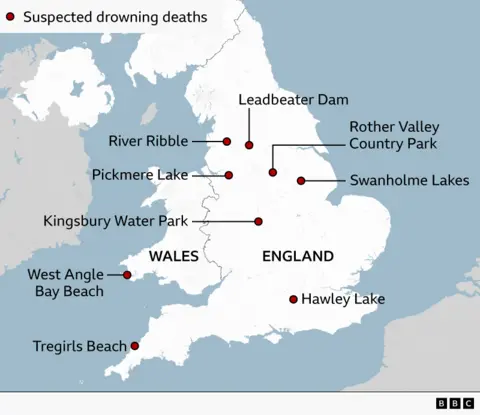
In all during the hotter weather, at least seven young people have died in the water, as well as a man in his 60s and a woman in her 70s.

Wednesday brings a reprieve from the record-breaking temperatures, as cooler air moves over northern and eastern areas of England.

A leading network for drowning prevention has recommended swimming in supervised locations with lifeguards where possible and entering the water slowly to reduce the risk of cold-water shock.

Speaking to BBC Breakfast on Wednesday morning, Jim Bridge from Water Safety Partnership urged those who find themselves in difficulty in the water to "float to live".

"So lie on your back with you head back, with your ears submerged, use your arms and legs to stabilise yourself and just let your breathing come back to a normal breathing pattern.

"And when you're feeling confident that you've gotten used to the water and your breathing's normal, you can shout for help or swim to save yourself."

People living in parts of Northamptonshire and Bedfordshire report their taps running dry.

Wales has recorded its hottest May day in over 80 years, with a temperature of 32.9C.

Police are running the campaign to deter anti-social behaviour after a number of reported incidents.

Temperatures soared to 35.1C in Kew Gardens, south-west London, according to provisional figures.

Temperatures in Northern Ireland are not likely to be as high as those in the Republic of Ireland.