yahoo Press
Puerto Rico governor announces state of emergency to fight coastal erosion
Images
1 / 6

2 / 6

3 / 6
4 / 6

5 / 6

6 / 6
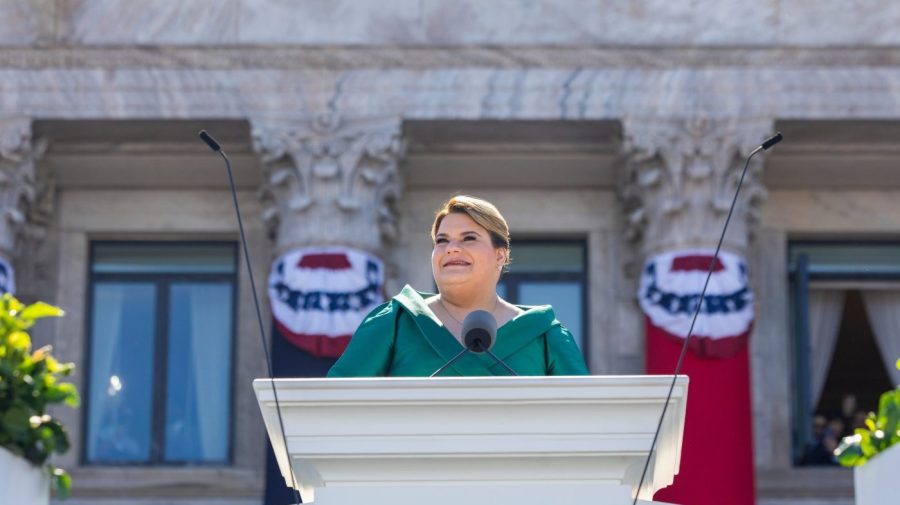
Puerto Rico Gov. Jenniffer González-Colón declared a state of emergency Wednesday over coastal erosion on the island’s northern coast.

González-Colón signed an executive order that states coastal erosion has “accelerated” in Puerto Rico because of rising sea levels, storm surges, atmospheric phenomena and the “geomorphological vulnerability” of multiple coastal communities.

Those trends, the order states, represent a “direct threat” to residences, public infrastructure, natural resources and the safety of citizens on the island.

The order specifically highlights the “critical condition” of erosion impacting the community Parcelas Suárez in Loíza, roughly 20 miles east along the northern coast of Puerto Rico from the capital of San Juan.

“My administration is acting with urgency to protect lives, property and critical infrastructure in our coastal communities,” González-Colón wrote in a statement in Spanish. “This executive order allows us to accelerate the necessary work to address a situation that represents a real and imminent risk to hundreds of Puerto Rican families.”

By signing the executive order, the governor will expedite immediate mitigation, protection and government response measures. The order also authorizes the island’s Department of Natural and Environmental Resources and other agencies to “immediately implement” mitigation projects and actions, while Puerto Rico’s Office of Management and Budget, Financial Advisory Authority and Fiscal Agency must collaborate in order to “facilitate resources and operational assistance.”

González-Colón signed the order just days before the beginning of Atlantic hurricane season, which starts on June 1 and ends on Nov. 30. Forecasters with the National Weather Service (NWS) are projecting a 55 percent chance of a below-normal hurricane season, a 35 percent chance of a near-normal season and a 10 percent chance of an above-normal season.

The NWS cited slightly warmer than normal ocean temperatures in the Atlantic and weaker than average trade winds for its projections. The service noted that El Niño is “expected to develop and intensify” during the hurricane season.

“Although El Niño’s impact in the Atlantic Basin can often suppress hurricane development, there is still uncertainty in how each season will unfold,” said Ken Graham, the director of the NWS. “That is why it’s essential to review your hurricane preparedness plan now. It only takes one storm to make for a very bad season.”

During hurricanes Irma and Maria in 2017, Puerto Rico experienced “significant impacts” to beaches, dunes and coral reefs, according to the U.S. Geological Survey. The coastal erosion, inland flooding and coral losses resulting from those storms put critical infrastructure at risk to future flooding and erosion, the survey noted.

Copyright 2026 Nexstar Media, Inc. All rights reserved. This material may not be published, broadcast, rewritten, or redistributed.

For the latest news, weather, sports, and streaming video, head to The Hill.