yahoo Press
Navy chief undercuts Trump and Hegseth on Taiwan, Iran
Images
1 / 6

2 / 6

3 / 6
4 / 6

5 / 6

6 / 6
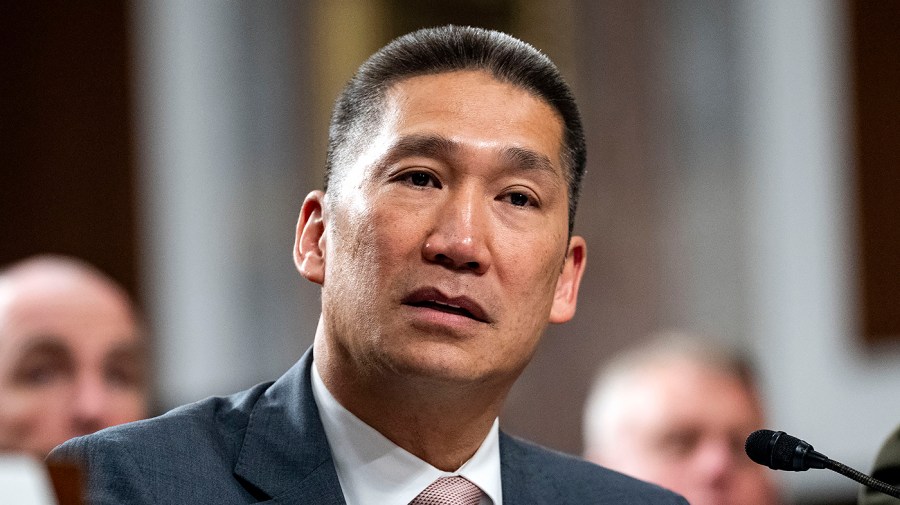
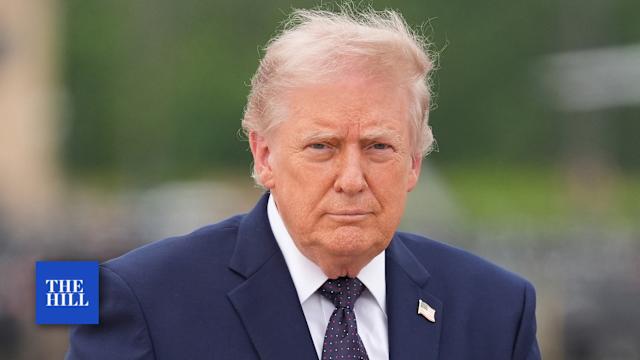
Acting Navy Secretary Hung Cao’s insistence this week that the Pentagon had paused a $14 billion arms sale to Taiwan over a munitions review has undercut the Trump administration’s narrative on both Iran and Taipei. Cao on Thursday told Senate appropriators that while the U.S. has “plenty” of missiles and interceptors, the Trump administration is holding off on some foreign military sales to “make sure we have the munitions we need for Epic Fury,” referring to the official name for President Trump’s war with Iran. Cao’s remarks — which contradict Trump’s claims that he may hold off on the arms sale to Taiwan as a “negotiating chip” with China — also discounts the administration’s narrative that munitions stockpiles are no cause for worry. But the coinciding issues may prove to be a benefit for Trump as he looks to rebuild America’s stockpiles while also seeking diplomatic gains with Beijing. “On one hand, Trump wants to keep U.S.-China relations on a constructive path, at least until [Chinese President] Xi Jinping visits Washington in September, and on the other hand, there is a munition problem. So if you can delay the sale and/or delay delivery of the order and sort of help both of these issues at the same time, it makes sense,” said Evan Sankey, an analyst at the Cato Institute focusing on U.S. foreign policy toward China and East Asia. “It is both things … and if that munitions problem dovetails with President Trump’s diplomatic preferences regarding China, that’s kind of like a happy coincidence,” he told The Hill. Trump last week traveled to China to meet with Xi, taking care during the trip to publicly steer clear of any mention of Taiwan — which Beijing sees as part of its territory. China has threatened to bring Taipei under its control by force if necessary — increasing its military drills around the island — and has discouraged Washington from selling it weapons. Case in point, when the administration in December approved a separate $11 billion arms sale to Taiwan — one of the largest such packages ever — China vehemently opposed it, claiming it would “accelerate the push towards a dangerous and violent situation across the Taiwan Strait.” That weapons package has not yet been advanced. Though the U.S. maintains formal diplomatic ties with China and doesn’t recognize Taiwan as a country, Washington provides the island with weapons to help it maintain its self-defense. Following his Beijing visit, Trump told reporters that the arms sale was discussed with Xi “in great detail,” even though in 1982 the U.S. pledged to Taiwan it would not consult Beijing on arms sales to the island. He said he hadn’t yet approved the $14 billion deal with Taipei as, “we’re going to see what happens. I may do it; I may not do it.” He also told Fox News that arms sales to Taiwan are “a very good negotiating chip” in Washington’s handlings of Beijing. The comments quickly riled defense hawks in Congress, with Sen. Mitch McConnell (R-Ky.) asking Cao about the arms pause on Thursday, calling the delay “distressing.” “We’re just making sure we have everything, but then the foreign military sales will continue when the administration deems necessary,” Cao replied during a Senate Appropriations defense subcommittee hearing. At the same hearing, Sen. John Kennedy (R-La.) pressed Navy Chief of Operations Admiral Daryl Caudle on the sale to Taiwan, asking him if he agreed that it would be a good idea for the U.S. to gain leverage with China. Caudle declined to offer his opinion, saying such deals “are very complex” and require “a full calculus of all the levers of power that are being negotiated and worked.” “What more do we have to know, admiral? President Xi has telegraphed his anxiety, his insecurity … We want leverage, we want stability, not a war. … Why don’t we just go ahead and sell the weapons to Taiwan that Taiwan wants?” Kennedy asked. Caudle maintained that the U.S. “definitely want[s] Taiwan to be as strong as they can be” but added that he wouldn’t get in front of the administration’s decision. Zack Cooper, a senior fellow with the American Enterprise Institute, told The Hill that he believes Beijing has built up leverage to try and make it more difficult for Trump to carry out arms sales to Taiwan without incurring the loss of the relationship. “The Chinese might condition Xi Jinping’s trip to the U.S. planned for September on Trump not providing arms,” Cooper said. “I also think it’s very likely that they will condition Defense Secretary Pete Hegseth’s trip to China — which I’ve heard is scheduled for July — on that arms sales package either not being announced or being significantly shrunk.” He pointed out that the U.S. delay is not entirely out of the ordinary since the U.S.-Israeli war in Iran began on Feb. 28. Washington also has held off on a shipment of Tomahawk missiles to Japan, reportedly telling the nation that deliveries of its order for about 400 missiles by March 2028 would be disrupted. An arms sale to South Korea also has been delayed, though Seoul has been hesitant to comment publicly, Cooper said. Washington has reportedly burned through thousands of missiles since the start of the Iran war, which has been in a tenuous ceasefire since April. Administration officials have insisted munitions stockpiles are not strained, accusing the press and lawmakers of exaggerating the issue. “First of all, the munitions issue has been foolishly and unhelpfully overstated,” Hegseth told House appropriators last week. “We know exactly what we have. We have plenty of what we need.” Among the munitions expended include nearly all of the long-range stealth cruise missiles left in Washington’s stockpile and thousands of Tomahawks, Patriot interceptor missiles, Precision Strike and ATACMS ground-based missiles. Congress for over a month has anticipated a supplemental request from the White House, reportedly set for between $80 billion to $100 billion to fund the Iran war, with a significant chunk meant to backfill costly and sophisticated weapons. Even with the arms sale uncertainty, Taiwanese officials still maintain the U.S. policy on the island remains unchanged, and that its authorities haven’t been notified of a hold on the planned $14 billion deal. “I think we remain cautiously optimistic about arms purchases,” Taiwan Defense Minister Wellington Koo said last week. Copyright 2026 Nexstar Media, Inc. All rights reserved. This material may not be published, broadcast, rewritten, or redistributed. For the latest news, weather, sports, and streaming video, head to The Hill.