yahoo Press
Everlane's sale to Shein has fans feeling betrayed, but not entirely surprised
Images
1 / 5
2 / 5

3 / 5

4 / 5
5 / 5
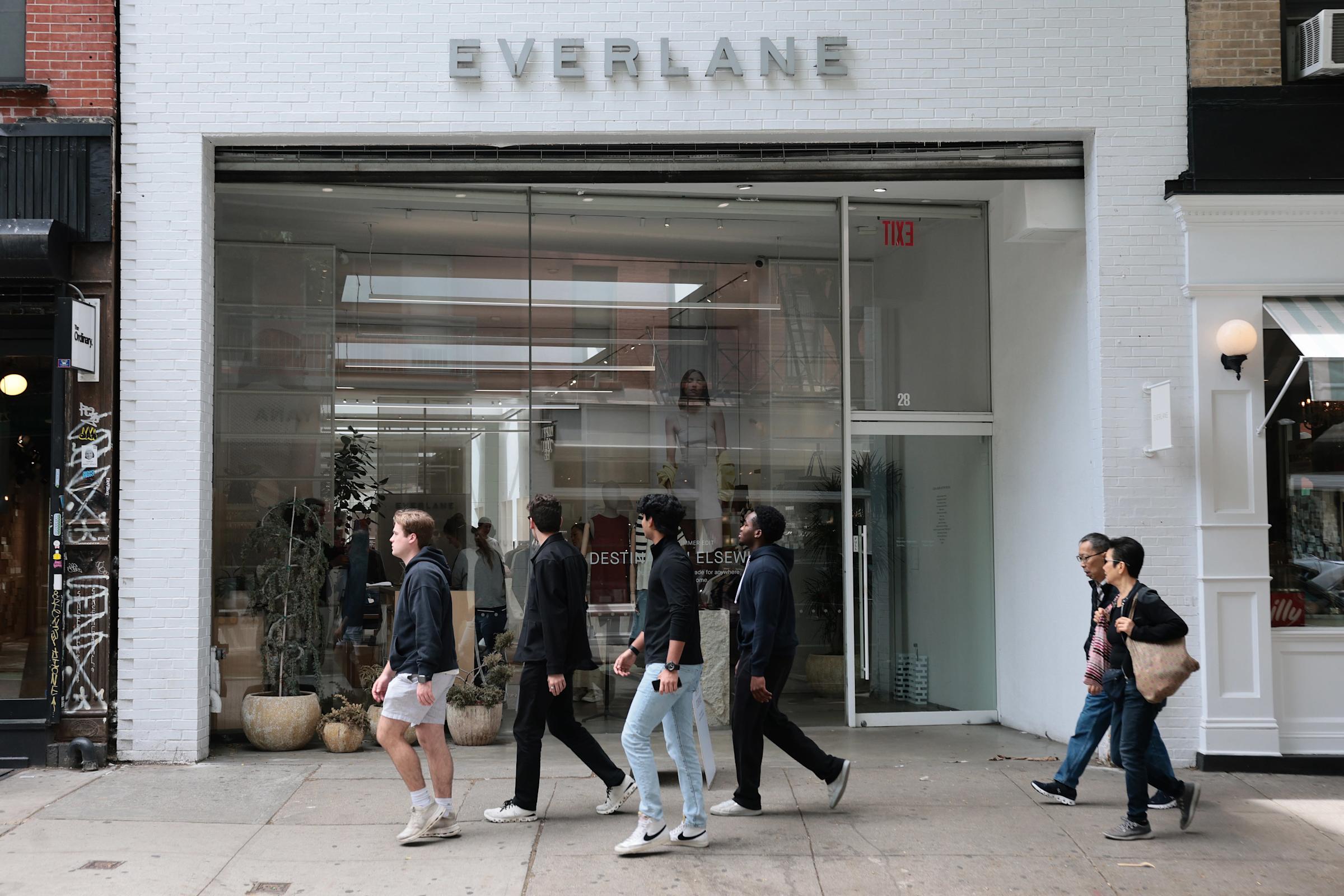
Rarely does a global retail platform’s acquisition of a onetime direct-to-consumer brand inspire such wailing and gnashing of teeth. But when the news broke this week that fast-fashion titan Shein had reportedly purchased Everlane, the San Francisco-based clothing label beloved by millennial office workers in the 2010s, the outpouring of emotion was swift and intense.

“I couldn’t believe it,” says Anashe Barton, a 29-year-old tech worker and content creator in San Francisco.

Subscribe to The Post Most newsletter for the most important and interesting stories from The Washington Post.

“I’d use the word ‘disillusioned,’ because that comes with a combination of shock and disappointment,” says Kailey Herrmann, a 32-year-old English professor in San Luis Obispo, California.

“It’s like a betrayal,” says Amy Fermanian, 32, a stay-at-home parent and former software engineer in Los Angeles. “I feel like my first love married the worst person I’ve ever met.”

In the fall of 2010, Michael Preysman left a venture capital job to start his own business: Everlane, a direct-to-consumer clothing label based in San Francisco. Everlane, which launched to the public in 2011 and quickly began to populate urban workplaces with tasteful basics like roomy carpenter pants and earth-toned blouses in heavy-duty silk, spent the next decade becoming synonymous with the retail buzzword of our time: sustainability.

Its website bombarded shoppers with a mission statement about ensuring the integrity of its factories and materials, and a “radical transparency” pledge to “reveal our true costs, and then show you our markup” before it even revealed the clothes. Preysman hosted panels with the company’s head of apparel to talk about “the future of sustainability at Everlane,” and spoke to media outlets about “removing all virgin (new) plastic from the company’s supply chain, stores, and offices by 2021.”

So when Puck first reported that Everlane, said to be $90 million in debt, had been acquired by Shein - a company that’s wound up in the middle of numerous controversies, lawsuits and investigations in the last decade or so involving alleged design theft, tax evasion, product safety concerns and labor- and human-rights violations - some longtime shoppers saw a stunning abandonment of principles. Others say Everlane has been quietly behaving like a fast-fashion brand for years.

Neither brand would confirm the sale to The Washington Post, and Everlane didn’t respond to a request for comment on customer complaints, including that its quality had slipped in prior years.

The sale to Shein is one more test, in any case, of many consumers’ dwindling belief in a sustainable future for fashion.

For many Everlane shoppers, the responsibly made product was the biggest selling point. Fermanian was a college graduate entering the workforce in 2014, and she’d become aware of the ethical issues in fast fashion following the Rana Plaza factory collapse the year before. She preferred natural fibers at the time, and once she found Everlane, she rejoiced. “I felt respected as a consumer with the price transparency,” Fermanian says, “and I felt like they probably respected garment workers by publishing the factories that they used, too.”

Herrmann felt justified in spending money at Everlane because its scores on Good On You, a service that investigates and rates companies’ impact on people, animals and the planet, were consistently strong. The company also boasted multiple certifications for material quality, including the Global Organic Textile Standard certification. “I didn’t think Everlane was perfect,” she says, “but I thought they were doing better than a lot of their counterparts.”

Kristen Dudding, 28, works in tech support for a software company in L.A., and she was an undergraduate fashion major when she discovered Everlane. Fashion could be murky when it came to labor ethics and environmental impact, she knew, and “I was just so inspired to see a company actually acknowledge that and try to do something about it,” Dudding remembers. “They had ethical factories that paid living wages, etcetera, etcetera, and all of that was incredible to me.” (It is pure coincidence, but perhaps a telling one, that almost all the shoppers interviewed for this article are women in California.)

It is, of course, entirely possible that for Everlane, making an earnest attempt to run a clothing brand sustainably at scale simply didn’t work out financially. Sustainability, after all - what with its ethically sourced and high-quality materials, not to mention the aforementioned living wages paid to laborers - can be expensive. It is possible that Everlane accumulated $90 million of debt doggedly chasing the ideal of harm-free fashion.

Still, once-loyal Everlane shoppers maintain that its products and practices began to feel suspiciously like those of a fast-fashion brand long before the company became part of a fast-fashion empire.

Barton, for example, was disappointed to see the company introduce sales and markdowns in the mid-2010s. (“Most brands keep prices artificially high” to offset markdown prices, Preysman told NBC News in 2014. Everlane’s products, by contrast, “never go on sale because we manage inventory really tightly. When someone comes in, they get the true value any time.”)

“There was something off-putting about the fact that there was this huge kind of turnover in their inventory,” Barton says. “Are they just overproducing everything? Where is all this going? Are they, you know, wasting it, or throwing it away?”

After the brand introduced its first brick-and-mortar location in 2017 - which was followed by several more locations, concentrated on the coasts - longtime Everlane devotees like Fermanian believe the quantity and quality of the products changed.

“I noticed more poly blends,” she says. Fermanian, who sews as a hobby, says she “could also see the construction choices getting a little crappier.”

Meanwhile, Dudding remembers Everlane releasing new collections more often. “The new drops got more and more consistent, more often, with larger numbers of SKUs. And that’s when I was like, ‘Hold on. That doesn’t really seem quite right,’” she says. “‘How can you afford to do that while maintaining your high standards?’”

In 2020, private-equity firm L Catterton purchased a minority stake in the company, later becoming a majority owner; in 2021, Preysman stepped down as CEO and was replaced by the former head of Ugg.

Crystal Chen, 38, is a former product marketer who now teaches marketing literacy on TikTok through her program Slow Buy Club. A loyal Everlane shopper for nearly a decade, Chen officially quit Everlane earlier this year after buying a second pair of the exact same leather flats she’d purchased in 2019.

“I was like, ‘These do not feel the same. They feel cheap, they feel plasticky, what’s going on?’” Chen remembers. Eventually, she nearly slipped in the new pair while holding her baby. That was the end.

“I felt all the things that people feel when they’ve broken up with their ex,” Chen says. And this week’s news “was like reading about your ex, like, getting into a scandal, or moving to Miami and buying a Maserati and having a midlife crisis,” she adds. “A mix of, ‘Oh my God, honey, I’m so sorry this had to happen to you’ and ‘Thank God I broke up with you.’”

Several of the women in this article similarly believe they’ll never shop at Everlane again. The sale to Shein “made me instantly skeptical of all the messaging and the marketing that they had put out there,” Barton says. “A big part of why I liked Everlane was because I felt like I was buying from a company with a much more thoughtful approach to fashion and sustainability. And if that brand is now tied to Shein, which I have pretty much completely avoided … I think I can’t participate.”

Some, meanwhile, wonder if they’ll trust any fashion brands’ claims to be ethical producers of clothing going forward. Brands that might have made a run at “compassionate capitalism” a decade ago “aren’t even pretending anymore,” says Temi Adeoye, a 28-year-old in Brooklyn who works in social media and sometimes bought work clothes at Everlane in recent years. “It’s all about the accumulation of capital at all costs.”

“At least lie to me a little,” she adds with a laugh.

“For a lot of us millennials, to watch this brand that we believed could be the antidote to fast fashion finally succumb to fast fashion is a betrayal of so many of the bigger things we believed about how the world could be at its best,” Chen says. The 2010s were all about techno-optimism, “this idea that you can outsource your values to companies and trust them, and they’ll do the right thing.” Instagram was connecting people all over the world through beautiful photos, Chen adds; Twitter was making information widely available and empowering the common person to speak out.

But now, “we’re in this era of, like, no brand is forever. No brand positioning is forever,” she says. “And the only way to be an ethical consumer, or conscious consumer, is to bear that accountability yourself.”

Jade Tran contributed to this report.

Related Content