yahoo Press
Zohran Mamdani just announced NYC's 1st city-owned grocery store. Could the idea help reverse rising food prices across the U.S.?
Images
1 / 9
2 / 9

3 / 9

4 / 9

5 / 9
6 / 9
7 / 9

8 / 9

9 / 9
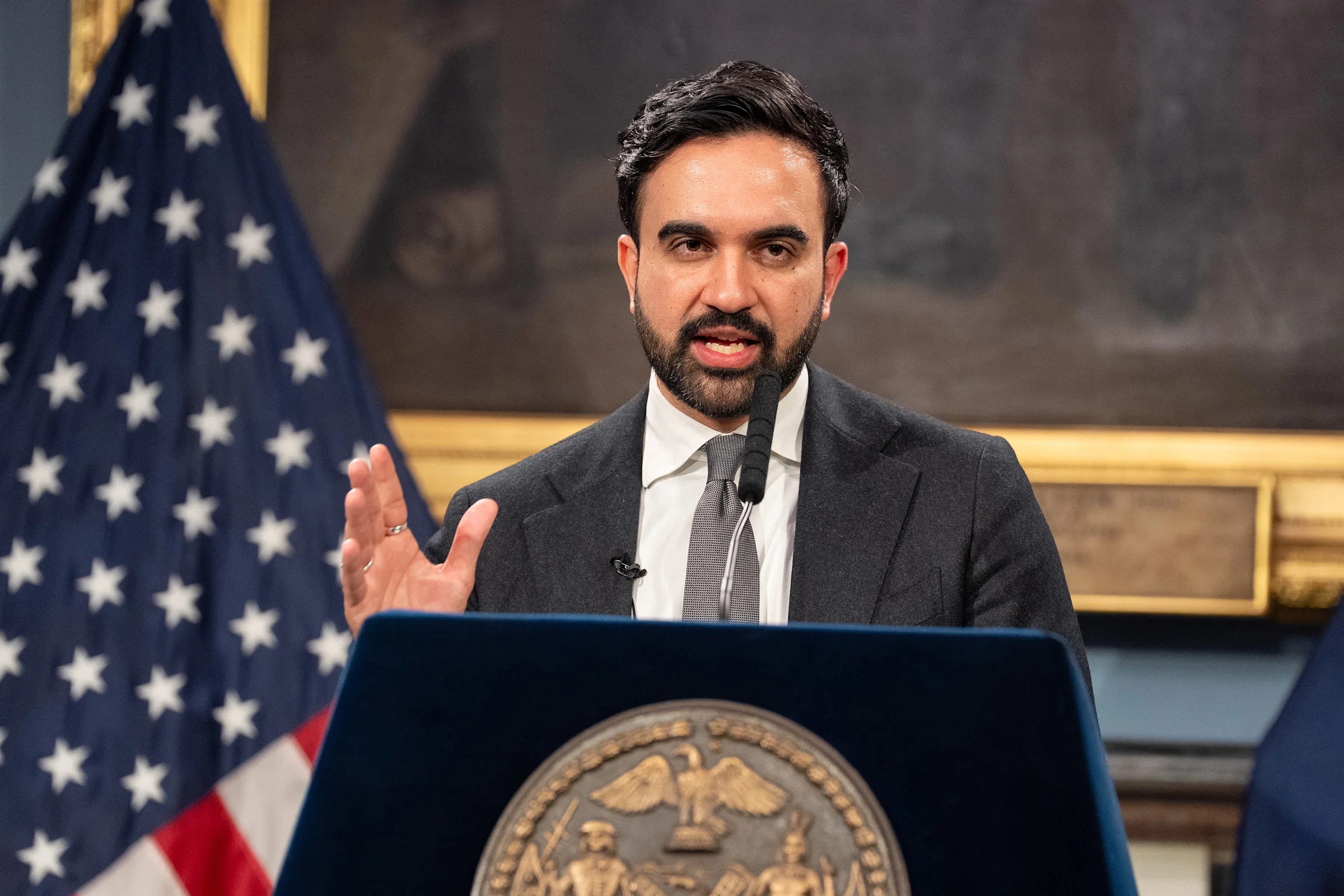
New York City Mayor Zohran Mamdani announced this week that the Big Apple’s first city-owned grocery store will open in the South Bronx sometime next year, delivering on a central promise of his dark-horse 2025 campaign — and pitching the project, which aims to put one public, nonprofit supermarket in each borough by the end of his first term, as “physical proof of our conviction that government can be a force for good.”

"We are going to use the power of government to lower prices and make it easier for New Yorkers to put food on the table," Mamdani, a 34-year-old Democrat and democratic socialist, said on Monday. "When government understands its purpose as serving the very working people that it has left behind, time and again, it can make a difference in the most pressing struggles facing our city today.”

At a time of rising food prices, should other governments across the U.S. consider following in Mamdani’s footsteps? Or are publicly owned grocery stores incompatible with American capitalism?

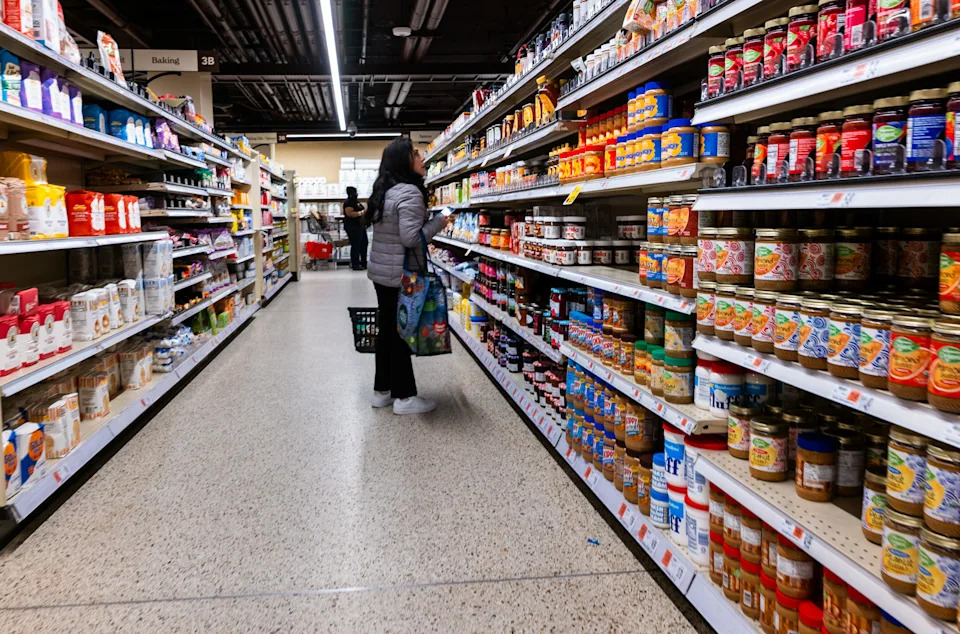
Sticker shock at the supermarket is nothing new; it was one of voters’ biggest gripes during the 2024 presidential campaign and the pandemic period that preceded it. Yet, the latest spikes — driven largely by energy costs tied to the Iran war and President Trump’s tariffs — have been especially pronounced.

Government data released last week showed that U.S. grocery prices shot up faster in April than in any month in nearly four years. Today, seafood costs 6.2% more than it did a year ago. Fresh vegetables cost 11.5% more. Beef costs 14.8% more. Coffee costs 18.5% more. Tomatoes cost 39% more. And those hikes are on top of pandemic-era inflation that had already pushed up food prices by roughly 25%.

Here’s how Mamdani’s city-owned grocery stores will work — and some pros and cons on whether the idea could ever be feasible beyond New York.

In theory, the mayor’s plan is pretty simple: use municipal resources to lower overhead and operating costs for grocery stores, then pass those savings on to consumers in the form of lower prices.

In practice, here’s what that means — at least so far.

One 20,000-square-foot grocery store is scheduled to open in 2027 at the Peninsula, a new live-work campus in the Hunts Point neighborhood of the South Bronx, developed in part by the city’s Economic Development Corporation and built on the site of a former juvenile detention facility.

A second store will open in 2029 at La Marqueta, a city-owned marketplace under elevated train tracks in the predominantly Latino neighborhood of East Harlem in Manhattan.

Locations in the other three boroughs — Brooklyn, Queens and Staten Island — are currently being vetted.

The goal with all five grocery stores, according to Mamdani’s office, is to “prioritiz[e] City-owned sites wherever possible.” Why? So his administration can waive rent and real estate taxes, slashing a major expense.

The city would also pay to build and outfit the stores. To that end, Mamdani has so far requested $70 million in capital dollars — a request the City Council still needs to approve. (The East Harlem outpost would cost roughly $30 million to get up and running, according to the mayor’s office.) Mamdani has said that the money for his public grocery stores could come, at least in part, from scaling back an existing program that offers tax breaks and special regulatory relief for private supermarkets that open in underserved areas (a.k.a. “food deserts”).

Beyond building the stores and letting them operate rent- and tax-free, the whole city-owned moniker becomes a bit misleading. The Mamdani administration doesn’t plan to run these new stores. Instead, that job would go to private “third-party grocery operator(s)” who will be selected “through a competitive procurement process” — then monitored to ensure they’re keeping prices as low as possible.

In the past, Mamdani has likened the idea to a “public option” for groceries rather than state-run — or in this case, city-run — supermarkets.

Actually, it is. A few, scattered rural municipalities have tried opening their own grocery stores to fill the void after other local options closed. The town of Baldwin, Fla. — population: about 1,300 — purchased its shuttered market in 2019 and operated it like a public utility for about five years. A similar city-owned store has been thriving for more than a decade in St. Paul, Kan., a town of 600 residents.

Big cities beyond New York have started to explore the idea as well.

Chicago Mayor Brandon Johnson, another progressive Democrat, commissioned a 105-page feasibility study that found city-owned grocery stores were “necessary, feasible and implementable” — but his administration ultimately decided to concentrate on city-owned markets with multiple independent vendors instead.

In Madison, Wis., construction began in February on a municipally backed grocery store located on the first floor of a mixed-use affordable housing building owned by the city. It’s expected to open by the end of the year.

In Atlanta, Democratic Mayor Andre Dickens partnered with chain Savi Provisions to open the city’s first municipally subsidized market in September, contributing $3.5 million of the project's $5.4 million cost.

And in Washington, D.C., two mayoral candidates — both Democrats — just debated the idea last month.

That’s the question Mamdani’s new “network” of five city-owned grocery stores is designed to test. It’s effectively the biggest public-grocery pilot program in U.S. history.

For his part, the mayor has long insisted that his stores will be able to “buy and sell at wholesale prices,” in part by “centraliz[ing] warehousing and distribution.” His thinking is that the more the city scales up — the more stores it opens — the easier that process will get.

A Yahoo/YouGov poll conducted last year found that 51% of Americans approved and 31% disapproved of creating “a network of government-owned grocery stores focused on keeping prices low rather than making a profit” — a +20-point margin.

But critics have doubts.

The most vociferous objections come from conservatives and Republicans, who tend to dismiss the concept of a city-owned grocery store as “FULL DERANGED MARXIST” while conjuring bleak images of Soviet-era breadlines. “The most terrifying words in the English language are, ‘I’m Zohran Mamdani, & I’m here to run your grocery store,’” GOP Rep. Young Kim of California wrote Tuesday on social media.

Some economists and small-business owners have also weighed in against Mamdani’s plan — which, again, calls for private contractors to actually run the stores. They argue that city-owned grocery stores could undercut mom-and-pop businesses, forcing many to shutter. They also claim the approach is economically inefficient. Profit margins in the grocery business already are notoriously low, they say — just 1% to 3% — and the whole system depends on an intricate infrastructure of cooperative distributors, volume discounts and branded promotions that may be difficult to replicate in a public, nonprofit network.

For now, Mamdani’s response is to say, essentially, that city-owned grocery stores are worth a try.

“It’s not just that government can help,” the mayor said on Monday. “It’s that government must help. And our government will help.”