buzzfeed Press
The 12 Best Anime Ever Made, Ranked — And Yes, I'm Prepared For The Comments
Images
1 / 17
2 / 17

3 / 17

4 / 17

5 / 17
6 / 17
7 / 17
8 / 17
9 / 17
10 / 17
11 / 17
12 / 17
13 / 17
14 / 17
15 / 17
16 / 17
17 / 17
No, Fullmetal Alchemist: Brotherhood didn’t make the top spot. Here’s what did, and why.

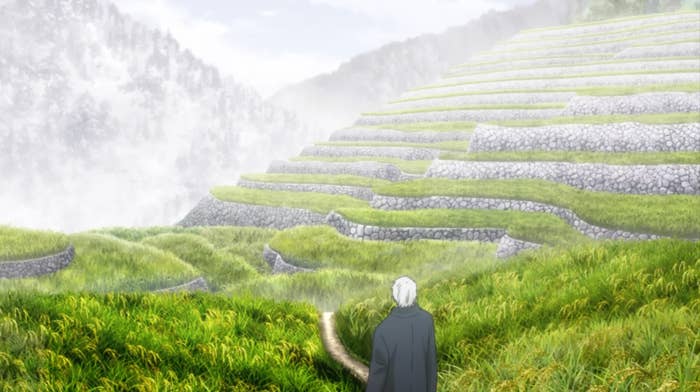
Mushishi is the quietest show on this list, but that shouldn’t be mistaken for smallness. The series follows Ginko, a soft-spoken researcher who travels through a pre-modern version of Japan studying “mushi,” primordial life forms that most people can’t see. They’re not ghosts, gods, monsters, or villains — they’re simply part of the world, and each episode follows what happens when human beings come into contact with something older than they are and largely indifferent to them.

Though the premise sounds simple, Mushishi uses it to examine grief, illness, isolation, inherited trauma, and the limits of human control. Nature in this show is neither hostile nor comforting. It doesn’t punish people, reward them, or explain itself. People are just left to live with what they can’t fully understand. Adapted from Yuki Urushibara’s manga by Artland, the series has no central villain, no escalating plot, and no final destination. It’s slow because it has to be. Nearly 20 years later, few anime have made stillness feel so consequential.

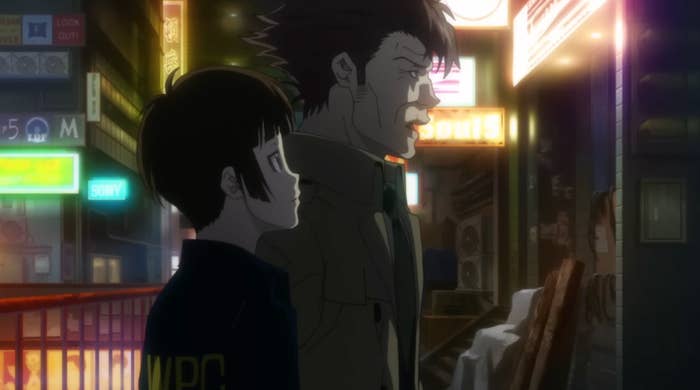
Set in a near-future Japan governed by the Sibyl System, Psycho-Pass imagines a society where an algorithmic surveillance network measures every citizen’s mental state in real time and assigns them a “Crime Coefficient.” If that number gets too high, they can be detained or killed before they’ve actually committed a crime. The series follows rookie Inspector Akane Tsunemori and her team of “Enforcers” — latent criminals forced to help the state catch other criminals — as they pursue the people the system can’t properly read. Written by Gen Urobuchi and animated by Production I.G., the show clearly draws from Ghost in the Shell and Minority Report, but its concerns feel less like distant sci-fi every year.

Psycho-Pass doesn’t just interrogate whether the system works. It asks what kind of people a system like that produces. What happens to moral agency when the state outsources judgment to an algorithm? What happens when dissent gets treated like an illness? And what does it mean to enforce a system that may also be imprisoning you? Shogo Makishima, the show’s main antagonist, works because he exposes those contradictions rather than just existing outside them. He’s a literary and philosophical sociopath, but the show doesn’t dismiss his arguments just because he’s monstrous. The franchise’s uneven later installments keep it lower on this list, but Season 1 alone is strong enough to make it essential.

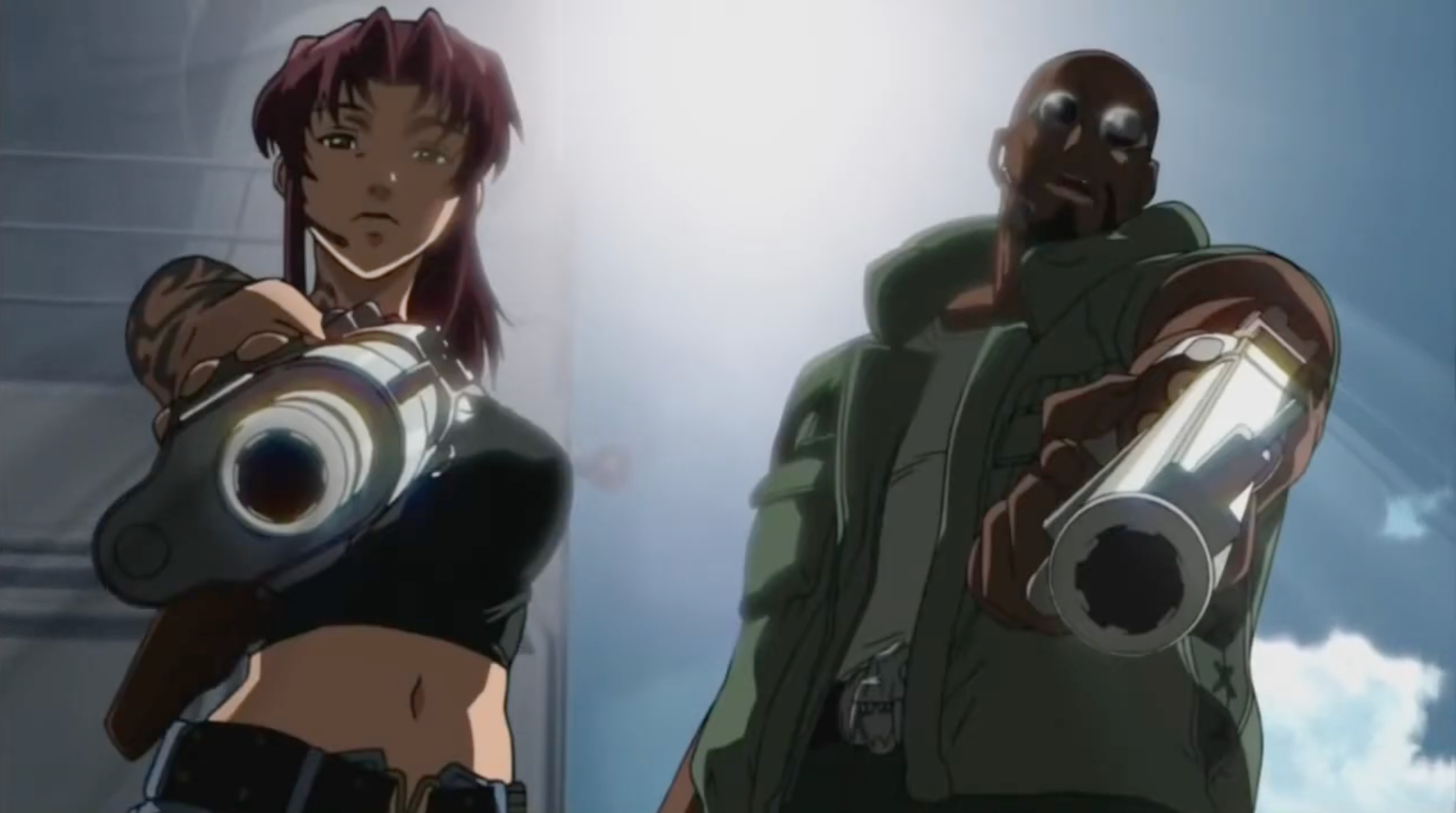
Black Lagoon is a cult favorite for a reason. Set in the fictional Thai port city of Roanapur, the series follows the Lagoon Company, a mercenary crew that runs jobs for basically every criminal organization operating in the region: yakuza, triads, Russian mafia, Italian mafia, cartels, and anyone else willing to pay. The story begins with Rokuro Okajima, a Japanese salaryman who’s kidnapped by the Lagoon Company during a job and eventually joins them under the name Rock. From there, the show becomes a stylized, bloody, and deeply cynical crime thriller about what it means to survive in a place where the law has already lost.

Creator Rei Hiroe cites John Woo, Quentin Tarantino, and James Ellroy as influences, and it shows — in the gunfights, the dialogue, the grimy noir atmosphere. But Black Lagoon works because it’s more than slick crime-action. Its characters are shaped by war, trafficking, colonialism, religious hypocrisy, and violence they can’t outrun. The female characters in particular — Revy, Balalaika, Roberta, Eda — aren’t “badass female characters” dropped into a male crime story. They are the story. Black Lagoon rarely makes the safest all-time anime lists, but that’s why it belongs here. The style is obvious, but the substance is easy to miss.

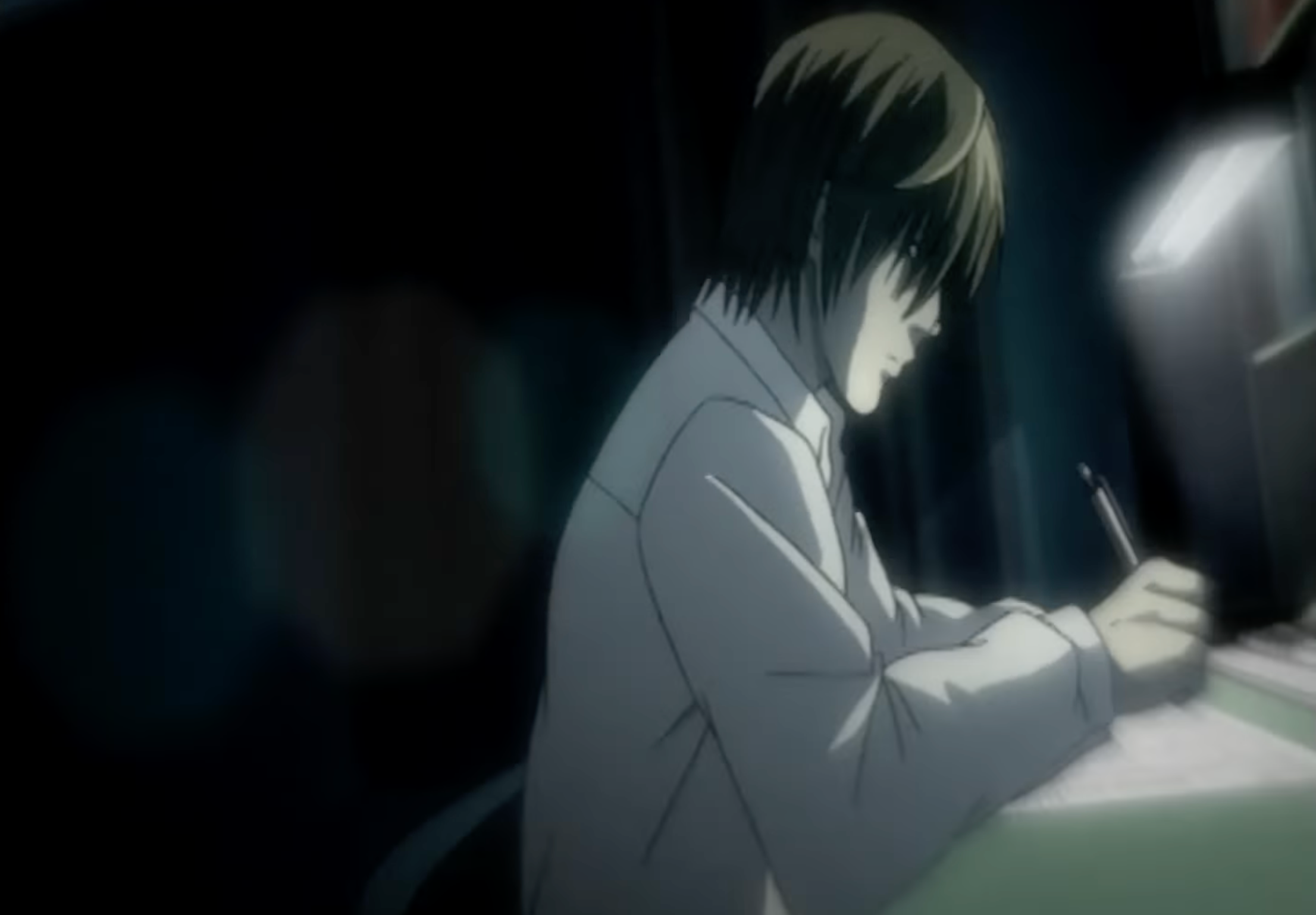
Death Note was the gateway anime for an entire generation of Western viewers, and it still holds up as one of the best psychological thrillers the medium has produced. The premise is simple and instantly compelling. Light Yagami, a brilliant high school student, finds a notebook dropped by a shinigami that lets him kill anyone whose name he writes inside it. Convinced he can rid the world of evil, Light appoints himself a god-like vigilante called Kira, only to be hunted by L, an eccentric detective who may be the only person smart enough to catch him.

Though Death Note’s cat-and-mouse plotting is the obvious hook, the show’s real power lies in how seriously it takes Light’s worldview before exposing what that worldview does to him. He doesn’t start as a cartoon villain. He starts as someone with a coherent moral argument, and the horror lies in watching that argument become more ruthless as he attains more power. Adapted by Madhouse and directed by Tetsurō Araki, who later directed Attack on Titan, the first two-thirds of the series remain one of anime’s sharpest explorations of surveillance, punishment, and unchecked moral certainty. However, the post-L stretch is divisive, and many viewers think the show basically ends at Episode 25.

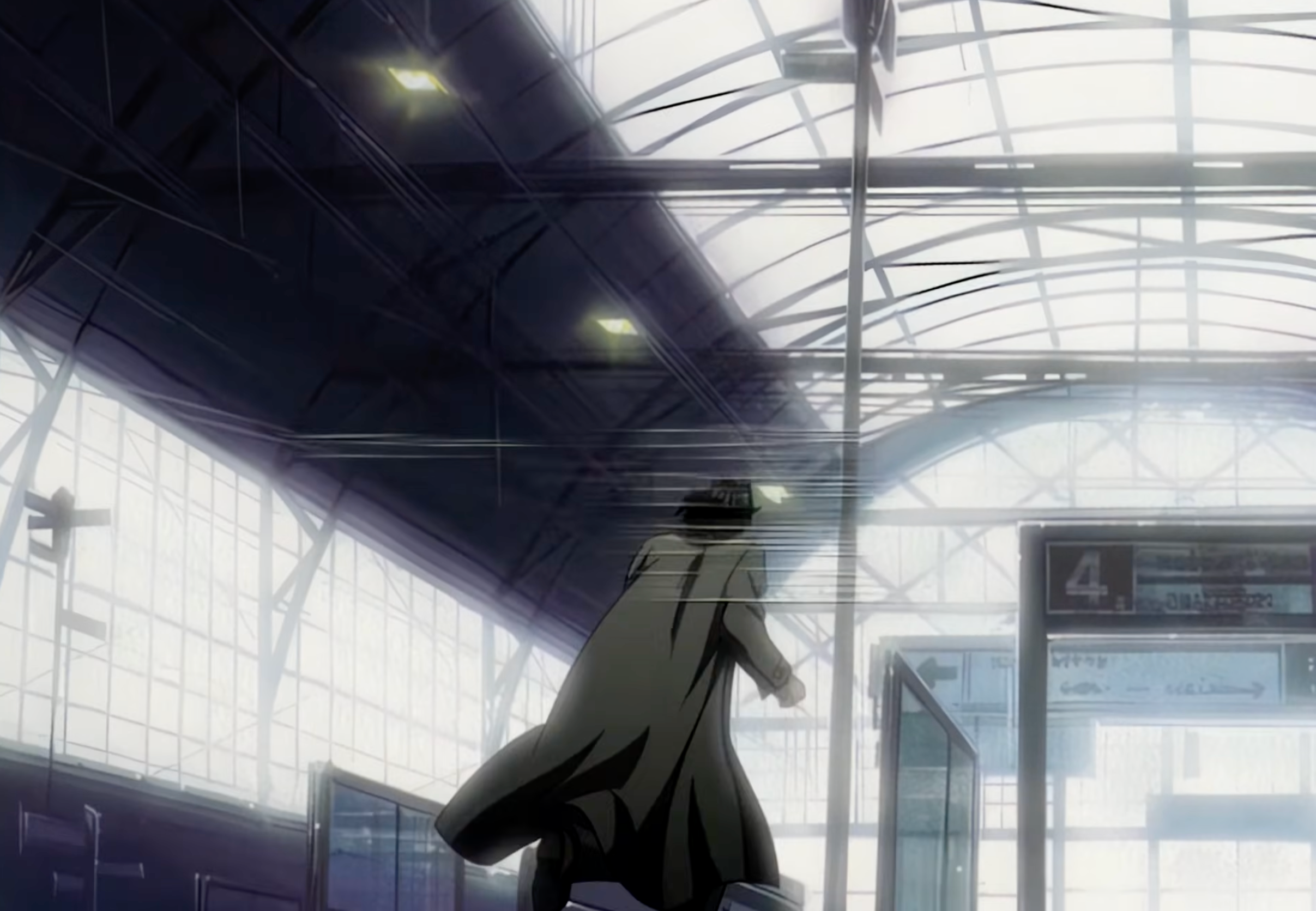
Monster is one of the most literary anime ever made, which is another way of saying it’s slow, demanding, and worth it. Adapted from Naoki Urasawa’s manga and animated by Madhouse, the 74-episode psychological thriller follows Dr. Kenzo Tenma, a Japanese neurosurgeon working in 1980s Düsseldorf. After he saves the life of a young boy against his hospital’s wishes, Tenma later discovers that the child, Johan Liebert, has grown into a charismatic serial killer — and that Tenma himself has been framed for some of Johan’s crimes.

The show’s central question is simple and awful. If you save a life, are you responsible for what that person does with it? From there, Monster becomes less about catching Johan than understanding how someone like him could exist in the first place. Set against the shadow of Cold War Europe and psychological conditioning experiments, the series moves through dozens of smaller stories about guilt, violence, identity, and the damage people leave behind. Johan is one of anime’s most terrifying villains precisely because he rarely has to do much on-screen. His menace comes from how well he understands people, and how little he feels compelled to explain himself. Monster is long, slow, and almost aggressively patient, but that’s also why it works. It feels less like a thriller built around twists than a novel about evil unfolding one chapter at a time.

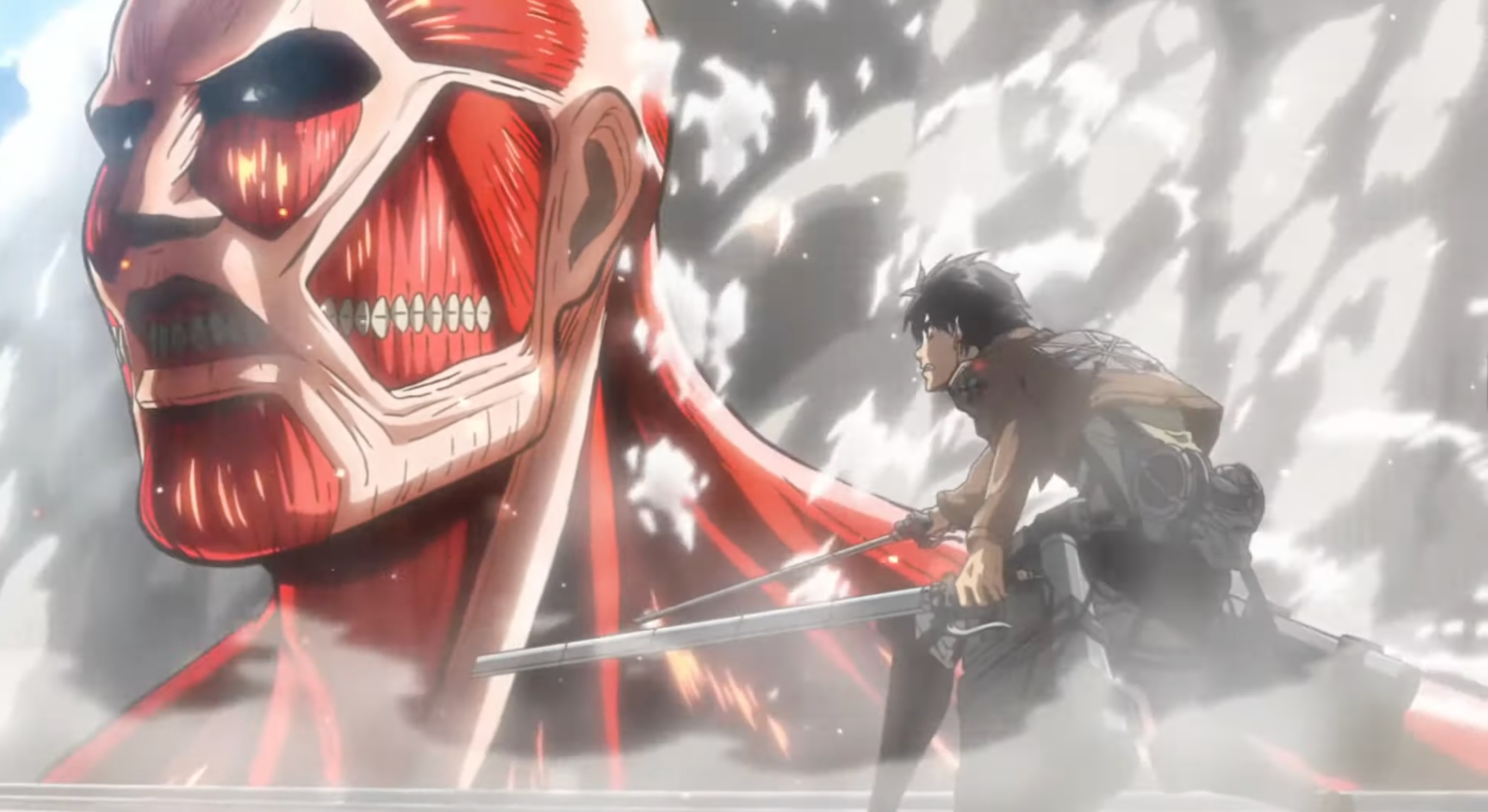
Attack on Titan was the cultural pivot point of 2010s anime. At first, it looks like a survival-horror story. Humanity lives behind enormous walls to protect itself from giant, man-eating Titans, and Eren Yeager joins the Survey Corps after a Titan breach kills his mother. But the world beyond the walls turns out to be much larger, darker, and more politically complicated than anyone inside them was allowed to understand.

That turn makes the series hard to dismiss, even with all the discourse around its ending. The early seasons are brutally effective horror-action television, but the story eventually becomes about nationalism, inherited victimhood, propaganda, and what happens when historical violence keeps reproducing itself. Beyond expanding the world, the show’s biggest reveal reframes almost everything that came before it. The first three seasons, animated by Wit Studio, are exceptional, and the geopolitical pivot remains one of the most ambitious narrative turns in mainstream anime. The final season’s move to MAPPA and its 2023 conclusion divided viewers, but it’s still essential. Had the final stretch landed as cleanly as the show’s best arcs, I might have ranked it higher.

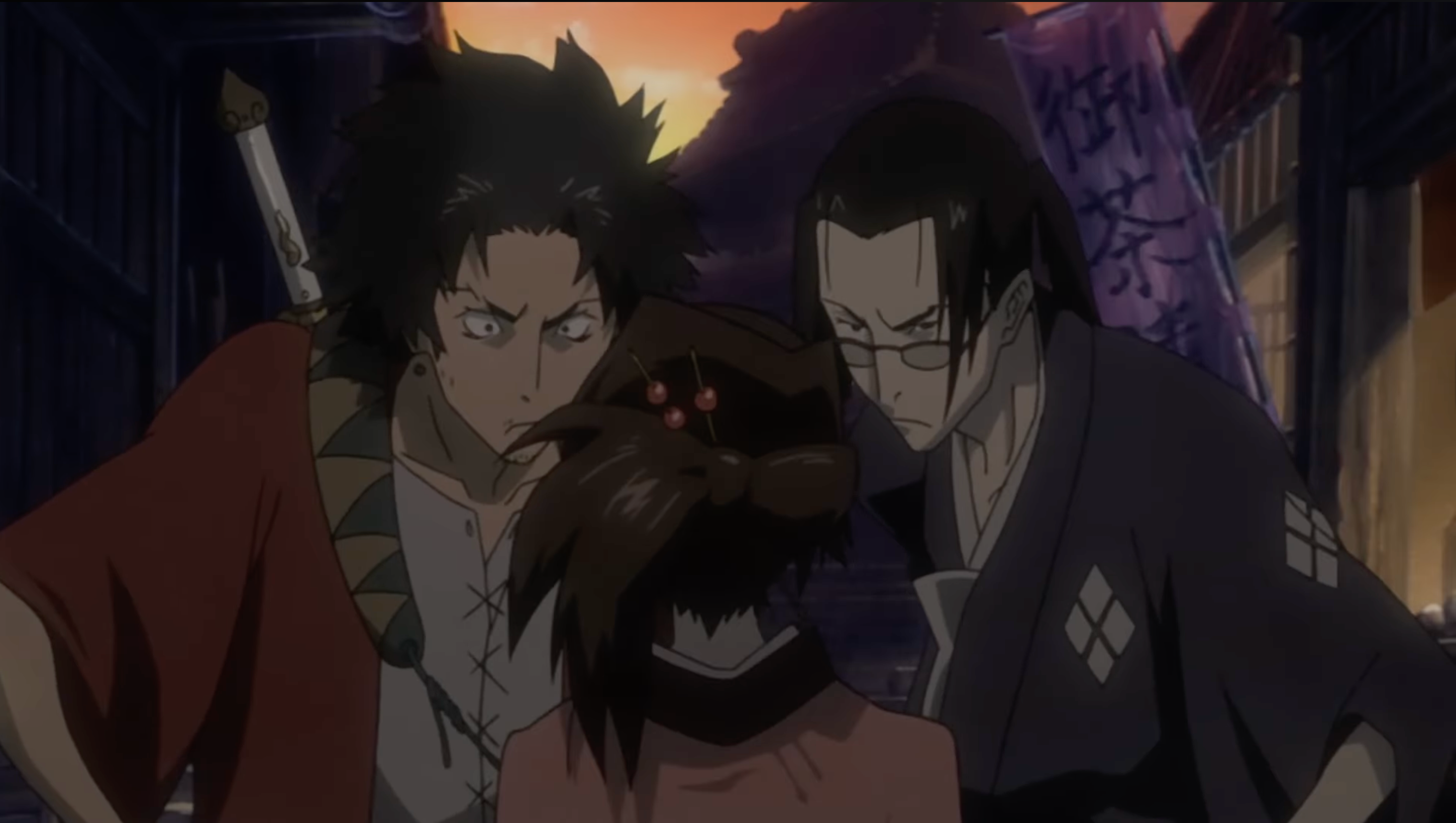
Shinichirō Watanabe’s follow-up to Cowboy Bebop is a samurai series scored to hip-hop, which sounds like a gimmick until you realize the whole show is built around that logic. Set in Edo-period Japan, Samurai Champloo follows Fuu, a teahouse waitress searching for “the samurai who smells of sunflowers,” and the two swordsmen she recruits as bodyguards: Mugen, a wild vagrant, and Jin, a disciplined ronin. The result is part road story, part action series, part historical remix.

However, Samurai Champloo's remix has a purpose beyond aesthetic. The show is genuinely interested in the people pushed to the margins of official history — Ainu communities, Ryukyuan outsiders, hidden Christians, sex workers, porters, criminals, and drifters trying to survive inside a social order that has no real place for them. Though they seem like cool anachronisms, the graffiti tags, beatboxing, baseball games, and hip-hop soundtrack are actually the method. The show uses hip-hop’s logic of sampling and remixing to argue that history can be told from the margins, not just from the records left by people in power. Watanabe and Nujabes’ collaboration also helped shape the sound that would later become synonymous with lo-fi hip-hop. However, the soundtrack isn’t the only reason the series endures. Obviously, Samurai Champloo is cool, but it’s also much more politically and historically aware than it gets credit for.

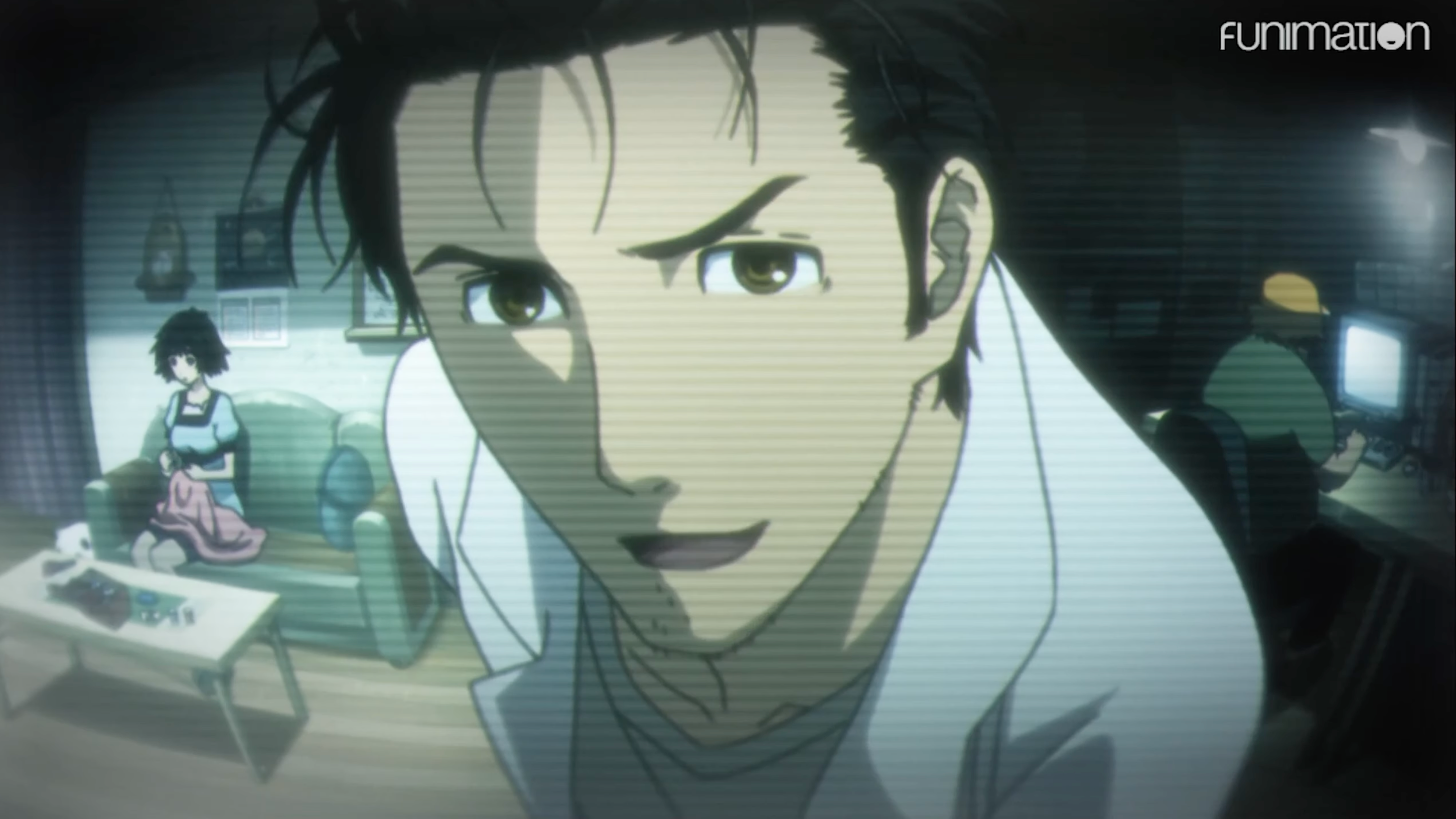
Steins;Gate is one of the best time-travel stories in anime, in part because it understands that time travel is only interesting if the consequences matter. The series follows Rintaro Okabe, a self-described “mad scientist,” and his Future Gadget Lab after they discover that their modified microwave can send text messages into the past. At first, the experiments feel strange, funny, and almost harmless. Then their discovery attracts the attention of SERN, and Okabe is forced to relive timelines in increasingly desperate attempts to save the people closest to him.

Despite being a time-travel story, Steins;Gate isn’t really about mastering time. It’s about realizing how little control one person actually has. Okabe starts the series hiding behind a ridiculous persona, but the show slowly strips that away by forcing him to make choices he can’t fully calculate or undo. The series also grounds its sci-fi in real fringe culture, from the John Titor time-traveler hoax to conspiracy theories about CERN, and treats its own rules with unusual discipline. It’s famously slow to start, with the first stretch built around chuunibyou comedy and lab hijinks, but the payoff is worth it. By the back half, Steins;Gate turns its sillier early episodes into the setup for one of the most precise and emotionally effective sci-fi stories in anime.

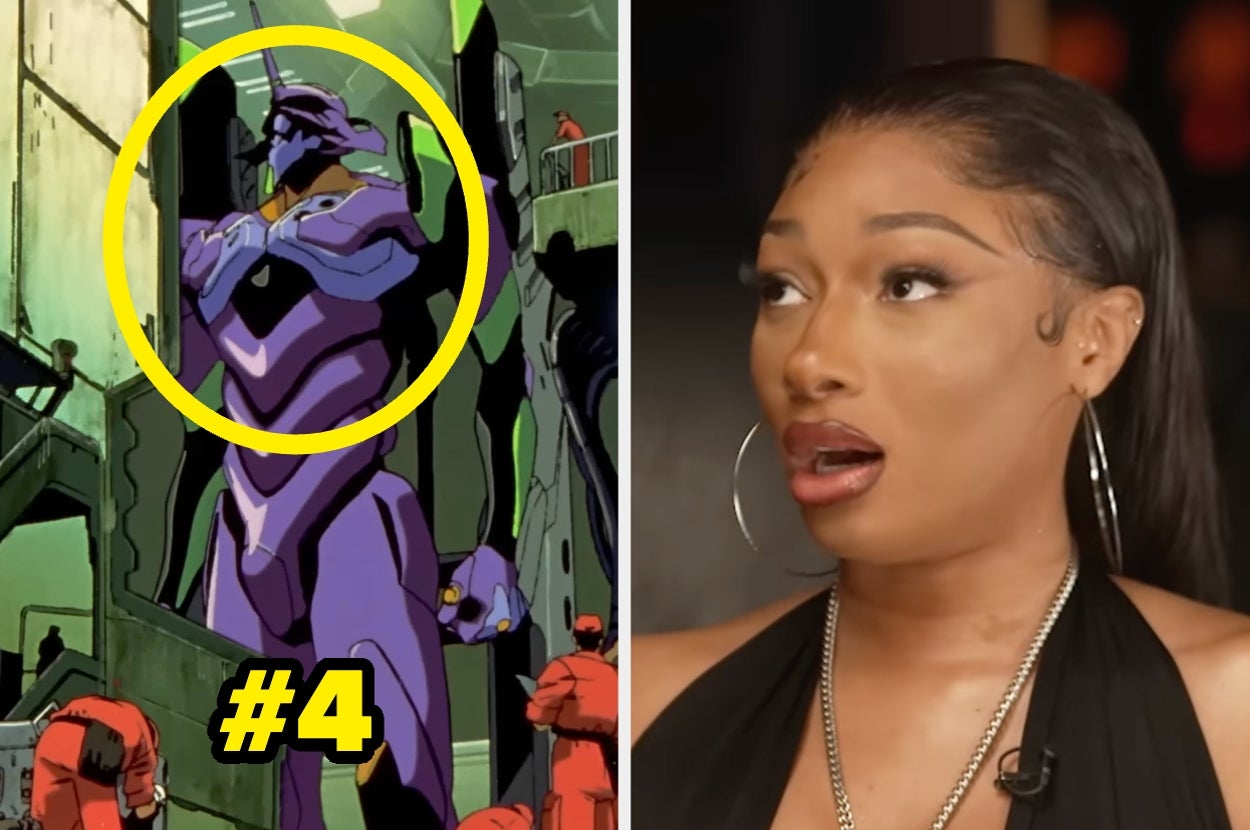
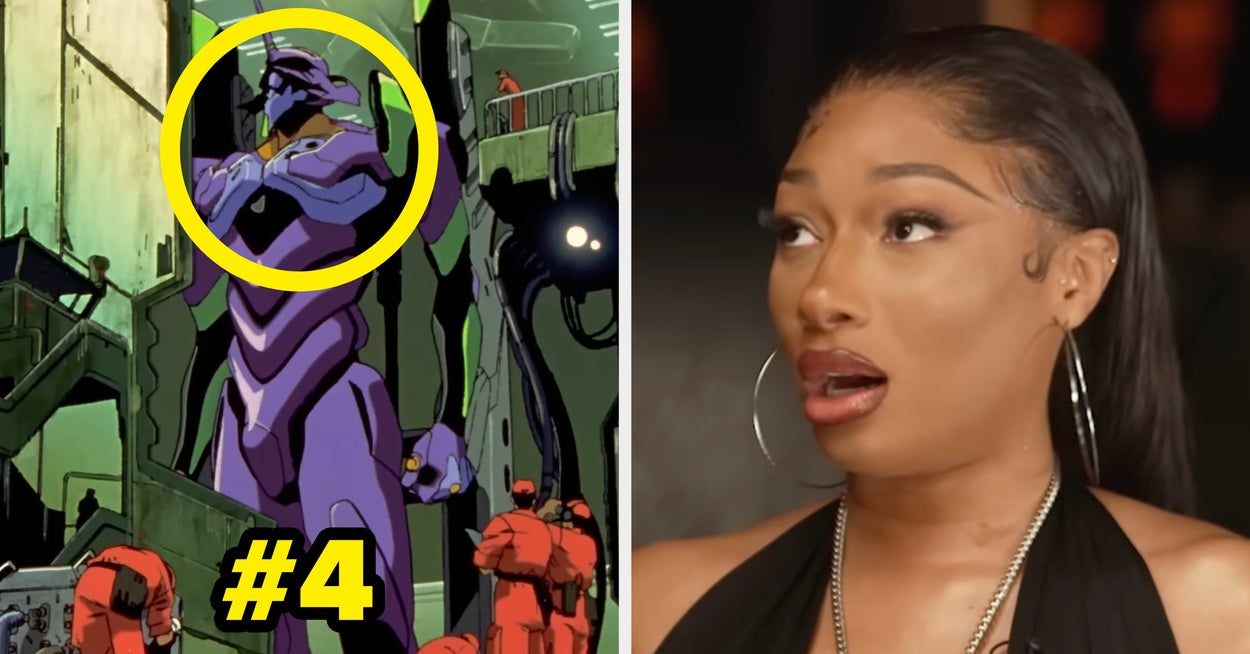
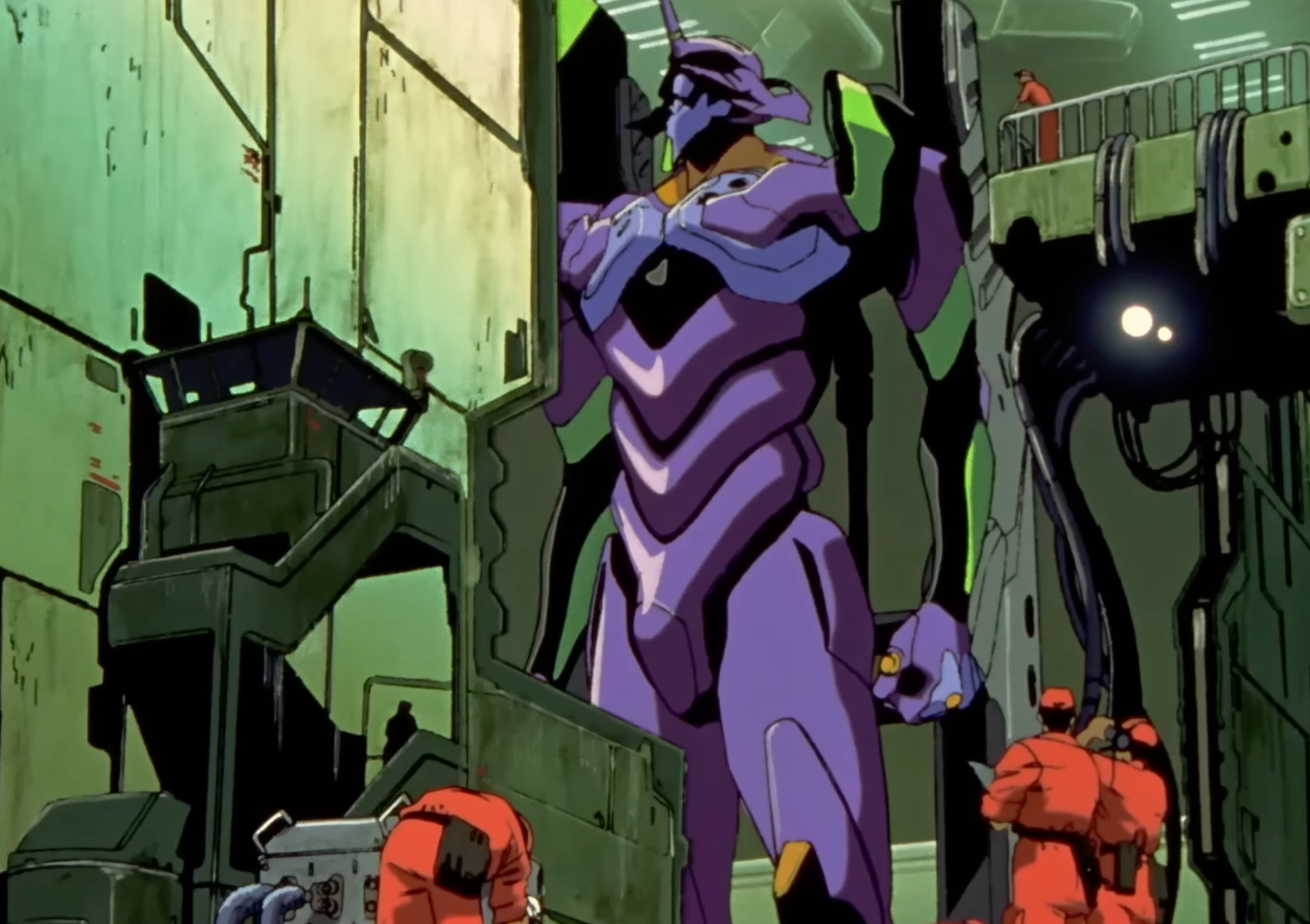
Neon Genesis Evangelion is one of the most influential anime ever made, and also one of the hardest to summarize without making it sound much simpler than it is. On the surface, it’s a mecha series set in 2015, 15 years after a global catastrophe known as the Second Impact. Teenage Shinji Ikari is summoned by his estranged father to pilot a biomechanical Evangelion against monstrous beings called Angels. That premise sounds like a giant-robot show. Very quickly, it becomes something much stranger and more psychologically brutal.

More than anything, Evangelion is about the difficulty of being a person. It’s about parental absence, depression, intimacy, self-loathing, and the way trauma gets routed through the institutions people build to survive it. Created by Hideaki Anno during what he has described as a period of severe depression, the series uses the mecha framework to explore psychoanalytic and theological ideas on a scale few commercial animated shows had attempted before. Its famously abstract ending came after the production ran into budget and schedule issues, and the 1997 film The End of Evangelion offered a more violent, externalized conclusion. But whether viewers find it brilliant, frustrating, or both, its influence is hard to overstate.

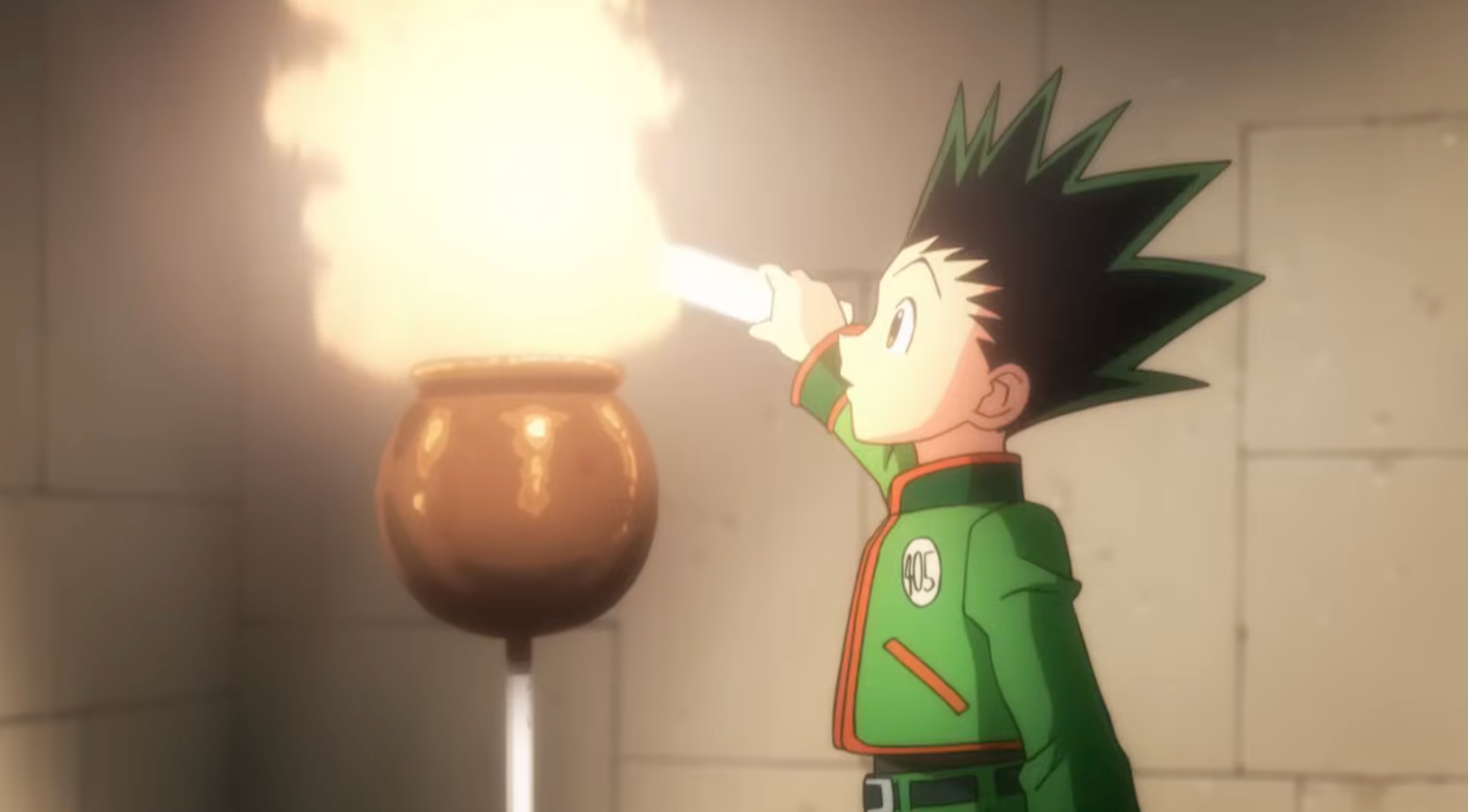
Hunter × Hunter looks, at first, like a classic shōnen adventure. Twelve-year-old Gon Freecss leaves home to become a Hunter — an elite licensed adventurer — and find his absent father, Ging. Along the way, he meets friends, enters exams, learns special abilities, and faces increasingly dangerous opponents. In less capable hands, that would be enough. But Yoshihiro Togashi’s story keeps changing the terms of what kind of show it is.

The Hunter Exam starts like a familiar tournament-style arc, but by the Chimera Ant arc, the series has become a war story about empathy, violence, and whether moral consideration can extend to a species that sees humans as livestock. Gon’s arc also gets darker the longer the series goes on. Instead of rewarding his innocence and determination in the usual shōnen way, the show pushes those traits until they become frightening. His most important confrontation strips him of almost every heroic quality the genre usually celebrates. At the same time, the relationship between Meruem and Komugi becomes one of anime’s most devastating arguments for tenderness in the middle of brutality. Togashi’s manga has been on a near-permanent hiatus for years, but the 2011 anime reaches a clear enough stopping point to stand as one of the best shōnen adaptations ever made.

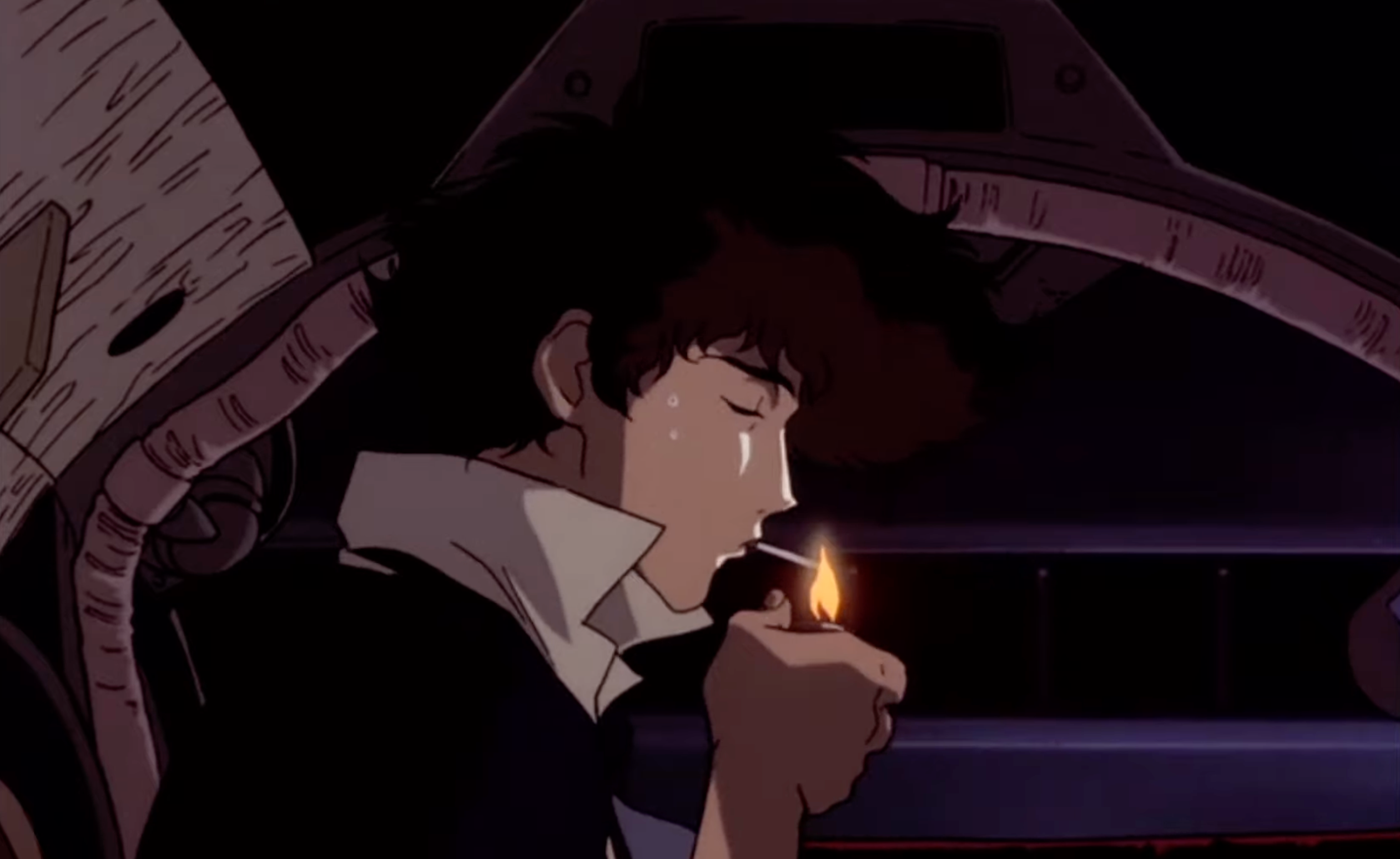
Cowboy Bebop is one of the most consistently praised anime of all time, and for good reason. Set in 2071, the series follows a group of bounty hunters drifting through a colonized solar system — Spike Spiegel, a former syndicate hitman; Jet Black, an ex-cop; Faye Valentine, an amnesiac gambler; Ed, a child hacker; and Ein, a corgi who is somehow one of the crew’s most competent members. The soundtrack by Yoko Kanno and the Seatbelts pulls from jazz, blues, rock, and electronic music, and it remains one of the most recognizable scores in anime history.

What makes Cowboy Bebop endure, though, isn’t just the style. The show is built as a series of standalone genre experiments — noir, Western, kung fu, horror, comedy — but underneath that lies a story about people trying and failing to outrun their pasts. Every member of the Bebop crew is carrying a life that didn’t end cleanly, and the show understands that drifting is not the same thing as freedom. Watanabe’s future isn’t sleek or triumphant. It’s a tired, working-class frontier full of people scraping by in colonies capitalism already forgot. That’s why the genre play never feels empty. The coolness is real, but so is the sadness underneath it.

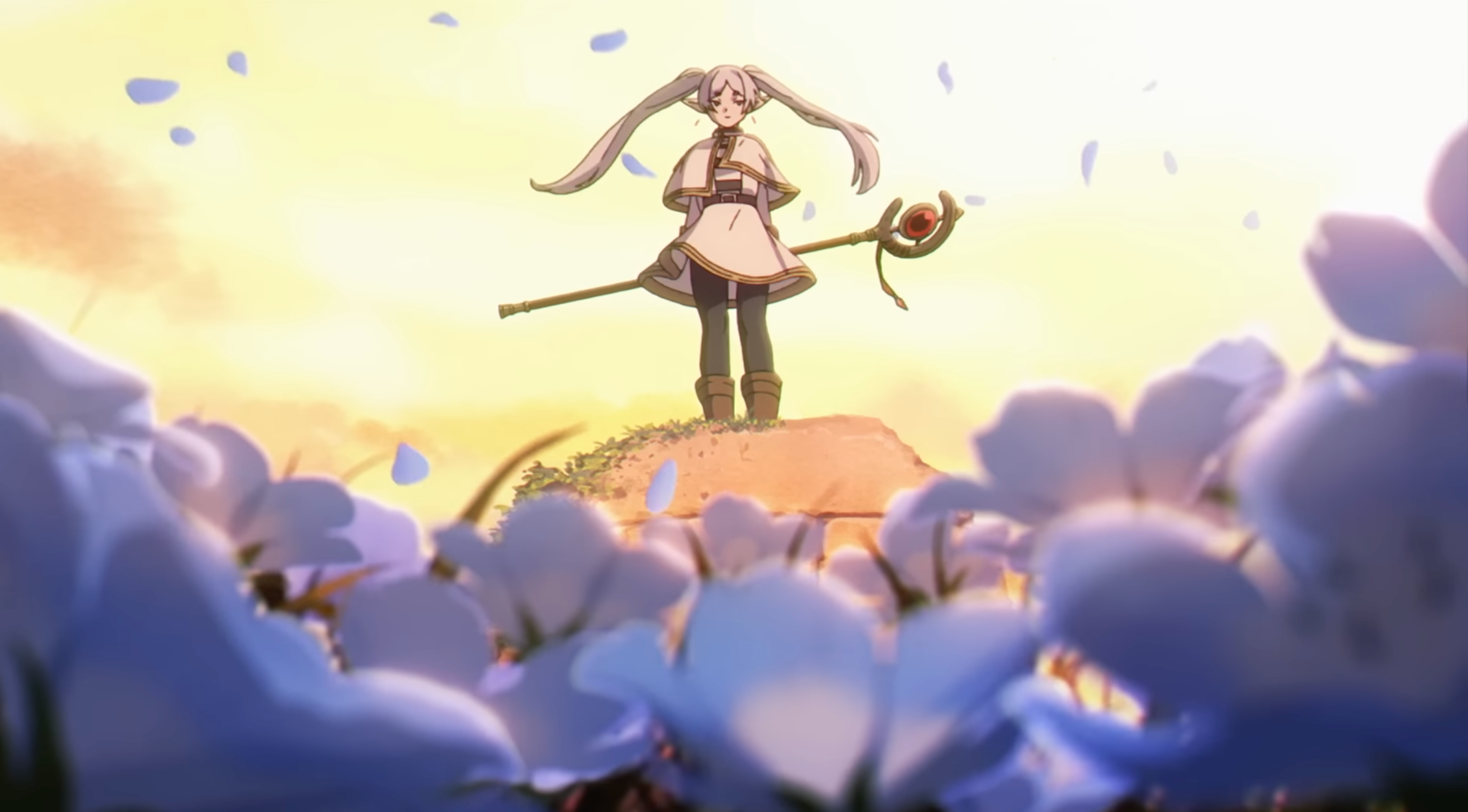
Frieren starts where a more conventional fantasy story would end. The Demon King has been defeated, the kingdom is safe, and the heroic party has already completed its mission. But while Frieren’s human companions return to ordinary lives, grow older, and eventually die, Frieren — an elven mage who will live for thousands of years — has to keep going.

That setup turns the fantasy genre inward. The series isn’t so much about defeating evil as it is about what remains after the great adventure is over. After the death of Himmel, the party’s former hero, Frieren begins a new journey to understand the people she traveled with for 10 years but never really knew. Animated by Madhouse, the show is made up largely of small quests, quiet interludes, and character studies. Entire episodes turn on learning a spell that changes the taste of grapes or visiting a town because someone once loved the flowers there.

That slowness is the point. Frieren is about grief, but not the immediate kind. It’s about grief that arrives late, after you finally understand what someone meant to you. It’s also about teaching, inheritance, and what the long-lived owe to the short-lived. It’s not the most influential anime ever made, and it’s not trying to be the most action-packed. Its case for the top spot is different. It uses animation to sit inside a feeling for longer than many stories would. Frieren takes its time because time is what the show is about.