Press
Tens of thousands descend on London for rival protests
Images
1 / 10

2 / 10
3 / 10
4 / 10
5 / 10
6 / 10
7 / 10
8 / 10
9 / 10
10 / 10
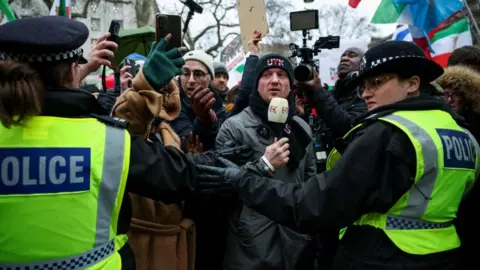
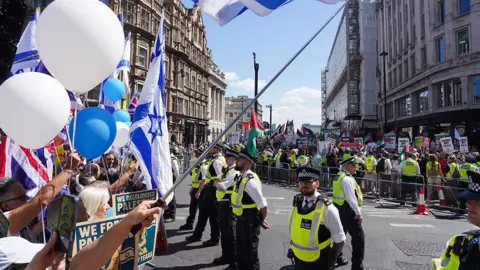
Tens of thousands of protesters have descended on London for two rival marches - the Unite the Kingdom rally organised by far-right figure Tommy Robinson, and a pro-Palestinian demonstration.

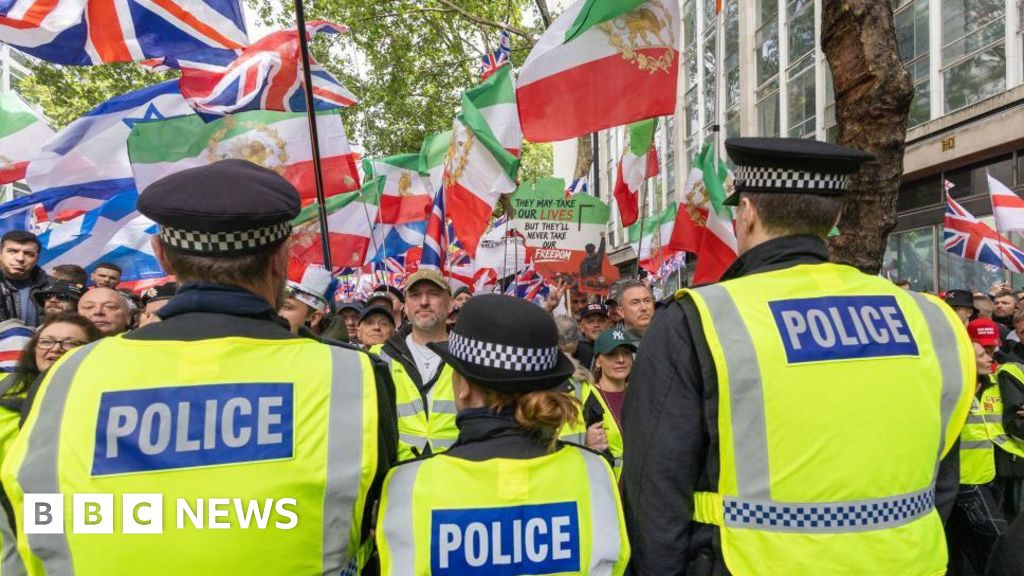
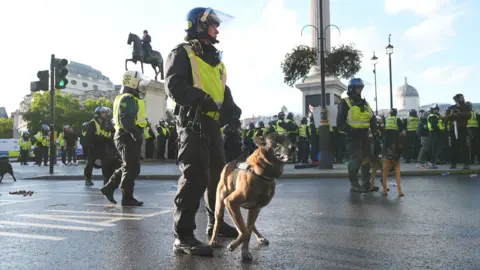
More than 4,000 police officers have been deployed to the capital, and they are managing a so-called "sterile zone" between the two marches. Officers are also using drones, police horses and dogs, and have armoured vehicles on standby.

The Metropolitan Police has called it one of the most significant policing operations in years.

In addition to the protests, tens of thousands of football fans are heading to Wembley Stadium for the FA Cup Final on Saturday afternoon.

Met Police Deputy Assistant Commissioner James Harman said the policing operation will cost the force £4.5m.

The Met said the risks from the protests meant it had to impose the "highest degree of control", including the first use of live facial recognition cameras as part of a protest policing operation.

Live facial recognition is being used at Euston and King's Cross St Pancras railway stations, where people attending the Unite the Kingdom march are likely to arrive.

The Met said officers had arrested two men near Euston station. They were wanted on suspicion of GBH following an incident in Birmingham, and were spotted arriving in London to attend the Unite the Kingdom rally.

Drones are being used to monitor both protest routes, while officers in Wembley will also monitor CCTV feeds from the FA Cup final to identify supporters travelling towards demonstrations.

Eleven foreign "far-right agitators" have been blocked from entering the country to attend the Unite the Kingdom event, the government said on Friday.

Among the 11 blocked from entering the UK is the US-based, anti-Islam influencer Valentina Gomez, who attended the first Unite the Kingdom march last September.

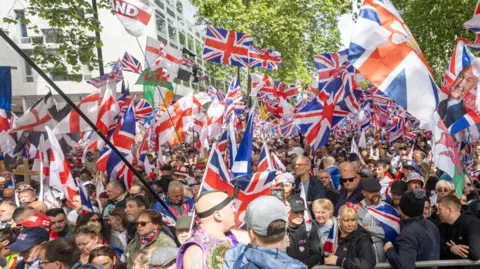
Protesters attending the Unite the Kingdom march gathered in Kingsway, before heading to Whitehall and a rally in Parliament Square.

Many could be seen waving Union flags, and chants of "we want Starmer out" could be heard.

Reporting from the scene, BBC correspondent Tom Symonds said people there had a wide range of views - including those who want to see the end of the current government, and others who feel that white people, in particular white working class people, are being discriminated against in the UK today.

In a statement on Friday, Sir Keir Starmer said: "We're in a fight for the soul of this country, and the Unite the Kingdom march this weekend is a stark reminder of exactly what we are up against.

"Its organisers are peddling hatred and division, plain and simple. We will block those coming into the UK who seek to incite hatred and violence.

"For anyone who sets out to wreak havoc on our streets, to intimidate or threaten anyone, you can expect to face the full force of the law."

In a post on X on Saturday morning he added: "Today the voices of division will be loud. They don't speak for the country I know, one that belongs to all of us.

"That's our Britain. A Britain worth fighting for."

Ahead of the march, Robinson, whose real name is Stephen Yaxley-Lennon, wrote in a post on X: "Today, we Unite the Kingdom and the West in the greatest patriotic display the world has ever seen.

"The establishment has shown their hands early, and clearly don't want the people united. Tough! It's happening!"

There are strict controls on where the marches can go and and what time they must finish.

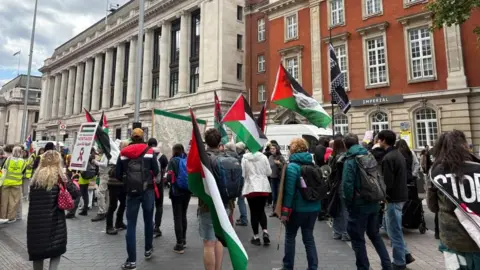
The separate pro-Palestinian march, commemorating Nakba Day, started in Kensington, before heading to Waterloo Place via Piccadilly.

Nakba Day refers to the displacement of Palestinians in 1948, around the creation of Israel.

Flags and signs reading "smash the far right" and "Free Palestinian Hostages" could be seen amongst those gathered, many of whom were wearing keffiyehs, seen as a symbol of solidarity with Palestinians.

John Rees from Stop the War, one of the organisers of the pro-Palestinian march, said it happens on the same day every year, and questioned why the Unite the Kingdom march was allowed to also take place on 16 May.

The police response should have been that it was "unacceptable", he told Radio 4's Today programme.

The Met has previously said it was already in discussion with Unite the Kingdom when the application for the Nakba Day march was made.

Meanwhile, new guidance issued by the Crown Prosecution Service (CPS) pushes prosecutors to consider whether protest placards, banners and chants viewed on social media may amount to offences of stirring up hatred.

Specialist officers are also primed to take swift decisions to arrest and charge hate speech crimes, which may include arrests for chants referring to "intifada" at the pro-Palestinian march.

Home Secretary Shabana Mahmood said the right to protest was "a cornerstone of our democracy".

She added: "But anyone spreading hate or committing acts of violence will face the full force of the law."

Director of public prosecutions (DPP) Stephen Parkinson said: "This is not about restricting free speech. It is about preventing hate crime and protecting the public, particularly at a time of heightened tensions.

"Where the line into criminality is crossed, we will not hesitate to prosecute."

Lord Mann, the government's independent advisor on antisemitism, told the BBC that organisers of public events should screen contributors to judge the level of risk they pose.

He said: "The police have a difficult job in handling protests and the organisers of demonstrations should ensure that people they platform, give a microphone to, in front of how many thousands of people, have a responsibility to ensure their speakers stay within the law."

Nick Aldworth, a former Met Police superintendent and national counter-terror co-ordinator, told BBC Radio 4's Today programme on Saturday that when it comes to a spontaneous response from a speaker, "police will seek to enforce it... I think proving that later in court could be difficult".

Saturday's rally has been organised by anti-Islam activist Stephen Yaxley-Lennon, better known as Tommy Robinson.

Two protests and the FA Cup final mean road closures and a large police presence in central London.

It comes as a Unite the Kingdom rally is taking place in central London on the same day as the annual Nakba march.

Four men, aged 27, 32, 30 and 27, are arrested in relation to the death of Nahom Medhanie, 26.

Police were called to reports of an argument in Saint George's Road and found Suhayb Abdulkadi, 24, with stab wounds.