buzzfeed Press
13 Korean Snacks You Absolutely Have To Try, And 1 You Can Definitely Pass On
Images
1 / 17

2 / 17

3 / 17

4 / 17

5 / 17
6 / 17
7 / 17
8 / 17
9 / 17
10 / 17
11 / 17
12 / 17
13 / 17
14 / 17
15 / 17

16 / 17
17 / 17
If I were to ever crave a donut, it would be this.

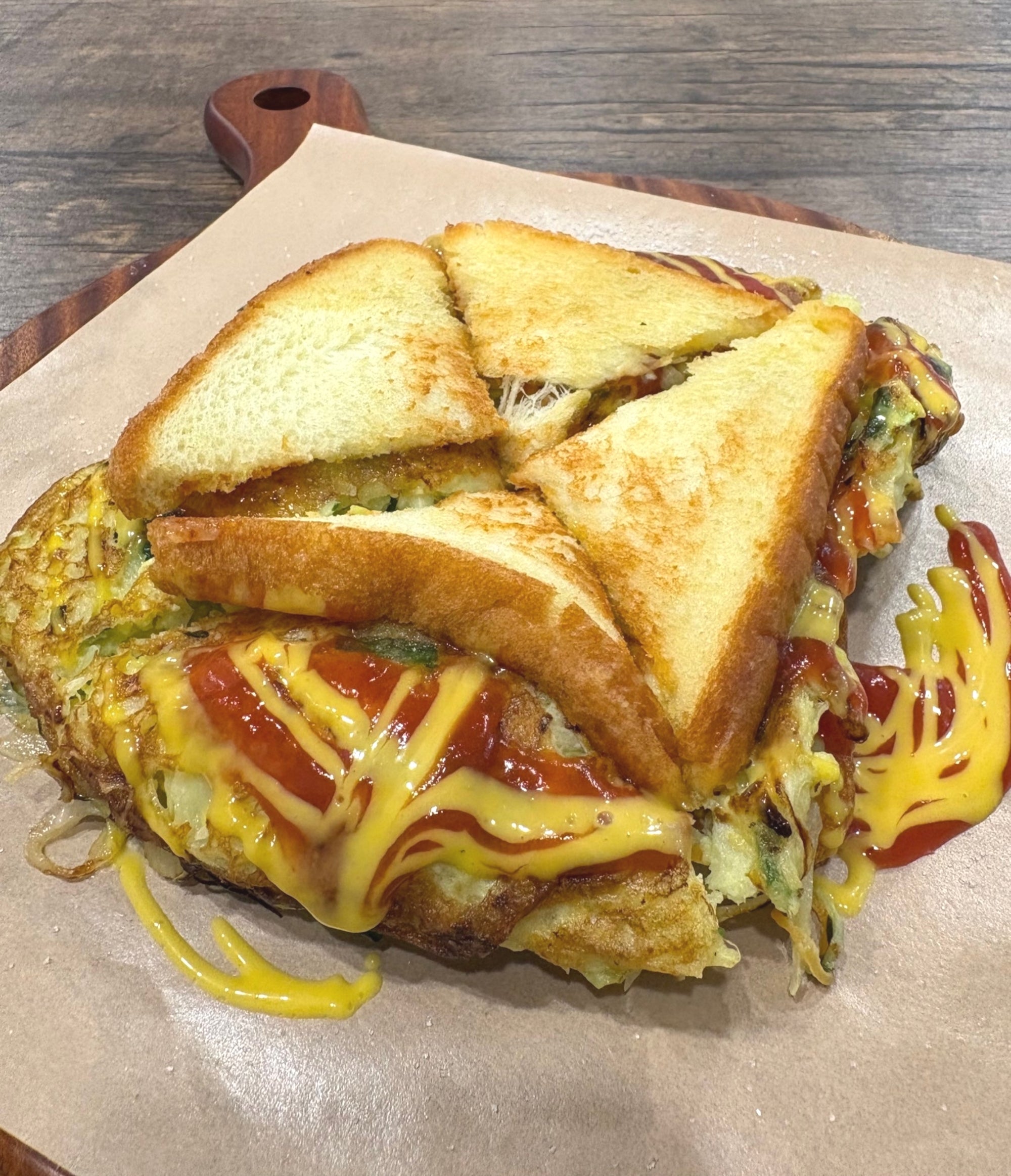
If America has the Egg McMuffin or New York has the egg, bacon, and cheese, maybe this is Korea's version of a popular breakfast sandwich.

It’s a warm, greasy breakfast sandwich filled with an egg, cabbage, carrot, and onion mixture, sprinkled with sugar on top, and accompanied by copious amounts of ketchup, sandwiched between two slices of toasted, buttered milk bread. You can also add a slice of cheese and ham to it.

I got mine at Halmeoni Toast at Changdong Market, where even the locals line up to get their breakfast fill. Apparently, it's quite a famous spot. They have a wall full of photos and signatures from Korean celebrities, including one of Culinary Class Wars' top four finalists, Chef Yoon Nam-no.

From what I heard, there are now fewer vendors these days, but a popular chain version called Isaac's Toast still serves them up. Or you can try touristy hot spots known for their food scene and head there in the morning.

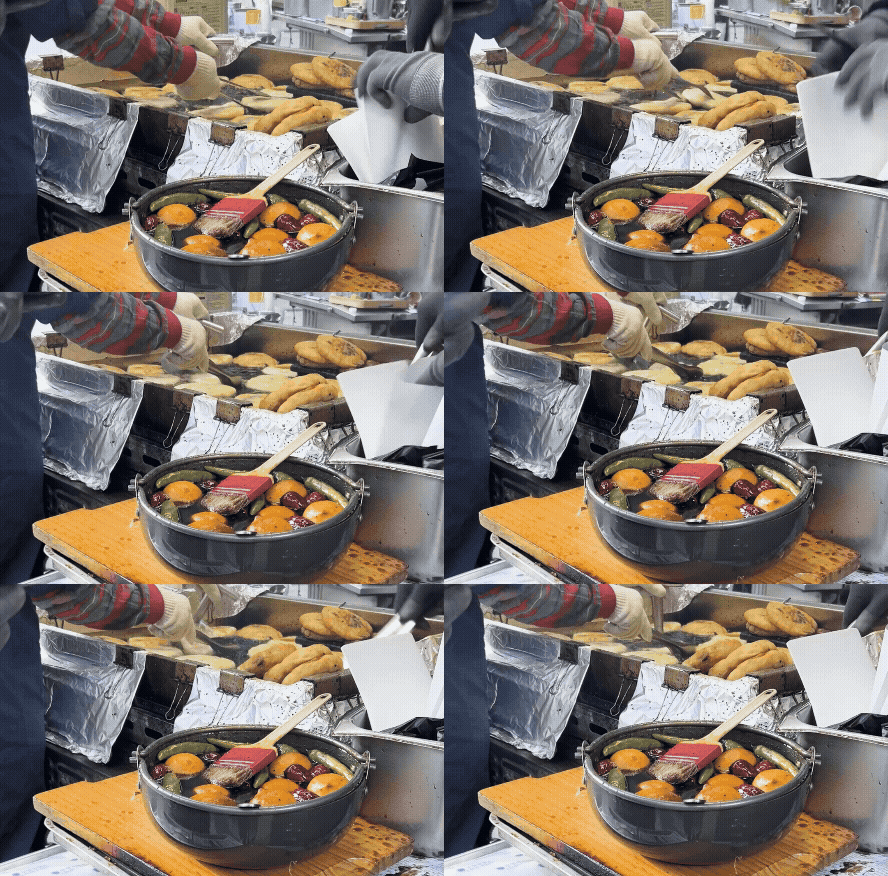
This sweet treat is a pan-fried flatbread most popularly filled with a mixture of brown sugar that gets melted down into a syrupy and slightly crumbly texture in the middle.

Really good hotteoks have a crispy exterior while the dough is chewy. I've tried a brown sugar-filled version at Gwangjang Market, a bustling street food market in Seoul, which, if you're into the food scene or curious about South Korea, you've probably seen countless videos. (It's as wonderful and delicious as you imagine.) The one at Gwangjang was pan-fried, and it was good!

But a savory version I found was even better. I went to a popular vendor located at Namdaemun Market, a bustling marketplace that sells everything: clothes, socks, hats, jewelry, kitchenware, you name it.

This hotteok is filled with japchae — stir-fried Korean glass noodles — and always has a long line. I waited 15 minutes or so on a Friday evening, and compared to even some weekday afternoons I've seen, I got lucky.

I can see why they're so popular! They were deep-fried and hot and crispy on the outside with a chewy doughy middle, and the flavors of the seasoned glass noodles made this usually dessert-like option taste new. I would get it and even wait in line for it again.

And FYI, hotteoks are best eaten right away, standing on the street curb, gasping between bites as steam rises from the freshly-fried filling.

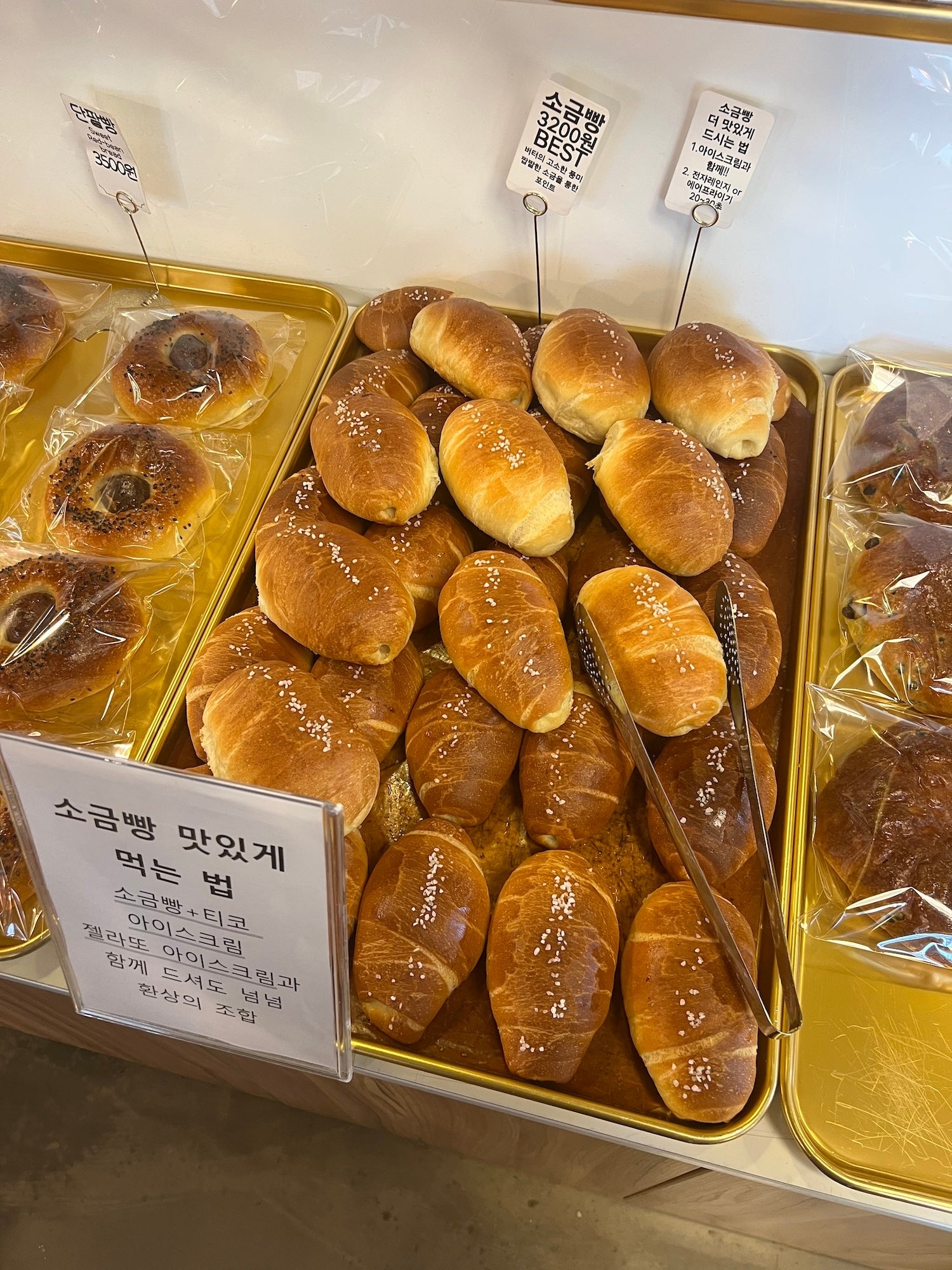
Salt breads originated in Japan as shio pan, but in the last few years, they've also grown popular in South Korea’s food scene.

Good salt breads have a delicate, airy, crispy exterior and a light and fluffy interior. The flavors of salt and butter permeate each bite. It's like East Asia's version of a croissant, and I'm sorry to say it...but it might be better than a croissant.

They're really good, and if you want to try one, you can pop into almost any bakery now. Though they might not all have the same quality, I think a fun part of Seoul’s food scene is that you’ll come across vendors selling the same item, and you might be surprised which one ends up being a favorite.The best salt bread I had was at a small bakery in Myeong-dong, an area known for its shopping, touristy knick-knacks, and street food rather than baked goods.

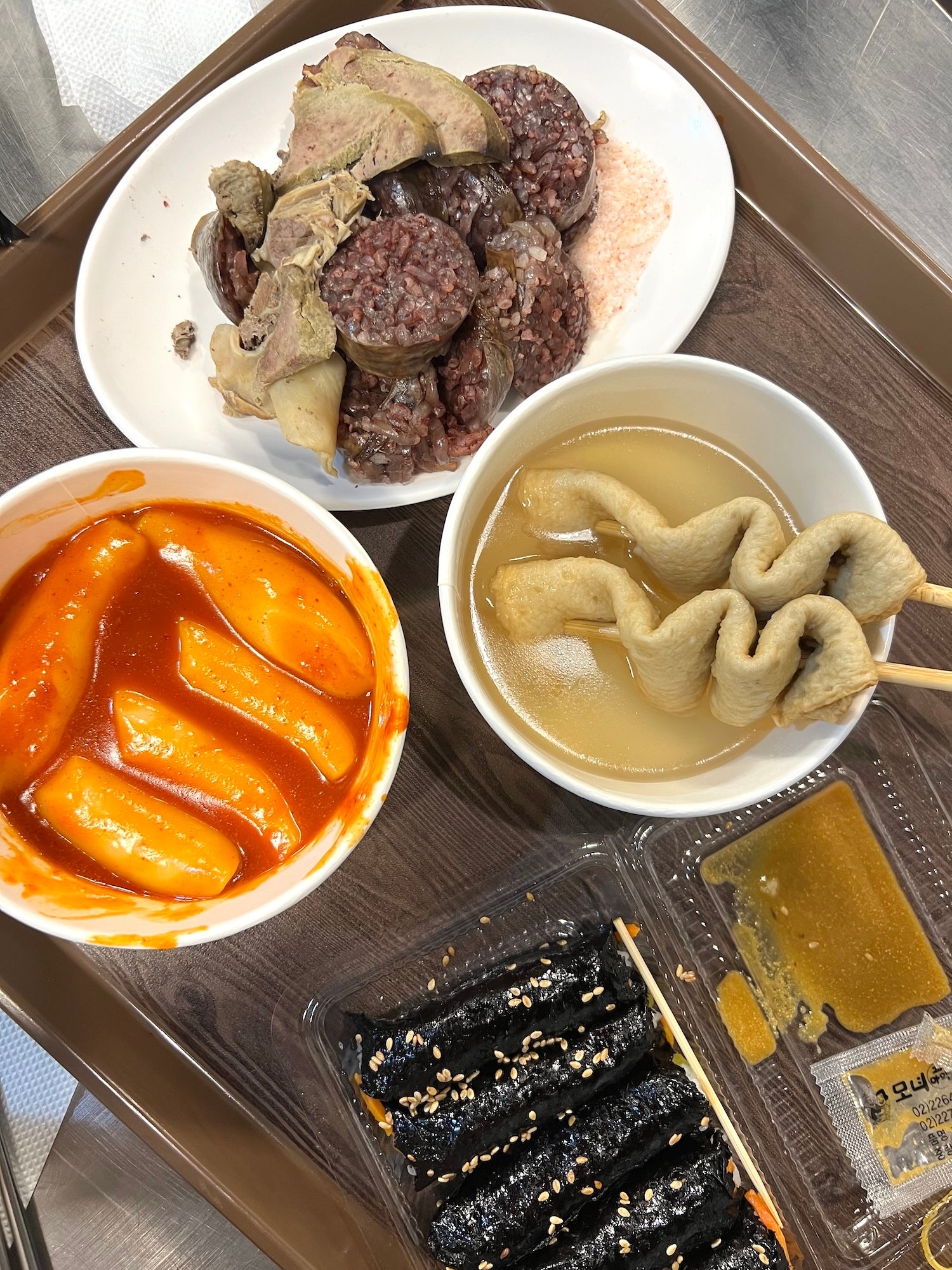
Ah, tteokbokki. They're bite-sized puffy rice cake pillows simmered in a sweet and spicy red pepper paste sauce aka gochujang, and I love having the whole works when I eat them. I'll have them with a side of airy, crispy, fried tempura, Korean blood sausages, kimbap, and a side of fishcake soup aka odeng tang to wash it all down.

There are so many tteokbokki places to try in Seoul. From the ever-popular red pepper paste version to gungjung tteokbokki, a soy sauce-based option if spice isn't your thing, to my personal favorites: the fusion versions, like carbonara and rose.

Kangane Tteokbokki at Gwangjang Market is one of the more famous spots. They're known for adding thinly sliced radishes to the sauce, which brings on a subtle sweetness from the daikon and gives the sauce base a unique, clean umami taste.

Wang means king in Korean, and these dumplings are usually as big as the palm of your hand.

Unlike mandu or gyoza, which are wrapped by a thinner casing, wang mandu shares the same filling but is covered by a thicker, spongy dough.

They're steamed in these giant silver vats, and are usually available in a variety of flavors from vegetarian to meat and kimchi.

Like almost all street foods, they're best consumed right away. Warning: the filling is piping hot. You'll blow on your fingers as you tear through the giant dumpling, trying to chew through the bouncy dough and steamy, meaty, chive-heavy filling, while still thrilled because they're that good!

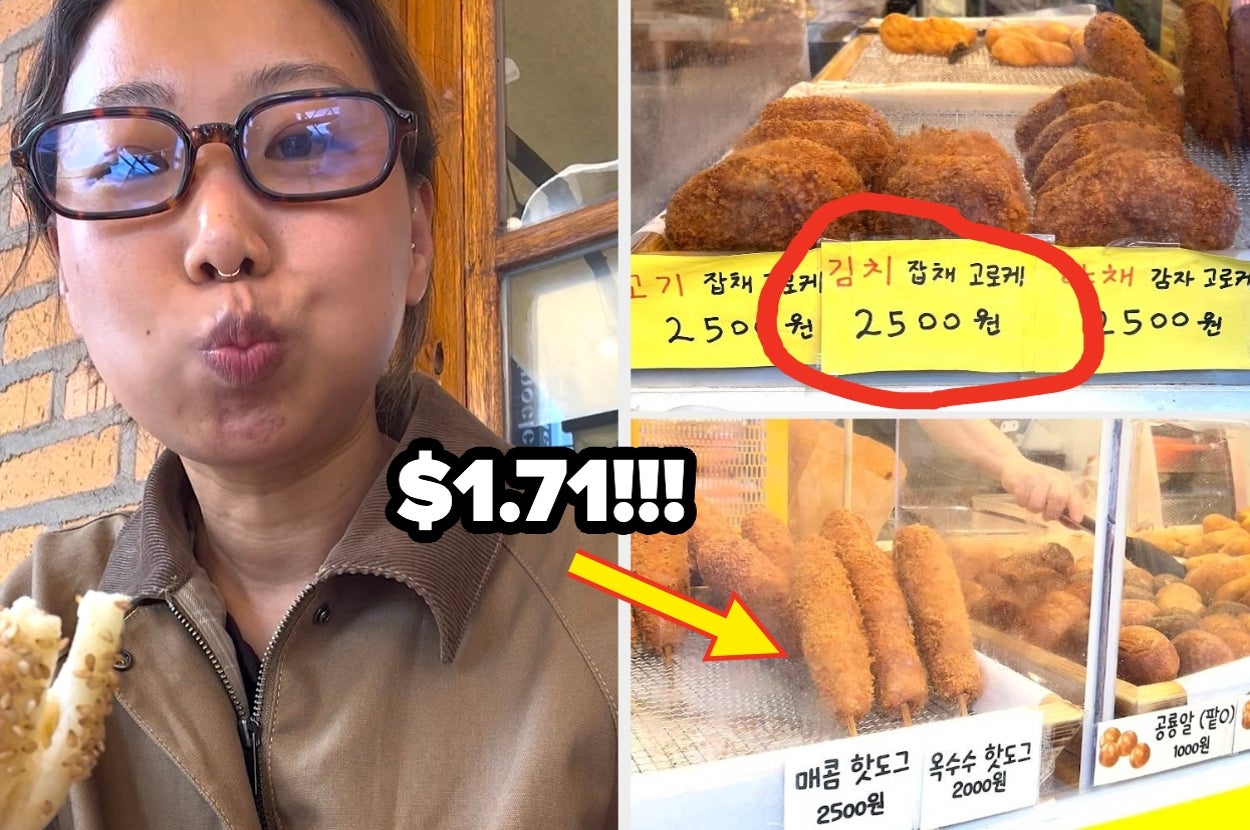
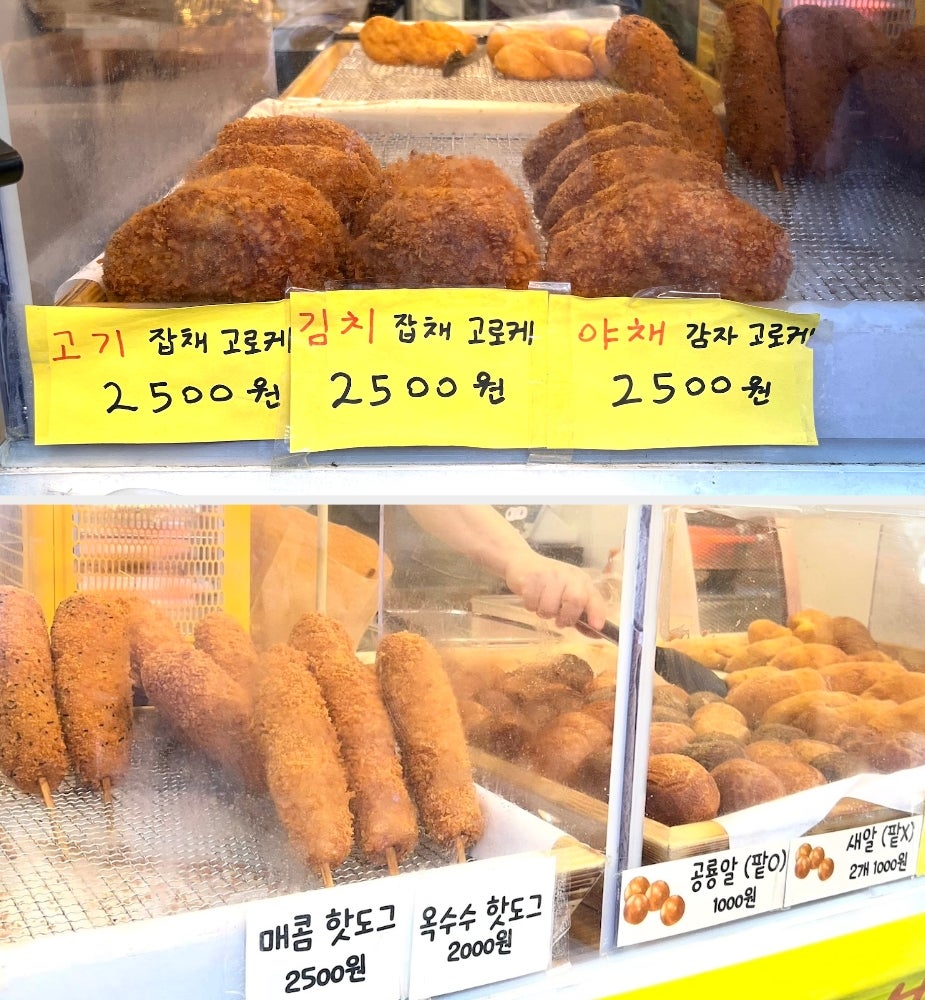
Korean croquettes are like deep-fried bread pockets usually filled with some sort of ground beef mixture and japchae. There’s usually a meat or vegetarian japchae option available, a kimchi japchae one, and sometimes, a curry one filled with potato and ground beef (my favorite).

I stumbled upon these while walking home, and I excitedly picked up a meat and vegetarian option, and a deep-fried corn dog.

Many Korean snacks and street foods have a sweet-and-savory profile. Interestingly, the vendor asked if I'd like sugar sprinkled over my corn dog, and I said, "Sure!" I think I would have liked it better without the sugar, but it didn't hurt to try it.

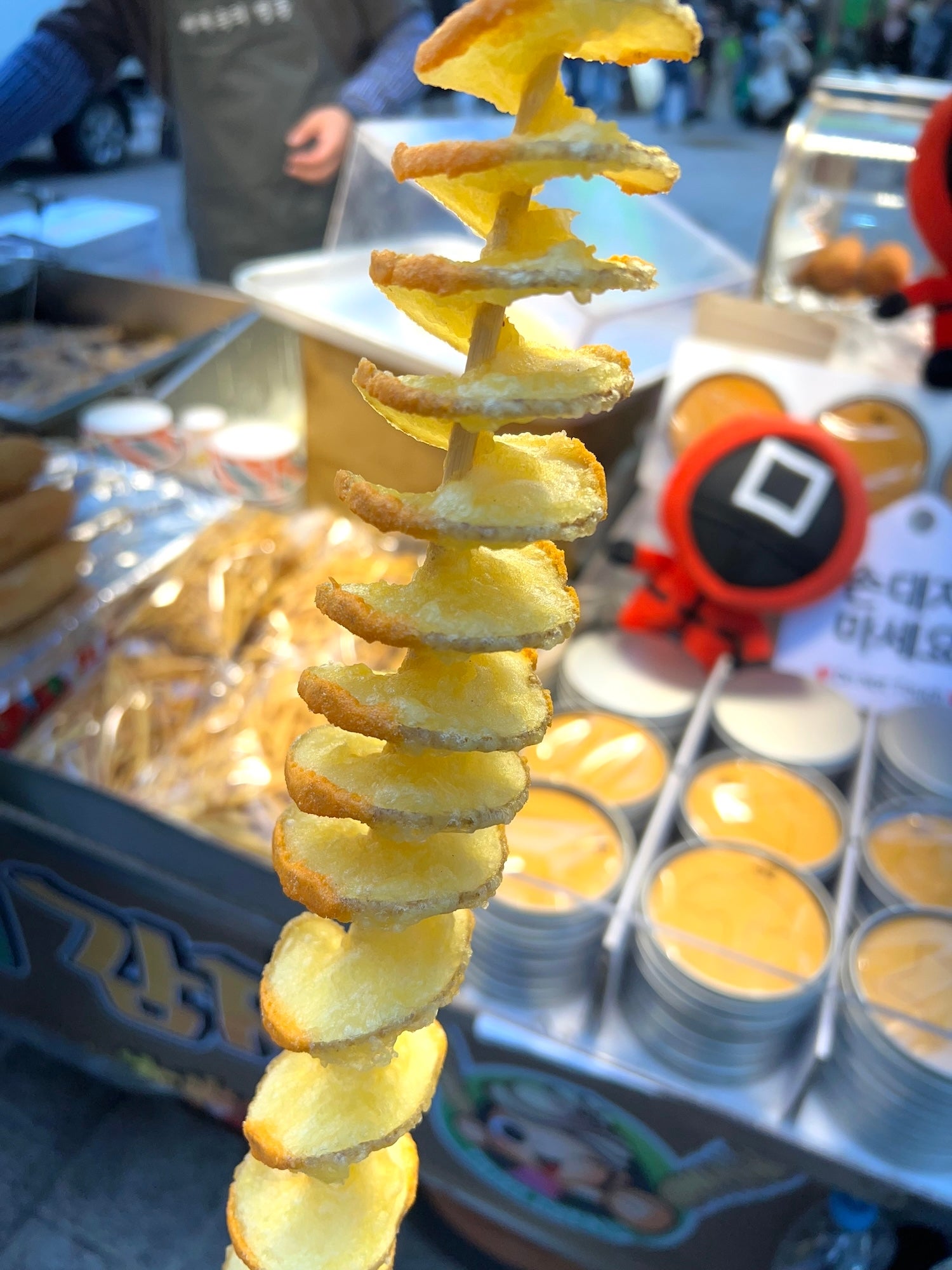
I was strolling through Myeong-dong when I started to feel peckish. My dinner plans were still more than an hour away, but fortunately, street food vendors were starting to set up shop.

I chose this vendor because I love potatoes and fries, and was super curious about the treat after seeing it go viral a few years ago.

I was happy I chose it! It tasted like French fries. Even though the spirals are cut thinly, they still tasted meaty. There's an option to sprinkle cheese powder on top, and that added a cheesy, savory, and slightly sweet flavor to it. Without it, they’re still good and lightly salted.

So, I'm not a donut girl. I never crave them or eat them, aside from an occasional Krispy Kreme.

It was a day of eating and exploring Gwangjang Market, and as I was leaving, I noticed a long line. Even though donuts aren’t my thing, I was curious and joined the line. I waited for 15 minutes or so (it does move quickly) and ordered one.

I'm pretty sure my eyes widened. It was airy, perfectly chewy like a really good mochi donut. I looked it up to see what makes theirs so tasty, and this vendor’s version adds glutinous rice flour to the dough. It took the simple kkwabaegi to the next dimension. I ate the whole thing. If I were to ever crave a donut, it would be this. It's a famous stall in Gwangjang Market, so if you're in the area, I'd suggest giving these a try. You'll be surprised by their unreal texture!

Note: Not all kkwabaegi have glutinous rice flour in them.

This is another treat I never crave, but Seoul's food scene has a way of changing my mind.

I've had versions of it in the States, where the batter was always too greasy and the red bean filling too thick; it felt like I was gobbling through paste.

But this treat is one of those nostalgic street food snacks for Koreans. One of the original ones.

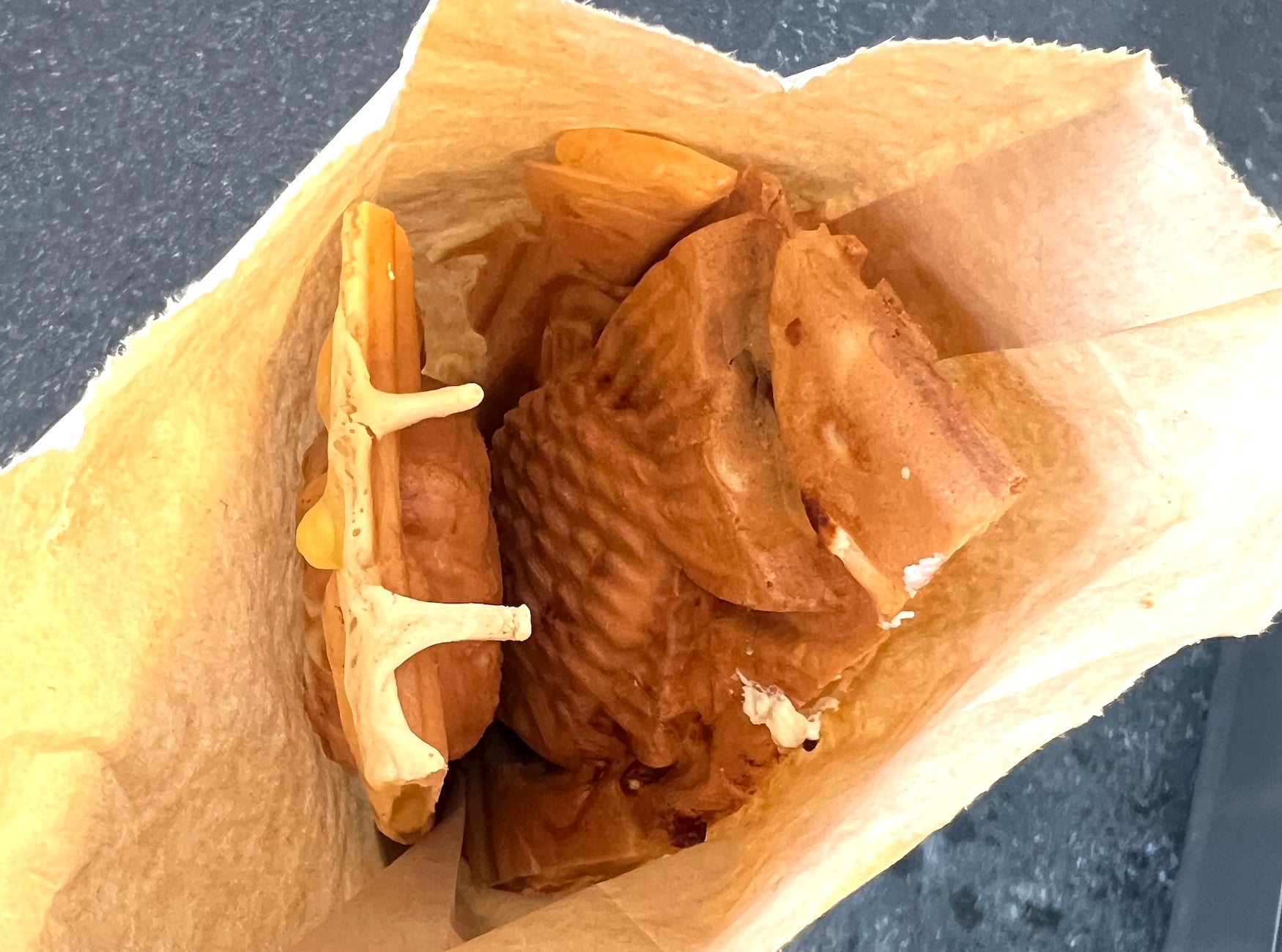
On another visit to Gwangjang, I passed by another long line, and once again, I decided to wait for a snack that I don’t really like. While this line was shorter, it moved much more slowly because the vendor gave TLC to each order. I got the original version filled with red bean paste, a cream cheese and red bean one, and a custard one.

AND WHOA. I can't say if all vendors make their bungeobbang this good, but this vendor's talents changed my taste buds. I like them now. The batter was light and crispy, and the filling warm, and just enough, and not too sweet. The combination of the crispy bite and sweet filling was a delicate and fulfilling experience.

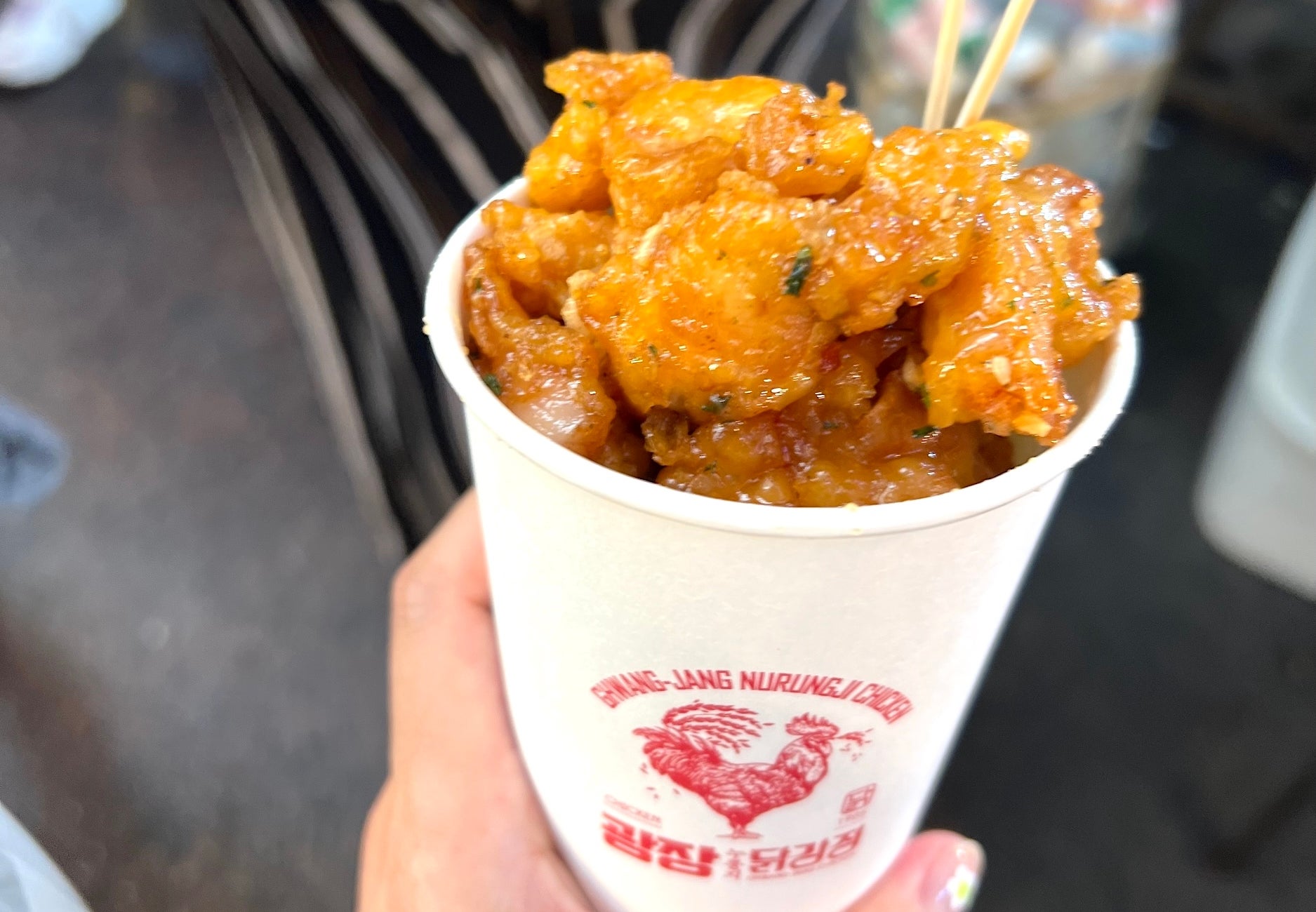
Another Gwangjang Market find! (This place is foodie heaven.)

If you've ever had Korean fried chicken or frequent Korean pubs, you might have seen this on the menu. I would describe this street food snack as mini fried chicken bites with a sweet soy sauce glaze. Sometimes, there are crushed peanuts sprinkled over them to add texture and a boost of nutty savoriness.

It’s a crispy-textured flavor bomb and very, very good. It will make you want to crack open a beer to have with it. You get to enjoy fried chicken without getting your hands too dirty since these are bite-sized.

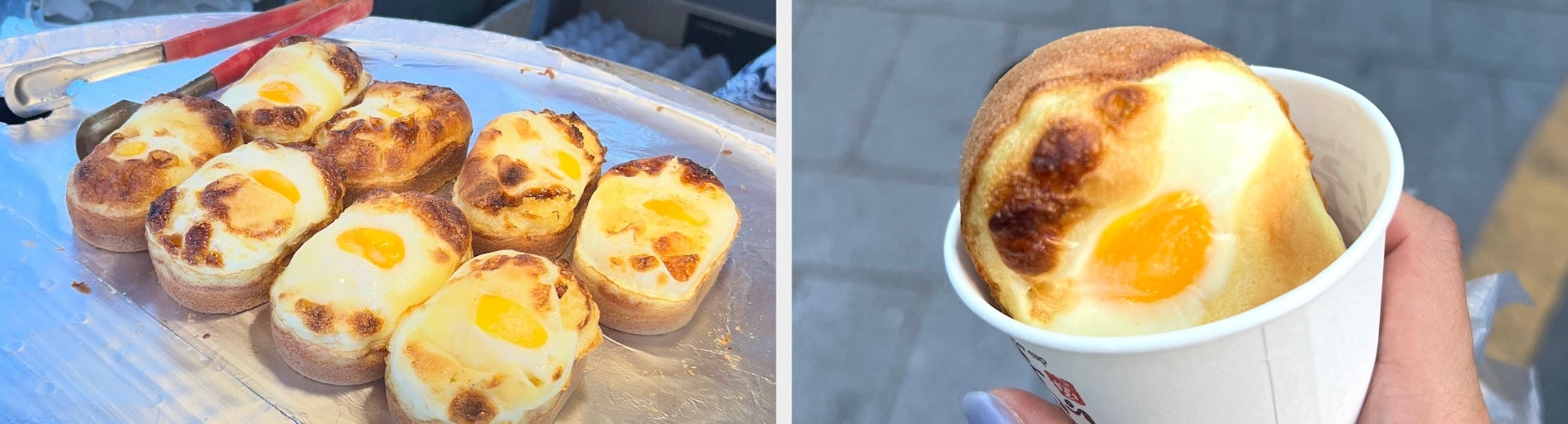
These cute things are gye-ran bbang, a historic, beloved, and affordable street food snack.

I was able to try one passing through Jongno 3-ga, an area known for its retro-looking food scene. They were advertised for 2,000 won, a little over $1, and so I decided to stop and try one. I wasn't very hungry when I tried it, so I can’t say it wowed me.

But I could imagine a gye-ran bbang swaying me if I were on my way to work on a dreary morning, and I didn't have time for breakfast. I'd definitely pick up two of these and scarf them down on the go.

The batter part is thick like a pancake, with a thin layer of a custard-like spread on top, followed by a baked whole egg. It tastes a little sweet, bready, and very eggy. So, you should probably like eggs if you're going to try this.

South Korea took the Dubai chocolate craze to the next level with these viral desserts. (Jjondeuk, by the way, translates to sticky, chewy.)

They have the same toasted kataifi and pistachio cream filling, but this version is wrapped up in melted marshmallow for the chewy texture and dusted with cocoa powder. Its final form looks something like a cocoa truffle.

In every reaction video I've seen, people's eyes lit up at the first bite. By the time I arrived in Korea, the craze was dying down, but I was able to snag one at a local chain coffee shop. (When they were popular, they were only available in limited batches because they’re not easy to make, and always sold out.)

So, I liked them! But was it eye-poppingly good? Sadly, this version was missing the chewy marshmallow texture. But the filling was extraordinary. If it had that signature chewiness to it, I probably would have had the same reaction as those people on TikTok.

They're not cheap, and usually cost over 5,000 won, which, for Korean street food or snacks, I'd call steep. But if I'm being honest, I'd try another one.

As the hype for the Dubai chewy cookies dies down, butter tteok is taking its place. They're shaped like macaroons, but taste nothing like them. Their exterior is crunchy, with an interior that’s chewy and bouncy like thick mochi. The dough tastes buttery, sweet, and indulgent.

When I first landed in Korea, I found a convenience store version of them first, and even though I knew they wouldn't be as tasty as the real thing, I was curious to try them. Whoops. Yeah, don't.

Texture is one of the key points of butter tteok, and the refrigerated convenience store ones don’t have it. They’re just thick and chewy. These ones also came with a packet of icing to drizzle over, but it was too runny and made it messy to eat.

I did get to try the real ones from a shop called Butter Haus that specializes in the dessert. I picked up a few to try, and even though I wasn't able to eat them right away, they were still good when I got home. After trying the Butter Haus version, I could see why they’re so popular. If I had an iced Americano in hand, I could have probably eaten a bucket of these.

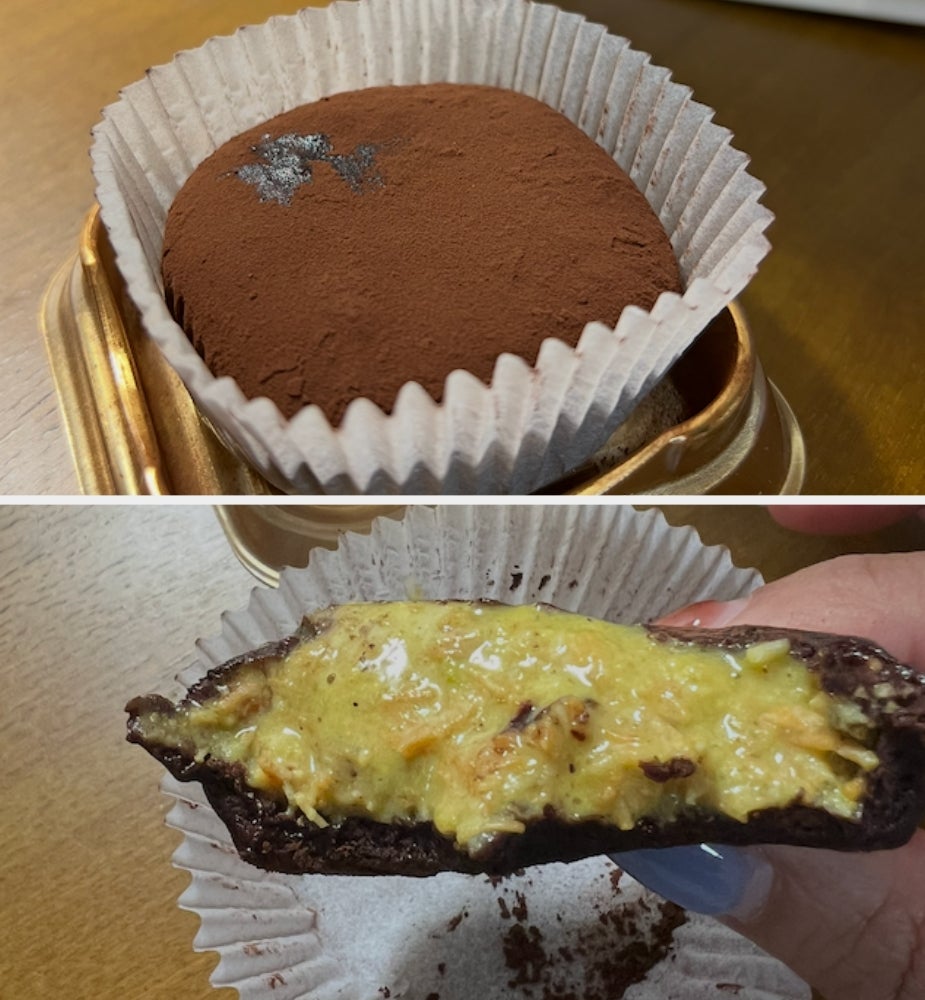
Alright, so I should have learned my lesson with my convenience store butter tteok, but I couldn't help myself and wanted to test out this viral snack hybrid.

I didn’t have any expectations, and they weren’t met!

The dough was “butter tteok,” so it was chewy at least, and chocolaty. The dough sandwiched a dab of the kataifi pistachio filling. I felt like I ate 50% of each product, but instead of feeling like I got the full 100%, I felt unfulfilled.

What I learned is that, if ever curious about trying these viral food trends, convenience store options are a fun way to get a taste of what the real thing might be like. But when you try the real thing, you’ll notice a difference.