Press
When will we know election results in England, Scotland and Wales?
Images
1 / 11

2 / 11
3 / 11
4 / 11

5 / 11

6 / 11
7 / 11
8 / 11

9 / 11
10 / 11
11 / 11
The biggest set of elections since the 2024 general election has seen millions of people head to the polls.

Voters in Scotland and Wales are electing representatives to their national parliaments.

In England, about 5,000 seats across 136 councils and six mayoral contests are being decided.

After a day of polling, the focus turns to the results.

The timing of the counts - and the expected results - vary across the elections.

England

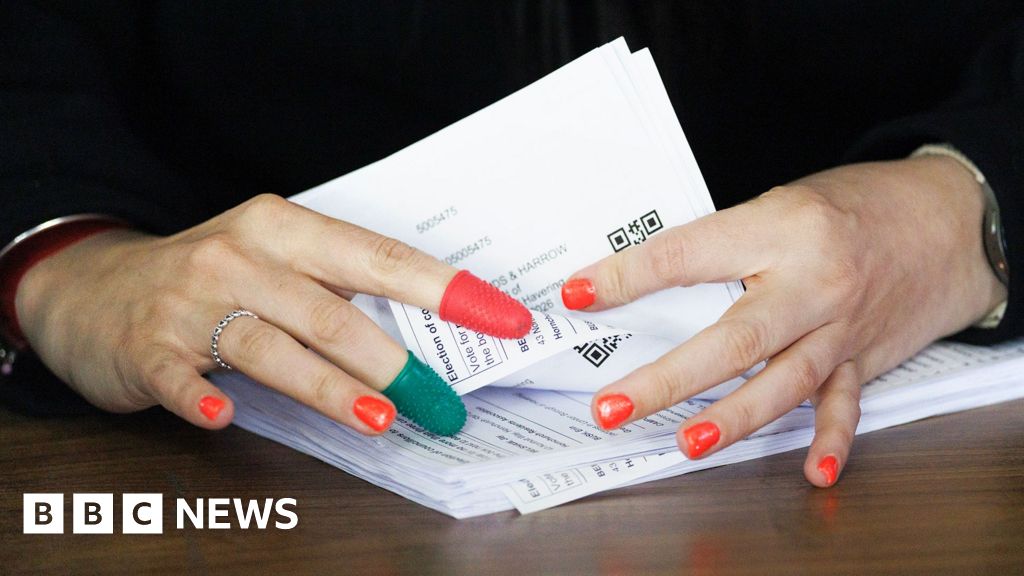
Previously, votes have been counted as soon as polls closed on Thursday.

This time, only a few local authorities began counting on Thursday night, with most starting on Friday morning.

The first results were announced in the early hours on Friday.

It is expected that the latest will be known by Saturday evening.

Scotland

Votes will begin to be counted for Scotland's constituencies and regional lists on Friday morning.

It's likely that the shape of the new parliament will be clear by early Friday evening.

But each count is the responsibility of a local returning officer and there may be delays or recounts.

In a Holyrood election such delays could prevent the calculation of full results and it is possible that some seats may not be declared until late Friday evening or even Saturday.

Wales

Votes will begin to be counted for all 16 of Wales' constituencies on Friday morning.

It is estimated that results could then be declared from about lunchtime, continuing into the early evening.

But with some experts predicting a higher number of recounts compared to past elections, and the unknowns of a brand-new voting system and new constituencies in the mix, whether Wales' results will be done and dusted before the weekend remains to be seen.

Thursday night

From 23:00 BST BBC Radio 4 and BBC Radio 5 Live have joined forces for an overnight results programme, co-presented by Nick Robinson and Rachel Burden.

From 23:10 Laura Kuenssberg hosted a special programme on BBC One, with analysis from polling expert Sir John Curtice and number-crunching from Reeta Chakrabarti.

Live pages on the BBC News website and app will keep you updated on results and reaction across the UK, with fact-checking from BBC Verify. Follow BBC News on TikTok, Instagram and YouTube for the latest updates on social media.

Friday morning

From 09:30 BST Sophie Raworth will continue election coverage on BBC One after a BBC Breakfast special, with Clive Myrie in Cardiff for the Senedd elections and Kirsty Wark in Edinburgh for the Holyrood vote.

From 09:30 BBC One Scotland and BBC Radio Scotland will bring live declarations, interviews and reporting from every count in Scotland.

From 11:00 a results programme will be broadcast on BBC One Wales and S4C, providing analysis and interviews. James Williams and Dot Davies will present a BBC Radio Wales programme and listeners can join Dewi Llwyd and Kate Crockett on BBC Radio Cymru.

About 5,000 seats across 136 local councils are up for grabs.

There are also six mayoral contests, in Watford and five London boroughs - Croydon, Hackney, Lewisham, Newham and Tower Hamlets.

In council elections, voters generally have one vote for each available seat in an election area, known as a ward or division. Some wards have more than one representative.

Like MPs in general elections, local councillors are elected under the first-past-the-post system. The candidate or candidates with the most votes in each ward win and become councillors.

The political party which wins the most seats gains control of the council.

Councils are responsible for local services including care for older people and people with disabilities, rubbish collection and recycling, housing, education and road maintenance.

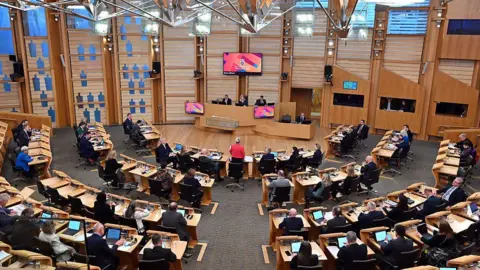
The Scottish Parliament election will decide who governs the country in key areas such as health and education and, as a result, the direction it takes on many issues.

All 129 Members of the Scottish Parliament (MSPs) are up for re-election.

There are 73 constituency MSPs and 56 regional MSPs (seven per region) in Holyrood.

Each voter had two ballot papers and cast two votes, one to elect their constituency MSP and one to elect their area's regional MSPs.

Constituency MSPs are selected directly under first past the post, with the winner being the candidate who receives the most votes.

The process to select regional MSPs uses a type of proportional representation.

Voters chose either a political party or an individual candidate from a list. Political parties are allocated regional seats according to a formula which includes the number of votes they receive in each region and the number of constituencies they win outright.

Usually the party with the most MSPs forms the Scottish government, and its leader becomes first minister.

The current Scottish Parliament was set up in 1999, when Scotland already had its own legal and education system.

Holyrood is now responsible for a much broader range of issues including health, housing, policing and prisons, as well as many aspects of transport, welfare and tax.

It can pass laws in any areas not "reserved" to the UK parliament at Westminster.

The 2026 Senedd election represents the biggest change to the parliament since powers began to be transferred to Wales in 1999. It will determine who governs Wales on many key issues.

The number of Members of the Senedd (MSs) is being expanded from 60 to 96 representatives from 16 newly devised constituencies.

Political parties could list up to eight candidates for each constituency. Independent candidates could also stand. Voters chose one party or one independent candidate.

The 96 seats will then be allocated according to the share of votes received by each party or independent candidate.

The party that wins the most seats in the Senedd election would expect to lead the government. However, no party has ever won a majority in the Welsh Parliament and the new system makes it highly unlikely that will change at this election.

Any MS can nominate any member to be first minister. If there are two or more candidates, MSs will vote to decide who they want to fill the role.

The National Assembly for Wales opened in 1999.

Renamed Senedd Cymru or Welsh Parliament in 2020, its responsibilities now include health, schools, transport and farming, as well as some tax powers.

Sign up for our Politics Essential newsletter to keep up with the inner workings of Westminster and beyond.

Labour lost all but one seat and the result leaves the council still in no overall control.

The party's Richard Tice says voters have turned out to "repaint the red wall, the turquoise wall".

See which parties are winning - and losing – across the UK and who’s won in your area, using our interactive tool.

Labour sources have told the BBC the party's century-long winning run is expected to come to an end.

Labour MP Jonathan Brash renews his call for Labour leader Keir Starmer to resign.