foxnews Press
Trump opens Hormuz under fire with ‘Project Freedom’ as Iran warns of attacks
Images
1 / 20
2 / 20

3 / 20

4 / 20
5 / 20

6 / 20

7 / 20

8 / 20

9 / 20

10 / 20

11 / 20

12 / 20
13 / 20

14 / 20
15 / 20

16 / 20

17 / 20
18 / 20
19 / 20

20 / 20
Retired Marine colonel says key threats remain as Iran continues attacks in the Strait.

The U.S. operation to reopen the Strait of Hormuz is unfolding under fire, with American forces intercepting Iranian missiles and drones and destroying attack boats targeting commercial shipping as they begin moving vessels through one of the world’s most critical waterways.

U.S. Central Command said two U.S.-flagged merchant vessels have successfully transited the strait under the effort, dubbed "Project Freedom," even as Iranian officials rejected the claim as "baseless" and warned that any foreign military presence would be attacked.

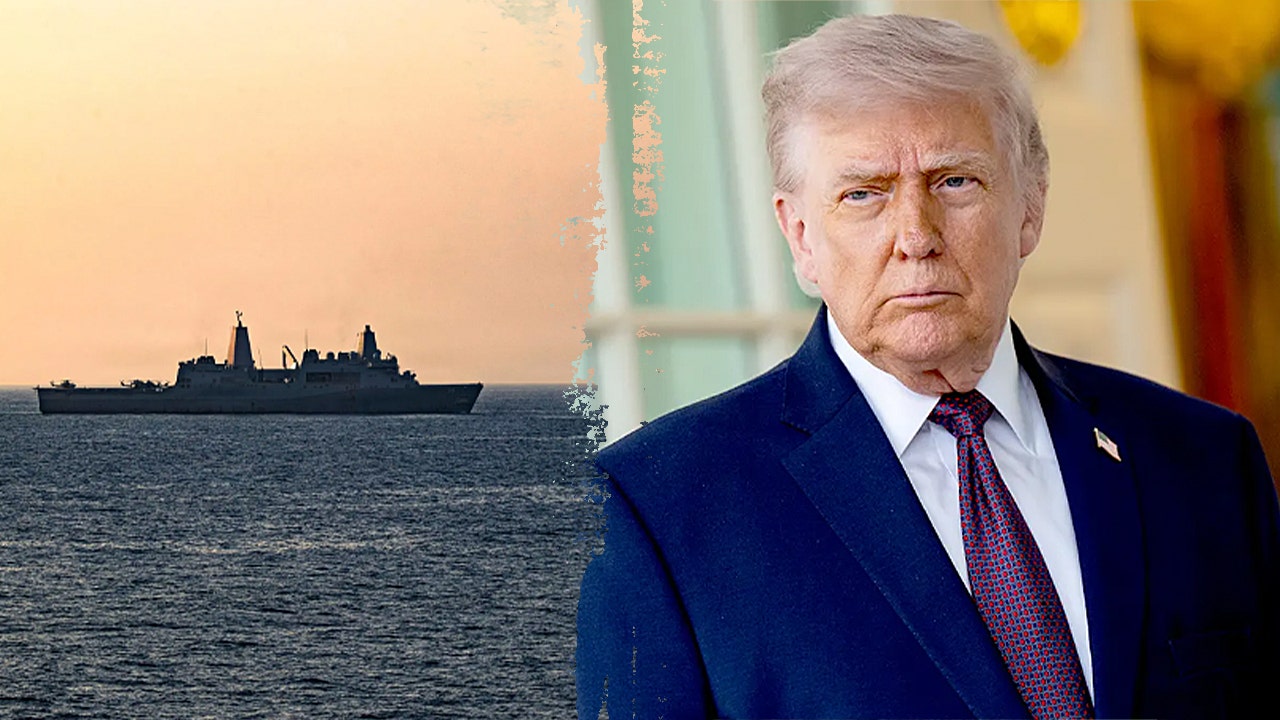
President Donald Trump warned that any Iranian strike on U.S. vessels would be met with overwhelming force, saying Iran would be "blown off the face of the earth," while a senior Iranian commander said American forces would be targeted if they "approach and enter" the strait.

The operation quickly has turned into a direct test of control over the strait, with U.S. forces moving ships under fire while Iran threatens to strike any foreign presence — a clash that could pull the two sides deeper into open conflict.

President Donald Trump warned that any Iranian strike on U.S. vessels would be met with overwhelming force.  (Salwan Georges/Bloomberg via Getty Images)

In this handout photo provided by U.S. Central Command, U.S. forces patrol the Arabian Sea near M/V Touska on April 20, 2026, after firing upon the Iranian-flagged vessel that the U.S. accused of attempting to violate the U.S. naval blockade of Iranian ports near the Strait of Hormuz. (U.S. Navy via Getty Images)

TRUMP’S APOCALYPTIC IRAN WARNING RAISES STAKES FOR SWEEPING US STRIKE THREAT

In a post on Truth Social, Trump said Iran had taken "shots at unrelated Nations" during the operation, including a South Korean cargo ship, and suggested allies could join the effort.

"Perhaps it’s time for South Korea to come and join the mission!" he wrote.

U.S. Central Command commander Adm. Brad Cooper told reporters that Iranian forces launched cruise missiles, drones and small boats at vessels under U.S. protection as the operation began, targeting primarily commercial shipping as well as some U.S. Navy ships.

U.S. forces responded by intercepting the attacks and destroying six Iranian small boats, Cooper said, adding that American forces "defeated each and every one of those threats."

He said the two U.S.-flagged ships transited the strait "uneventfully" and that additional vessels are expected to begin moving to take advantage of the passage.

The operation involves a large U.S. military presence, including guided-missile destroyers, more than 100 aircraft, unmanned systems and roughly 15,000 service members.

Cooper said the U.S. is not escorting ships individually but instead providing a layered "defensive umbrella" across the strait, combining naval, air and electronic warfare capabilities.

U.S. forces also spent weeks using advanced technology to clear and validate a transit pathway, which was tested by sending U.S.-flagged ships through first, he said.

The Strait of Hormuz carries roughly a quarter of the world’s seaborne oil trade, making any disruption a major concern for global markets.

Iran has sharply rejected the U.S. operation, with Ali Abdollahi, head of the Iranian military’s unified command, warning that any foreign forces entering the strait "will be attacked."

Iran’s Revolutionary Guard Corps also has denied that any commercial ships successfully transited the waterway, calling U.S. claims "baseless."

The developments leave the strait effectively contested, with the U.S. asserting it has opened a secure transit route while Iran denies that ships are moving and threatens further attacks.

Admiral Charles Bradford "Brad" Cooper II, Commander of US Central Command speaks during a joint press conference with US Secretary of Defense Pete Hegseth, at US Central Command (CENTCOM) headquarters at MacDill Air Force Base in Tampa, Florida, on March 5, 2026.  (Octavio JONES / AFP via Getty Images)

Trump has framed "Project Freedom" as a humanitarian effort to help "neutral and innocent bystanders," saying many ships are running low on supplies and need assistance to resume normal operations.

But he has also warned that any interference would be met with overwhelming force.

The operation is unfolding as the fragile ceasefire shows signs of fraying, with the United Arab Emirates saying its air defenses engaged ballistic missiles, cruise missiles and drones launched from Iran.

While the U.S. has demonstrated it can move ships through the strait under heavy military protection, it remains unclear whether the effort can scale to normal commercial traffic levels or sustain safe passage if Iranian attacks intensify.

Retired Marine Corps Col. Ray Gerber said there is limited independent evidence so far that commercial shipping has resumed at scale, noting that maritime tracking data and industry signals have yet to clearly reflect increased traffic.

"We’re not really seeing a lot of evidence of it," Gerber said. "Most of the industry is saying they’re still waiting."

He also questioned whether the U.S. has fully mitigated one of the most significant threats in the waterway: naval mines.

"If they’ve cleared a corridor, my first question is going to be, ‘So you’ve swept it for mines?’" he said.

Gerber added that even if initial transits succeed, sustaining the operation could become more dangerous over time as Iran responds to what it sees as a loss of leverage.

CLICK HERE TO DOWNLOAD THE FOX NEWS APP

"The Strait of Hormuz is Iran’s primary leverage point. Any changes to that status quo raise the possibility of returning to more active conflict," he said.

The next phase of the operation — whether more ships follow and whether attacks escalate — will likely determine whether the strait can be fully reopened or remains effectively contested.

Get the latest updates from the 2024 campaign trail, exclusive interviews and more Fox News politics content.

By entering your email and clicking the Subscribe button, you agree to the Fox News Privacy Policy and Terms of Use, and
        agree to receive content and promotional communications from Fox News. You understand that you can
        opt-out at any time.

Subscribed

You've successfully subscribed to this newsletter!