Press
What we know about Trump's 'Project Freedom' in Strait of Hormuz
Images
1 / 9

2 / 9
3 / 9
4 / 9

5 / 9
6 / 9
7 / 9
8 / 9
9 / 9
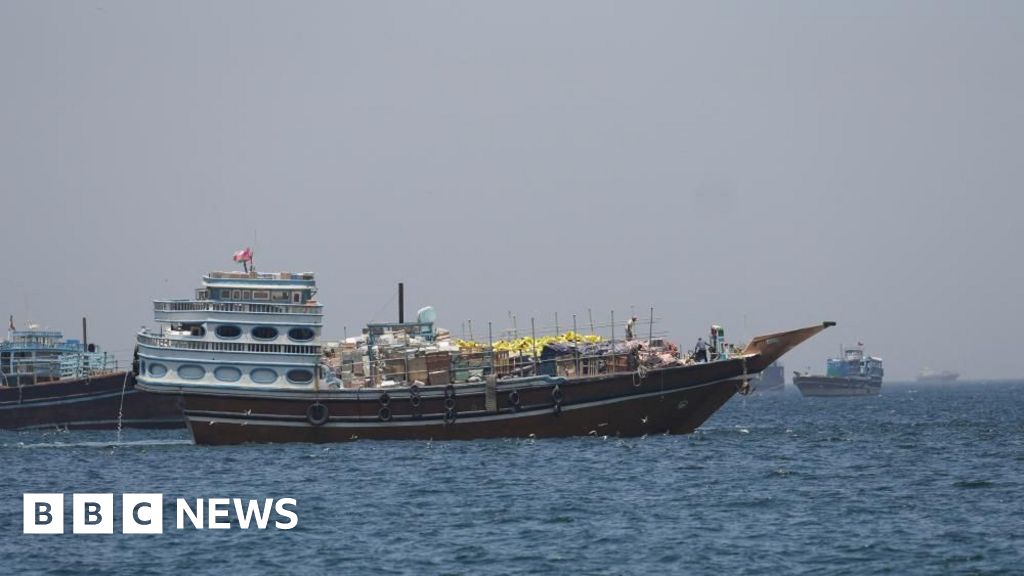
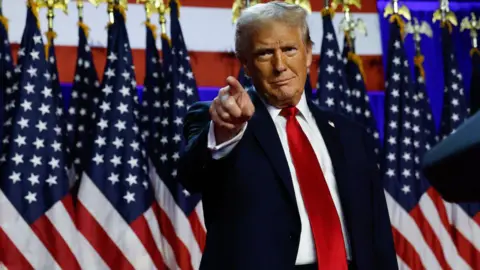
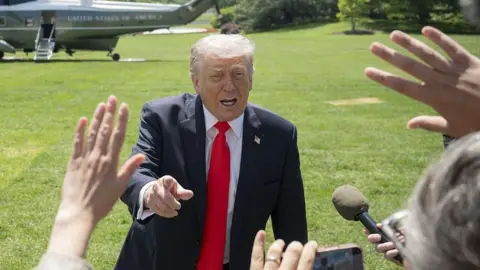
President Donald Trump has announced the US will help "guide" ships that have been stranded by Iran's closure of the Strait of Hormuz.

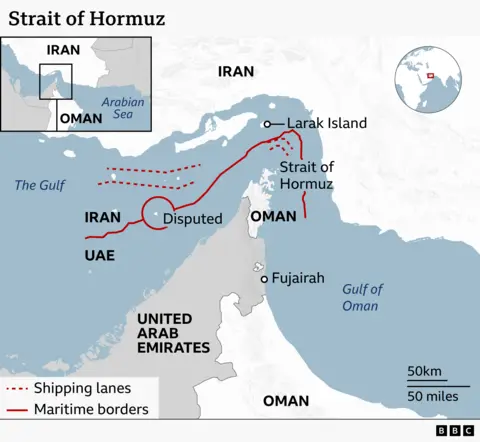
The Strait has remained largely blocked since the US and Israel launched air strikes on Iran - and Tehran responded by blocking the crucial waterway through which 20% of the world's oil and liquefied natural gas is meant to pass freely.

What does Trump's "Project Freedom" entail and could it lead to a resumption of hostilities?

The president said the US had been asked by countries "from all over the World" to help free up their ships which were "locked up in the Strait of Hormuz" and were "merely neutral and innocent bystanders!".

And so, in response, the US would "guide their Ships safely out of these restricted Waterways".

"The Ship movement is merely meant to free up people, companies, and Countries that have done absolutely nothing wrong — They are victims of circumstance," Trump said in the post on his Truth Social platform.

He added this was "a Humanitarian gesture on behalf of the United States, Middle Eastern Countries but, in particular, the Country of Iran" - as many of these vessels were "running low on food, and everything else necessary for largescale crews to stay on board in a healthy and sanitary manner".

Trump's announcement appears mild compared to previous statements against Iran.

It even makes it sound like Iran is a party to the operation - the president went as far as to say "Project Freedom" was being undertaken on behalf of Iran, too.

But that is not how Iran sees the operation.

A statement from the head of Iran's central command said it would attack "any foreign armed force" that tried to approach or enter the Strait, "especially, the aggressive US army".

Maj Gen Ali Abdollahi said safe passage through it must be co-ordinated with Iran "under all circumstances".

An estimated 20,000 sailors and 2,000 ships have been trapped in the Gulf since the start of the war with Iran, according to the International Maritime Organisation - a UN agency that regulates shipping.

There has been growing concern over dwindling supplies and the effects on sailors' physical and mental health.

But Trump did not say how they would be able to sail away - he only threatened to use force "if, in any way, this Humanitarian process is interfered with".

Hours later, US Central Command (Centcom) announced that "guided-missile destroyers, over 100 land and sea-based aircraft, multi-domain unmanned platforms, and 15,000 service members" would be used to support the operation.

The statement did not specify how the combined hardware and personnel would support the vessels.

If the US guidance was meant as an offer of information and advice to vessels and crew, that may be of little help given Iran's ominous threats to attack them.

If, on the other hand, the US will attempt to provide stricken ships with a military escort, that could bring them back into direct military confrontation with Iran.

The American military says it is implementing Trump's plan.

On Monday afternoon, Centcom said US Navy guided-missile destroyers were operating in the Gulf "after transiting the Strait of Hormuz in support of Project Freedom".

It added American forces were "actively assisting efforts to restore transit for commercial shipping" but gave no details.

"As a first step, 2 U.S.-flagged merchant vessels have successfully transited through the Strait of Hormuz and are safely headed on their journey," Centcom also said. Again, no details were released about the identity of the commercial vessels.

The BBC could not immediately see any vessels matching the US description on the tracking site MarineTraffic. It is also possible for vessels to turn off their location transmissions or to falsify them.

Iran's powerful Islamic Revolutionary Guard Corps denied any vessels had passed through the Strait. It said the US statements were "baseless and entirely false" and warned that any other movements opposing the instructions of the IRGC Navy "face serious risks".

Hours after the US operation was meant to have begun, the Iranian military said: "With a firm and swift warning from the Islamic Republic Navy, the entry of American and Zionist enemy destroyers into the Strait of Hormuz was prevented."

More details were provided later by Iranian state media. It reported that the Iranian Army Navy had "issued a warning and fired warning shots along the route of the hostile enemy destroyers" - which the Americans had "disregarded".

Centcom quickly denied the Iranian claims that one of its warships had been hit by two missiles.

The United Arab Emirates (UAE) - a Gulf ally of the US, which has often been attacked by Iran during the war - said a tanker affiliated with Adnoc, its state-owned oil company, had been targeted by two drones as it transited the Strait of Hormuz.

No-one was injured, the country's foreign ministry said in a statement.

A suspected strike also hit a South Korean cargo vessel anchored in the Strait of Hormuz, in waters near the UAE, according to the country's Ministry of Oceans and Fisheries.

It added that there was thought to have been an explosion on the port side of the engine room during the suspected strike. No casualties were reported.

What impact might shortages have on our summer holidays - and what could be done about it?

How much Donald Trump can do with the time he has left as president will depend massively on the cost of living.

Airspace closures in the Middle East following the outbreak of the war on 28 February has had a major impact on air travel.

In the US, two senior Republicans voice concern over President Trump's decision to pull out 5,000 troops.

The president writes that hostilities "have terminated" because of the ceasefire, arguing he does not need congressional authorisation.