Press
Record animal sacrifice attempts at Al-Aqsa prompt status quo fears
Images
1 / 7
2 / 7
3 / 7
4 / 7

5 / 7

6 / 7

7 / 7
Record number of attempts by Israeli settlers to smuggle Passover sacrifices into the holy site since 1967 leads to takeover fears.

Save

Share

Israeli settlers have made seven attempts to smuggle animal sacrifices into the Al-Aqsa Mosque compound during this year’s Jewish Passover festival, the highest number of such incidents documented since the beginning of the Israeli occupation in 1967.

The Palestinian Authority’s Jerusalem Governorate said on Sunday the provocations took place while Israeli authorities kept the 144-dunum (36-acre) compound, along with the Church of the Holy Sepulchre, sealed off for 40 consecutive days.

However, Al-Aqsa Mosque reopened early on Thursday morning, as worshippers flocked to the Jerusalem holy site after authorities lifted the weeks-long restrictions. Israeli forces had cited a “state of emergency” and “security” measures linked to the US-Israel war on Iran for the prolonged shutdown.

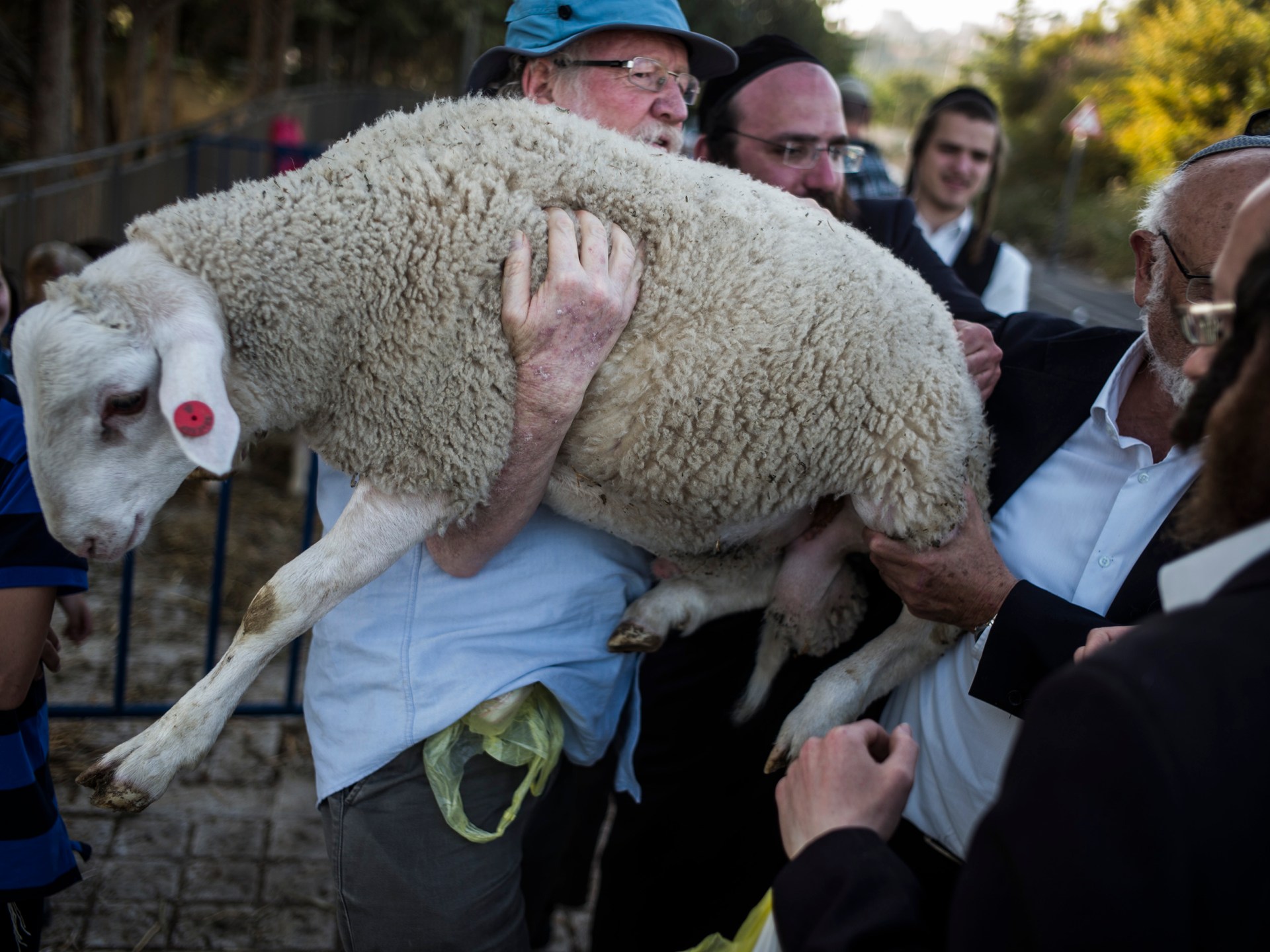
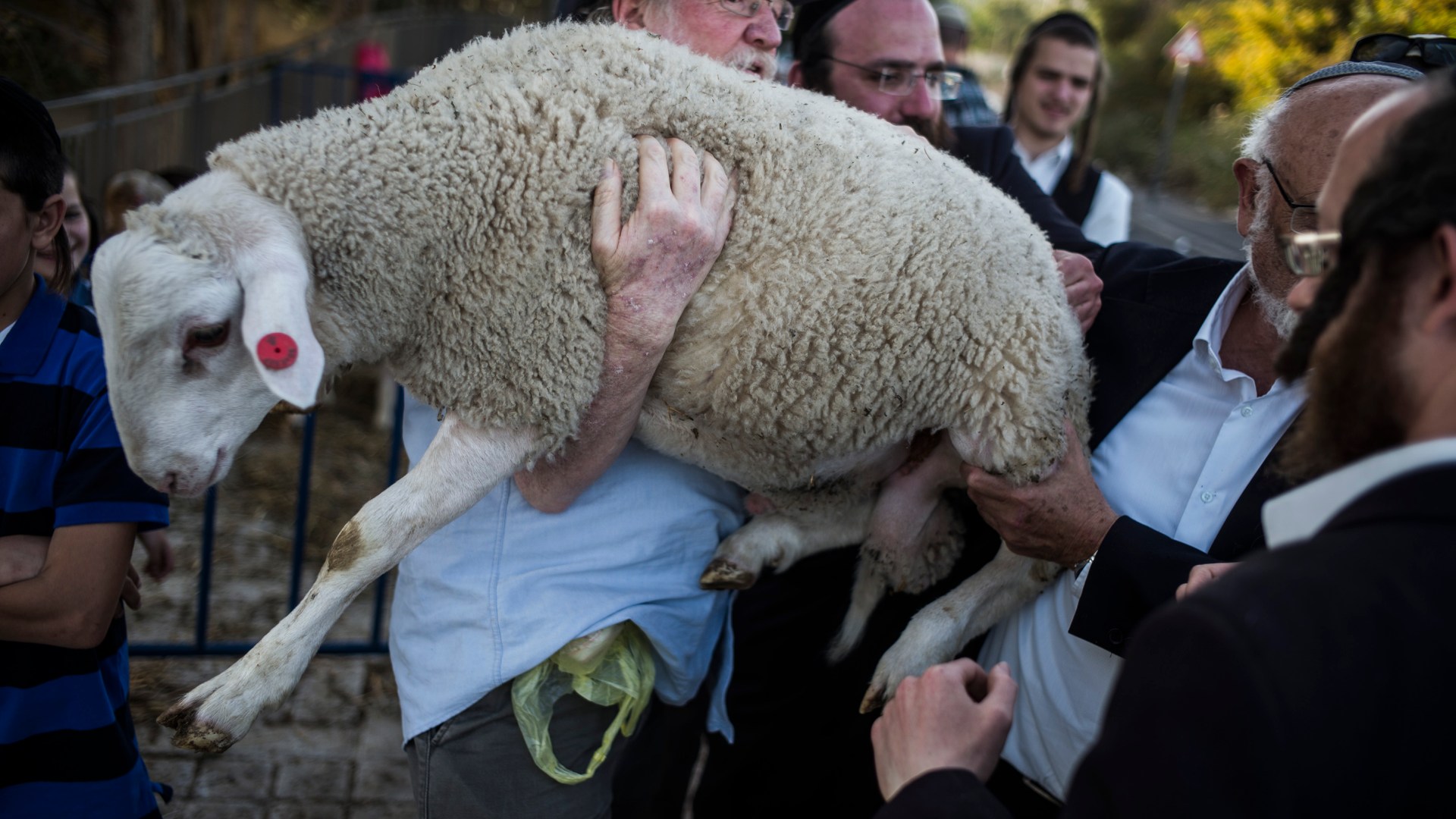
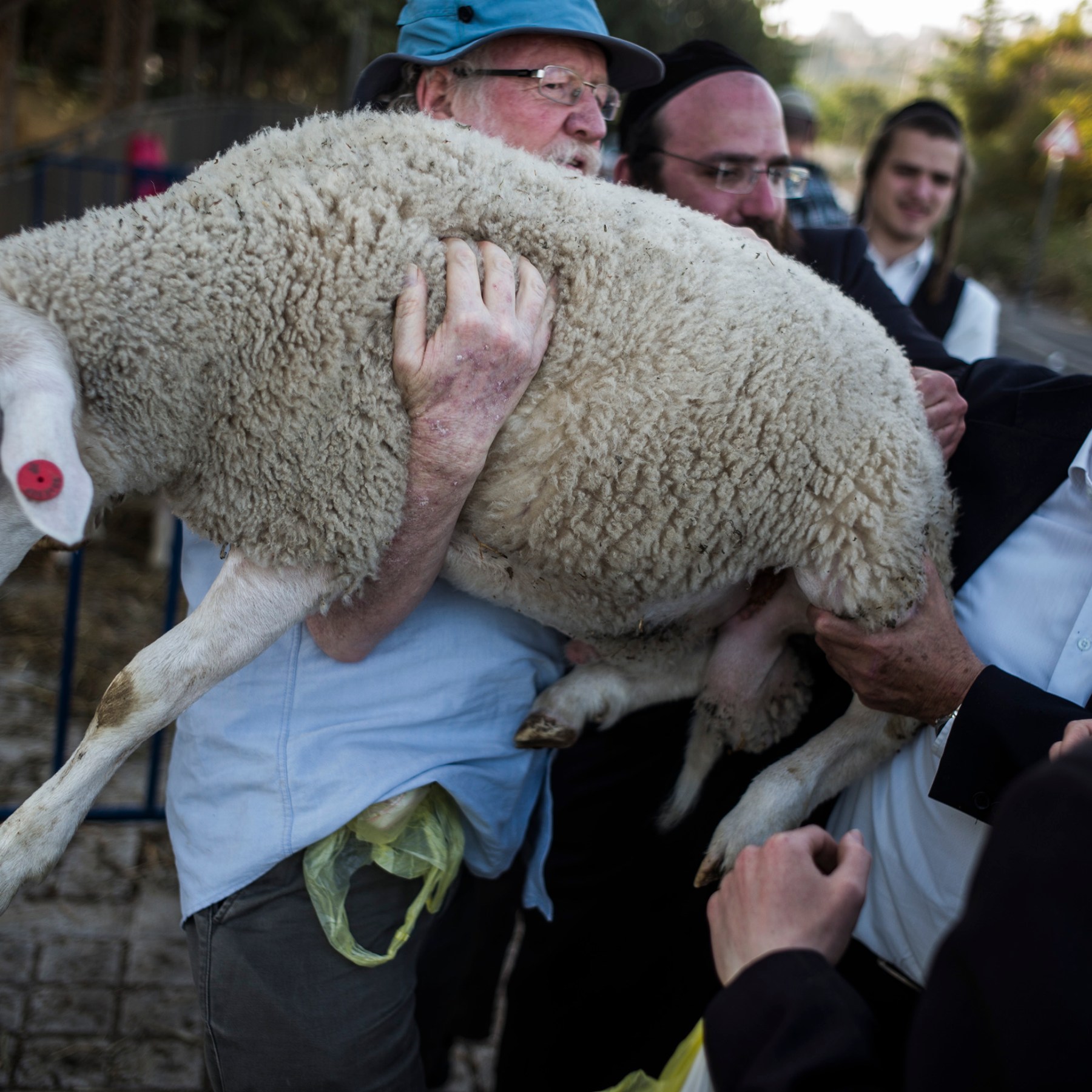
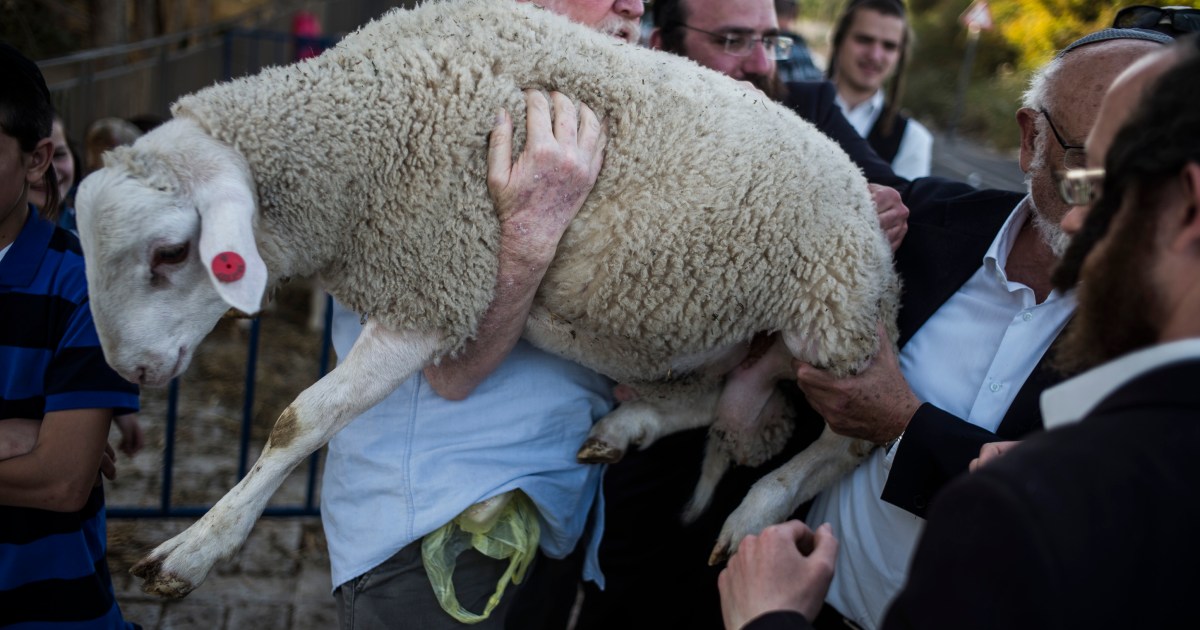
Capitalising on weeks of empty courtyards, far-right “Temple Mount groups” – which use the Jewish name for Al-Aqsa – launched a concerted push to perform biblical animal sacrifices inside the Muslim holy site. The governorate documented that settlers successfully reached the borders of the Old City with their sacrifices – typically a goat or a sheep – on at least two occasions before being stopped.

According to Israeli media, police previously detained at least 14 Jewish worshippers on April 1 for attempting to reach the site to perform the ritual.

Several of the attempts have been captured on video, with footage showing smiling activists – including, in some cases, young children – carrying baby goats in their arms or leading them through the stone alleys of the Old City, before being intercepted and questioned by armed Israeli police at various checkpoints and gates.

While the detentions of the activists may appear to show Israeli authorities maintaining order, experts argue they mask a long-term strategy of encroachment on Al-Aqsa, with the eventual aim of taking it over.

Suhail Khalilieh, a political analyst and expert on Jerusalem affairs, told Al Jazeera that the push to perform sacrifices at Al-Aqsa was not a religious matter, but instead served as a “political, colonial and provocative tool”.

He dismissed the Israeli police’s detention of the settlers as a “theatrical play” designed to absorb local and international anger while allowing gradual changes on the ground.

“It is a dual-management mechanism,” Khalilieh explained, noting a dynamic role play between the state and the Temple groups. “The police intervention is limited and temporary … The state’s refusal to permanently end these phenomena is, in itself, an imposition of gradual changes on the ground that will ultimately lead to a new reality.”

Under the historical and legal status quo governing the site, non-Muslims are allowed to visit the compound during designated hours, but are strictly prohibited from praying or performing religious rituals. The Jerusalem Endowments (Waqf) and Al-Aqsa Mosque Affairs Department, affiliated with Jordan, is the legal entity with exclusive jurisdiction.

Attempts to normalise Jewish prayer on the site are a growing phenomenon, with backing from far-right Israeli ministers. However, they go against traditional Orthodox Jewish teaching, which bans entry to the Al-Aqsa compound.

For the Temple Mount groups, whose stated objective is the destruction of the mosque to build a Jewish temple, the sacrificial rituals are highly symbolic.

“It signifies a transition from the phase of waiting to actual field action,” Khalilieh said, describing the permitted settler activities as an “unofficial declaration of a new phase” aimed at gradually imposing Israeli Jewish sovereignty.

The Palestinian Authority echoed that sentiment, warning that the push for animal sacrifices represents the “peak of weaponising religious rituals as a colonial tool” to Judaise the mosque.

The settler groups have also weaponised the historic 40-day closure of the mosque by launching aggressive online campaigns, heavily utilising artificial intelligence-generated images to rally their base.

For instance, far-right Israeli activist Arnon Segal recently shared an AI-generated image depicting a festive scene of Jewish families and children leading sheep adorned with ribbons into the mosque compound, with the Dome of the Rock in the background. The caption read, “If we will it, it is no dream” – a famous quote by early Zionist leader Theodor Herzl.

Khalilieh warned that the use of such AI-generated imagery poses a “real strategic threat”. By generating festive, less shocking depictions of the blood sacrifices, the technology psychologically and socially normalises the practice within Israeli society.

“It shifts the idea from being a limited, fringe concept to a full popular demand,” he noted. “This creates a false sense of consensus, which ultimately pressures decision-makers to turn these individual initiatives into official state policy.”

The prolonged shutdown of Al-Aqsa has already drawn widespread international anger. Last month, foreign ministers from eight Arab and Islamic countries condemned the Israeli closure as a “flagrant violation” of international law, stressing that Israel has no sovereignty over occupied Jerusalem.

However, Khalilieh urged the Arab and Islamic worlds to go beyond condemnation. He called for a “counter-digital narrative” to combat AI-generated misinformation and immediate diplomatic pressure to prevent unilateral changes. He drew a sharp parallel to the Ibrahimi Mosque in Hebron, which has fallen under heavy Israeli control following similar gradual shifts.

Before the gates reopened on Thursday, Palestinian worshippers had remained locked out of Al-Aqsa. The compound was closed for five consecutive Fridays.

While the courtyards and prayer halls were left empty for weeks – save for a handful of Waqf guards -the reopening follows growing calls among Palestinians in Jerusalem who had mobilised at the nearest Israeli military checkpoints surrounding the Old City in an attempt to break the siege.