huffpost Press
Man Who Tried To Remove Tear Gas From Crowd Faces 20 Years In Prison
Images
1 / 10
2 / 10
3 / 10
4 / 10
5 / 10
6 / 10

7 / 10
8 / 10
9 / 10

10 / 10
When Angelmarie Taylor and Jonathan Caravello heard federal immigration agents were raiding Glass House Farms, a cannabis facility, last July, they quickly headed over. By the time they arrived, federal agents had blocked off the road leading to the facility.

People gathered on the road near the blockade, desperate for information about their loved ones trapped inside, especially after workers texted that they were being told to shut off their phones and communication went dark. Over the course of several hours, the crowd documented the unfolding raid and protested the arrests. Agents deployed rubber bullets, pepper spray and tear gas into the crowd, which included children and elderly community members.

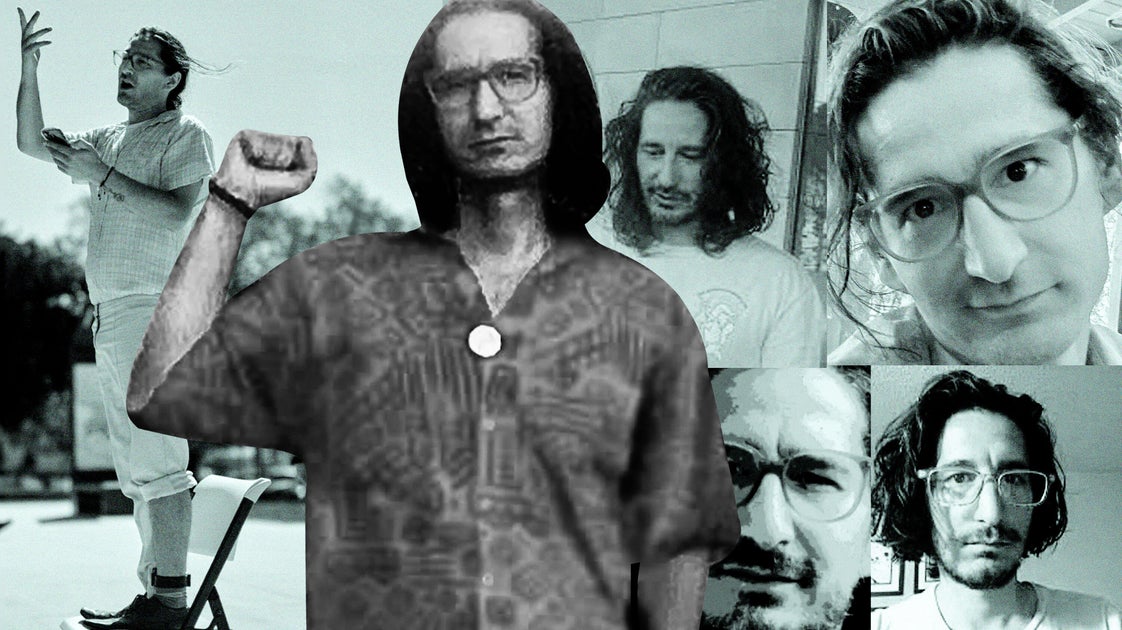
When a tear gas canister landed near his feet, Caravello threw it away from the crowd, in a high arc over the federal agents, Taylor said. He later removed a separate canister that had become stuck underneath someone using a wheelchair and tossed it away. Shortly after, Taylor said, an agent snatched him and pinned him to the ground as several other agents piled on top of him. Agents eventually placed him in a car and drove away from the facility, driving through protesters who tried to block them from leaving. Taylor jumped in a truck to try to follow Caravello, but agents threw tear gas through the vehicle’s window, she said. By the time she recovered, Caravello was gone.

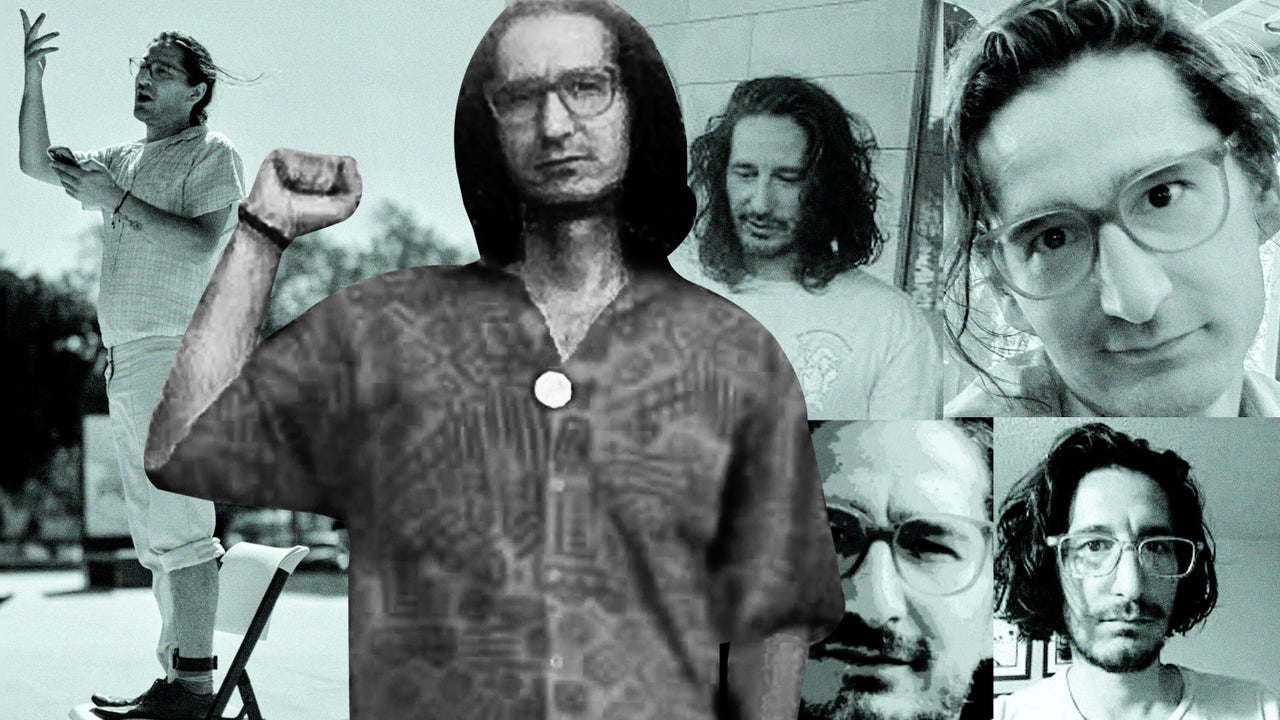
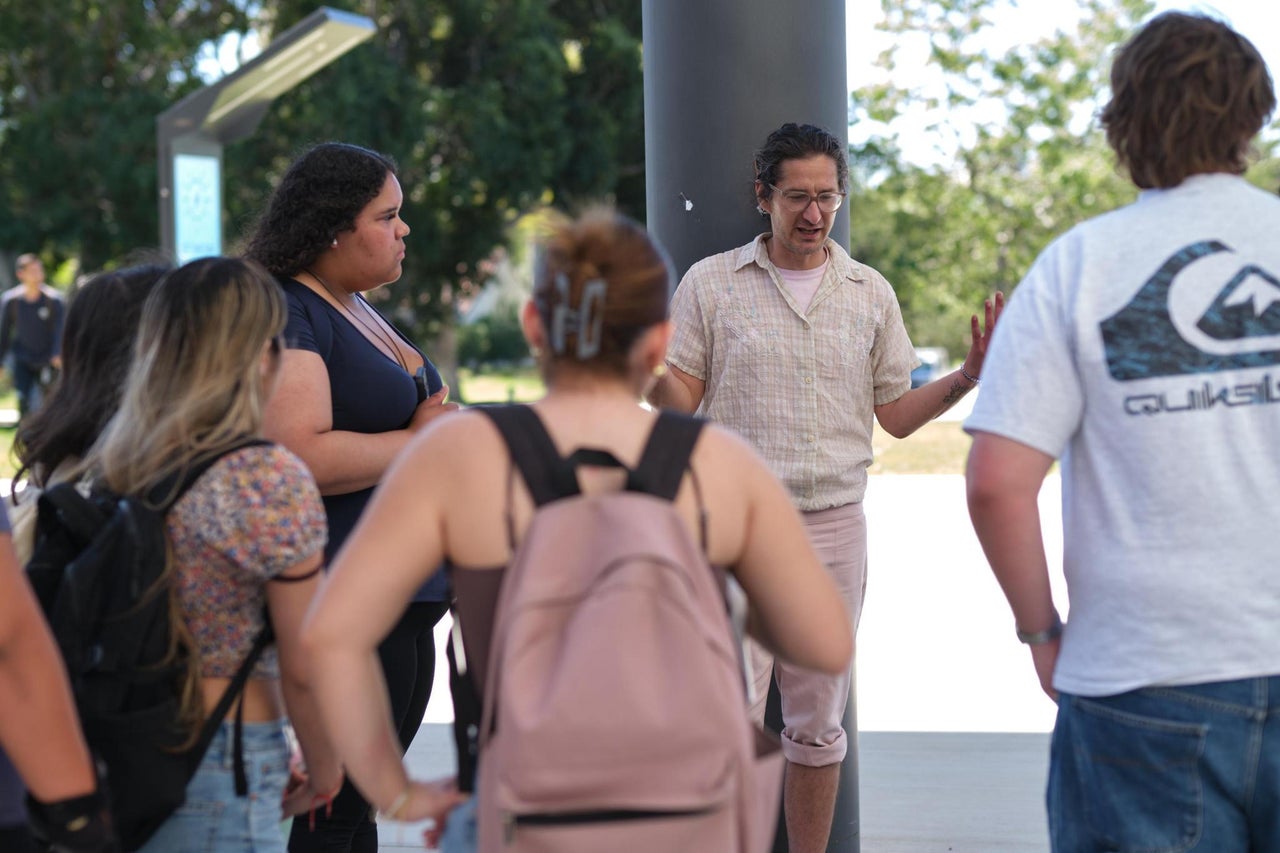
Caravello, a 38-year-old philosophy lecturer at California State University Channel Islands and an active member of his faculty and tenants unions, had told friends he was at the raid. When he stopped responding to text messages, a group of colleagues, friends, and current and former students mobilized an impromptu search committee to find him. They checked nearby hospitals and jails, and eventually made the 70-mile trip to the Los Angeles Metropolitan Detention Center, where they heard immigrants detained in the raid were being held.

Caravello was detained inside and being held without access to a lawyer, but the people searching for him didn’t find out for two more days, when his name finally showed up in the federal prisoner database. Each time his supporters made the long trip to MDC, officials turned them away, refusing to provide information about Caravello.

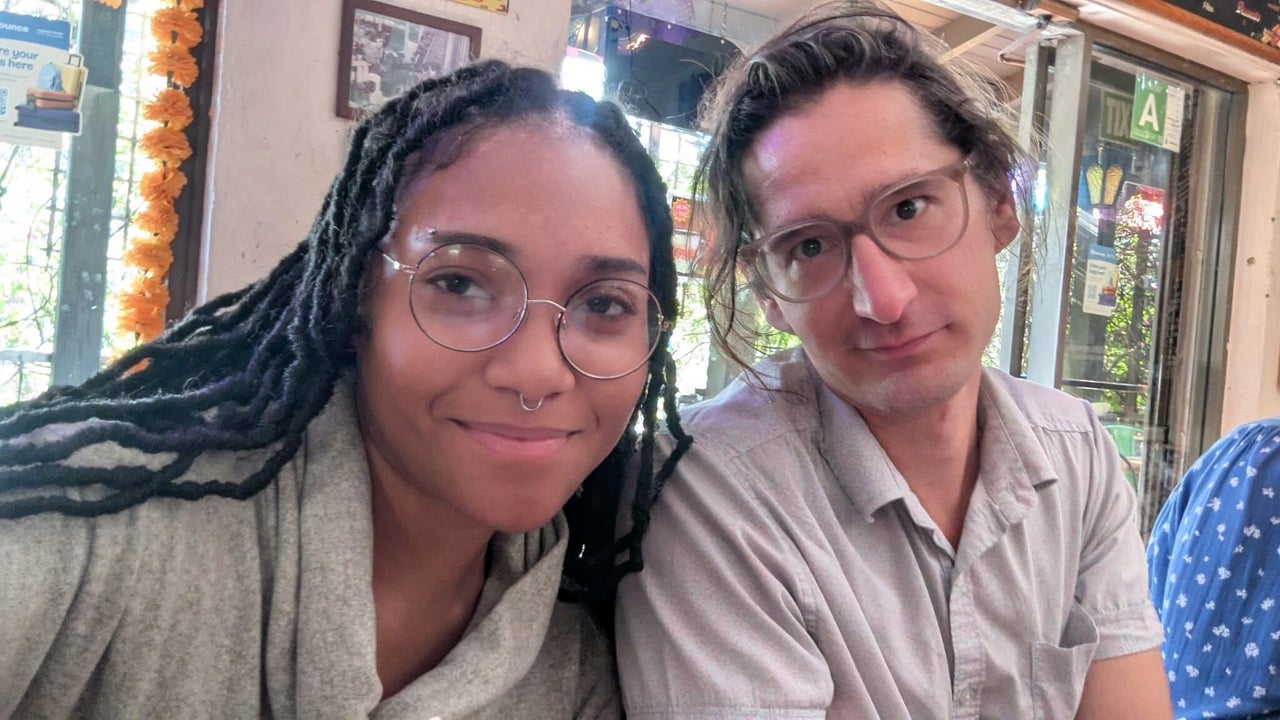
“It was one of the most difficult moments of my life,” said Taylor, a former student of Caravello’s and a community organizer. “My mother is a deportation survivor. Having people kidnapped and disappeared is something I have deep trauma with. It was like losing a father, uncle, or brother. To see it happen so blatantly, right before my eyes — I couldn’t sleep, I couldn’t eat.”

As they searched for Caravello, details of the brutal raid emerged: Federal agents arrested 361 immigrants across two Glass House facilities. One worker, 56-year-old Jaime Alanis García, fell from a 30-foot-high roof after calling his family to tell them he was hiding from federal agents. He died days later, marking the first known person to die during the Trump administration’s immigration raids.

Days after the raid, federal officials accused Caravello of throwing a tear gas canister at U.S. Customs and Border Patrol agents, and he was charged with a misdemeanor count of assaulting a federal officer. In an affidavit, Homeland Security Investigations Special Agent Virginia Pulido alleges that “the canister came within approximately several feet above law enforcements’ heads” but does not describe any officer being hit or injured by the canister.

Caravello was released after four days in detention, on a $15,000 surety bond. Prosecutors later convened a grand jury to bring a felony charge of assault on a federal officer with a deadly or dangerous weapon, which carries a maximum penalty of 20 years in prison. Caravello found out about the felony charge from friends who learned the news from a post on X by U.S. Attorney Bill Essayli.

Caravello’s trial starts on Tuesday, where his defense is likely to argue that he was protecting himself and others from the tear gas rather than attacking federal agents. “They rolled it at him and some other protesters as they were walking away and he threw back over their heads,” his attorney Knut Johnson said in November after Caravello entered his plea of not guilty.

Caravello declined to comment, citing his pending case. The Department of Justice did not respond to a request for comment.

The aggressive charging tactics in Caravello’s case are part of a broader pattern of the federal government seeking decades-long prison sentences against those who resist its anti-immigration agenda.

“This is not an isolated situation,” Margarita Berta-Ávila, the president of the California Faculty Association, Caravello’s labor union, said in an interview. “We know that this is a reflection of patterns of escalation to criminalize dissent and activism with respect to our undocumented communities, immigrant communities, and communities of color in general.”

Throughout the country, juries have declined to convict many of the protesters and activists who have been hit with baseless assault charges — but the charges themselves can have a chilling effect on activism.

“They want the drama of being able to post that they’re going to throw a peaceful protester in jail for 20 years,” said Kendall McClellan, an English faculty member at CSUCI and a CFA lecturer representative. “They’re not receiving convictions on these — I don’t think that’s the point. The point is to scare people so we won’t stand up for our First Amendment right to protest.”

CSUCI, the university where Caravello teaches, is a five-minute drive from Glass House Farms in Camarillo, California. The CSU public university system is often referred to as the “People’s University,” for its comparatively lower tuition and diverse student body. Sixty-two percent of the students at the Channel Islands campus are Latinx, and 60% are first-generation students.

Caravello starts each course by saying he “cares about us as people first and students second,” said Ryan Witt, a former student of Caravello’s and current intern in the faculty union. He encourages students to talk to him outside of class and offers to connect them with resources for mental health or housing or food insecurity.

“I know he isn’t just saying that,” Witt said. “I know there’s a lot of students who have taken him up on that.”

Taylor met Caravello seven years ago, when she took his introductory philosophy course during her freshman year. As a runaway youth, she arrived at school without parental support. She came to see Caravello as a mentor, she said — someone who empowered students to channel their frustration with the unjustness around them into organizing for meaningful change.

“We need educators like him to help us understand education through a liberatory lens,” Taylor said.

Together, they started up the university’s chapter of Students for Quality Education, a student internship program through the faculty union. Taylor, who is also part of the university’s Black Student Union and MEChA, a Chicano student organization, credits Caravello with helping students organize around reforms to Title IX, and implementing alternatives to police on campus. Ahead of Donald Trump’s reelection, Caravello helped connect students with local immigrant rights groups to learn how to protect each other from immigration enforcement.

By the time of the Glass House raids, Taylor and Caravello were both participating in patrols to monitor and respond to immigration raids in the community. The night before the raid, they joined other community members at a Camarillo City Council meeting, where they urged elected officials to reject the presence of federal immigration officials in their city.

“Many of my students are undocumented and many of their families are undocumented. It’s my responsibility to protect them, and so I’ve been patrolling the city streets following armed, masked thugs trying to kidnap my neighbors,” Caravello said.

“ICE is not welcome here,” he continued. “You, our elected officials, should swear them off, if not in policy, then in spirit, to at the very least pay back your undocumented community members for picking your fucking strawberries.”

When Caravello was released from custody in July, he was required to wear an ankle monitor (at a personal cost of about $130 per month), stay inside his home from 8 p.m. to 5 a.m., remain within the Central District of California and submit to random drug testing. When his friends expressed sympathy over the conditions of his release, he would always say that other people are navigating worse conditions with less resources and support. But they could tell it was taking a toll on him.

“It’s like a night-and-day difference, John before this incident and John after this incident,” Taylor said.

Caravello’s visits home to Arizona, where he has a young niece and nephew, were abruptly put on pause. He had to pull back from some of his organizing work because of the threat his ankle monitor posed to other activists. Despite living near the beach, he could no longer go in the ocean because the ankle monitor could not be submerged in water. Even nighttime walks to clear his head were off-limits because of his curfew.

In March, the judge overseeing his case allowed his ankle monitor to be removed, but it was replaced with a phone-monitoring app that required him to submit selfies several times randomly throughout the night to prove he was at home.

On March 12, the first night with the app, he was prompted to take photos at 8 p.m., 10 p.m., 2:17 a.m. and 4:57 a.m, according to a court filing. The next night: 9:09 p.m., 10:58 p.m., 1:41 a.m. and 4:02 a.m. For two weeks, he got no more than four hours of uninterrupted sleep at a time. The judge lifted the monitoring requirement late last month after his lawyer said the sleep deprivation was interfering with his ability to prepare for his trial.

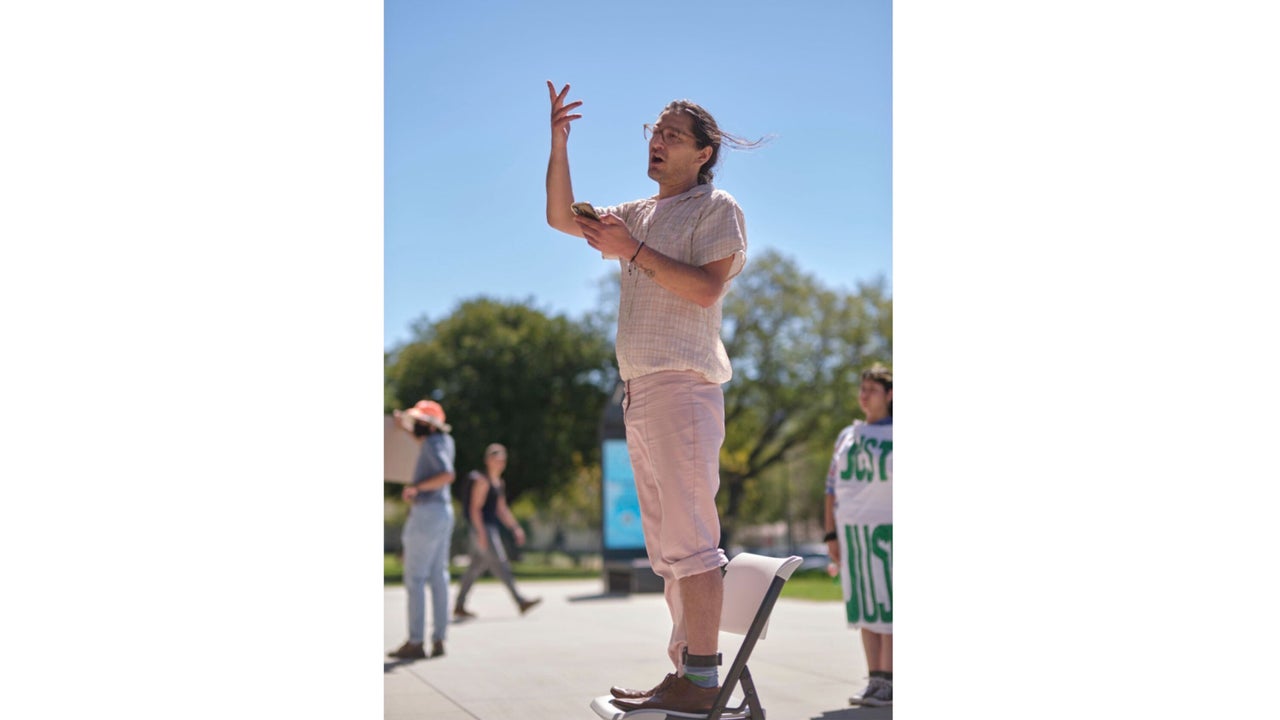
Caravello’s supporters have urged community members to show up in Los Angeles for the trial, which they frame as part of the federal government’s crackdown on political dissent. “We will not allow them to make an example of our professor, our ally, our friend,” MEChA co-chair Mercedes Cacho said at a rally in support of Caravello weeks ahead of the trial.

“Your courage and bravery to protect us doesn’t go unnoticed. It fuels us,” she said of Caravello. “The fear instilled by these state powers don’t work on us, in fact, they do quite the opposite. This is because we know that solidarity and organization between people like John and I and who we represent is the most powerful.”