yahoo Press
1 chart reveals how 'Magnificent 7' fortunes have fallen
Images
1 / 7

2 / 7

3 / 7

4 / 7

5 / 7
6 / 7

7 / 7
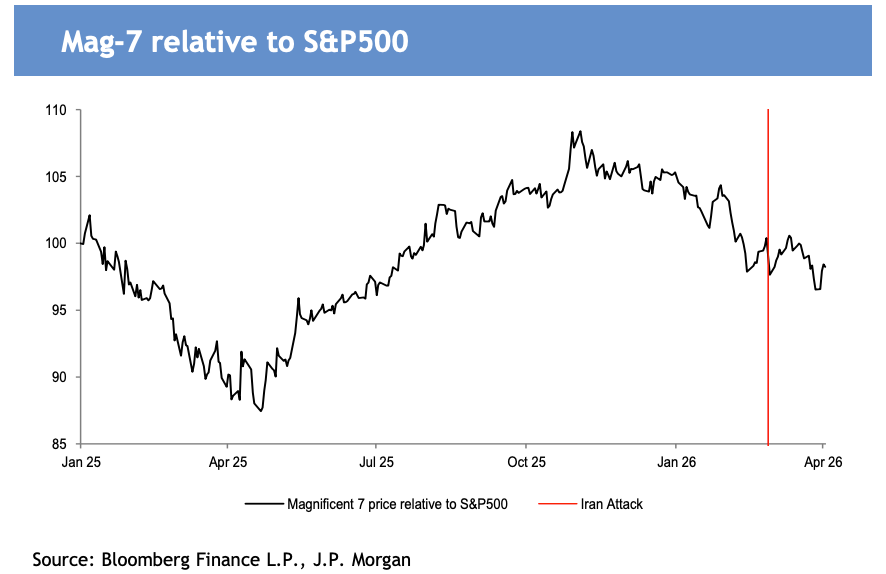
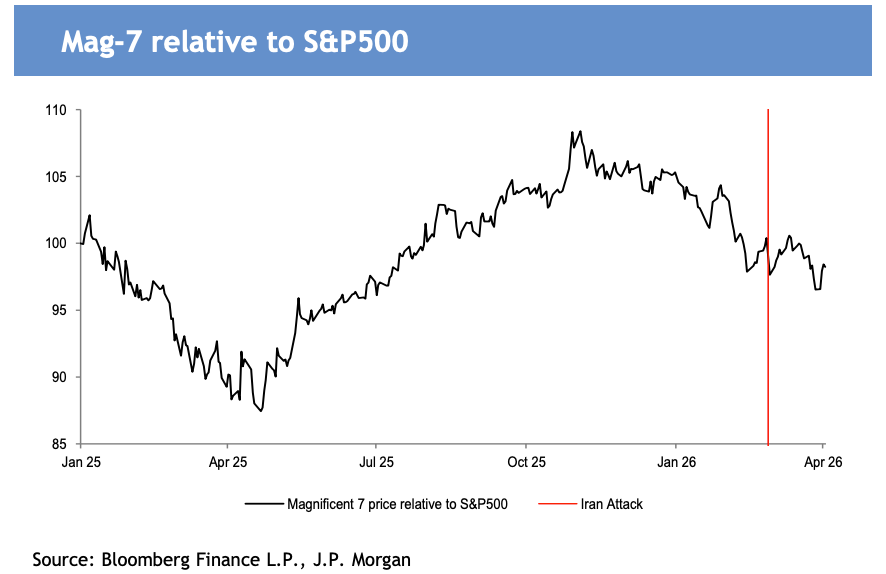
The Magnificent Seven stocks are hovering around fresh lows relative to the S&P 500 (^GSPC), JPMorgan strategist Mislav Matejka pointed out in a new note on Tuesday (see chart below).

"Mag 7 relative [to S&P 500] is not acting as a safe haven," Matejka said.

The Magnificent Seven is a group of seven cash-rich, large-cap technology stocks that have collectively dominated the US stock market and driven the majority of the S&P 500's gains since 2023. It includes: Nvidia (NVDA), Amazon (AMZN), Tesla (TSLA), Microsoft (MSFT), Google (GOOG), Apple (AAPL), and Meta (META).

The combined market capitalization of these stocks is currently about $19.54 trillion.

There's a reason the once-formidable tech trade, led by AI chipmaker Nvidia, has tanked only four months into 2026.

Growth stocks like these are under pressure as investors question whether aggressive AI spending plans will pay off.

The Magnificent Seven companies are aiming to spend around $680 billion on AI-related capital expenditures in 2026 — a 70% increase from 2025. The fact that a lot of these companies are raising debt to fund AI build-outs has only added to the concerns about profit potential this year.

Meanwhile, the onset of Operation Epic Fury has uprooted a host of investment theses that were in place at the start of the year. Call it the "Great Rotation" into less-loved market sectors.

Read more: How to protect your money during turmoil, stock market volatility

Small-cap stocks, believe it or not, have enjoyed a solid year despite the threat of higher gas prices wreaking havoc on the US economy. The iShares Russell 2000 ETF (IWM) is up 2% this year, outperforming the S&P 500's 4% drop.

Surging oil prices have sent the United States Oil Fund (USO) up a stunning 99% this year as investors look for ways to capitalize on commodity uncertainty.

USO invests primarily in futures contracts for light, sweet crude oil, other types of crude oil, diesel-heating oil, gasoline, natural gas, and other petroleum-based fuels.

On the other hand, as of early April 2026, the Magnificent Seven giants have collectively lost $1.1 trillion in market cap.

Matejka added, "The U.S. AI trade appears to be losing steam since mid-December. In contrast, AI plays in emerging markets continued to show strong momentum and is relatively more attractive than their U.S. counterparts."

Brian Sozzi is Yahoo Finance's Executive Editor and a member of Yahoo Finance's editorial leadership team. Follow Sozzi on X @BrianSozzi, Instagram, and LinkedIn. Tips on stories? Email brian.sozzi@yahoofinance.com.

Click here for in-depth analysis of the latest stock market news and events moving stock prices

Read the latest financial and business news from Yahoo Finance