Press
'Be serious... don't speak every day': Macron criticises Trump approach to Iran war
Images
1 / 7

2 / 7
3 / 7
4 / 7
5 / 7

6 / 7
7 / 7
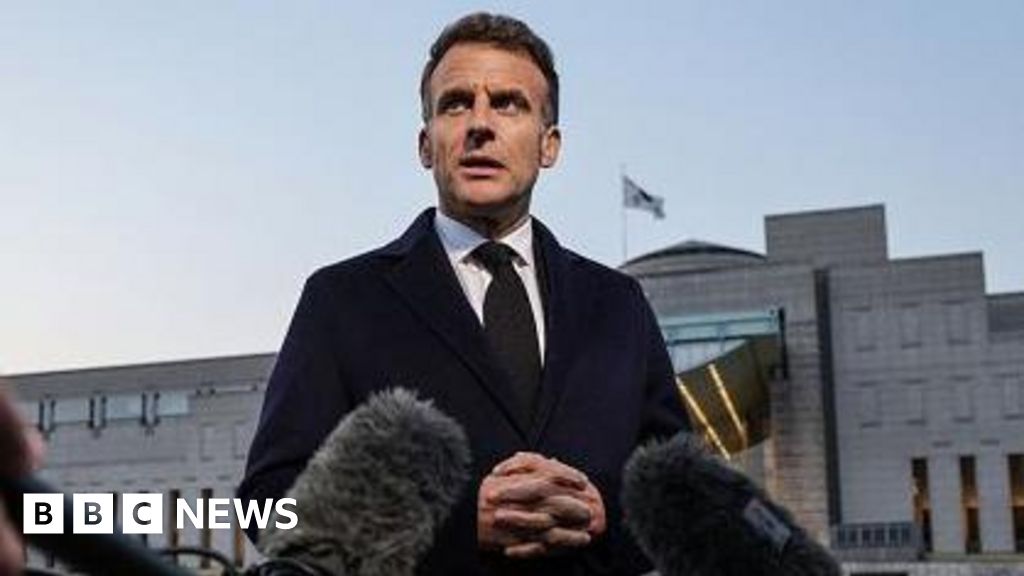
The Iran war requires a "serious" approach that does not change every day, Emmanuel Macron has said, in an apparent reference to US President Donald Trump's seemingly contradictory remarks about the conflict.

"This is not a show. We are talking about war and peace and the lives of men and women," the French president told journalists upon arrival in South Korea for a state visit.

"When you want to be serious you don't say every day the opposite of what you said the day before," Macron added.

"And maybe you shouldn't be speaking every day. You should just let things quieten down."

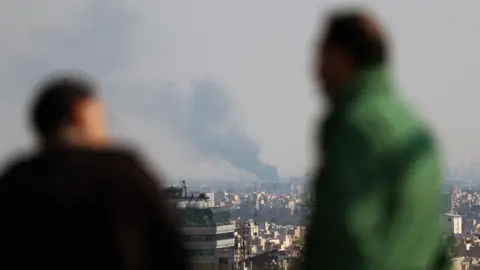
Macron was answering questions on the US-Israel war in Iran, which has now entered its second month. France and other European countries have supported some of the US operations in the region, but have so far resisted getting dragged into the war.

Trump and his administration have so far offered mixed messages on the conflict, at various times suggesting that a ceasefire was near, that the war had already been won or that the US was going to fight on.

Macron also addressed Trump's recent comments in which the US president said he was reconsidering his country's membership of Nato.

"Alliances like Nato are valuable because of what is unspoken – meaning the trust behind them," Macron said, arguing that casting doubt on one's commitment to the organisation emptied it of its substance.

Partners sign agreements and show up if issues arise, Macron added, "rather that commenting on them every day to say that you will or will not respect them".

"I feel like there is too much chatter, it's all over the place," he said.

He added he was unwilling to comment on an operation that the US and the Israelis "decided on by themselves", Macron said. "They then lament that they are alone in an operation they decided on alone. It's not our operation."

Macron also mentioned the US strikes on Iran in June 2025, which Trump said had "obliterated" Iranian nuclear facilities.

However, in the wake of the February 2026 war the US president said it was the "last best chance to strike at Iran's nuclear weapons programme".

"I remind you that six months ago were told that everything had been destroyed and all had been sorted out," Macron noted.

He argued that international observers were needed to check the nuclear development situation in Iran, and a framework to prevent further enriching.

"You still have today and you'll still have in the future people who have the know-how, hidden laboratories, etc. So it's not targeted military action even lasting a few weeks which can sort out the nuclear problem for good."

Trump has been on the offensive against France, which he accuses of failing to help in the war on Iran.

At a private lunch on Wednesday, Trump mocked Macron by imitating a French accent and saying that his wife Brigitte "treats him extremely badly" and that Macron was still "recovering from the right to the jaw".

Trump was likely referring to a 2025 video which showed Macron being shoved in the face by Brigitte.

Macron dismissed the comments as "neither elegant nor up to standard".

"I won't respond to them, they don't deserve a reply," he said.

The comments on Macron's marriage have been exceptionally badly received in France, where even staunch Macron critics came to his defence.

"For Donald Trump to speak to him like that and to speak of his wife in such a manner - I find that absolutely unacceptable," said Manuel Bompard of hard-left France Unbowed party.

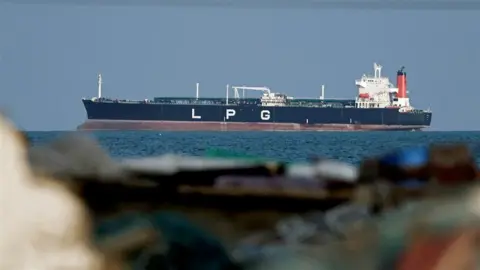
Tehran has retaliated to the strikes on its territory by closing the Strait of Hormuz, a key waterway which enables the passage of a large proportion of the world's energy supply. In the absence of a quick resolution to the closure, Trump has said the countries most affected by the disruption should solve the problem themselves.

Macron pushed back against the idea of a military operation to liberate the strait, saying it was "unrealistic" because it would take too long and be too dangerous.

"It would expose anyone crossing the strait to coastal threats from the [Iranian] Revolutionary Guards, who possess significant resources, as well as ballistic missiles, [and] a host of other risks," he said.

Ordinary people from various parts of Iran describe expanding strikes, economic pain and fear of repression.

Yvette Cooper said coordinated diplomatic and economic measures are required to reopen the shipping lane.

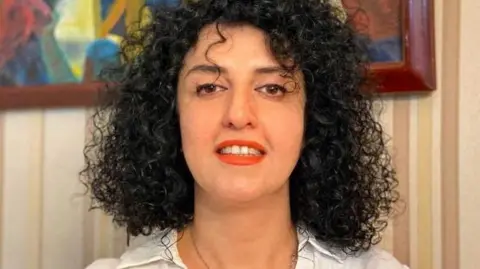
Narges Mohammadi's brother says he fears her life is in imminent danger and she needs to be transferred to a hospital.

The seven-month-old child is the unintended victim of a suspected gang-related shooting, officials say.

The determination does not imply intent to cause harm or death or indicate criminality.