foxnews Press
GREGG JARRETT: Trump's birthright citizenship order meets a wary SCOTUS audience
Images
1 / 20

2 / 20

3 / 20

4 / 20

5 / 20
6 / 20

7 / 20
8 / 20
9 / 20
10 / 20
11 / 20

12 / 20
13 / 20

14 / 20

15 / 20
16 / 20

17 / 20

18 / 20
19 / 20

20 / 20
Fox News legal editor Kerri Urbahn breaks down oral arguments in the Supreme Court’s birthright citizenship case on ‘Outnumbered.’

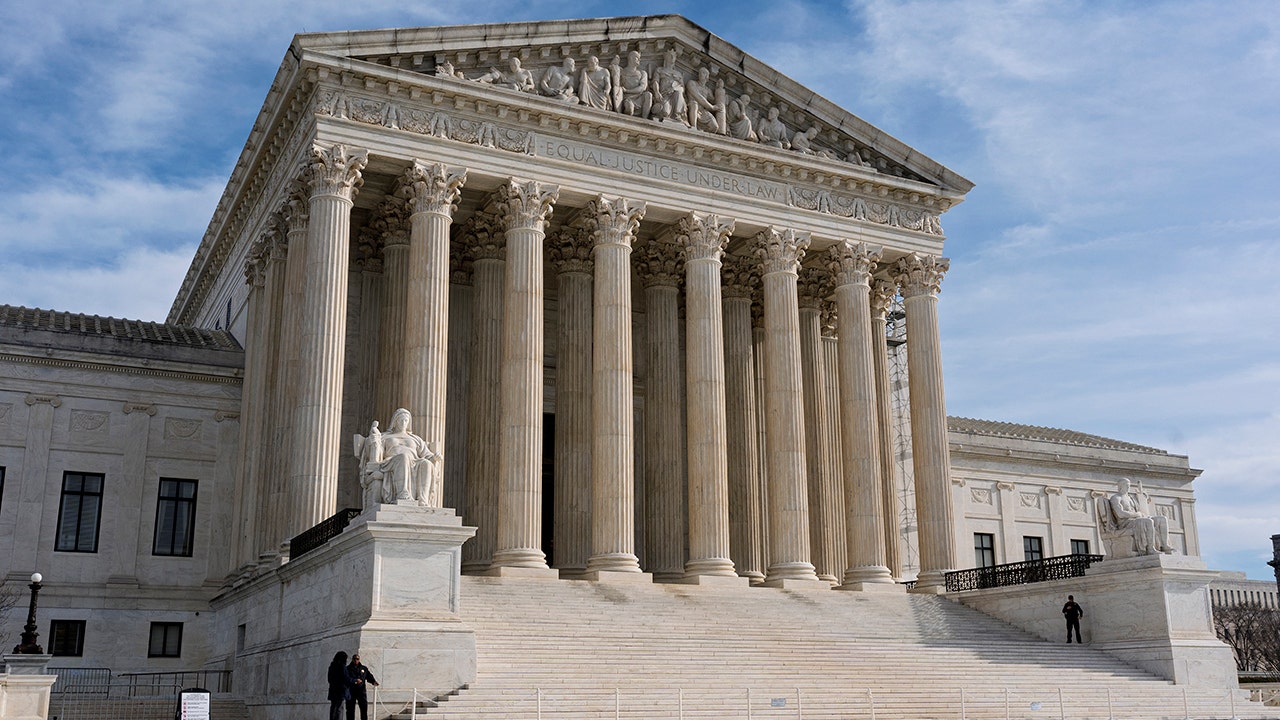
The U.S. Supreme Court heard oral arguments on Wednesday in a case that could dramatically test the bounds of citizenship in America and reshape immigration policy.

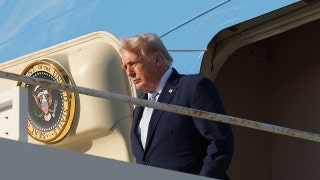
At issue was President Trump’s executive order ending automatic citizenship for U.S.-born children of parents who are here illegally. In an historical first, the president attended the first part of the hearing as the named party being sued by roughly two dozen states.

Trump watched as his solicitor general, John Sauer, presented a credible and defensible argument that the 14th Amendment was never intended to grant universal citizenship to the progeny of those who broke the law by coming here fraudulently or illegally.

SCOTUS TO REVIEW TRUMP EXECUTIVE ORDER ON BIRTHRIGHT CITIZENSHIP

Sauer was an impressive advocate with a masterful command of the law and history. However, he faced a level of skepticism from a majority on the court which suggests that, in the end, Trump’s executive order may be struck down.

Granted, divining an outcome based solely on oral arguments can be equivalent to reading tea leaves. The dynamic could change behind closed doors and upon further deliberations. But it cannot be overlooked that even conservative justices at the hearing posed penetrating questions that seemed to manifest their doubt.

ACLU Attorney Cecilia Wang argued in defense of broad birthright citizenship. She, too, faced challenging questions, albeit with a far more conciliatory tone that appeared to betray the eventual result.

As expected, much of the discourse centered on the 14th Amendment, ratified in 1868 three years after the Civil War ended. The central objective was to grant citizenship to formerly enslaved people and their children:

TRUMP SAYS HE WILL ATTEND SUPREME COURT ORAL ARGUMENTS ON BIRTHRIGHT CITIZENSHIP CHALLENGE

"All persons born or naturalized in the United States, and subject to the jurisdiction thereof, are citizens of the United States and of the State wherein they reside."

But what did the framers intend when they inserted the operative phrase, "subject to the jurisdiction thereof?" Those five words consumed a good deal of the high court’s discussion on Wednesday.

Exhibiting his knowledge of the 1866 debate, Sauer referred back in time to the sponsors of the amendment, who explained that it meant full and complete allegiance to the U.S. and "not owing allegiance to any foreign power."

The solicitor general argued that illegally present aliens are not "subject to the jurisdiction" of the U.S. because they presumptively maintain political fealty to another sovereign as citizens of that foreign power. The mere act of setting foot on American soil does not necessarily constitute loyalty or otherwise subject an individual to absolute jurisdiction.

Sauer quoted Sen. Lyman Trumbull, a moving force behind the 14th Amendment, who specifically stated that the Citizenship Clause does not encompass individuals still subject to any foreign power or "owing allegiance to anybody else."

His colleague, Sen. Jacob Howard, further defined the limits of citizenship by stating that "this will not, of course, include persons born in the United States who are foreigners, aliens…"

However, the justices seemed unmoved by the notion that citizenship should not apply to the children of people who broke the law coming here and have no permission to be in the U.S.

The Justices revisited at length an important precedent in the 1898 ruling in United States v. Wong Kim Ark (169 U.S. 649) involving a son born in the U.S. But his parents, originally from China, were here lawfully and domiciled permanently. They were not evading the law. Back then, the Supreme Court’s decision pivoted on that distinguishable fact.

Nevertheless, the justices expressed reservation that the Ark case could be used as a primary basis for excluding citizenship to the offspring of unlawfully present parents who are subject to deportation.

CLICK HERE FOR MORE FOX NEWS OPINION

For at least a century, our government has been granting citizenship based on a perception of the 14th Amendment that Sauer described as "a long-enduring misconception." Forgotten over the years was the original intent of the authors and the vital context of the congressional debate. No one who helped craft the amendment argued that citizenship should be given to children of illegal immigrants.

Yet, the current case may be one of those instances in which an established norm or accepted practice compounded by the complexity of reversing course creates too great an obstacle. Justice Amy Coney Barrett wondered how an endless array of cases would be adjudicated if the court upheld Trump’s order. Still another Justice raised the thorny question of a humanitarian dilemma.

CLICK HERE TO DOWNLOAD THE FOX NEWS APP

A decision is expected before the end of the current Supreme Court term in June. If Trump does not prevail, there still remains an avenue of recourse. Congress always has the ability through legislation to set explicit parameters by newly defining birthright citizenship.

But given the chronic stasis that persists on Capitol Hill, no one should be optimistic that it could happen anytime soon.

CLICK HERE TO READ MORE FROM GREGG JARRETT

Gregg Jarrett is a Fox News legal analyst and commentator, and formerly worked as a defense attorney and adjunct law professor. His recent book, "The Trial of the Century," about the famous "Scopes Monkey Trial" is available in bookstores nationwide or can be ordered online at the Simon & Schuster website.  Jarrett’s latest book, "The Constitution of the United States and Other Patriotic Documents," was published by Broadside Books, a division of HarperCollins on November 14, 2023.  Gregg is the author of the No. 1 New York Times best-selling book "The Russia Hoax: The Illicit Scheme to Clear Hillary Clinton and Frame Donald Trump." His follow-up book was also a New York Times bestseller, "Witch Hunt: The Story of the Greatest Mass Delusion in American Political History."

Get the recap of top opinion commentary and original content throughout the week.

By entering your email and clicking the Subscribe button, you agree to the Fox News Privacy Policy and Terms of Use, and
        agree to receive content and promotional communications from Fox News. You understand that you can
        opt-out at any time.

Subscribed

You've successfully subscribed to this newsletter!