huffpost Press
Supreme Court Rules Against Law Banning Conversion Therapy For Minors
Images
1 / 7

2 / 7

3 / 7

4 / 7

5 / 7

6 / 7

7 / 7
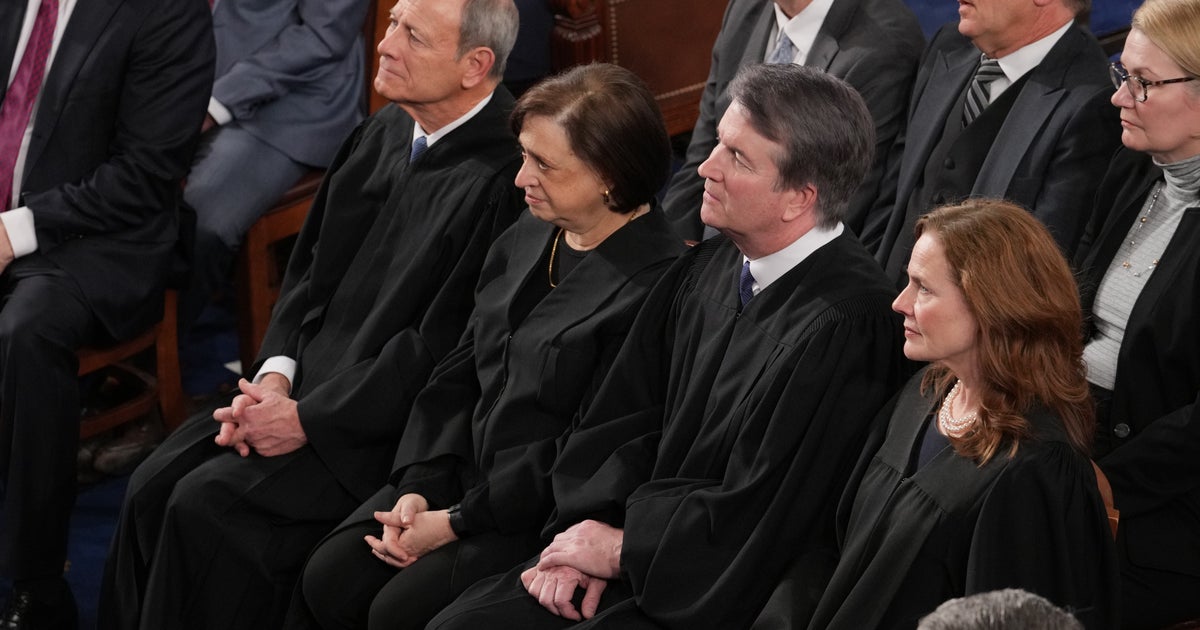
The Supreme Court issued an opinion in Chiles v. Salazar on Tuesday, ruling against a Colorado law banning conversion therapy for children.

The court holds that a Colorado law banning conversion therapy, particularly with regard to talk therapy, “censors speech based on viewpoint,” Justice Neil Gorsuch wrote for the majority.

“Colorado may regard its policy as essential to public health and safety. Certainly, censorious governments throughout history have believed the same. But the First Amendment stands as a shield against any effort to enforce orthodoxy in thought or speech in this country,” he wrote.

The justices ruled the lower courts should have applied a more rigorous standard of review. They remanded the case back to the 10th Circuit for further arguments, requiring the court to use strict scrutiny review, the most challenging judicial review process.

The justices ruled 8-1, with Justice Ketanji Brown Jackson as the lone dissenter. She read parts of her 35-page opinion from the bench, arguing that states have long regulated medical care, and to think of talk therapy differently “flouts centuries of state-standardized regulation of medical care and is, ultimately, nonsensical.”

She argued the court is “opening a can of worms” that could impact states’ ability to regulate any kind of medical care in the future.

“The Constitution does not pose a barrier to reasonable regulation of harmful medical treatments just because substandard care comes via speech instead of scalpel,” she wrote in her opinion.

Justice Elena Kagan called the case a “textbook” case of viewpoint discrimination. As an exercise to understand why she presented “a hypothetical law that is the mirror image of Colorado’s.”

“Instead of barring talk therapy designed to change a minor’s sexual orientation or gender identity, this law bars therapy affirming those things,” Kagan wrote in a concurrence. “[T]he First Amendment would apply in the identical way. Once again, because the State has suppressed one side of a debate, while aiding the other, the constitutional issue is straightforward.”

This appeared to be an argument why opponents of conversion therapy should consider this opinion favorably. If conversion talk therapy can be banned by some states, so too could other states ban any talk therapy that affirms someone’s gender identity or sexual orientation, Kagan suggested.

The case was brought to the court by Kaley Chiles, a Christian licensed therapist, who claimed that Colorado’s law banning conversion therapy for minors violated her rights to freedom of speech.

Under the 2019 law, licensed mental health providers are barred from offering so-called conversion therapy, meaning counseling “that attempts or purports to change an individual’s sexual orientation or gender identity,” to anyone under 18. The law exempts unlicensed religious counselors from the regulation.

Chiles claimed that the law restricts her First Amendment protections from counseling minors who want to “resist same-sex relationships or align the client’s sense of identity and biological sex.” However, Chiles has explicitly denied any desire to offer such counseling, and noted in her brief that she doesn’t want to impose her beliefs on her clients.

Chiles is represented by the Alliance Defending Freedom, a conservative Christian legal group that succeeded in overturning Roe v. Wade in 2022, and over the past few years, has teed up challenges to LGBTQ+ rights.

The practice of conversion therapy has been broadly discredited and there is no evidence to show it is effective at changing a person’s gender identity or sexual orientation. However, studies do show that LGBTQ+ youth and adults who have been subjected to conversion therapy have higher rates of suicidality, depression and anxiety.

Paul Blumenthal and Paige Lavender contributed to this report.

By entering your email and clicking Sign Up, you're agreeing to let us send you customized marketing messages about us and our advertising partners. You are also agreeing to our Terms of Service and Privacy Policy.