yahoo Press
Q&A: How Corastone Aims to Streamline Private Market Transactions
Images
1 / 4
2 / 4

3 / 4

4 / 4
You can find original article here WealthManagement. Subscribe to our free daily WealthManagement newsletters.

Making the process simple and eliminating the need for tons of paperwork when allocating clients’ money to private markets has been a major goal of asset managers and financial advisors for several years now. One company addressing this need is Corastone, a blockchain platform that connects GPs with wealth managers and fund administrators to process fund transactions.

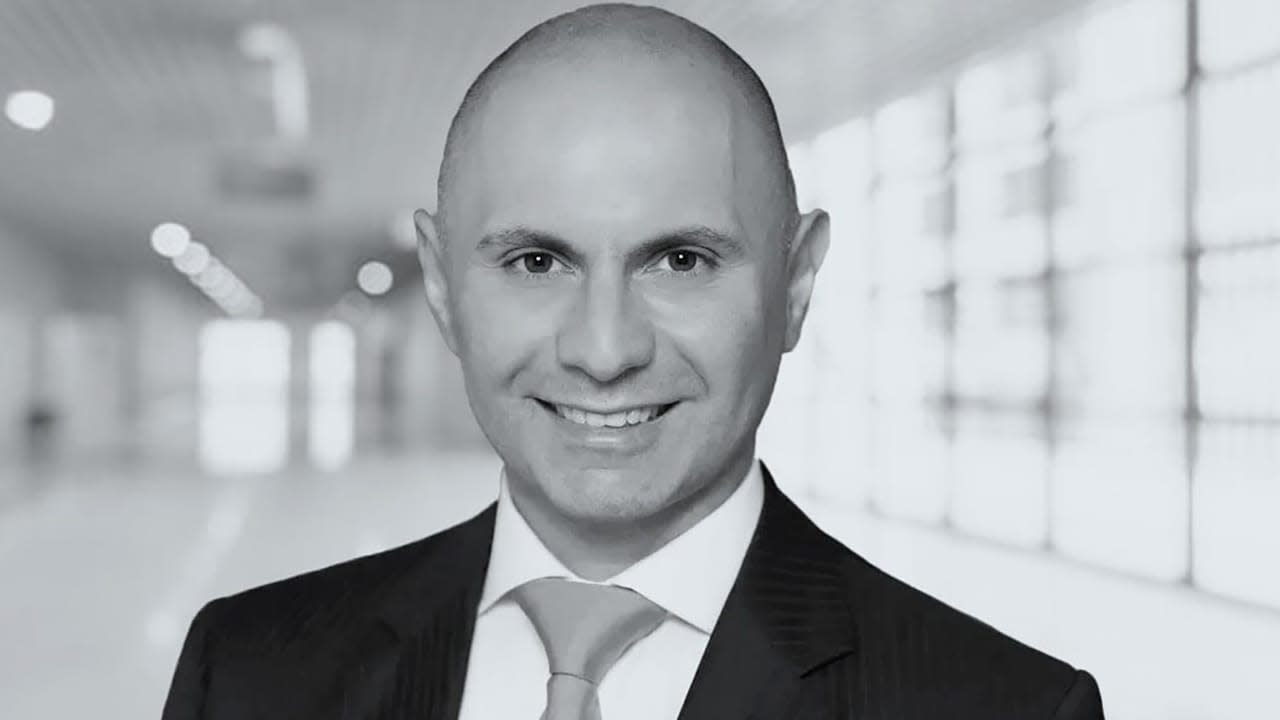
The platform has financial backing from KKR, Apollo, CAIS, Fidelity, Future Standard and some other big names in the alternative asset industry, according to Hamid Gayibov, co-founder and president of Corastone. Prior to launching the firm in 2018, Gayibov spent some years handling private placements at J.P. Morgan, as well as working on the private markets team at Xenon Capital Partners, an investment bank that focused on energy deals in Eastern Europe and the Commonwealth of Independent States.

Wealth Management recently spoke with Gayibov about the pain points Corastone hopes to solve for the financial services industry, how tokenization is changing the business and what he thinks artificial intelligence can and cannot achieve for financial advisors.

This Q&A has been edited for length, style and clarity.

WM: Can you give me an overview of your professional background before Corastone?

Hamid Gayibov: Education-wise, I have my master’s in economics and finance. Right after school, I ended up at JP Morgan, started there as an investment banking analyst. Spent about 7 1/2 years at JP Morgan, predominantly focusing on M&A and private placements. And then I worked for a while as part of the private markets team at Xenon Capital Partners.

And then almost eight years ago, we founded Corastone.

WM: How did the idea for Corastone come about, and what pain points are you trying to solve for the industry?

HG: There is a little bit of a personal story. I was an investor in a private equity fund, and I had a need to get out of the fund. It was a traditional drawdown fund, and it was fully invested. But at the time—I am talking 2015 to 2016—the whole process was fairly difficult. Just finding a buyer, I had to utilize my own network to get it done. And I reached out to a friend of mine, with whom I went to college, whose background was in operations. I posed the question to him: “How come in the public markets everything is seamless and automated?” High-frequency trading was the story of the time. But if you look at the private markets, it feels like everything is paper-based.

We started doing research, trying to understand whether there was some regulatory element to it, some operational challenges. And that’s how the idea for Corastone was born. Can we make and digitize and build a new infrastructure on which private markets can operate?

WM: Can you talk about which functions can be completed on the platform?

HG: If you think about the ecosystem of the private markets, it consists of three stool legs. On one side, it’s the GP and asset managers with mixed investments. There is a distribution platform that distributes the product to their client, and there is a transfer agent or a fund admin who administers the fund and makes sure that they have the positions correctly reflected, and all that stuff.

Corastone was designed to connect all these parties together, so on a permission basis, they can interact with each other and have access to their required data to transact. All of this was essentially done to eliminate processes that are very reliant on PDF files, Excel spreadsheets, etc., that are being exchanged between parties.

WM: KKR took a minority stake in the company. Can you tell me how your relationship with them came about?

HG: KKR was our first institutional investor. Subsequently, in about a year’s time, there was Apollo, CAIS and in the most recent round, we had Fidelity and [Future Standard], who also became investors.

At the time, we had a number of conversations with the team at KKR, and they were very focused on how to bring about operational efficiencies, how to bring down the costs of making that investment for the retail wealth channel. That’s when we presented the technology, the platform and what we had built so far, and they felt that this was something of interest to them.

WM: Where are we, in your view, in the evolution of the use of private markets in the private wealth space?

HG: Speaking as a private individual, thinking back to my days in finance, the keyword was always diversification. Each person has to look at it from their own portfolio standpoint and rely on professional advice where they can, obviously. But if you think about the U.S. economy, where north of 75% to 80% of companies are private, and the S&P 500 is dominated by mega companies, one would make an argument that having a proper exposure to private markets is worth it for most accredited investors.

Now, again, it’s all subject to individual portfolios and risk tolerance, but from my standpoint, if they need to allocate 3% or 5% of their overall portfolio to private markets for diversification, that should be accessible. And the only way to make it accessible is by making the whole operational system efficient.

WM: We are hearing about how the next step in this evolution is tokenization and private assets being available on the blockchain. Do you have any insight into how soon that might be coming?

HG: I think it’s already here. We are working with the largest asset managers, and they are very active in their work in facilitating access to their product through Corastone technology, for example, which uses ledger technology. The industry is actively looking for ways to make it easier to transact in private markets.

WM: What do you see as the major opportunities and challenges for the industry right now?

HG: Obviously, education is a big component. These individual investors or their advisors have to understand the products that are available in the market. That’s the No. 1 issue that needs to be solved.

I personally think that AI can be tremendously helpful for that. Although, obviously, while the AI can be helpful, the quality of the data has to be reliable.

And issue No. 2, the digital rails for the private industry, where a transaction can be facilitated smoothly, where you don’t have to fill out complex documentation and then wait until you are admitted to the fund and then go through the whole process and instead, your advisor can just book a trade with a point and click to get this into your account.

WM: Can you talk about where you feel AI can be the most useful in the industry and where it might not deliver a good return on investment?

HG: So, AI can be a tremendous tool in the hands of advisors because of the massive amount of data out there. To make sense of that data is going to be very helpful, from the AI standpoint. Obviously, the data provenance is going to be key because AI is an interesting tool. With great data, it can be transformative. With bad data, it can create a significant amount of operational risk. So, with that caveat, that’s where I think AI is going to be very helpful.

AI can also help companies like ours as we think about how do we create a process that is seamless. For example, as we review documents [it can help] it can identify any mismatches ahead of time so advisors can immediately react and discuss issues with clients right away instead of having to wait two or three days or sometimes longer until someone physically looks at the document, identifies the issue and goes back and says “Go back and fix it.” By that time, it might be a week later, and a trade has been done. That’s where I think it can be very impactful.

Where I don’t think AI is going to be truly impactful is in terms of identifying which product is better or which company is better or things of that nature. I think a human analysis would need to be there.

WM: What are some additional ways you are using AI at Corastone? Which models are you using?

HG: So, we are in the early innings of that. We use various models, depending on the tasks. Mostly, we are using AI for QA functions. We don’t use coding, we don’t give AI access to the Corastone platform. We are just using AI to enhance the productivity and efficiency of our QA team.

And we are very close to the development in terms of the capabilities that they have. As of now, we are very limited, very conservative when it comes to the deployment of AI. We are obviously going to be expanding this as the models also expand their capabilities.