yahoo Press
‘My house is tilting’: Furious Las Vegas homeowners say $1M+ homes crumbling in just 5 years. How to protect your home
Images
1 / 4
2 / 4

3 / 4

4 / 4
Moneywise and Yahoo Finance LLC may earn commission or revenue through links in the content below.

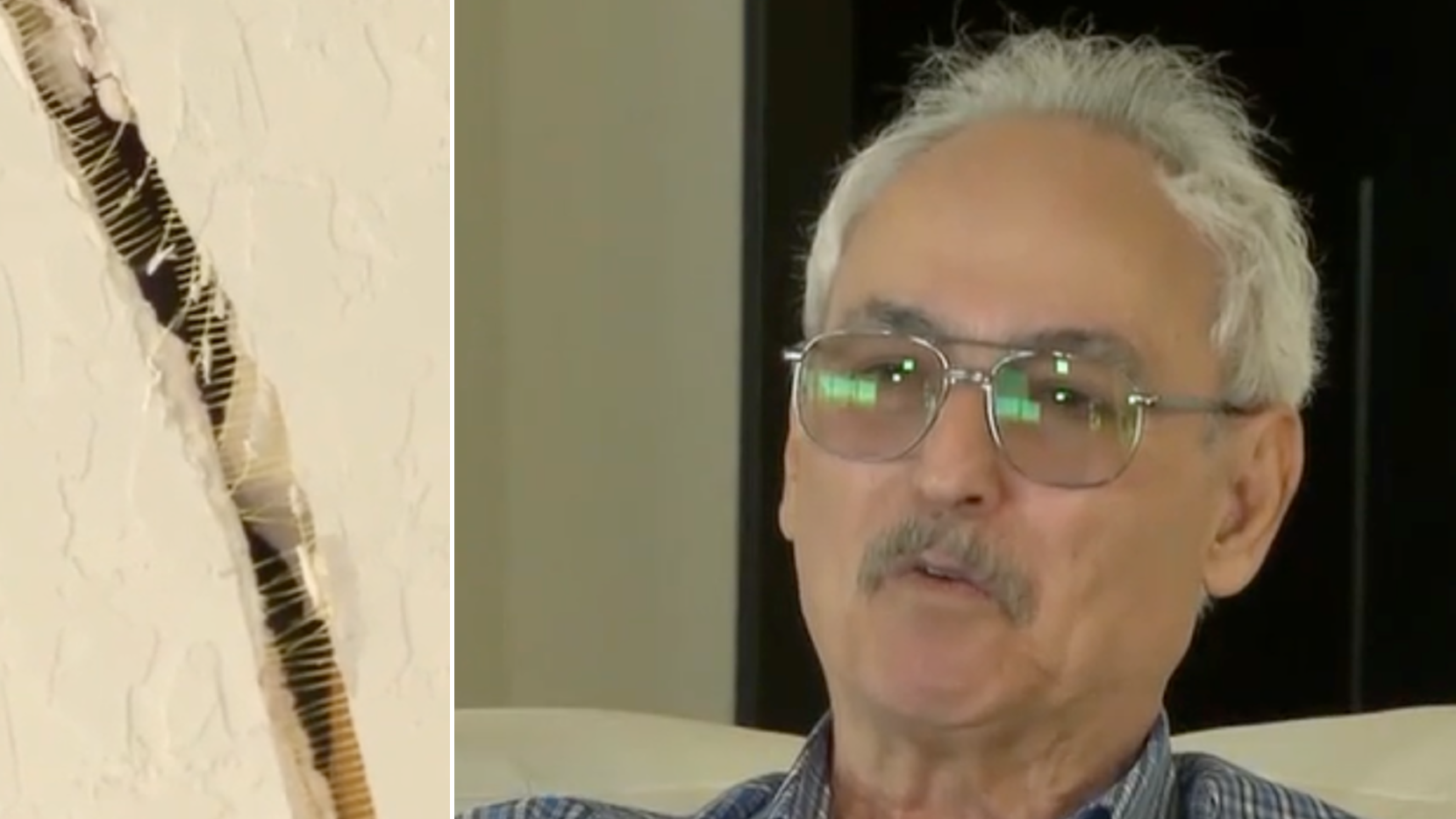
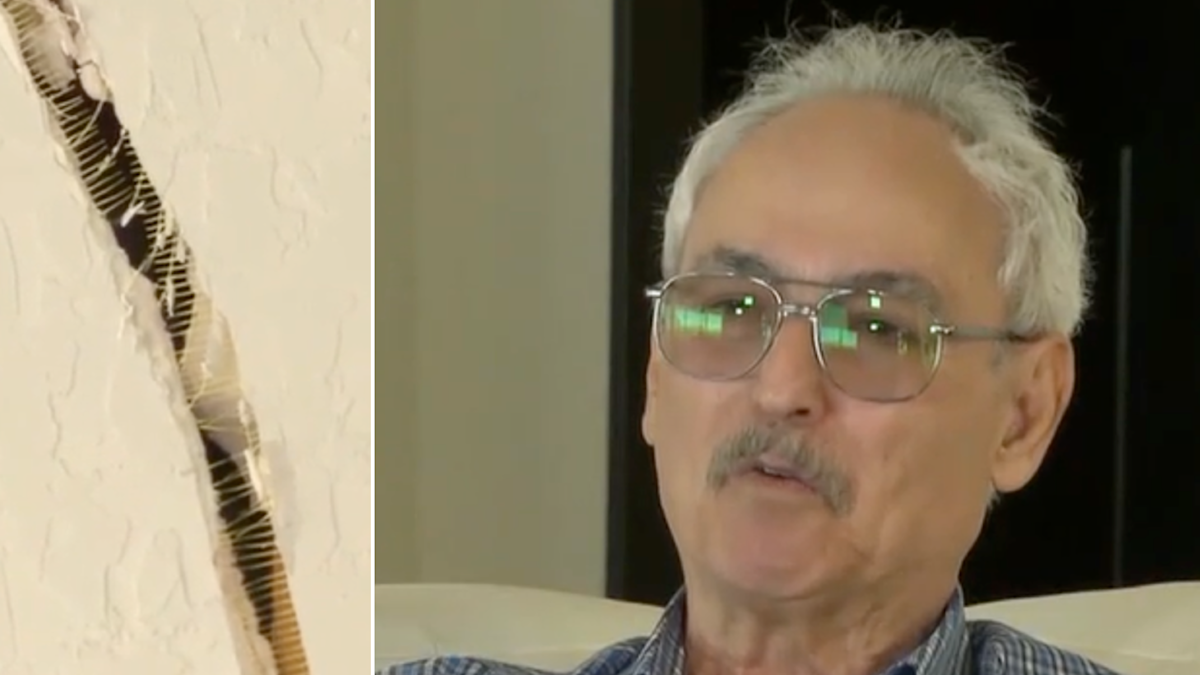
Willie Barron thought he had found his dream home when he purchased a $1.3 million property overlooking Lake Las Vegas. Five years later, he’s dealing with tilting floors, splitting walls and the constant worry of falling as he navigates his own house.

“My house is tilting an inch and a half from the rear to the front … everything is unstable and uneven and I can’t afford to fall,” Barron told FOX5 Las Vegas (1).

Thanks to Jeff Bezos, you can now become a landlord for as little as $100 — and no, you don't have to deal with tenants or fix freezers. Here's how

New 2026 IRA rules are here. See how to protect your nest egg from inflation before the next tax deadline with physical gold. Get your free guide from Priority Gold

Dave Ramsey warns nearly 50% of Americans are making 1 big Social Security mistake — here’s what it is and the simple steps to fix it ASAP

He’s among several Del Webb homeowners on a ridgeline in Lake Las Vegas who claim their luxury homes are “crumbling from below.” Attorney Norberto Cisneros, who has spent two decades representing families in construction-defect cases, describes this situation as “probably one of the worst cases I’ve ever seen.”

However, the issues in Lake Las Vegas are just a glimpse into a much larger problem affecting homeowners across the country. A combination of extreme weather events and poor building standards is putting homes under threat nationwide.

FOX5 cameras captured wide cracks in the dining room wall of one home that keep reappearing despite multiple repairs. In the kitchen, tiles are coming apart, and in the backyard, the patio has detached from the house, with fences splitting and retaining walls cracking.

What’s worse, many of the affected homes are finished in stucco, making the damage appear even more dramatic as fractures spread across exterior walls.

Many of the issues are a “classic example of soils problems,” Cisneros explained. “They gutted out the community, took all the soils, and they have to re-compact it before they build the homes on top. They did not compact the soils properly here.”

Homeowners are also concerned that the next earthquake or monsoon could spell disaster.

“If it’s large enough … this house will go down and affect the houses below us,” resident John Penn said in the same interview.

Cisneros estimates that stabilizing each property could cost between $300,000 and $500,000. Under Nevada law, builders are required to respond within 90 days of receiving a construction-defect notice. However, Cisneros notes that this time frame has passed without any repair plan as required by law (2).

PulteGroup, the parent company of Del Webb, made the following statement to FOX5: “We stand behind the quality of homes we deliver. We are actively engaged with homeowners in assessing their concerns and addressing warranty-related repairs.”

Read More: I’m almost 50 years old and don’t have retirement savings. Is it too late?

The stability issues in Lake Las Vegas do not apply just to that area. In places where the ground is unstable — or where finishes like stucco are improperly applied — rushed construction can turn the dream of owning a home into a financial nightmare.

Florida offers another cautionary tale. For years, the state has grappled with what local media calls the “billion-dollar stucco problem,” where poorly applied stucco has led to cracking walls, leaks and hidden water damage (3).

In some cases, houses are literally “rotting away.”

FOX 13 Tampa Bay actually uncovered so many failures in new-build homes that the Florida attorney general launched an investigation (4).

In fact, PulteGroup, the same builder behind the Lake Las Vegas development, has also faced major legal consequences in Florida. In 2018, the company agreed to a $78.7 million judgment to resolve claims over stucco defects. It also reached a settlement with the Florida Attorney General’s Office that required millions in restitution and repairs for homeowners (5).

Other states face different construction risks. In Texas, clay soils expand when it rains and shrink in dry spells, putting pressure on foundations — a problem researchers at the Texas A&M Transportation Institute warn could worsen with climate change (6).

Then there’s California, which has some of the strongest consumer protections in the nation. The state’s Right to Repair Act requires builders to fix certain defects if homeowners follow strict notification timelines (7).

But disputes can still drag on, impacting new construction. A UC Berkeley Terner Center for Housing Innovation report found that rising litigation and insurance costs have slowed new condo development (8).

So, how can you protect yourself?

Researching builders before buying a new home is just the first part of the equation.

The second? Consider the impact of an intensifying climate in the area where you want to purchase a new home.

Take California, for instance. State Farm, a leading U.S. insurance provider, stopped writing new home insurance policies in 2023 (9), and in the following year, they stopped renewing coverage for 72,000 existing policyholders (10).

But the story doesn’t end there. State Farm also received regulatory approval to raise home insurance premiums by 17% in 2025, in the wake of the devastating L.A. wildfires (11).

What’s worse, approximately 84% of all neighborhoods in the U.S. might see some drop in value by 2055 — amounting to $1.47 trillion in losses, according to an analysis from First Street (12). Up to 12 counties in Texas, Louisiana and Florida could see home values cut in half.

Additionally, a higher risk of climate-related disasters would also cause home insurance premiums to skyrocket. The average annual cost of home insurance rose by 12% in 2025, up roughly 46% since 2021, according to data from Insurify (13).

And the problem could get worse. First Street predicts insurance premiums could rise by a national average of 25% by 2055 (12).

Fortunately, there are ways in which you can reduce your insurance burden. Chief among them is staying on top of your rates.

After all, homeowners' insurance is only getting more expensive. The average single-family homeowner already pays an eyewatering $2,370 in yearly premiums, but to make matters worse, 47% of policyholders saw their rates go up in 2025, according to J.D. Power.

This is bad news for those who simply auto-renew with their current provider every year. In such a quickly shifting landscape, it can pay to take two minutes to shop around for better rates.

OfficialHomeInsurance.com makes it easy to find the coverage you need without the hassle of calling multiple providers for quotes.

Simply fill out a few details, and you could save an average of $482.

For many families, their home represents the biggest investment they will ever make. But purchasing a new home doesn’t always guarantee peace of mind, even with good home insurance.

Here are some more ways to protect yourself:

Research the builder: Look for complaints, lawsuits or settlements before signing a contract.

Hire an inspector — even for a new property: Issues like soil instability or poor stucco work can be concealed behind fresh finishes.

Examine the soil: The USDA’s free Web Soil Survey can help you determine if your lot sits on expansive clay or in a flood-prone area (14).

Know your state’s defect laws: For example, Nevada builders must respond with a plan within 90 days; whereas in Texas, many owners have up to six years to act.

Review your insurance policy: Many policies for homeowners exclude earth movement or construction defects for foundation issues due to natural settling, meaning you may have to pay out of pocket or pursue legal action (15).

Wherever you live, the lesson is the same — don’t assume a brand-new home comes without risks.

The homeowners in Lake Las Vegas learned this lesson the hard way. They thought they were buying dream houses. Instead, they may be facing repair bills in the hundreds of thousands.

Owning a home has long been coveted as a pinnacle of the American dream, but the reality is arguably changing.

Grant Cardone, a real estate mogul, echoes this sentiment. Despite having built a real estate empire worth $5 billion (16), he considers homeownership to be “a terrible investment.”

“[A home] doesn’t cash flow. You don’t get big tax write-offs because of it,” Cardone said during a podcast interview with Sean Mike Kelly last year (17). “You have no leverage. You’re living in it. You’re paying for it. You never own it.”

“Even when the loan is paid, you don’t own it, no, you still got to pay property taxes, still got to insure, still got to maintain it,” he added.

These hidden costs of homeownership can average up to $21,000 a year, according to a report from BankRate (18).

But you can still leverage the growth potential of the real estate sector without sinking your life savings into a house.

For instance, crowdfunding platforms like Arrived let you become a landlord with as little as $100 — without having to pay any hidden costs.

Backed by world-class investors, including Jeff Bezos, Arrived allows you to invest in shares of vacation and rental properties, earning a passive income stream without the extra work that comes with being a landlord of your own rental property.

To get started, simply browse through their selection of vetted properties, each picked for their potential appreciation and income generation. Once you choose a property, you can start investing and potentially earning quarterly dividends.

Plus, once you’re an investor with Arrived, you’ll also gain access to their newly launched quarterly secondary market, where investors can buy and sell shares of individual rental and vacation rental properties directly on the platform.

With access to more than 400 properties in 60 cities, this new way to trade real estate opens up flexibility and opportunities to gain access to more properties every quarter.

Even better, for a limited time, when you open an account and add $1,000 or more, Arrived will credit your account with a 1% match.

If diversifying into multifamily and industrial rentals appeals to you, you could consider investing with Lightstone DIRECT, a new investing platform from the Lightstone Group, one of the largest private real estate companies in the country with over 25,000 multifamily units in its portfolio.

Since they eliminate intermediaries — brokers and crowdfunding middlemen — accredited investors with a minimum investment of $100,000 can gain direct access to institutional-quality multifamily opportunities. This streamlined model can help reduce fees while enhancing transparency and control.

And with Lightstone DIRECT, you invest in single-asset multifamily deals alongside Lightstone — a true partner — as Lightstone puts at least 20% of its own capital into every offering. All of Lightstone’s investment opportunities undergo a rigorous, multi-stage review before being approved by Lightstone’s Principals, including Founder David Lichtenstein.

How it works is simple: Just sign up with your email, and you can schedule a call with a capital formation expert to assess your investment opportunities. From here, all you have to do is verify your details to begin investing.

Founded in 1986, Lightstone has a proven track record of delivering strong risk-adjusted returns across market cycles with a 27.6% historical net IRR and 2.54x historical net equity multiple on realized investments since 2004. All told, Lightstone has $12 billion in assets under management — including in industrial and commercial real estate.

As such, even if multifamily rentals don’t appeal to you, Lightstone could still serve you well as an investment vehicle for other real estate verticals.

Get started today with Lightstone DIRECT and invest alongside experienced professionals with skin in the game.

If you want to stick with rentals, but specifically single-family, mogul might be worth a look.

Founded by former Goldman Sachs real estate investors, mogul offers fractional ownership in blue-chip rental properties.

Their team hand-picks the top 1% of single-family rental homes nationwide for you. This way, you can invest in institutional quality offerings for a fraction of the usual cost — while receiving monthly rental income, real-time appreciation and tax benefits.

Each property undergoes a vetting process, requiring a minimum 12% return even in downside scenarios. Across the board, the platform features an average yearly return of 18.8%. Their cash-on-cash yields, meanwhile, average between 10 to 12% annually. Offerings often sell out in under three hours, with investments typically ranging between $15,000 and $40,000 per property.

Getting started is a quick and easy process. You can sign up for an account and then browse available properties. Once you verify your information with their team, you can invest like a mogul in just a few clicks.

Most Americans earn a dismal 0.39% APY on their cash at big banks. Unlock 4.05% APY and pay $0 in account fees instead with a Wealthfront Cash Account

Vanguard reveals what could be coming for U.S. stocks, and it’s raising alarm bells for retirees. Here’s why and how to protect yourself

Robert Kiyosaki begs investors not to miss this ‘explosion’ — says this 1 asset will surge 400% in a year

Taxes are going to change for retirees under Trump’s ‘big beautiful bill’ — here are 4 reasons you can’t afford to waste time

Join 250,000+ readers and get Moneywise’s best stories and exclusive interviews first — clear insights curated and delivered weekly. Subscribe now.

We rely only on vetted sources and credible third-party reporting. For details, see our editorial ethics and guidelines.

FOX5 Las Vegas (1); Justia (2); WTSP Tampa Bay (3); FOX 13 Tampa Bay (4); Top Class Actions (5); Texas A&M Transportation Institute (6); Davis-Stirling.com (7); UC Berkeley Terner Center for Housing Innovation (8); California Department of Insurance (9); Fox Business (10); CBS News (11); First Street Technology (12); Insurify (13); USDA (14); Policygenius (15); @Grant Cardone (16); @DigitalSocialHour (17); Bankrate (18)

This article provides information only and should not be construed as advice. It is provided without warranty of any kind.