Press
Trump is waging war based on instinct and it isn't working
Images
1 / 19

2 / 19

3 / 19
4 / 19
5 / 19
6 / 19
7 / 19
8 / 19
9 / 19
10 / 19
11 / 19
12 / 19
13 / 19

14 / 19

15 / 19
16 / 19
17 / 19
18 / 19

19 / 19
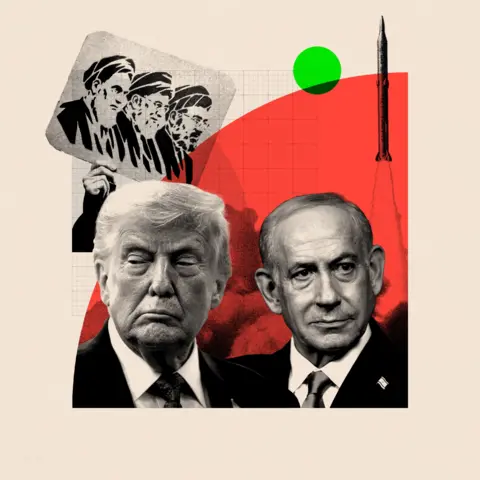
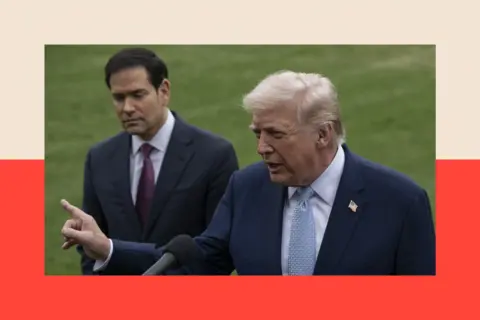
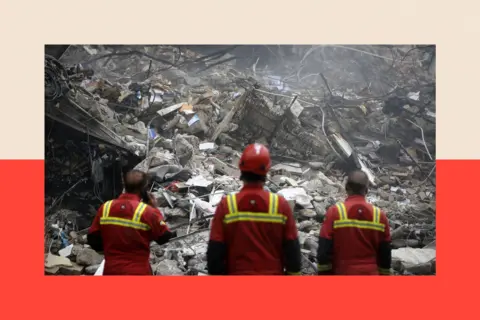
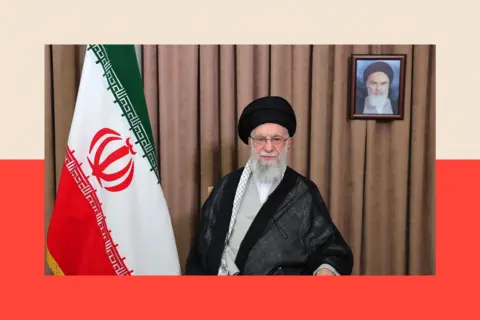
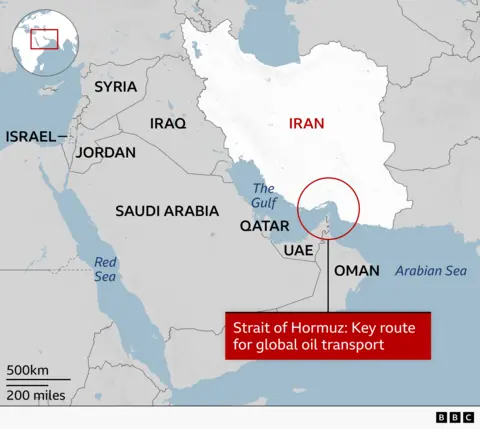
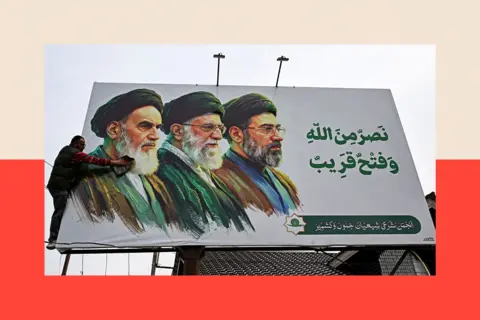
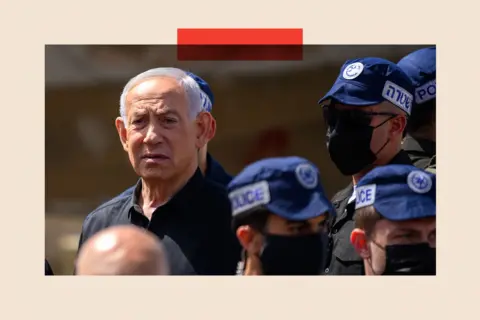
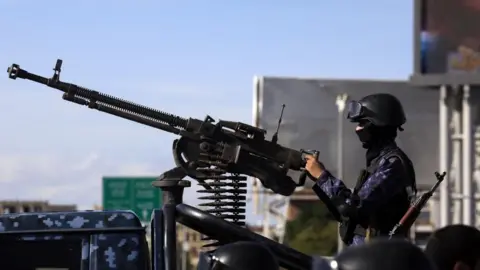
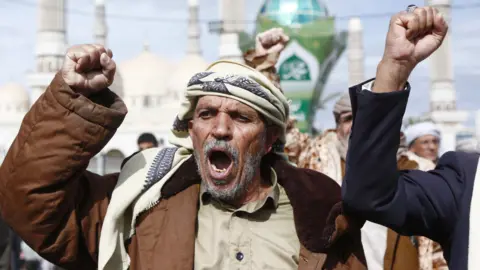
Some old truths about warfare have been knocking on the door of the Oval Office in the month since US President Donald Trump and Israel's Prime Minister Benjamin Netanyahu sent US and Israeli warplanes to bomb Iran. The failure to learn from the past means that Donald Trump now faces a stark choice. If he can not get a deal with Iran, he can either try to declare a victory that will fool no-one, or escalate the war. The oldest of the old truths comes from the Prussian military strategist Helmuth von Moltke the Elder: "no plan survives first contact with the enemy." He was writing in 1871, the year Germany was unified as an empire, a moment that was as consequential for the security of Europe as this war might be for the security of the Middle East. Maybe Trump prefers the boxer Mike Tyson's modern version: "everyone has a plan until they get hit." Even more relevant for Trump are the words of one of his predecessors, Dwight D. Eisenhower, the American general who commanded the D-Day landings in 1944 and went on to serve two terms as a Republican president of the United States in the 1950s. Eisenhower's version was "plans are worthless, but planning is everything." He meant that the discipline and process of making plans to fight a war make it possible to change course when the unexpected happens. For Trump, the unexpected item has been the resilience of the regime in Iran. It seems that he was hoping for a repeat of the US military's lightning-fast kidnap in January of the President of Venezuela Nicolás Maduro and his wife, Cilia Flores. They are now in prison in New York, facing trial. Maduro's deputy Delcy Rodríguez replaced him as president and is taking orders from Washington. Hoping for a repeat of the victory over Maduro suggests a yawning lack of comprehension of the differences between Venezuela and Iran. Eisenhower's adage on thinking ahead came in a speech in 1957. He had been the man in charge of planning and commanding the largest amphibious military operation in history, the invasion of western Europe on D-Day, so he knew what he was talking about. He went on to explain that when an unexpected emergency arises "the first thing you do is to take all the plans off the top shelf and throw them out the window and start once more. But if you haven't been planning you can't start to work, intelligently at least." "That is the reason it is so important to plan, to keep yourselves steeped in the character of the problem that you may one day be called upon to solve – or to help to solve." Far from capitulating or collapsing after Israel and the US killed Iran's Supreme Leader Ayatollah Ali Khamenei on the first air strike of the war, the regime in Tehran is functioning and fighting back. It is playing a weak hand well. In contrast, Trump has given the impression that he is making it up as he goes along. He follows gut instincts, not the pages of intelligence and strategic advice that other presidents have ploughed through. Thirteen days into the war, Trump was asked by Fox News Radio when the war would end. He answered that he did not think that the war "would be long." As for ending it, it would be "when I feel it, feel it in my bones." He relies on an inner circle of advisers who are in their jobs to back up his decisions and make them happen. Speaking truth to power is not, it seems, in their job description. Relying on the president's instincts rather than a well-worked set of plans – even if they must be adapted or discarded – makes it harder to fight a war. The lack of clear political direction blunts the devastating firepower and effectiveness of the US armed forces. Four weeks ago, Trump and Netanyahu put their faith in a ferocious bombing campaign that killed not just the supreme leader but his closest advisors and has so far killed 1,464 Iranian civilians, according to HRANA, a US-based group that monitors human rights violations in Iran. The two leaders were expecting a quick victory. Both challenged Iranians to follow up their bombs with a popular uprising to topple the regime. But the regime in Tehran still stands, still fights back and Trump is finding out why his predecessors were never prepared to join Netanyahu in a war of choice to destroy the Islamic Republic. Opponents of the regime have not risen up. They're all too aware that in January government forces killed thousands of protesters. Official warnings have been broadcast telling anyone thinking of trying to repeat the protests that they will be treated as enemies of the state. The Iranian regime is an obdurate, ruthless, well-organised adversary. Founded after the 1979 revolution that overthrew the Shah, it was then forged in the deadly misery of the eight-year war with Iraq. The regime is built on institutions, not individuals, and reinforced by iron-clad religious beliefs and an ideology of martyrdom. That means that killing leaders, while undoubtedly shocking and disruptive, does not also become a death sentence for the regime. After January's killings, it will consider the deaths of many more Iranians, either at the hands of the regime's own forces or American and Israeli bombs as an acceptable price of survival. The Iranian regime could not hope to match the firepower of the US and Israel, but like Moltke, Tyson and Eisenhower, it has been making plans. It broadened the war, attacking its Gulf Arab neighbours as well as American bases on their territory and Israel, spreading the pain as widely as possible. Iran's effective closure of the Strait of Hormuz, the narrow entrance to the Gulf, has cut off roughly 20% of world oil supplies and sent global financial markets into a spin. Iran spent years and billions of dollars building up the network of allies and proxies that Iran called 'the axis of resistance' that included Hezbollah in Lebanon and Hamas in Gaza and the West Bank to threaten and deter Israel. The Israelis have hit it very hard and effectively since the Gaza war started with the Hamas attacks of 7 October 2023. But Iran is now demonstrating that a geographical feature, the narrow Strait of Hormuz, can be an even more effective deterrent and threat than its ruinously expensive system of military alliances. Iran can enforce its control of the Strait with cheap drones that can be launched from hundreds of kilometres away in Iran's mountainous interior. Allies get killed. Geography stays the same. Short of capturing and occupying the cliffs on either side of the Strait, and big stretch of Iranian land beyond them, the US and Israel – and the rest of the world – are discovering that the Iranian regime will demand a big say in the reopening the Strait of Hormuz. As the former deputy commander of NATO, General Sir Richard Shirreff observed on the BBC's Today Programme, any war game working through the consequences of an attack on Iran would have shown that the Islamic Revolutionary Guard Corps would close the Strait of Hormuz. That gets back to the importance of planning how to start a war, how to end it and how to deal with the day after. Donald Trump and his inner circle, flushed with the prospect of a quick and easy victory, seem to have skipped those steps. The 'axis of resistance' also includes the Houthis in Yemen. On Friday they fired a barrage of missiles at Israel for the first time since this war started with the airstrikes on Iran on 28 February. If the Houthis resume their attacks on shipping in the Red Sea, Saudi Arabia would lose its western sea route for oil exports to Asia. The Red Sea has its own choke point, the Bab al Mandab strait, as important for world trade as the Strait of Hormuz. If the Houthis decide to escalate by attacking shipping in Bab al Mandab and further south, as they did during the Gaza war, they would cut off the route from Asia to Europe through the Suez Canal. That would create an even worse global economic emergency. Netanyahu, in contrast to Trump, has been thinking in detail about this war since he started the political career that has made him Israel's longest-serving prime minister. On the first full day of the war against Iran, Netanyahu recorded a video statement on the roof of the tower block in Tel Aviv known as the Kirya, which houses Israel's military headquarters. He spoke with a clarity about Israel's war aims that has eluded Trump. That should not be a surprise. Going to war with Iran is a more straightforward proposition for Israel than the US. The preoccupations of a regional power are different to the much broader global challenges faced by the US. Netanyahu is convinced that he can ensure Israel's future security by doing as much damage as possible to the Islamic Republic. The war, he said in the video, was "to ensure our existence and our future." Netanyahu has always regarded Iran as Israel's most dangerous enemy. His critics say that preoccupation was one of the reasons for Israel's failure to detect and stop the Hamas attacks out of Gaza on 7 October 2023. He thanked the US military and Trump for their "assistance" and moved on to the point that for him is the heart of the matter. "This coalition of forces allows us to do what I have yearned to do for 40 years: smite the terror regime hip and thigh. This is what I promised – and this is what we shall do." Netanyahu and Israel's military establishment had at different times over his many years in office, looked into ways of going to war with Iran, destroying its nuclear facilities and ballistic missiles, and everything else that made it a threat to them. The conclusion in Israel was always that, while they could do Iran some serious damage, it would only be a setback for the regime. It became accepted wisdom that the only way to smash Iran's military capacity for a generation or more was in alliance with the US. But that required a president in the White House who was prepared to go to war alongside Israel, something that had never happened despite the two countries' close relationship and Israel's dependence on US military and diplomatic support. Netanyahu could never persuade a US president that it was in America's interests to go to war with Iran – until the second term of Donald J. Trump. Despite America and Iran's bitter and toxic relationship since the Shah, a staunch US ally, was overthrown in 1979, successive US presidents believed that the best way of dealing with the Islamic Republic of Iran was to contain it. During America's occupation of Iraq, it did not go to war with Iran even when Tehran was equipping and training Iraqi militias who were killing US troops. The only justification, they calculated, would be an imminent threat, especially information that Iran was close to creating a nuclear weapon. Trump included a nuclear threat in his evolving list of reasons to go to war. But there is no credible evidence that Iran was about to get a weapon or the means to deliver one. Even the White House still has a statement on its website dated 25 June 2025 under the headline 'Iran's Nuclear Facilities Have Been Obliterated – and Suggestions Otherwise are Fake News.' President Trump is now discovering why his predecessors decided that the risks of choosing to go to war would be just too great. The war looks to be turning into a classic example of how a smaller, weaker power can fight an enemy that is bigger and stronger, the kind of conflict that strategists call asymmetric warfare. It is early days, after only a month, to compare it to other wars that on paper the US was winning in terms of enemies killed and bombing raids completed in Vietnam, Iraq and Afghanistan. But it is important to remember that after years of bloodshed and killing, they all ended in ways that amounted to defeat for the United States. The next set of decisions by Trump and Netanyahu could decide whether the war in Iran becomes another major misstep by the US. Trump has now postponed twice his threat to destroy Iran's power network – which as described by him could amount to a war crime. He says that is because Iran is desperate to make a deal to end the war, as the regime has been hit so hard by the damage and death the US has already inflicted and fear that it might do even more. Contacts between the two sides, via the mediation of Pakistan and others, are taking place. The Iranians deny Trump's assertion that it is a full-blown negotiation. An official text of the president's 15-point plan for peace has not been published, but leaked versions show a document that is a compilation of all the demands the US and Israel have made of Iran over many years. It reads more like terms of surrender rather than a basis for negotiation. Iran has countered with its own demands, equally unacceptable to the other side, including recognition of its control of the Strait of Hormuz, reparations for war damage, and the removal of American bases from the Middle East. Unless both sides can make a giant leap into an unexplored middle ground of compromise, it is hard to see a deal being made. It is not impossible. The Iranian regime has a history of negotiation. Arab diplomatic sources have backed up other reports, telling me that Iran was offering a path towards a deal on its nuclear programme when the US abruptly abandoned diplomacy by going to war on 28 February. One source told me: "you know the Iranians were offering everything." That sounds like an over-simplification, and the Americans deny progress was being made, but the signs are there was room for more diplomacy when the US and Israel sent in bombers. The war is at a critical point. If there is no deal between the Americans and the Iranians, Trump has very few choices. He could declare victory, saying America has destroyed Iran's military, therefore it is mission accomplished, and that opening the Strait of Hormuz is not his responsibility. That could melt down world financial markets and horrify his already disgruntled allies in Europe, Asia and the Gulf. A wounded, angry Iranian regime would have plenty of scope to put more pressure on the world economy. More likely, Trump would decide to escalate the war. The Americans have more than four thousand US Marines on ships heading to the Gulf, paratroopers from the 82nd Airborne on standby and are discussing further reinforcements. No one is talking about a full-scale invasion of Iran, but it is possible the Americans will try to capture islands in the Gulf, including Kharg island, Iran's main oil terminal. That would involve a series of challenging and dangerous amphibious landings. That might even suit Iran, which wants to drag the Americans into a longer war of attrition. Iran calculates that the regime's capacity for pain is greater than Donald Trump's. Donald Trump has found in Iran that he is coming up against the limits of his power. The Iranian regime has a different definition of victory and defeat than he does. For them, mere survival is victory. But now they are hoping for more, believing that control of the Strait of Hormuz gives them new leverage to make demands, perhaps even to make strategic gains. The Iranians have demanded, among other things, a promise not to be attacked in future and recognition of their control of the Strait of Hormuz as a price for opening it to all shipping. The White House press secretary Karoline Leavitt said on Wednesday that "President Trump does not bluff and he is prepared to unleash hell. Iran should not miscalculate again." "If Iran fails to accept the reality of the current moment, if they fail to understand that they have been defeated militarily, and will continue to be, President Trump will ensure they are hit harder than they have ever been hit before." Being defeated in war is not a choice. If Iran had been as badly beaten as Trump and his people say, the regime in Tehran would have collapsed by now. He would not need to threaten them into accepting their fate. America and Israel can do much more damage and kill many more people in Iran. In Lebanon, Israel is pressing ahead with its offensive against Hezbollah, Iran's main ally. In the absence of a ceasefire, they calculate that they can raise the level of force until the Iranians have no choice but to yield. That is far from certain. The longer the war continues, the greater the consequences for the region and for the wider world. One leading Iran analyst, Ali Vaez of the International Crisis Group told me they could be 'catastrophic.' In 1956 the United Kingdom and France went to war alongside Israel after the Egyptian president Gamal Abdul Nasser nationalised the Suez Canal, a global waterway that was as significant a chokepoint for the world economy as the Strait of Hormuz is now. They attained all their military objectives but were forced to withdraw by President Eisenhower of the United States. For the British, it was the beginning of the end of their imperial domination of the Middle East. America is faced by the rise of China. When the history is written of their competition to be the world's strongest power, Donald Trump's badly planned war against Iran might be seen as a turning point, a waystation of decline, as Suez was for the United Kingdom. BBC InDepth is the home on the website and app for the best analysis, with fresh perspectives that challenge assumptions and deep reporting on the biggest issues of the day. Emma Barnett and John Simpson bring their pick of the most thought-provoking deep reads and analysis, every Saturday. Sign up for the newsletter here Mike Jeffries' lawyers argue that he is suffering with dementia and late onset of Alzheimer's disease. One of the flagship No Kings rallies happened in Minnesota, where singer Bruce Springsteen preformed to crowds. There are fears the Iranian proxy may attack shipping in the Red Sea, adding to global economic woes. The Iran-backed group could bring a second crucial waterway to a standstill, writes Sebastian Usher. Jawad Younes and his uncle Ragheb were laid to rest on Saturday after their family compound was hit a day earlier.