yahoo Press
Is This The No.1 Way To Play the Rare Earth Crisis?
Images
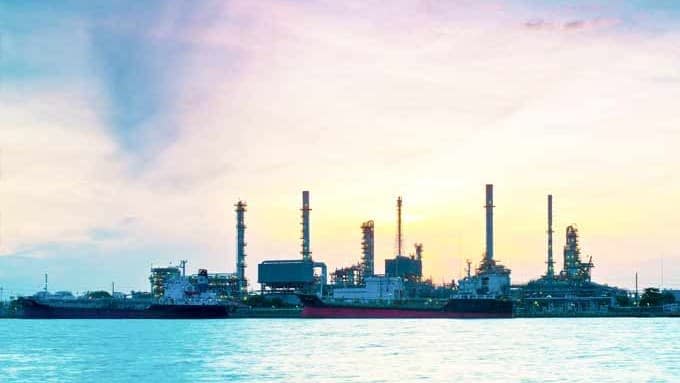
1 / 4
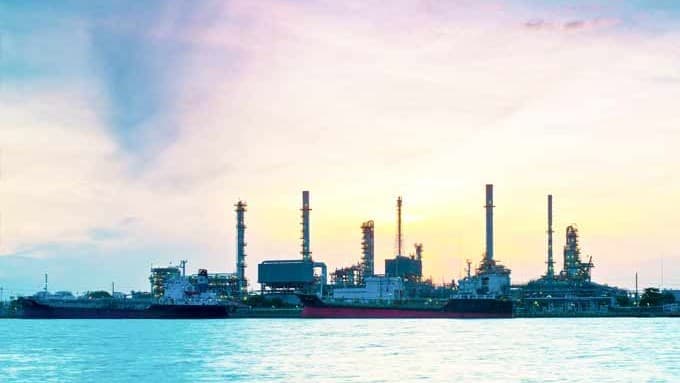
2 / 4

3 / 4

4 / 4
In Euclid, Ohio, just outside Cleveland, sits a facility that most people would drive right past without a second look. But inside that facility, work is being done that could reshape America’s position in one of the most critical supply chain battles of our time. The company behind this work is REalloys (NASDAQ: ALOY), and they’re turning rare earth oxides into the defense-grade metals and alloys that go into the permanent magnets found in everything from fighter jets to missile guidance systems.

REalloys doesn't have the name recognition of the billion-dollar rare earth miners that tend to get most of the attention. But the rare earth problem facing the West has never really been about mining. It's about what happens after the material comes out of the ground…and that's where the company operates.

The company’s Euclid facility, built on more than 40 years of specialty metals expertise, is currently the only site in North America with a proven track record of delivering heavy rare earth metals, alloys, and magnets to U.S. government and commercial partners.

It has existing contracts with the Department of Defense, the Department of Energy, and NASA. And it anchors a vertically integrated supply chain that they have built from mine to finished magnet…all of it designed to operate without any critical reliance on China.

Why This Mostly Ignored Metals Facility in Ohio Matters More Than You’d Think

To understand why this facility matters, you have to understand a problem that most of the rare earth conversation gets wrong.

Rare earths are not actually rare. They exist in mineable quantities across Canada, the United States, Brazil, Greenland, and elsewhere. The issue is that the West handed over its rare earth processing capability to China roughly 40 years ago, and China now controls approximately 90% of global rare earth refining and magnet production.

That means virtually every rare earth magnet in Western defense systems, vehicles, and industrial equipment traces back to Chinese processing.

The part of the supply chain that’s missing in the West is not the mine. It’s the processing…the series of technically demanding steps where raw material gets separated into individual rare earth elements, converted into high-purity metals at extreme temperatures, and then alloyed to precise specifications for use in magnets.

The Center for Strategic and International Studies (CSIS) has identified this metallization step as the least developed and most difficult capability to rebuild outside China. It requires deep, accumulated operating expertise that takes years to develop and cannot simply be purchased.

That’s the gap REalloys’ Euclid facility was designed to fill. While most Western rare earth companies remain focused on mining or early-stage separation, REalloys handles the conversion step that CSIS identifies as the hardest to rebuild. Oxide goes in. Defense-grade metal and alloy come out. And the chemistry is held to tolerances that defense and industrial customers consistently require.

As Andy Sherman, the company’s Head of Research and Development, puts it: the company’s objective is not to compete with mining. It’s to make mining matter. Without the ability to convert raw material into qualified, usable inputs, all the mining in the world doesn’t reduce dependence on China by a single percentage point.

What REalloys Has Actually Built

REalloys (NASDAQ: ALOY) stands out in this space not because of one facility or one partnership. It’s the fact that the company has assembled an end-to-end supply chain that covers every stage from raw feedstock to finished magnet, which is something that simply doesn’t exist at a comparable scale anywhere else in North America.

Upstream, the company owns the Hoidas Lake rare earth project in Saskatchewan and has secured feedstock agreements with partners in Kazakhstan, Brazil, and Greenland, giving it access to diversified, non-Chinese sources of raw material.

Midstream, REalloys has partnered with the Saskatchewan Research Council (SRC), which has built a Rare Earth Processing Facility in Saskatoon designed from the ground up to operate without any reliance on Chinese technology, equipment, or critical consumables. They hold an exclusive 80% offtake on the facility’s production, which is targeting first commercial output in late 2026 to early 2027.

At full capacity, the facility is expected to produce approximately 525 tonnes per year of neodymium-praseodymium metal, along with roughly 30 tonnes of dysprosium oxide and 15 tonnes of terbium oxide, which would make it the largest source of heavy rare earth oxides outside China.

What’s particularly notable about the SRC facility is the technology behind it. When China blocked the export of rare earth processing technology in 2020, SRC designed and built its own systems from scratch.

The result is an AI-driven operation that runs the entire separation process with six people, compared to the roughly 80 workers a comparable Chinese facility would require. The AI system monitors approximately 5,000 data points on a millisecond basis, and according to SRC, it produces higher-purity metals with greater efficiency than conventional methods.

Downstream, the Euclid, Ohio, facility takes those refined materials and converts them into the metals, alloys, and magnets that defense and industrial customers actually use. The expertise behind that operation spans over 30 years of applied development in specialty metals, including a decade of focused collaboration with U.S. national laboratories and the Defense Logistics Agency.

REalloys acquired this capability through PMT Critical Metals, bringing with it not just equipment and infrastructure, but decades of accumulated process knowledge that cannot be easily replicated.

Why Process Knowledge Matters More Than Capital

One of the things that makes the rare earth space different from most industries is that the primary barrier to entry is not money. It’s time and expertise.

Defense and industrial customers don’t simply buy rare earth metals on the open market. They qualify specific suppliers through a rigorous, multi-year process in which material is tested, incorporated into components, stressed, retested, and evaluated again after changes in scale. Any variation in chemistry, microstructure, or processing conditions can reset the clock entirely. Once a supplier is qualified and integrated into a program, switching can be a technical and regulatory undertaking that nobody takes on lightly.

That creates a competitive dynamic very different from most markets. The companies that get qualified first tend to stay qualified, because defense platforms are designed to operate for decades, and suppliers are chosen early and rarely replaced. Each successfully qualified alloy then both adds revenue and reduces the friction and time required to qualify for the next program, creating a compounding advantage over time.

REalloys’ Euclid facility has already crossed the most important threshold: it has demonstrated that it can produce rare earth metals and alloys domestically to the specifications that real customers require. The hardest part, proving the process, has already been done. Now it's about expanding capacity and locking in long-duration programs where material supply is committed for years.

For competitors, catching up would mean simultaneously securing non-Chinese feedstock, building commercial-scale separation capability, developing metallization technology, and then completing the multi-year qualification process with defense customers.

Industry estimates suggest a minimum timeline of three to seven years for a credible challenger, assuming strong execution and significant capital. And even then, REalloys could already be locked into the programs that matter most.

The 2027 Deadline That Changes the Landscape

The timing of all this is not accidental. On January 1, 2027, updated U.S. defense procurement rules under DFARS will take effect that will restrict the use of Chinese-origin rare earth materials in qualifying weapons systems. The restrictions extend across the full supply chain, from mining and refining through separation, melting, and production.

That deadline creates an immediate, concrete need for domestically sourced, defense-compliant rare earth metals and magnets. Every contractor currently relying on Chinese-sourced materials will need a qualified alternative. And the list of companies that can deliver compliant heavy rare earth material by that date is extremely short.

That scarcity reflects something the broader metals industry already understands: processing is where the expertise lives, and expertise takes decades to build.

Alcoa (NYSE: AA) spent over 130 years building the smelting and refining infrastructure that makes it America’s dominant aluminum processor. Its moat is not the ore; it’s the accumulated process knowledge that competitors cannot simply buy. Cleveland-Cliffs (NYSE: CLF) tells the same story in steel—the Ohio-based company turns raw iron ore into defense and automotive-grade flat-rolled steel domestically, and its competitive position rests entirely on conversion capability, not resource ownership. Carpenter Technology (NYSE: CRS) has built America’s leading specialty alloy business on exactly that principle—its high-performance metals for aerospace and defense command premium pricing not because the inputs are scarce, but because the processing expertise required to produce them to specification is. Rare earth metallization is no different, and the West is only now beginning to reckon with how long it will take to rebuild it.

REalloys appears to be the only company that can actually take heavy rare earth oxides all the way to finished metals for magnets in North America ahead of that deadline. Its Phase 1 production through the SRC partnership is timed to align with the regulatory shift, and its Euclid facility already has the operational foundation to process that material into defense-grade output.

Phase 2 plans call for significantly larger capacity later this decade, including approximately 200 tonnes per year of dysprosium metal, 45 tonnes of terbium metal, and the ability to produce up to 20,000 tonnes per year of heavy rare earth permanent magnets. At that scale, REalloys would go from being a critical niche supplier to one of the biggest rare earth producers outside China.

The People and Institutions Behind the Company

The credibility of any company making these kinds of claims ultimately comes down to who’s involved and who’s backing them. On that front, REalloys has assembled a roster that’s hard to dismiss.

The U.S. Export-Import Bank has issued a $200 million letter of intent to support the company’s supply chain development. The Japan Organization for Metals and Energy Security (JOGMEC) has signed a memorandum of understanding covering technology transfer and potential financing support. These deals represent institutional commitments from the type of organizations expected to conduct extensive due diligence before putting their names on the line.

The company’s board reflects a similar level of seriousness. Chairman Stephen S. DuMont serves as President of GM Defense. General Jack Keane (Ret.), a four-star general and recipient of the Presidential Medal of Freedom, recently joined as a designated director. Former Saskatchewan Premier Brad Wall and former Canadian Ambassador to the U.S. David MacNaughton round out a board that brings deep expertise in defense, policy, and cross-border industrial strategy.

That kind of board tells you something. You build a roster like that when your company operates where national security and industrial policy come together…and when you expect to be operating at that level for a long time.

A Story Worth Watching

The rare earth conversation in the United States has been dominated for years by mining companies and headline-grabbing resource estimates. But the real constraint has always been further downstream, in the technically demanding, capital-intensive, experience-driven middle of the supply chain, where raw material becomes something a manufacturer or a defense contractor can actually use.

REalloys (NASDAQ: ALOY) is building at that exact point. It has the operational facility, the processing partnership, the feedstock agreements, the government contracts, and the institutional backing to suggest that this is a story of a company with smart execution…and it’s already underway.

Whether it ultimately succeeds at the scale its targeting remains to be seen. Building and commissioning complex processing infrastructure is never simple, and the rare earth supply chain has a long history of promising timelines that slip.

But the fundamental positioning is difficult to argue with: a proven facility doing work that almost nobody else in North America can do, backed by people and institutions that don’t attach their names to things casually, timed to a regulatory deadline that creates immediate demand.

For anyone paying attention to the rare earth space, or to the broader question of whether the West can actually rebuild the industrial capabilities it needs, what’s happening in Euclid, Ohio is a story worth following closely.

By. Tom Kool

The AI boom is triggering an unexpected and unprecedented bull run in natural gas and power  stocks. If you aren't paying attention to the energy demands of data centers, you will miss the biggest energy story of the decade. The smart money is already quietly moving into the few companies prepared to power the trillion-dollar AI machine.

Oilprice Intelligence brings you the inside view on where the next gains will come from, breaking down the market's biggest growth driver with analysis from veteran oilmen and experts. Click here to get this crucial intel for free

Important Disclosure: The owner of Oilprice.com owns shares and/or stock options of the company and therefore has an incentive to see the company’s stock perform well. We encourage you to conduct your own due diligence and seek the advice of your financial advisor or broker before investing.FORWARD LOOKING STATEMENTSThis publication contains forward-looking statements, including statements regarding expected continual growth of the featured companies and/or industry. The Publisher notes that statements contained herein that look forward in time, which include everything other than historical information, involve risks and uncertainties that may affect the companies’ actual results of operations. Factors that could cause actual results to differ include, but are not limited to, changing governmental laws and policies concerning, among other things, recreational and medical cannabis sales, success of the company’s proprietary technology, the size and growth of the market for the company’s products and services, the company’s ability to fund its capital requirements in the near term and long term, pricing pressures, etc.

IMPORTANT NOTICE AND DISCLAIMERNeither the author nor the publisher, Oilprice.com, was paid to publish this communication concerning REalloys (NASDAQ: ALOY). The owner of Oilprice.com owns shares and/or stock options of the featured company and therefore has an incentive to see the featured company’s stock perform well. The owner of Oilprice.com may buy or sell shares of the featured company at any time including at or near the time you receive this communication. This share ownership should be viewed as a major conflict with our ability to be unbiased. This is why we stress that you conduct extensive due diligence as well as seek the advice of your financial advisor or a registered broker-dealer before investing in any securities.

This communication is not, and should not be construed to be, an offer to sell or a solicitation of an offer to buy any security. Neither this communication nor the Publisher purport to provide a complete analysis of any company or its financial position. The Publisher is not, and does not purport to be, a broker-dealer or registered investment adviser. This communication is not, and should not be construed to be, personalized investment advice directed to or appropriate for any particular investor. Any investment should be made only after consulting a professional investment advisor and only after reviewing the financial statements and other pertinent corporate information about the company. Further, readers are advised to read and carefully consider the Risk Factors identified and discussed in the advertised company’s SEC, SEDAR and/or other government filings. Investing in securities is speculative and carries a high degree of risk. Past performance does not guarantee future results. This communication is based on information generally available to the public and does not contain any material, non-public information. The information on which it is based is believed to be reliable. Nevertheless, the Publisher cannot guarantee the accuracy or completeness of the information.

INDEMNIFICATION/RELEASE OF LIABILITYBy reading this communication, you acknowledge that you have read and understand this disclaimer, and further that to the greatest extent permitted under law, you release the Publisher, its affiliates, assigns and successors from any and all liability, damages, and injury from this communication. You further warrant that you are solely responsible for any financial outcome that may come from your investment decisions.

TERMS OF USEBy reading this communication you agree that you have reviewed and fully agree to the Terms of Use found here http://oilprice.com/terms-and-conditions If you do not agree to the Terms of Use http://oilprice.com/terms-and-conditions, please contact Oilprice.com to discontinue receiving future communications.

INTELLECTUAL PROPERTYOilprice.com is the Publisher’s trademark. All other trademarks used in this communication are the property of their respective trademark holders.  The Publisher is not affiliated, connected, or associated with, and is not sponsored, approved, or originated by, the trademark holders unless otherwise stated. No claim is made by the Publisher to any rights in any third-party trademarks.

Oilprice Intelligence brings you the signals before they become front-page news. This is the same expert analysis read by veteran traders and political advisors. Get it free, twice a week, and you'll always know why the market is moving before everyone else.

You get the geopolitical intelligence, the hidden inventory data, and the market whispers that move billions - and we'll send you $389 in premium energy intelligence, on us, just for subscribing. Join 400,000+ readers today. Get access immediately by clicking here.