Press
What are heat pumps, what do they cost and are they noisy?
Images
1 / 12

2 / 12
3 / 12
4 / 12
5 / 12
6 / 12

7 / 12
8 / 12

9 / 12
10 / 12

11 / 12

12 / 12
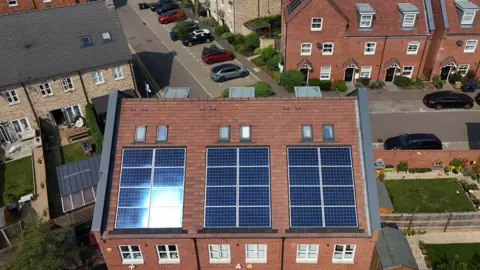
Developers will have to install heat pumps and solar panels in all new homes in England under new building regulations.

It follows the government's Warm Homes Plan, which promised £15bn to help UK households pay for green technologies as part of efforts to cut fossil fuel use and drive down energy bills.

Heating homes accounts for about a fifth of the UK's planet-warming emissions, so switching from gas and oil to heat pumps is seen as a key way to help meet net zero targets.

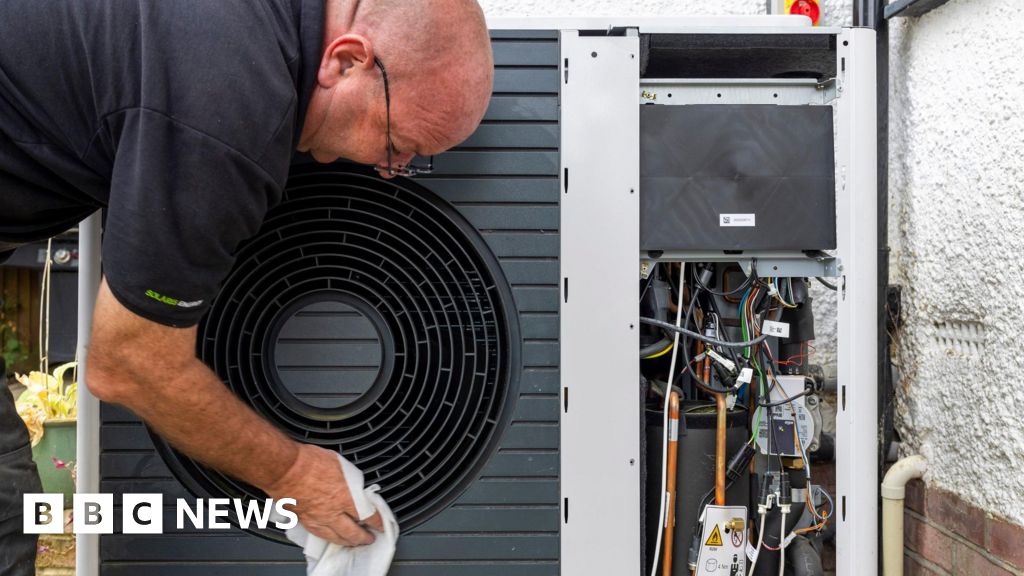
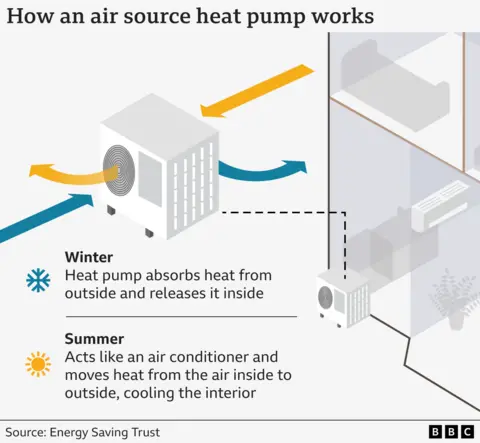
Heat pumps run on electricity instead of gas, and are more efficient than traditional boilers. They warm buildings by absorbing and amplifying heat from the air, ground, or water.

Air source heat pumps - the most common type - suck in outdoor air and pass it over tubes containing refrigerant fluids. The heat from the outdoor air causes the refrigerants to evaporate into a gas. Compressing the gas increases the temperature, and this heat is passed round the home.

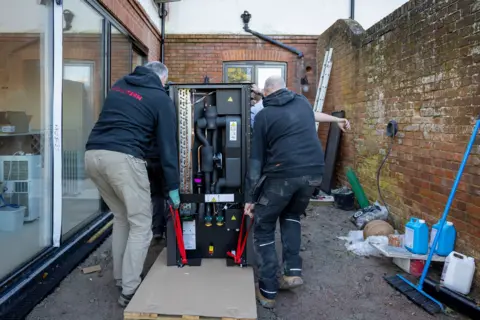
The system consists of a box measuring about 1m x 1m x 0.4m (3ft x 3ft x 1.3ft) which stands outside the property, as well as a heat pump unit and hot water cylinder inside the property.

The indoor unit is about the size of a gas boiler, while the size of the cylinder depends on the property.

Ground source heat pumps are more efficient than air-source models.

However, they are typically more expensive and less commonly used, as they require either a deep bore hole or a large horizontal system dug into the ground.

The Boiler Upgrade Scheme provides a grant of £7,500 towards the cost of an air source or ground source heat pump for homeowners in England and Wales. The scheme has been extended to 2029/30.

Households typically spend an additional £5,000 on top of the grant, which the UK's spending watchdog warned is too high for many.

The grant can be used for existing homes and non-domestic buildings. The property must have an eligible Energy Performance Certificate (EPC) - a measure of how your property is performing - issued in the last 10 years.

Properties no longer need to have existing loft or cavity wall insulation to qualify for the grant, which can save around £2,500 in upfront costs.

The Home Builders Federation estimates that implementing the new planning rules for properties in England will add around £10,000 to the overall cost.

For low-income households and those in social housing, the government is providing an extra £5bn for the Social Housing Fund and the Warm Homes Local Grant.

The Warm Homes Local Grant funds insulation, solar panels and air source heat pumps for some private owners or renters via local authorities in England. Properties must have an EPC rating of between D and G.

Scotland and Northern Ireland have separate schemes to help make homes more efficient.

While the upfront costs remain substantial, heat pumps could become cheaper to run than gas boilers, according to the Climate Change Committee (CCC), which advises the UK government on cutting emissions.

Savings depend on energy prices and how efficiently the heat pump works.

Electric heat pumps use much less energy than gas boilers, but electricity typically costs more than gas.

At the moment the cost of electricity is primarily driven by gas prices in the UK and around the world, but the government expects this to change as renewable energy continues to expand.

Households which also install solar panels can potentially save more by generating their own energy rather than rely on the grid.

The innovation charity Nesta estimates that the average home with a heat pump and solar panels could cut its annual energy bill by nearly £1,000.

Previously, homeowners needed planning permission to install a heat pump within 1m (3ft) of a neighbour's property, because of concerns over noise.

The rule was dropped to encourage uptake.

Newer devices are also quieter, and must be below 42db, which is similar to the level of noise produced by a fridge.

Rules specifying the size and number of heat pumps which households can install have also been relaxed.

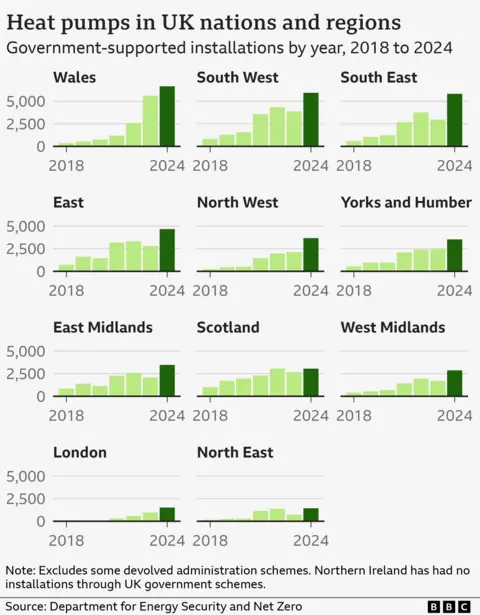
Fewer heat pumps are installed in the UK than gas boilers.

Installation rates are also lower than in other major European countries, like France, Germany and Italy.

But sales are increasing. Nearly 125,000 heat pumps were sold in 2025, more than double the number in 2023, according to the Heat Pump Association.

However, the CCC says this number needs to rise to nearly 450,000 a year by 2030 and 1.5 million by 2035 to help meet climate targets.

It says around half of UK homes need to have heat pumps by 2040.

Significantly more trained heat pump installers are needed to achieve this.

Sign up for our Future Earth newsletter to keep up with the latest climate and environment stories with the BBC's Justin Rowlatt. Outside the UK? Sign up to our international newsletter here.

Solar panels that can be plugged in at home could be available to buy in supermarkets in the coming months.

The Earth's climate is further out of balance than at any time in recorded history, the UN's weather agency says.

The government wants Britons to embrace heat pumps. But will they ever make financial sense for the average user?

Guildford Borough Council plans to reach net zero carbon emissions by 2030.

A heatwave brought record high temperatures to parts of the American southwest.