yahoo Press
Scientists discover mirror of our solar system in 2 exoplanets forming around a star
Images
1 / 11
2 / 11

3 / 11

4 / 11

5 / 11

6 / 11
7 / 11
8 / 11

9 / 11

10 / 11

11 / 11
When you buy through links on our articles, Future and its syndication partners may earn a commission.

Astronomers have observed two planets forming around a distant infant star, thus discovering a planetary system that offers us a look at the appearance of the solar system over 4 billion years ago.

The infant star in question is named WISPIT 2, and it's located around 437 light-years away with an estimated age of around 5.4 million years old. If that makes this star sound anything but an infant, consider that our middle-aged star, the sun, is 4.6 billion years old.

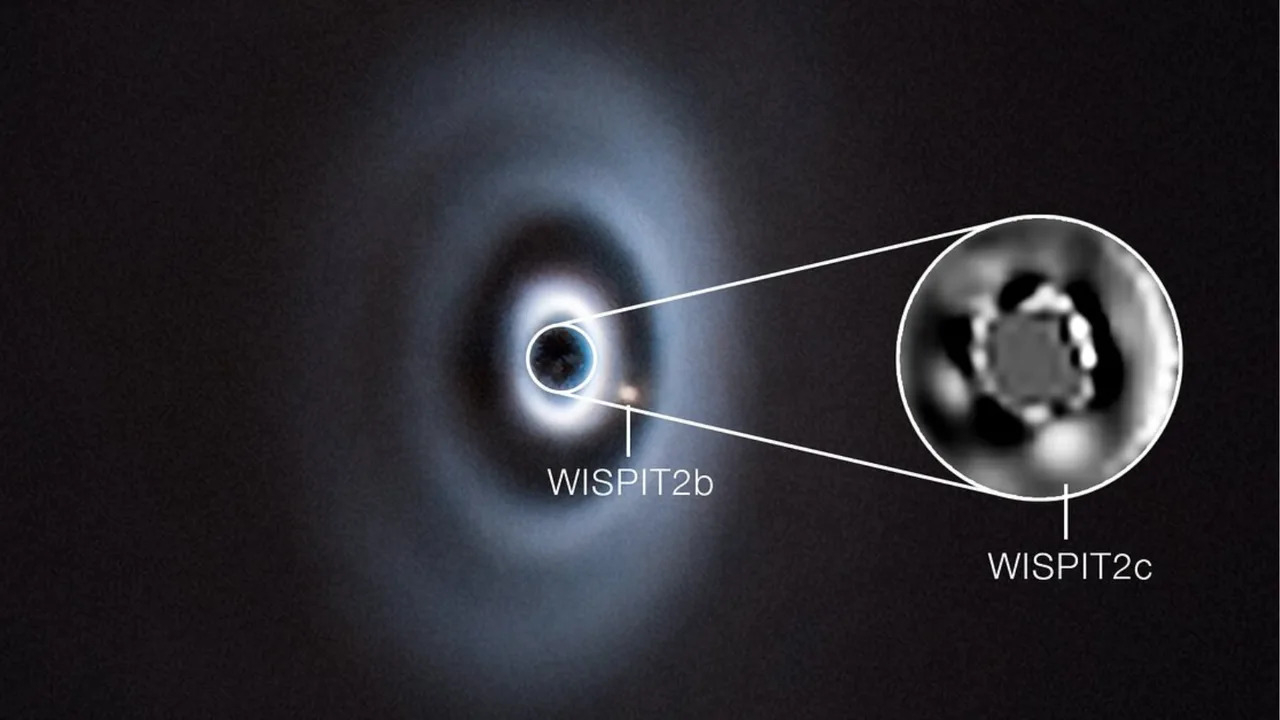
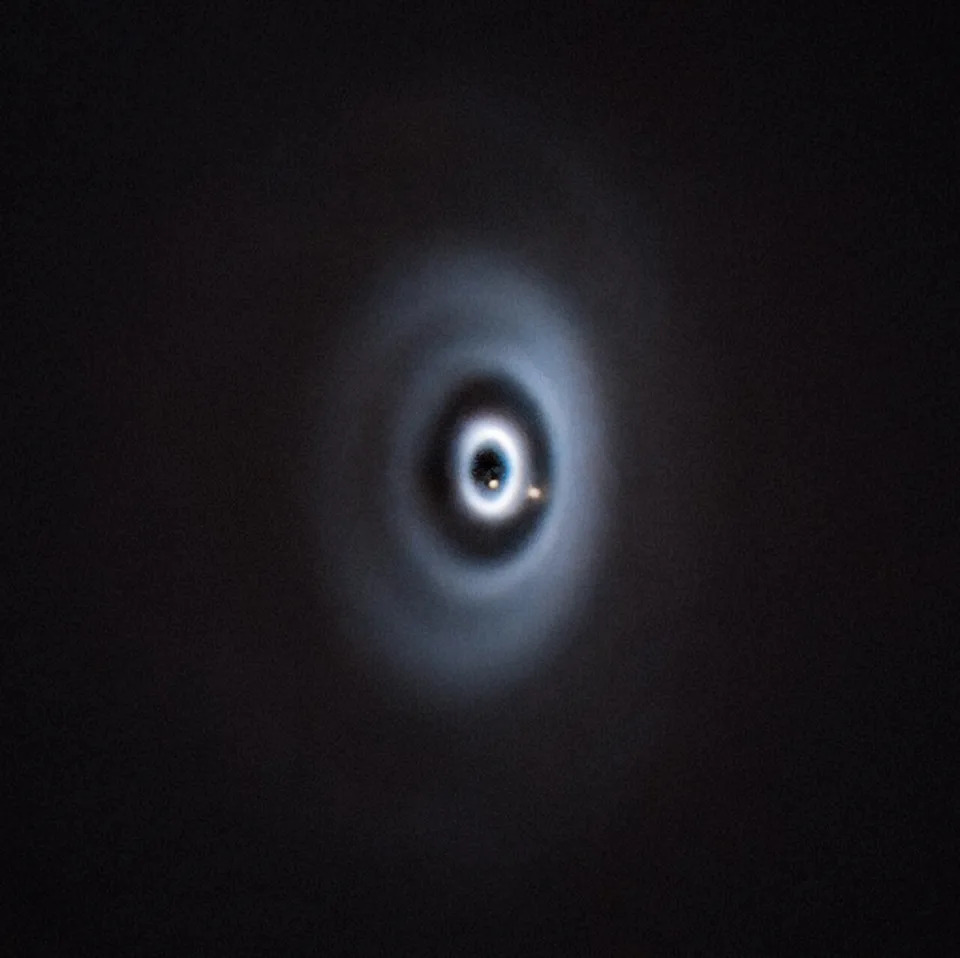
WISPIT 2 is surrounded by a donut-shaped cloud of gas and dust called a protoplanetary disk in which scientists have now detected two planets, designated WISPIT 2b and WISPIT 2c. And excitingly, there are structural hints with WISPIT 2's protoplanetary disk of more forming protoplanets. "WISPIT 2 is the best look into our own past that we have to date," discovery team leader Chloe Lawlor of the University of Galway, Ireland, said in a statement. "These structures suggest that more planets are currently forming, which we will eventually detect."

WISPIT 2 is only the second system in which astronomers have successfully detected two forming planets. The other system, PDS 70, lacks the extended disk and the distinct gaps and bands seen around WISPIT 2. That means that this system offers an unparalleled look at how planetary systems like our own solar system are formed.

"WISPIT 2 gives us a critical laboratory not just to observe the formation of a single planet but an entire planetary system," team member Christian Ginski of the University of Galway said in the statement.

WISPIT 2b was the first infant planet discovered around this infant star, detected last year and determined to have a mass around five times that of Jupiter and orbiting its parent star at a distance equivalent to 60 times the distance between Earth and the sun.

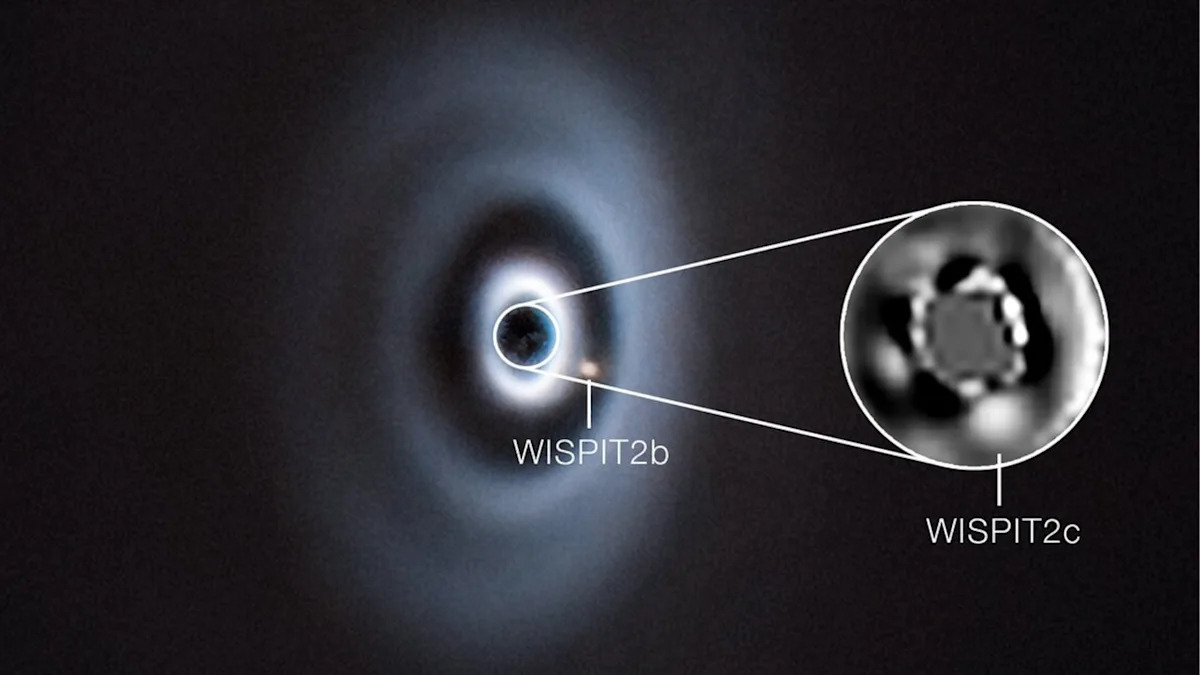
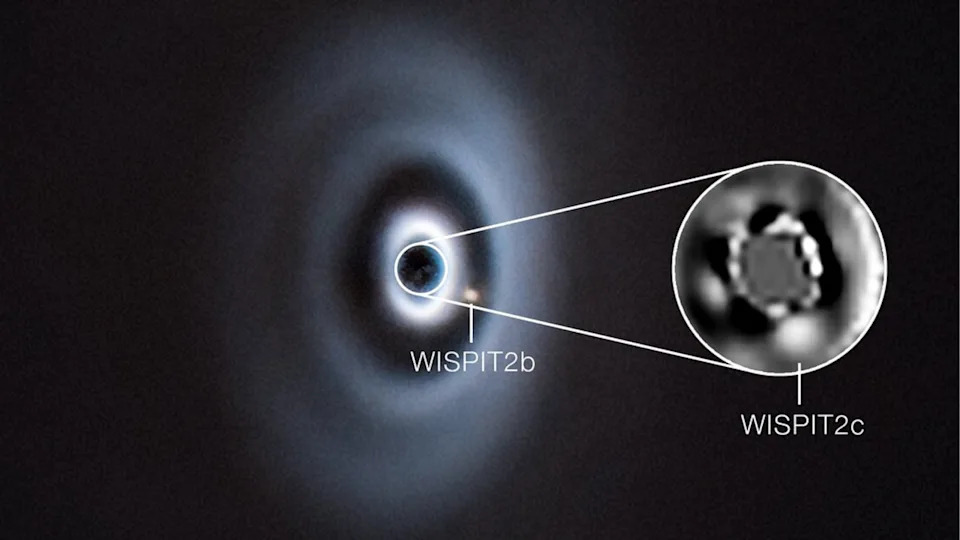
Following this discovery, astronomers found hints of an additional object closer to WISPIT 2, confirming this to be a planet using the Very Large Telescope (VLT) and the VLT Interferometer (VLTI). The newly found planet, WISPIT 2c, orbits its parent star at around 15 times the distance between Earth and the sun, meaning it's about four times closer to its star than WISPIT 2b is.

The researchers then captured an image of this forming planet using the VLT's Spectro-Polarimetric High-Contrast Exoplanet Research (SPHERE) instrument, further confirming it is a planet with another VLT instrument, GRAVITY+.

"Critically, our study made use of the recent upgrade to GRAVITY+ without which we would not have been able to get such a clear detection of the planet so close to its star," team member Guillaume Bourdarot of the Max Planck Institute for Extraterrestrial Physics in Germany said in the statement.

Both WISPIT 2b and WISPIT 2c are carving grooves in the protoplanetary disk around their parent star. This is happening because, as they orbit the star, their gravitational influences collect material from the disk to facilitate their growth.

At least one more planet is indicated in the system by a less-pronounced gap —further out from the system's central star than WISPIT 2b sits. The team hopes this third planet will be visible with the Extremely Large Telescope (ELT), currently under construction in the Atacama Desert region of northern Chile.

"We suspect there may be a third planet carving out this gap, potentially of Saturn's mass, owing to the gap's being much narrower and shallower," Lawlor said.

The team's research was published on Tuesday (March 24) in The Astrophysical Journal Letters.