yahoo Press
After Thousands of Applications With Two Master's Degrees, an American Says She Can't Get Hired at Trader Joe's — Her Video Is Going Viral
Images
1 / 5
2 / 5

3 / 5

4 / 5
5 / 5
She made it through the interviews. She spoke with real people, answered real questions, completed the exercises they asked for. When the offer letter arrived, she signed it. After more than two years of searching, after roughly 4,000 applications, it had finally worked.

Then the company stopped responding. No onboarding email. No start date. Nothing. When she followed up, they asked her to mail a check for equipment. She realized the interviews, the exercises, all of it — had been a way to harvest her work for free. A warning later appeared on the company's own LinkedIn page.

That was the second of three job offers Melissa has received since late 2022. It was not the worst one.

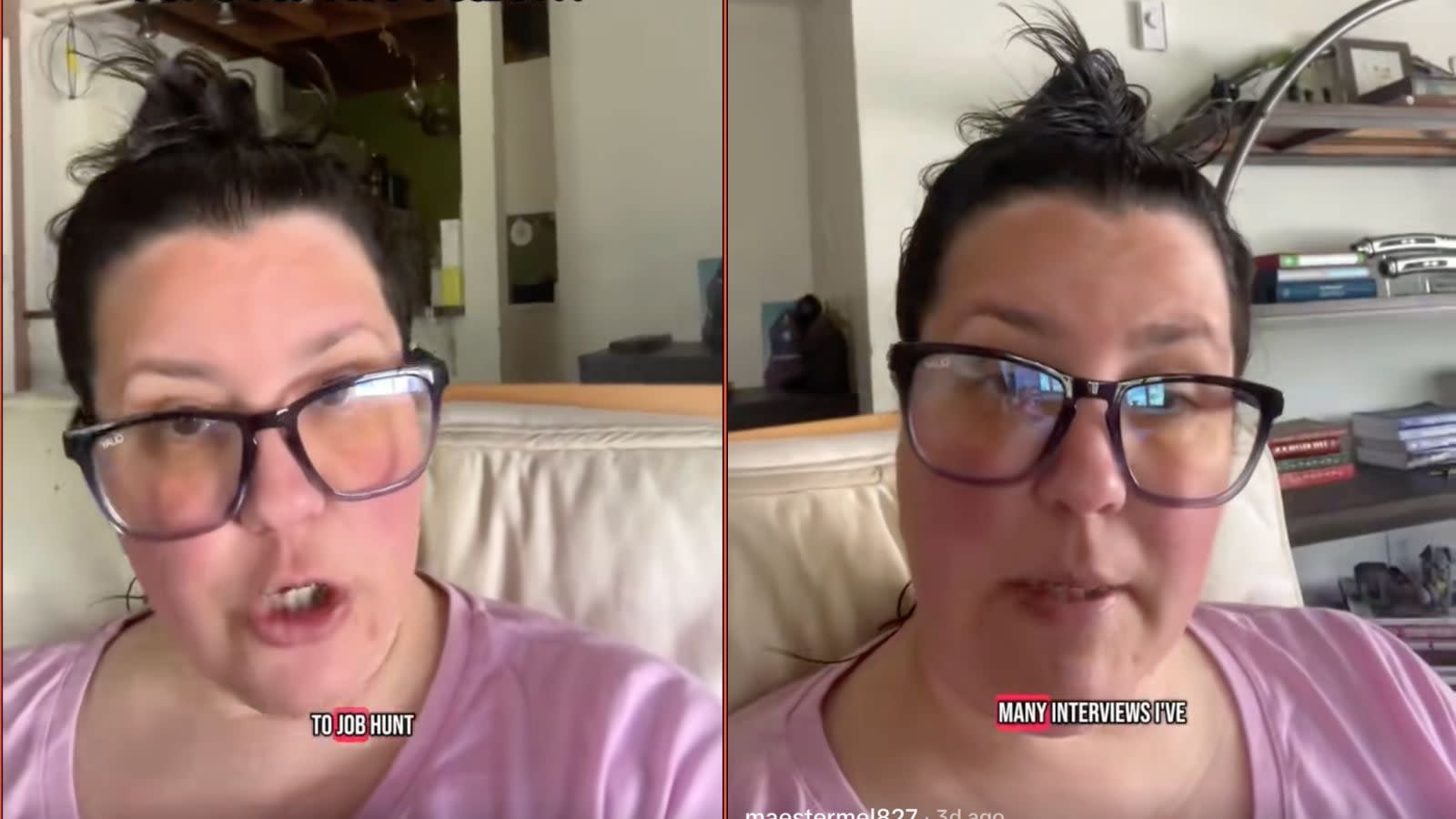
Melissa, who posts on TikTok as @maestermel82, put all of this into a nearly five-minute video that has since drawn over 251,000 likes and 9,500 comments. Her voice is steady through most of it. She is not performing outrage. She is doing math out loud for people who keep telling her the numbers must not be right.

The first offer was a teaching position located so far from her home that commuting would have cost more than the salary. The third was a recruiter role. She was ghosted. She found out she had been passed over when the hiring manager posted on LinkedIn congratulating the new hire — a college student whose only prior experience was a single internship.

Melissa has two master's degrees. She is a PhD candidate. She has more than 18 years of sales management experience in tech, in SaaS, in cloud-based software. She has eight different resumes, all keyword-optimized. Every cover letter customized. She has done everything the job-searching playbook tells a person to do, and then she did it again.

Melissa has not had internet at home since January 2023. She cannot afford it. To search for work, she borrows hotspots from the public library or pays to sit in a cafe — spending money she does not have to look for money that never comes. She has missed three on-site interviews over the past two-plus years because she could not afford to get to them. At one point, she took a gig answering phones at an acupuncture clinic — not 15 hours a week, but 15 hours a month.

She is also fighting an eviction that has been ongoing since November. She does not have an attorney. When people ask why she doesn't just move, she offers the math again: if she cannot afford rent, she cannot afford to relocate.

But the expense she keeps returning to in the video is not financial. It is the weight of being disbelieved. She describes it as dehumanizing — the unsolicited advice from people who have never experienced long-term unemployment, the assumption that the problem must be her, the quiet erosion of being gaslit by the people closest to you. Not out of cruelty, she says, but because they simply do not understand what this is.

She tells her audience directly: you are not crazy. People who have not been through it will insult you. They will disrespect you. Even people who love you. Because they do not get it.

The February 2026 jobs report showed the U.S. economy lost 92,000 jobs. Unemployment rose to 4.4 percent. One in four unemployed Americans have been searching for more than six months. The average duration of unemployment has reached 25.7 weeks, the longest since December 2021.

Economists have called this market frozen — not collapsing, but locked in place. People who lose work are not finding it again. Melissa's video is not an outlier. It is a data point with a face.

Melissa did not end her video with a solution. She did not point to resources or offer hope dressed up as a silver lining. She said it is that bad. She said the people telling you otherwise have not lived it.

Her TikTok caption, updated since the original was filmed, says job searching has only gotten harder. She did not elaborate. She did not need to.