Press
The mole hanging photos dividing social media
Images
1 / 12

2 / 12
3 / 12
4 / 12
5 / 12
6 / 12
7 / 12

8 / 12
9 / 12
10 / 12

11 / 12
12 / 12
Warning - this story contains images some readers may find distressing

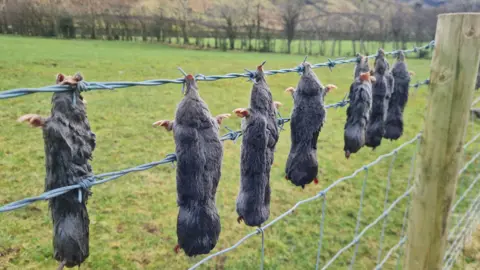
For decades, mole catchers in the countryside have hung their carcasses on fences to be counted for payment and as evidence of their trapping prowess. But when hill walker Simon Lucas shared a photograph of the tradition on social media, he was unprepared for the ferocity of the response.

"It seemed to really strike a nerve," he says.

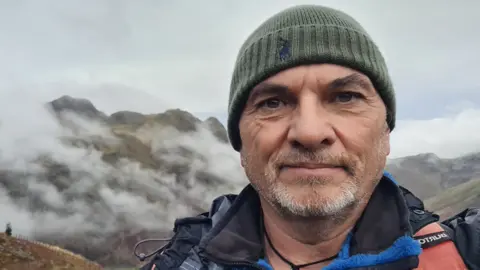
Lucas, 61, a musician from Bristol, travels to the Lake District in Cumbria for one week every month and regularly posts pictures of his wanderings.

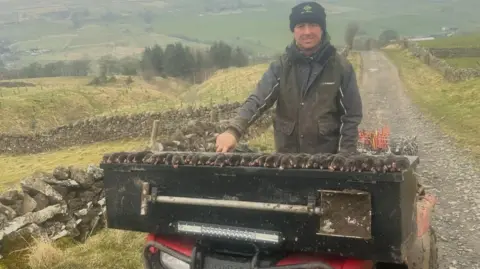
In February, he was returning from a hike on the road which connects Borrowdale to Seathwaite Farm when something caught his eye: a row of moles had been hung by their pink snouts from a barbed wire fence, their outsized front paws groping lifelessly in the air.

"I did think it was a bit grisly but I was mostly intrigued," he says.

He put his photograph on a social media group devoted to the Lake District asking for an explanation as to why the moles were there.

The comments began immediately, "hundreds and hundreds" of them with deeply entrenched polarised views.

"There were people from the cities who said it was horrible and those in the countryside who were basically saying it's country life if you don't like it, don't come," Lucas says.

"Normally my posts get just a few likes or comments, I've never experienced anything like it."

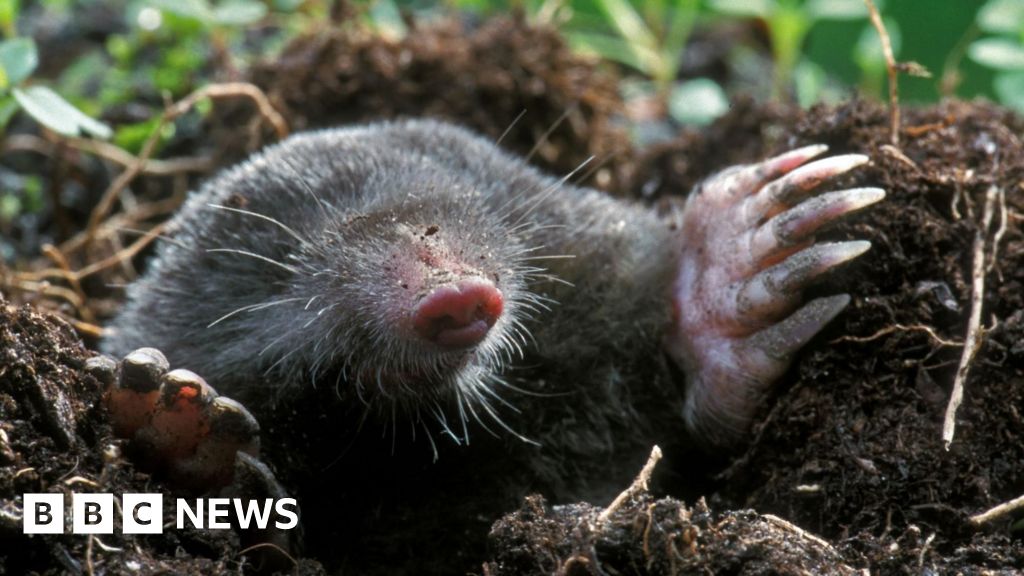
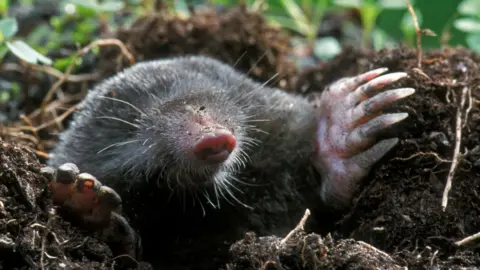
Moles are native to the UK and widespread, with an estimated population of more than 40 million.

They are widely seen as a pest on agricultural land because their tunnelling can damage the root systems of crops and pasture and the molehills can cause damage to machinery.

Richard Hodgson, who farms at Howick in Northumberland, says soil from the mole hills can also get picked up and incorporated into the bales of hay or silage, which "ruins the quality".

"It's surprising how much soil gets in which makes the feed unpalatable," he says.

It is not illegal to kill a mole which is considered a pest by the government, but they are protected under the Animal Welfare Act 2006 and only certain methods such as traps or gas are allowed.

Mikey Fullerton, from Consett in County Durham, followed his father into the mole-catching business.

Like his father before him, he strings the moles up although he said he might not do it on public footpaths.

"You need to be able to show the farmer what you've caught on his land," he says.

"It's also good because if you're looking for work in the area, if you've got moles hanging on one fence, another farmer might see them and say 'Who have you got doing your moles?'

"That way you might end up doing 10 farms in the area."

Fullerton accepts some people "don't agree with it" even though it has been going on "for decades and decades" and in some places he will put the moles in a bucket to show the farmer.

"They do need controlling though, they do serious damage," he says.

Karen Barwick from Carlisle is among those who dislikes the sight of these sturdy little creatures impaled on fences.

She snapped a row of them in February on farmland near Bowbank in County Durham and said it made her "a little sad and confused".

"I learnt later from my mum whoever caught them hung them up to be paid but I was surprised to see it was still happening.

"To be honest I felt a little sorry for the moles."

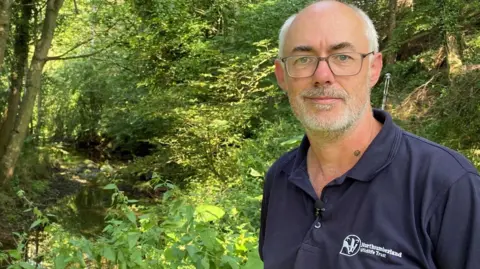
Duncan Hutt from Northumberland Wildlife Trust calls moles "fantastic creatures".

"They do an amazing job for nature, they eat grubs in the soil, they turn over the soil, they help soils drain and hold water".

He believes too much mole control is done for "aesthetic reasons" but accepts they can be a problem on agricultural land.

Like Karen Barwick though, he questions the need to string them up calling it "archaic".

"Surely these days there are better ways of counting moles," he says.

Simon Lucas is still paying regular visits to his beloved Lake District and says he respects "the historical nature" of the practice.

"I think a lot of country folk just want to be left alone to breed their sheep and hang their moles and resent people who come to the countryside with different views," he says.

"Maybe we should just leave people to carry on living the way they have for generations."

Follow BBC North East on X and Facebook and BBC Cumbria on X and Facebook and both on Nextdoor and Instagram.

Test your memory of the stories making the headlines across the North East and Cumbria this week.

Residents say it will be a "very sore blow" if the closure at Shotley Bridge goes beyond April.

Durham County Council says initiatives are already making a difference.

There is not enough staff to run the service safely overnight, a hospital spokesperson says.

Campaigner Dr Helen Groom says the figures prove many women are being held unnecessarily.