yahoo Press
Tax refunds up, but falling short of Trump’s $1,000 promise
Images
1 / 5
2 / 5

3 / 5

4 / 5
5 / 5
(Bloomberg) — Americans’ tax refunds are averaging about $350 higher than this time last year but so far running well below the extra $1,000 President Donald Trump promised after passage of his signature economic legislation.

Refunds averaged $3,623 through March 13, 11% higher than the same point last year, according to data the IRS released Friday. Nearly half of anticipated returns already have been filed.

Most Read from Bloomberg

China Pulls Silver From Global Markets to Meet Surging Demand

Trump Says US Considers ‘Winding Down’ Iran Military Effort

BTS, the Most Popular Boy Band Ever, Returns to a Changed Industry

Target Plans to Tighten Dress Code Rules for Store Employees

DOJ, White House Clear Way for Pirro to Keep Powell Probe

Average refunds typically decline as the tax season progresses since people who anticipate large refunds generally apply for them sooner while those who have to pay the government tend to wait. Still, the size of refunds also could move up in the coming weeks, particularly because taxpayers may not yet change ingrained filing habits to account for new breaks.

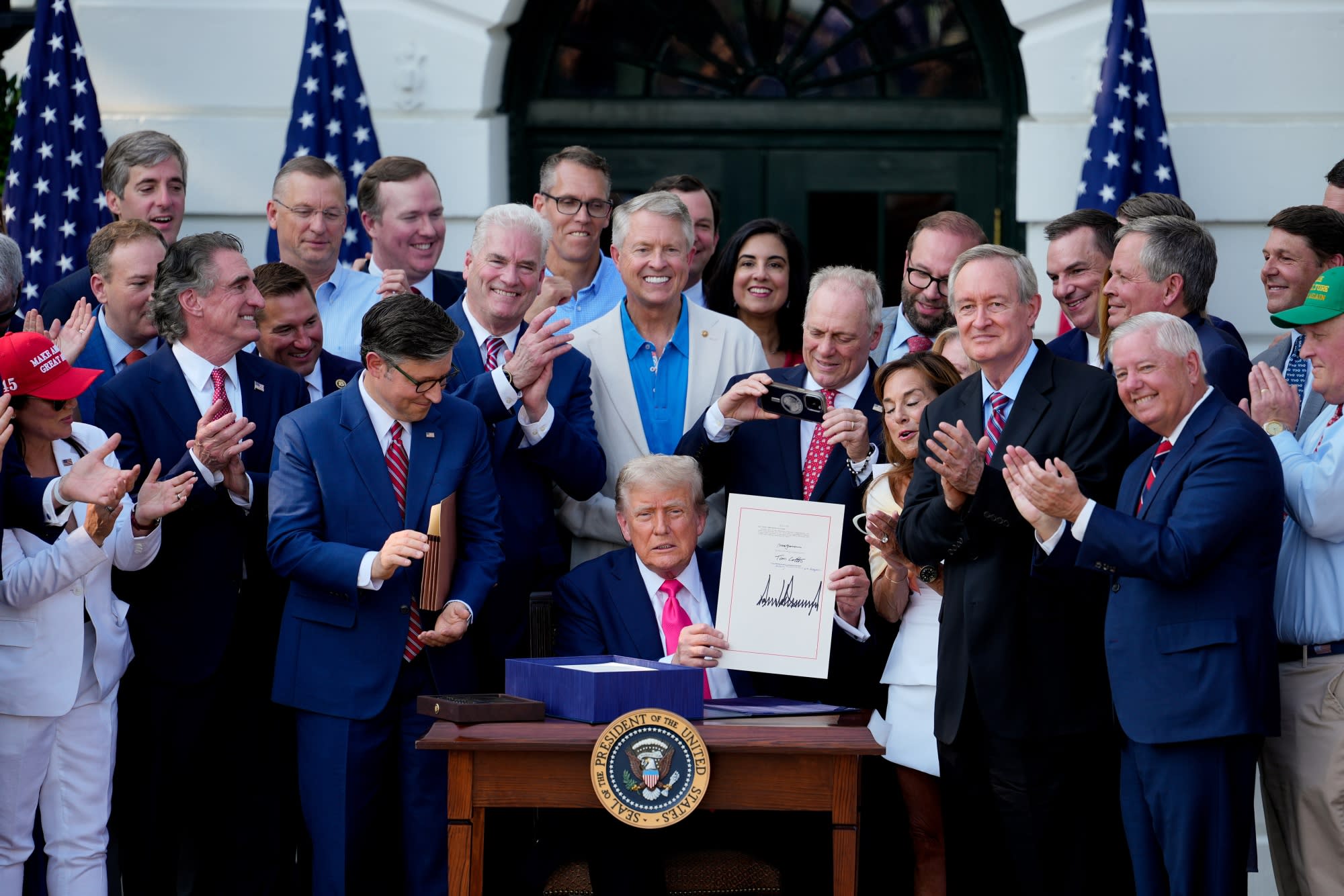
Republicans have pinned their economic pitch to voters on boosted tax refunds following passage of last year’s sweeping tax law, as they try to beat the odds to maintain full control of Congress in November’s midterm elections. The tax law included new deductions for tips, overtime, older Americans and car loan interest, and a higher maximum state and local tax deduction.

Those tax cuts have taken on increased significance for the GOP as voters face other economic headwinds, including rising oil prices. The White House forecast Trump’s tax law would increase average refunds by “$1,000 or more this year,” a claim that has been repeated by the president, as well as Treasury Secretary Scott Bessent and White House Press Secretary Karoline Leavitt.

“Think of that: $1,000 compared to last year, $1,000 just in what you’re going to save with some of the tax cuts,” Trump told an audience in Clive, Iowa, in January. “ It’s amazing.”

Average tax refunds this year have slowly declined since they reached a high-water mark of $3,804 in mid-February, according to weekly IRS reports, following the typical tax season trajectory.

Kyle Pomerleau, a senior fellow at the right-leaning American Enterprise Institute, said it’s plausible that average refunds could climb as April 15 approaches in defiance of past trends, but reaching the level promised by the Trump administration would be a long shot.

“I think a $1,000 average is a little too optimistic,” Pomerleau said, adding that more moderate estimates of a $500 to $750 increase average refunds over last year seem more likely.

Lower-income households, which are more dependent on tax relief, tend to file early. But the Trump administration’s tax breaks target middle- and higher-income households, which tend to file later, he said.

“That’s where the big change is, and that’s gonna be higher-income taxpayers,” he said.

Andrew Lautz, director of tax policy for the Bipartisan Policy Center, said the change in average refund could move in either direction. A large portion of returns already filed have claimed at least one of Trump’s new refunds, he added.

At the midpoint of filing season, 45% of returns had claimed at least one of Trump’s new tax cuts, including 3.5 million deducting tips, 15.5 million deducting overtime, 690,000 deducting car loan interest and 9.2 million claiming the bonus senior deduction, according to the Treasury Department. The IRS has received roughly 70 million returns so far, compared to the 146 million the agency received by the end last filing season and 166 million near the end of last year.

The number of returns filed as of March 13 was less than 1% behind the same point last year, according to the IRS.

“So far, a lot of the macro-metrics of this filing season suggests that things are normal, even though we know there’s all this new stuff,” Lautz said. “People are filing at regular intervals. Refunds are larger, as we expected. But there’s still a lot of uncertainty about where this goes in the final four weeks.”

Corey Husak, director of tax policy for the progressive Center for American Progress, said falling short of the promised $1,000 increase to average tax refunds could pose a political risk to Republicans, as they fight to hold onto control of the House and Senate.

“It certainly feeds into this narrative of the ‘Big, Beautiful Bill’ not being for normal Americans,” Husak said. “Over-promising on refunds and failing to deliver is just going to drive that message home.”

Most Read from Bloomberg Businessweek

American Retirees Want to Leave the Country. Italy and Costa Rica Are Happy to Have Them

We Kinda Messed Up Our Retirement

Beware the Retirement Red Zone That Can Derail Your Savings Plan

Peter Attia’s Longevity Empire Rocked by Epstein Files

Architect Bjarke Ingels Says Modern Buildings Are So Boring

©2026 Bloomberg L.P.