yahoo Press
Ras Laffan Attack Shatters Illusion of Global Gas Abundance
Images
1 / 4
2 / 4

3 / 4

4 / 4
The dominant narrative over the last two years in global gas markets has been one of impending abundance; everyone was warning of an upcoming LNG tsunami. Market analysts kept pointing to a wave of new LNG supply, mainly driven by expansions in Qatar, the United States, Canada, and parts of Africa. The world was clearly in their mind heading toward a glut by the late 2020s. Commodity markets and analysts, backed up by algorithms and Excel sheets, all predicted that prices would fall, flexibility would increase, and energy security concerns would ease. No one even looked at geopolitics, geo-economics, geography, or the clear war signs on the horizon.

The glut narrative has now been fundamentally broken.

With one single attack on Qatar’s Ras Laffan complex, more than just a supply disruption has occurred. This attack has exposed a structural fragility in the global LNG system that had long been underestimated, shifting the narrative from a supply glut to potential shortages and volatility in the market.

First of all, Ras Laffan is not a marginal facility, but the operational heart of Qatar’s LNG sector. Without question, the complex is one of the most critical nodes in the global energy system. The Gulf Arab state accounts for roughly 20% of global LNG exports, almost all of which are concentrated in and around Ras Laffan. The reported damage, as acknowledged by Qataris, is around 12–13 million tons per annum, or roughly 17% of Qatari capacity. The damage is no longer a local disruption; it hits directly with tsunami force at the backbone of global LNG supply.

If the reported damage needs to be restored, initial estimates suggest that restoring this capacity could take three to five years. The latter is based on the assumption that nothing else happens in the market and that Qatar will be able to access its technology supplies straight away. At the same time, the market is slowly, surprisingly slowly, realizing that the real impact goes beyond the repair timeline. The Ras Laffan attack has introduced the market’s worst nightmare, which is a new category of risk: the possibility that large-scale LNG infrastructure is no longer immune from geopolitical conflict. This new reality will dramatically change how future supply is assessed, financed, and delivered.

Related: The Three Companies Rebuilding America’s Rare-Earth Arsenal

If you had even indicated an attack on an LNG plant or complex in the last few months, you would have been thrown out of the office. Until this week, the sector’s total risk assessments were based on an LNG glut, entirely contingent on the smooth expansion of global capacity. That expansion, and maybe others in the coming days or weeks, is now in question. Qatar’s North Field expansion, which in all conventional scenarios was expected to deliver tens of millions of tons of additional capacity by the end of the decade, is now going to not only face delays or increased costs as security concerns, insurance premiums and financing conditions tighten, but also an increased scrutiny on the feasibility and risk picture in light of security of supply. Other projects, particularly in regions with higher geopolitical risk, will for sure be reassessed, such as the UAE, Oman, Egypt, Cyprus, and, of course, the future of Iran’s LNG.

Markets, financial institutions, and traders are also realizing that the assumption that lost Qatari volumes can be easily replaced is unrealistic. Whatever Washington or the Trump Brigades will put out to the media, the US, while now the largest LNG exporter, is not going to fill the gap, as it is already operating near full capacity. Due to the war in Iran, maritime constraints, and higher energy prices, new projects in the USA will face cost inflation, labor shortages, and regulatory challenges. The other option, Canadian LNG projects, will for sure try to jump into the gap, but these volumes are already committed to Asian buyers. African projects could be part of the solution, but, as history has shown, they remain exposed to security and execution risks.

For Europe, all eyes are on Norway, as it is the continent’s largest pipeline supplier. However, spare production capacity is very limited, and Russian gas remains not only politically constrained but also structurally unreliable, facing increased kinetic threats as well. In other words, the global gas system has far less flexibility than the glut narrative assumed.

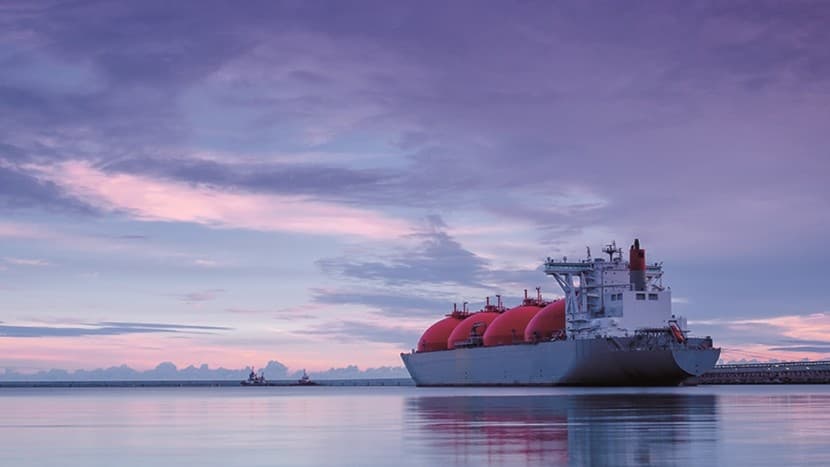
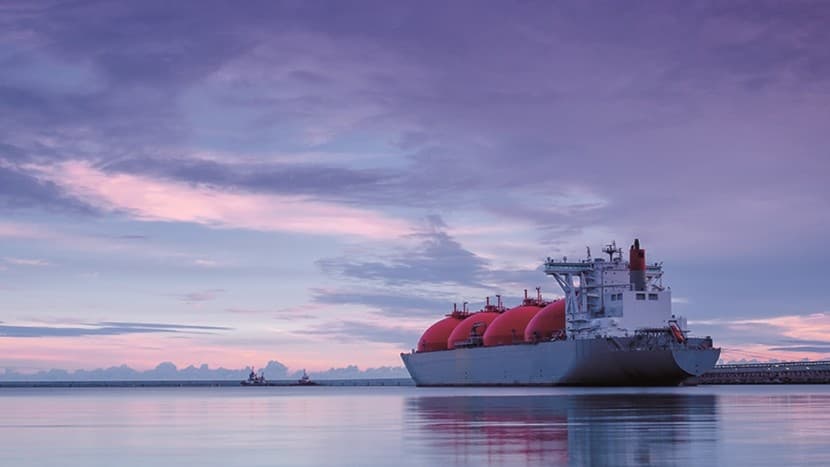
To make the picture even darker, or the situation even more dire, growing constraints in global LNG shipping further amplify Ras Laffan’s impact. As long as the Strait of Hormuz remains blocked due to heightened security risks, the market is expecting higher insurance costs, vessel rerouting, and longer transit times. In the short to mid-term, maritime factors have and will continue to reduce available supply by delaying cargo deliveries.

This comes at a time when the global LNG carrier fleet, even though it has expanded in recent years, is constrained. Many vessels are tied to long-term contracts, which directly limit their availability for spot market adjustments. The market is further tightening due to increased congestion and delays, while also facing increased demurrage costs.

It seems there is a real need for most energy sectors, policymakers, and traders or investors to start to understand that logistics has become as important as production. When cargo is delayed by weeks, it will not only be late, but the vessel will effectively be absent from the market. This is critical if the same vessel(s) are needed most. The compound effect we are seeing at present and in the future will shape a situation where even stable production levels will translate directly into reduced effective supply.

While most attention has been focused on Asia, especially China, Japan, India, and Pakistan, on the other side of the globe is Europe. This continent currently sits at the center of this emerging imbalance. Since the Russian invasion of Ukraine, Europe has increasingly depended on LNG. Europe has increased its overall diversification but has forgotten that this has also increased its exposure to global market volatility.

For Brussels and all other European capitals, Iran-Hormuz-Ras Laffan could not have come at a worse time. The continent is already facing very low storage levels, exposing it to high risk due to limited buffer capacity. At the same time, it is clear that competition from Asia will not only intensify but also spark a bidding war asap. With Qatari supply disrupted, Asian buyers, especially those without LNG and gas storage availability, will start to outbid Europe for available cargoes. The result is a structural shift in pricing dynamics.

Don’t think that Europe will be able to secure LNG, but the costs of this operation will be staggering. Higher prices feed directly into inflation, industrial competitiveness, and economic growth. Since Ukraine, and maybe even since the start of implementing its energy transition strategy, the continent has effectively imported volatility along with its energy supply.

At present, the LNG market is no longer governed solely by economics but by geopolitics, security risks, and logistical constraints. There is a dramatic but very clear shift from a system based on efficiency and flexibility to one defined by resilience and scarcity.

There are significant consequences for investors and policymakers, as the total situation has changed, maybe forever. Projects in politically stable regions with secure shipping routes will become increasingly attractive, while others, especially in higher-risk areas, will face increased scrutiny. In the coming years (3-5), it is expected that financing costs will increase, as they will need to reflect higher perceived risk. At the same time, which will be the case globally, so not only in the Middle East or Africa, but infrastructure design will also evolve, as there will be greater emphasis on redundancy, security, and diversification.

Long-term contracts are expected to regain importance, as this is the normal reflex for financials, commodity traders, or utilities, all of which will seek to secure a reliable supply in an uncertain environment. The emotions already show that the flexibility of spot markets, once seen as a strength, could become a liability during periods of tightness. Keep in mind that long-term contracts seem safer, but developments in Qatar (Iran-Hormuz-Ras Laffan) and Russia have also shown that long-term contracts don’t mean anything if geography and hard-core power are in play.

It seems clear that global gas markets will remain under pressure for several years. In the short term, all focus will be on managing and mitigating the immediate impact of the Ras Laffan disruption. Without a doubt, gas prices will remain elevated and highly volatile. As with the weather, there will be more frequent spikes driven by supply disruptions, demand surges, or outright fear and emotion.

It is to be expected that, in the medium term, the key question will be whether new capacity can come online quickly enough to offset lost volumes. The latter also needs to be able to counter and meet growing global demand. While nobody wants to address this, an increased number of delays in major projects, particularly in Qatar, is to be expected due to maritime, manufacturing, and financial issues. This will extend the period of tightness.

By the end of the decade, there is the option of a new market equilibrium. For the optimists, it will not resemble the previously anticipated surplus scenario. Higher prices, greater volatility, and increased geopolitical risk will characterize the system in the future if no other geopolitical crises emerge in the Middle East or elsewhere.

No timeline for a full recovery can be given right now. While experts think that damaged capacity at Ras Laffan could be restored within three to five years, another major factor will take longer: confidence. Rebuilding confidence in the global LNG system is not expected before the early 2030s.

The attack on Ras Laffan is and should be recognized as a turning point in global energy markets. The system's vulnerabilities have been revealed, and it also showed a lack of resilience. With one bang, it has disrupted expectations of abundant supply, while introducing a new layer of risk.

The LNG glut is not coming, as there will be a period of structural tightness. Access to energy will become a top priority and a strategic concern. For Europe, all lights are at present red, as it will need to navigate a more volatile and expensive energy landscape. For the global LNG industry, it means prioritizing security and resilience over cost and scale alone.

The era of cheap and abundant gas is over. The shortage era has begun.

By Cyril Widdershoven for Oilprice.com

More Top Reads From Oilprice.com

Qatar to Lose $20 Billion Annual Revenue from Iranian Attacks on LNG

Oil Inches Higher as Iran Strikes Kuwait’s Mina Al-Ahmadi Refinery

Buyers Scramble for Seaborne Oil as Middle East War Continues

Oilprice Intelligence brings you the signals before they become front-page news. This is the same expert analysis read by veteran traders and political advisors. Get it free, twice a week, and you'll always know why the market is moving before everyone else.

You get the geopolitical intelligence, the hidden inventory data, and the market whispers that move billions - and we'll send you $389 in premium energy intelligence, on us, just for subscribing. Join 400,000+ readers today. Get access immediately by clicking here.