Press
Why Israel targets Beirut’s Dahiyeh and what the suburb means to Lebanon
Images
1 / 9
2 / 9
3 / 9
4 / 9

5 / 9

6 / 9

7 / 9

8 / 9

9 / 9
Dahiyeh’s story is not only about Hezbollah or Israel. It is about how the suburb came to embody Lebanon’s deepest inequalities.

Save

Share

For years, Beirut’s southern suburb has been spoken about as though it were a world apart: A Hezbollah bastion, a target, a warning, or a battlefield. But in Arabic, the word “dahiyeh” simply means “the suburb”.

The word itself is ordinary. What makes it extraordinary in Lebanon is its history.

When the Lebanese speak of Dahiyeh, they do not mean any suburb of their capital city. They mean southern Beirut in particular – a dense belt of neighbourhoods that grew from villages, fields, informal housing and municipal edges into a major extension of the city.

Dahiyeh – in size nearly as big as municipal Beirut – has been shaped by migration and displacement in the past 50 years. While many moved there in search of work or housing, most of the others were pushed there by wars, political unrest, evictions and a general sense of being neglected by the Lebanese state.

The social geography of Lebanon, which gained independence from French colonisers in 1943, began to be transformed in 1948 when Israel’s establishment saw the expulsion of more than 700,000 Palestinians from their land in what is commonly referred to as the Nakba. After Israel’s further occupation of Palestinian lands in 1967 and the expulsion of Palestinian fighters from Jordan in 1970, southern Lebanon and parts of Beirut became increasingly bound up with the Palestinian national movement.

Dahiyeh’s growth, however, accelerated after 1975, when the Lebanese civil war broke out. People displaced from other parts of Beirut moved south. The subsequent Israeli attacks and invasions in 1978 and 1982 drove more people to the edge of the capital. In that sense, Dahiyeh was not just a destination for “migrants”. It was also a refuge for the uprooted, the poor, and those repeatedly forced to start over.

Studies by scholars such as Mona Harb, professor of urban studies and politics at the American University of Beirut (AUB), show how a common noun – Dahiyeh – gradually evolved into a distinct political space: A stigmatised periphery marked in the Lebanese imagination as Beirut’s “belt of misery” that hardened into a territory with its own social and political significance. Today, it is part of Greater Beirut, woven into the capital geographically, economically and socially, even if the country’s politics may have treated the area as an outlier.

Harb’s work explicitly frames the southern suburb as a politically produced urban territory rather than just a space outside Beirut. To understand how that happened, one has to begin with the making of modern Lebanon.

Under the French Mandate, and later through the political order consolidated at independence in 1943, power in Lebanon was distributed through a sectarian system that heavily favoured the established elites, especially the Maronite Christians, who dominated the presidency and other key positions. The system not only created inequality, but also formalised and reproduced it.

Rural Lebanon, especially the south and the Bekaa Valley, remained underdeveloped and politically neglected for decades. Among those most affected were Lebanon’s Shia community, who were disproportionately concentrated in the poorer agricultural regions and had less access to state investments, infrastructure and patronage than the more privileged urban and mountainous centres. Scholars say it was not simply a temporary developmental gap, but a long history of marginalisation that defined the country’s politics.

Israeli attacks on Palestinian positions inside Lebanon repeatedly hit the surrounding Lebanese communities as well, mainly in the south. For the Shia in southern Lebanon, these attacks sharpened a bitter awareness: They were living on the front lines of a bitter regional conflict, while they were also being denied equal economic rights and meaningful political inclusion in Lebanon itself.

Out of that reality emerged a new form of Shia political mobilisation centred not only on identity, but also on deprivation, dignity and state neglect. That mobilisation found its earliest expression in Harakat al-Mahroumin, the Movement of the Deprived, founded by Imam Musa al-Sadr in the 1970s. Al-Sadr became a towering figure of modern Lebanese Shia politics because he gave social, religious and political forms to grievances building up for decades. That movement later grew an armed wing: Amal.

Al-Sadr’s mysterious disappearance during a 1978 trip to Libya remains unresolved and politically contested to this day. What is not contested is his historical importance. He helped turn the Shia of Lebanon from a neglected rural underclass into an organised political constituency demanding equal rights, representation, and a defining national presence.

The 1982 Israeli invasion of Lebanon changed the Shia political landscape yet again. Israel’s siege of Beirut, the departure of Palestinian icon Yasser Arafat and his Palestine Liberation Organization forces, and Syria’s desire to dominate Lebanon all intensified divisions within Lebanese society.

Amal, which meanwhile had grown closer to Damascus to get weapons, money and political backing, remained a major force. But new Islamist movements emerged from within and around it, shaped by the Israeli occupation, disillusionment with older leaderships, and increasing support from Iran’s Islamic Revolutionary Guard Corps, especially in the Bekaa region.

Over time, these currents crystallised into Hezbollah. The split within the Shia movement was less theological and more about political strategy, defined by questions over aligning more closely with Syria, solidarity with the Palestinians, and general resistance against the Israeli occupation. Differences between Amal and Hezbollah over these questions turned violent in the 1980s, an intra-Shia fighting that Lebanese often recall as “a war among brothers”.

As Hezbollah grew stronger, Dahiyeh became much more than a residential belt. It turned into an urban heartland of a social and political force. Hezbollah built institutions there: Offices, schools, clinics, welfare networks and media infrastructure. Amal also had a presence, but the common shorthand that reduces Dahiyeh to a “Hezbollah stronghold” always conceals more than it reveals.

Today, Dahiyeh hosts a Shia majority, but also has a small minority of Palestinians and other Lebanese communities, including Christians. It bleeds physically into what is known as Greater Beirut, including its Christian and mixed areas. So when the suburb is bombed, it is not some isolated military island that is hit, but a deeply inhabited part of urban Beirut.

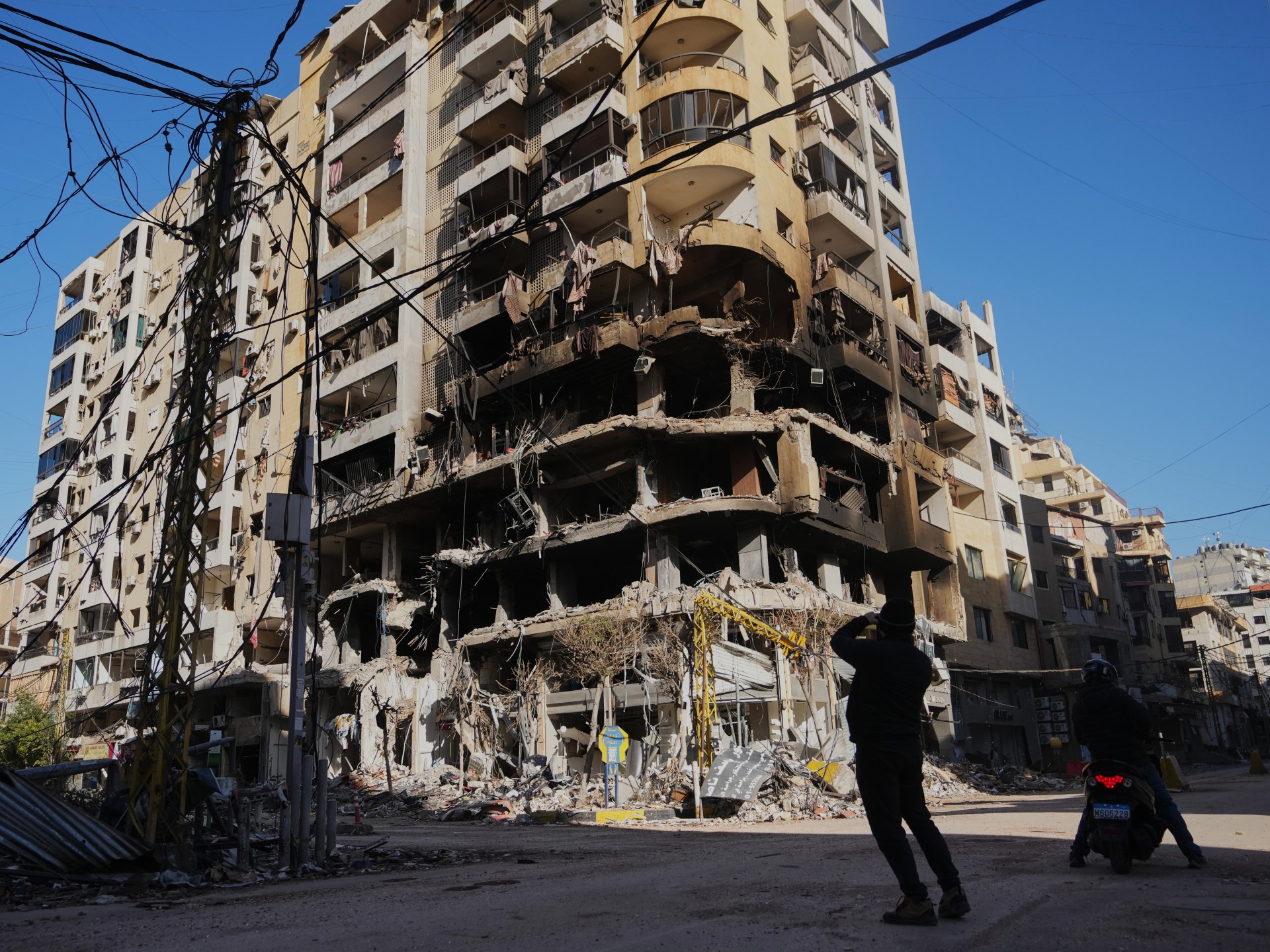
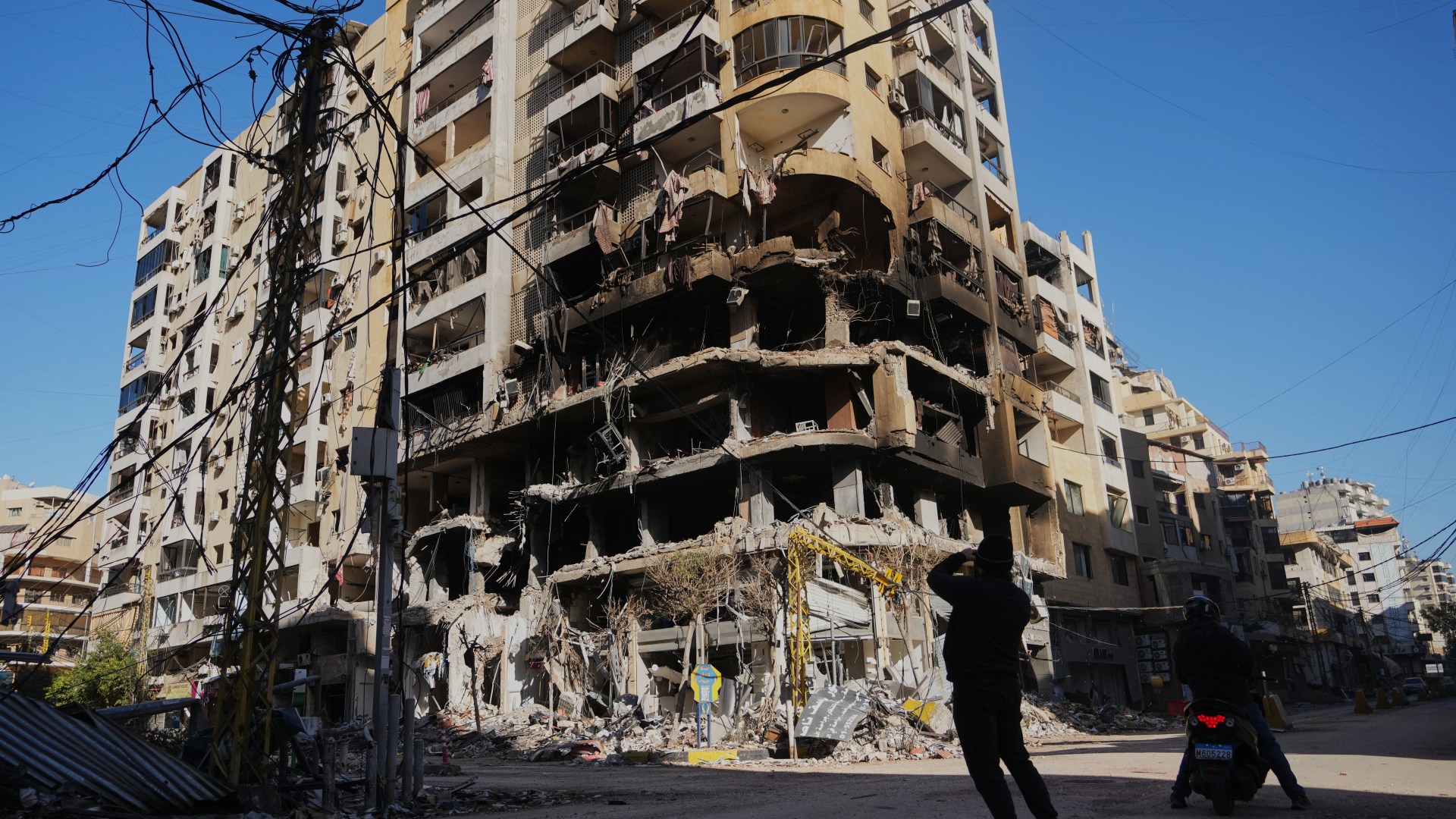
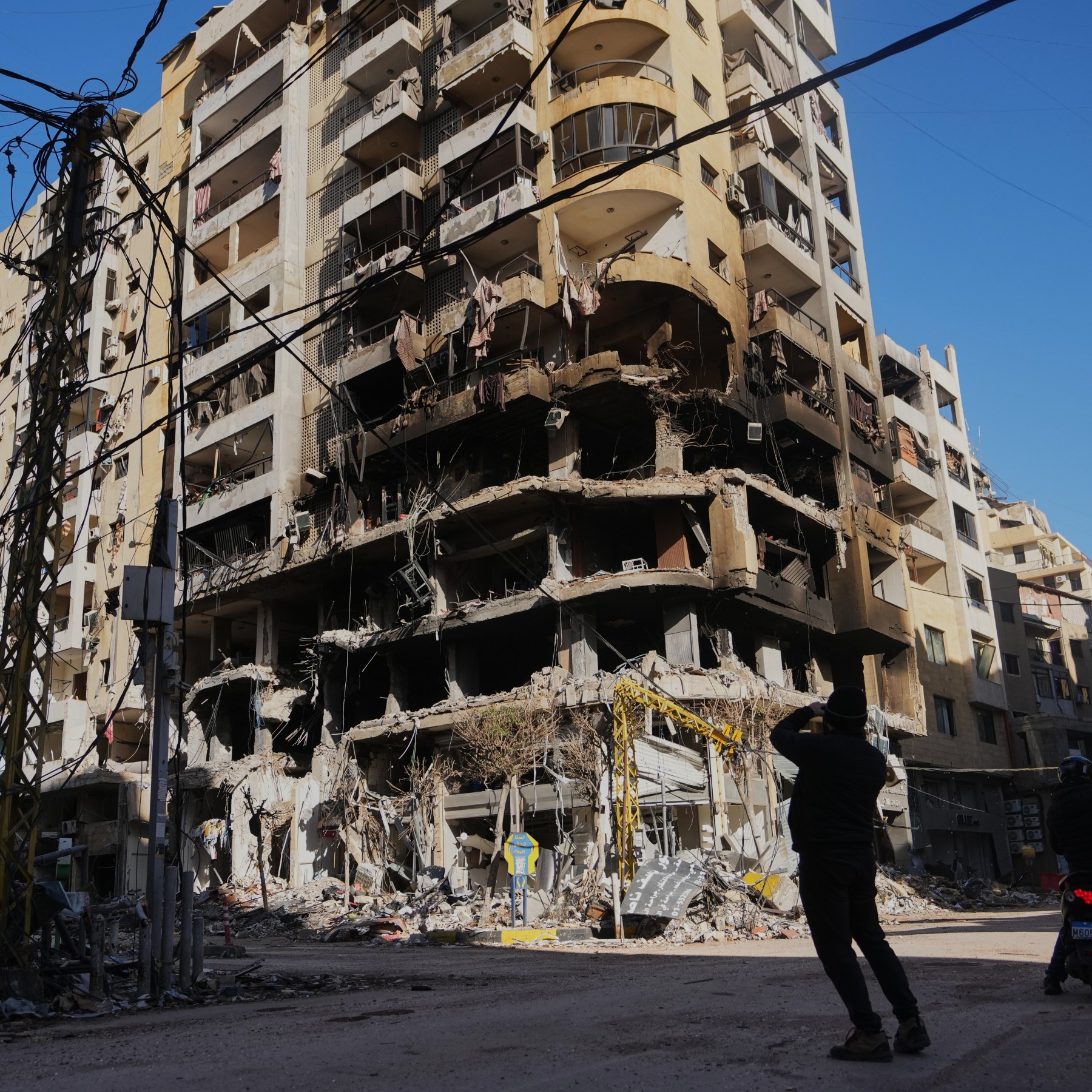
That is precisely why Dahiyeh is so central to the Israeli military’s thinking. During the 2006 war, large sections of the southern suburb, especially Haret Hreik, were devastated by Israel. The destruction became so emblematic that Israeli military strategists came up with what came to be known as the Dahiyeh Doctrine: Use of overwhelming force and large-scale destruction of areas associated with an armed group, with the aim of generating deterrence and putting pressure on residents supporting the group. Rights activists and legal scholars say the doctrine violates international humanitarian law, as civilian neighbourhoods and infrastructure do not become legitimate targets simply because an armed group is embedded among the population.

That Israeli pattern, however, has intensified since October 2023, when a genocidal war on Gaza and attacks on Lebanon began. Meanwhile, the killing of Hezbollah leader Hassan Nasrallah in an Israeli strike in late 2024 eroded Dahiyeh’s resistance. That erosion is more visible in the ongoing Israeli attacks on Beirut and southern Lebanon, where more than a million people have registered as displaced since March 2. The old formula – that Dahiyeh was the principal red line and that any strikes there could be deterred by Hezbollah’s threats of retaliatory strikes on several Israeli cities – no longer holds.

Once again, Dahiyeh has become a focal point of the war, with repeated bombardment sending plumes of smoke over a place that many outsiders still describe as a world apart, but which is in fact woven into Beirut’s daily life. Built over decades by the poor, the migrants and the repeatedly uprooted – and shaped by the politics of marginalisation against those whom al‑Sadr once named “the deprived” – Dahiyeh has long served as both a refuge and a front line. Today, it is again being made to carry the costs of a conflict larger than itself.